Feeds:
Posts
Comments

Archive for August 22nd, 2013


mexican gray wolf

Comments needed on proposed Rule changes regarding reintroduction into the wild of the Mexican Gray Wolf.

“Recently the U.S. Fish and Wildlife Service (USFWS) proposed changes to the rules governing the Mexican wolf reintroduction. The proposal, with one very good and many very bad changes, is very important to the future of Mexican wolves.

Please comment on the proposed changes and include the following key points:

1. The good change is to allow direct releases of Mexican wolves throughout the Blue Range Wolf Recovery Area.  The USFWS should put the rest of their proposed rule on hold and speed up approval for more direct releases in expanded areas.

This change has been recommended by experts for over 10 years and can be made faster and with less bureaucratic delay than any other part of the proposed rule.

2. The proposed rule effectively prevents wolves returning to the Grand Canyon region, including northern Arizona and southern Utah, or to northern New Mexico and southern Colorado. The USFWS should eliminate boundaries to the wolves’ movement.

Scientists say some of the last best places for wolves are in these areas, but currently wolves who set up territories outside the Blue Range Wolf Recovery Area are recaptured and moved back. Under the proposed change, the USFWS will recapture Mexican wolves just for going outside of the Mexican Wolf Experimental Population Area whether they establish territories or not. Additional populations of Mexican wolves are necessary to their recovery and genetic health, as is the ability for wolves to move between populations.

Capturing and moving wolves is always a risky business that can result in death or trauma to the wolf. And a bigger box is still a box.

3. The USFWS should not re-designate Mexican gray wolves as experimental, non-essential. By labeling all of the wild wolves as “nonessential” the USFWS ignores science and the reality of 15 years of experience with reintroducing wolves.

The USFWS claims that even if all of the 75 wolves in the wild are wiped out this is not “likely to appreciably reduce the likelihood” of recovery of Mexican wolves in the wild. When the current rule declared wolves in the wild “nonessential” there were only 11 wolves, recently released from a captive breeding program, and they made up only 7% of all Mexican wolves in the world.

Now the 75 wolves in the wild have up to four generations of experience in establishing packs and raising pups and are over 22% of all of the Mexican wolves in the world. And after four generations of captive breeding with few releases, scientists warn that there may be serious genetic problems making captive wolves less able to thrive in the wild.

The fourth generation wild lobos are not expendable and are essential to recovering this unique subspecies of wolf.

4. The USFWS needs to quit stalling and complete a comprehensive recovery plan – and let the public see it – at the same time as or before changing the current rule (except for allowing wolves to be reintroduced into additional suitable places).

USFWS admits that their present, typewritten, 1982 recovery plan is not scientifically sound and does not meet current legal requirements – yet in its proposed rule USFWS continues to emphasize a woefully inadequate population of only 100 wolves in the wild.

When USFWS published the current rule in 1998 they said they expected to put out a new recovery plan for the public to comment on later that year; 15 years later, there still is no scientific or legally adequate recovery plan!

The proposed rule puts the cart before the horse and should come with or after – not before – an updated recovery plan

USFWS’s decisions on the proposed rule can help Mexican wolves finally thrive or can push them closer to extinction.   Please comment today, and ask others to do the same.

You can submit your comments online here: http://www.regulations.gov/#!submitComment;D=FWS-R2-ES-2013-0056-0001
Or by mail addressed to: Public Comments Processing, Attn: FWS-R2-ES-2013-0056; Division of Policy and Directives Management; U.S. Fish and Wildlife Service; 4401 N. Fairfax Drive, MS 2042-PDM; Arlington, VA 22203

Letters received by July 29 requesting public hearing locations can be mailed to: Mexican Wolf Recovery Program, U.S. Fish and Wildlife Service, New Mexico Ecological Services Field Office, 2105 Osuna Road NE., Albuquerque, NM 87113. If you request a hearing location, please also ask for at least three weeks advance notice of the hearing.

Thank you for giving these special wolves a voice in their future.”

**Special thanks to “Lobos of the Southwest,” http://www.mexicanwolves.org/index.php/news/1059/51/Act-Now-to-Ensure-Wolf-Recovery for providing this information!

Read Full Post »


National Rally for Wolves

“Dear Rally attendees and supporters,

As a grassroots led and organized endeavor, we at The National Rally to Protect America’s Wolves! need your help.

The National Rally to Protect America’s Wolves! has reserved an area, just for OUR event, adjacent to the Washington Monument in Washington DC on Saturday, September 7, 2013. This historic and beautiful area is within sight of the South Lawn of the White House and the US Capitol building.

So far, we have 15 wonderful Rally Partners, they are all listed on the bottom of the Rally website, and seven excellent Rally speakers, including two Native Americans who are fighting hard to protect wolves in Minnesota. We will release the names of our first wave of speakers later this week. Additional inspiring and exciting speakers are on the way.

BUT, now we need YOU to come through for the Rally. We need funds to pay for OUR Rally for America’s wolves.

Together, we must pay for staging, podium, audio speakers, press area, trash service, portapotties, etc  along with a professional videographer who will be filming the Rally and creating a highlights DVD to post on YouTube and elsewhere and for distribution to the media. The total cost comes to approximately $10,000.

This is very doable within our devoted wolf defender community. If 500 wolf friends donate just $10 each, that equals $5,000. If twenty more wolf defenders, donate $250 each, that takes care of the remaining balance.

We are asking that you give: $500, $250, $100, $50, $25, $10, $5… whatever you can afford.

Please put your money where your heart is for wolves and help us pay for The National Rally to Protect America’s Wolves! As soon as we have the funds we need the donations page will be turned off.

Read Full Post »


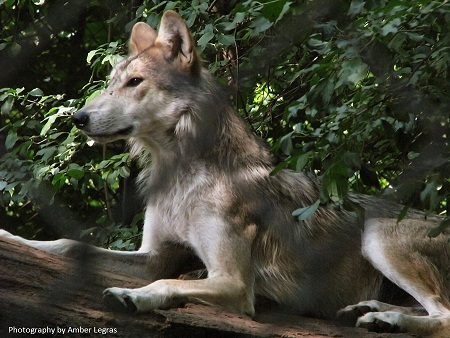
Mexican Wolf on log

“As the Arizona Daily Sun’s recent editorial, “Wolf expansion plan needs more details” points out, Flagstaff residents can provide a significant voice in restoring this ecologically critical, charismatic creature to its rightful place in northern Arizona.

The potential for wolves to return, as the Daily Sun reported back in 2007, has been considered for well over a decade.

The Mexican wolf is one of America’s most endangered mammals. With only an estimated 75 of these wolves in the wild, several management actions are urgently required for its survival. In mid-June, the U.S. Fish and Wildlife Service (USFWS) proposed to remove the gray wolf from the list of threatened and endangered species, except the Mexican wolf, which will remain an endangered subspecies subject to certain provisions that have proven problematic in the past.

Because the entire existing Mexican wolf population is derived from only seven survivors rescued from extinction, the agency’s proposal to allow direct releases of Mexican wolves throughout the existing Blue Range Wolf Recovery Area is absolutely critical. This action can and should be done immediately.

Twelve years ago a panel of four imminent carnivore scientists urged a revision of the Mexican Wolf Recovery Plan, laying the scientific foundation and imperative to enlarge the recovery area. The USFWS needs to quit stalling and complete a comprehensive recovery plan addressing the current plan’s shortcomings — and let the public see it — and at the same time allow wolves to be reintroduced into additional suitable locations as described above.

The Daily Sun’s editors brought up a good question: Why stop northern wolf migration at Interstate 40 as the USFWS proposes? There is nothing sacred and nothing scientific about the I-10 southern recovery area boundary, nor I-40 to the north. In fact, the USFWS suggests extending the recovery area south of I-10 to the Mexican border. However, the agency completely ignores the recommendations of its own Mexican wolf science team, who emphasize the wolf’s long-term survival requires connected habitats north of I-40, including the Grand Canyon region and portions of southern Utah and Colorado.

Wolves are legendary wanderers. While highways present serious hazards to all wildlife, wolves are capable of finding a way across. For example, one female traveled a circuitous route of more than 3,000 miles from Yellowstone to Colorado. She successfully crossed I-80 three times before she was poisoned in 2009. Closer to home, a female Mexican wolf traveled more than 200 miles and successfully crossed I-40. Sadly, a vehicle later struck and killed her in the fall of 2000, 12 miles north of Flagstaff on U.S. 89.

Wolves are social, family-oriented creatures that play a critical role in healthy, resilient ecosystems by affecting the behavior and numbers of prey species. The overabundance of grazing and browsing wildlife often results in degradation of forests, streams and grasslands.

For example, the wholesale slaughter of carnivores, including wolves, in the early 20th century on the North Kaibab forest and Grand Canyon National Park, precipitated an explosion of mule deer populations that dramatically reduced forbs, grass, aspen saplings, and other native vegetation. Elk, a recent migrant to Grand Canyon National Park and the Kaibab and Coconino national forests, continue to damage riparian vegetation as well as aspen and other native plants.

The recovery of viable wolf populations can dramatically improve the health and resilience of forest, stream, and grasslands. For example, the return of the wolf to Yellowstone discouraged elk from lounging and trashing streamside willow and cottonwood vegetation.  Now, increased vegetation stabilizes stream banks while shading and cooling many sections of creeks and rivers. Increased willow and other native vegetation allowed beaver to return and create numerous ponds providing sanctuary for fish and other wildlife.

Wolves kill and harass coyotes, benefiting hawks and foxes that depend on rodents hunted by coyotes. By killing and scaring off coyotes that otherwise prey on pronghorn antelope, pronghorn fawns are much more likely to survive in areas dominated by wolves. That’s because wolves favor larger prey and generally leave pronghorn alone.
As the most recent polls confirm, most Arizona residents recognize the critical role wolves play in nature, and believe they belong in northern Arizona.  While the deadline for requesting locations for public meetings has passed, you can submit your wolf recovery comments online at: http://www.regulations.gov/#!submitComment;D=FWS-R2-ES-2013-0056-0001

**Special thanks to “Lobos of the Southwest” and Kim Crumbo, a conservation director at Grand Canyon Wildlands Council in Flagstaff, for providing this information!  www.grandcanyonwildlands.org or (928) 606-5850.

Read Full Post »