
Photo credit to Pete Caster / pcaster@chronline.com
Wolf Haven Midsummer Night
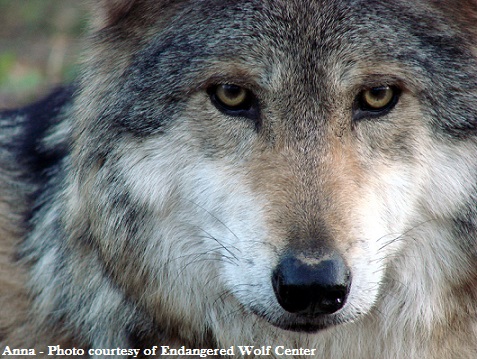
This picture above shows Ladyhawk, a 13-year-old gray wolf, howls in response to the Wolf Haven International’s Midsummers Night audience on Saturday evening at the Tenino sanctuary.
STAYING UP LATE TO HOWL WITH 50 WOLVES, By Sara Potter Nisqually Valley News correspondent:
“It is 5 a.m. and I am awoken in my tent by a sound that few others have, or will ever experience in their lifetime — a 20-minute serenade of 50 wolves, a dozen of which I had met the evening before.
That experience is what makes Wolf Haven’s new event, A Midsummer’s Night, truly special. Diane Gallegos, executive director of Wolf Haven International, says at this gathering no more than 25 individuals get to camp out with the wolves.
“It is a very intimate experience, and really shows our mission here which is to give the wolves the space and ability to live as free and non-domesticated lives as possible, while at the same time teaching and allowing visitors to meet them without stressing the wolves out,” Gallegos said.
This is the first year Wolf Haven has offered such an event, replacing their previously held howl-ins.
“The howl-ins were less intimate, with larger groups which changed the amount of time visitors got to spend asking questions and meeting the wolves,” shared Gallegos. “We want to offer the wolves the most authentic life in captivity we can, and by giving visitors the extended time to view the sanctuary more than once really allows for a truer experience than just a quick tour and then they leave.”
A Midsummer’s Night includes a catered dinner, an extended enrichment tour through the sanctuary with animal care staff, songs and s’mores by the campfire, overnight camping, a continental breakfast, and a morning visit through the sanctuary.
“To get to sleep near the wolves and hear them all night was really surreal,” said Cassie Carroll, who recently moved to the Northwest from the East Coast. “There is nothing like this where we are from and for us to share this experience with our daughters is amazing.”
Carroll’s daughters, Avie, 10, and Callie, 8, both adopted wolves after their first visit to Wolf Haven International a year ago.
“I adopted Noel,” Callie said. “I thought it was so neat that she was born in 2005 just like me, and it was so cool and funny that they sang Christmas carols to her and she responded; that is how she got her name.”
Noel, a Mexican Gray Wolf, had just a number when she arrived at Wolf Haven in 2010. Avie’s adopted wolf is a wolf-dog hybrid, Juno, who was rescued after her caregiver couldn’t succeed in domesticating her.
“She was really special, and a very beautiful wolf,” Avie said. “Next year I hope to do a presentation about her and teach my class about the wolves. Maybe somebody else will adopt another wolf, too.”
Wendy Spencer, director of animal care for the past 15 years, shares the importance of spreading knowledge and education about wolves and wolf-dogs, especially since the latter are more likely to be bought and raised in an effort to make domesticated, which few succeed at.
“They are naturally wild animals, with personality traits that are engrained in them,” shared Spencer, as she introduced the small group on the sanctuary tour to Juno. “Wolves mature around 2 or 3 years old, and their personalities and activities can dramatically change. For owners of wolf-dogs, during this time they can become desperate and, unfortunately, can mistreat the animal due to the fact that people don’t know what else to do.”
Awareness and knowledge, says Gallegos, are the main goals of Wolf Haven International and eventually, she says, her wish would be for them to be there for the purpose of learning and education, and not a sanctuary at all.
“Our overall goal is to provide to the population of the red, gray and Mexican wolves so that they grow and thrive in population, as well as, for wolf-dogs to be free without having any reason to live in any sort of captivity,” Gallegos said. “But, for now, the care that Wendy gives each one of our animals is something special. I joke around that in my next life I want to come back as one of Wendy’s animals.”
The dedication of the employees and volunteers is something the Carroll family also shared in.
“The whole experience was immensely enriching and we were impressed by all of the ways the staff and volunteers are working to ensure that the wolves are more accepted and protected, especially in the cases of the Mexican and reds, and their reintroduction back into the wild. My husband and I had spent five days in Yellowstone last summer and heard and saw the wolves howling, but not during the night,” shared Carroll.
“The girls have already insisted that we do it again next year, and they are eager to return even sooner to check up on their wolves.”
This summer’s event sold out quickly and Gallegos says to be sure and keep a look out for the posted dates for next summer’s event.
“We want to analyze this year’s results and make sure the repeated weekends did not stress out the wolves. We may decide to spread out the weekends next year, but either way we will surely post the dates by early this fall,” she assured.”
**Special thanks to Sara Potter, a freelance journalist living in Southwest Washington, for providing this information! http://www.yelmonline.com/news/local_news/article_bbceae14-0b59-11e3-ac34-001a4bcf887a.html
 The Wolf Preservation Blog