“Although it became well known in 2010 that all dogs originated from wolves in the Middle East instead of Asia, the fear of them is still very ingrained in the people there. It was over 15,000 years ago that the first non-nomadic hunter/gatherer communities began to intervene in the breeding patterns of wolves, thereby turning them into the first domesticated dogs. But this fact has been long forgotten by many in that region.
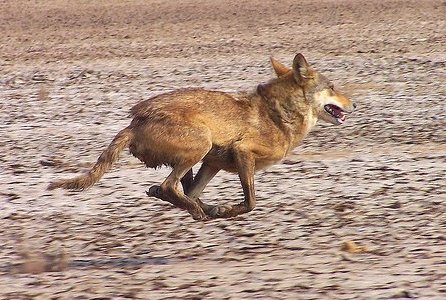
There are currently two subspecies of the Gray wolf that live in the Middle East. One is the Iranian wolf which is the only wolf species in the world that is not in danger of extinction. They can be found in diminishing numbers throughout Iran, Israel, Turkey, and Saudi Arabia. The other Middle Eastern wolf is the Arabian wolf, which is found in Israel, Iraq, Jordan, Oman, Saudi Arabia, and Yemen, and possibly some parts of the Sinai Peninsula in Eygpt.
Although these wolves are all over the Middle East, there are only two countries that subscribe to the notion that wolves have the right to coexist with man as part of the natural ecosystem. Those two countries are Oman and Israel and they have both given the wolves legal protection. In Israel for example, they have taken extraordinary measures to protect the wolves. Some of these measure include paying for electric fencing, using various species of guard dogs to deter wolves and the government also offers partial compensation for livestock losses. In the country of Oman the wolf population is on the rise. This has been attributed to a hunting ban that was put in place there. Oman has a very strong conservationist stance in comparison to the rest of it’s Middle Eastern neighbors.
As for the rest of the Middle Eastern countries such as in Iran, Jordan, Iraq, Turkey, Syria etc. the wolves are not doing as well. Here they are often looked as a pests that needs to be eradicated. In Saudi Arabia for example, the bodies of wolves can often be seen hanging from billboards as a message. It is widely claimed that many Saudis still kill the wolves as trophies. In other Middle Eastern countries wolves are hunted, poisoned, and run over.
This kind of outlook towards the wolves will not change however until the populations there become better educated. Currently in several of the Middle Eastern countries there are a few environmental organizations that are trying to work with the communities to help them better understand the wolves and their habitats and in turn minimize human and wolf conflicts. Godspeed to these organizations and may there be many more soon.”
**Special thanks to “White Wolf Pack” for providing this information (http://www.whitewolfpack.com/2011/12/only-2-countries-in-middle-east-protect.html)!
 The Wolf Preservation Blog