
“Recently an international group of prominent scientists have signed The Cambridge Declaration on Consciousness. This declaration proclaims their support for the idea that animals are conscious and aware to the degree that humans are. The list of animals includes all mammals, birds, and even the octopus.
The group consisted of cognitive scientists, neuropharmacologists, neurophysiologists, neuroanatomists, and computational neuroscientists. They were all attending the Francis Crick Memorial Conference on Consciousness in Human and Non-Human Animals. The declaration was signed in the presence of Stephen Hawking, and included such signatories as Christof Koch, David Edelman, Edward Boyden, Philip Low, Irene Pepperberg, and many others.
What is important here is the acknowledgement by the scientific community that many nonhuman animals possess conscious states. Because the body of scientific evidence is increasingly showing that most animals are conscious in the same way that we are, we can no longer ignore this fact when it comes to how we treat the animals in our world.
What has also been found is very interesting. It has been shown consciousness can emerge in those animals that are very much unlike humans, including those that evolved along different evolutionary tracks, namely birds and some encephalopods. The group of scientists have stated, “The absence of a neocortex does not appear to preclude an organism from experiencing affective states. Convergent evidence indicates that non-human animals have the neuroanatomical, neurochemical, and neurophysiological substrates of conscious states along with the capacity to exhibit intentional behaviors.”
The following are the observations made that were the reason for the signing of this declaration:
The field of Consciousness research is rapidly evolving. Abundant new techniques and strategies for human and non-human animal research have been developed. Consequently, more data is becoming readily available, and this calls for a periodic reevaluation of previously held preconceptions in this field. Studies of non-human animals have shown that homologous brain circuits correlated with conscious experience and perception can be selectively facilitated and disrupted to assess whether they are in fact necessary for those experiences. Moreover, in humans, new non-invasive techniques are readily available to survey the correlates of consciousness.
The neural substrates of emotions do not appear to be confined to cortical structures. In fact, subcortical neural networks aroused during affective states in humans are also critically important for generating emotional behaviors in animals. Artificial arousal of the same brain regions generates corresponding behavior and feeling states in both humans and non-human animals. Wherever in the brain one evokes instinctual emotional behaviors in non-human animals, many of the ensuing behaviors are consistent with experienced feeling states, including those internal states that are rewarding and punishing.
Deep brain stimulation of these systems in humans can also generate similar affective states. Systems associated with affect are concentrated in subcortical regions where neural homologies abound. Young human and nonhuman animals without neocortices retain these brain-mind functions. Furthermore, neural circuits supporting behavioral/electrophysiological states of attentiveness, sleep and decision making appear to have arisen in evolution as early as the invertebrate radiation, being evident in insects and cephalopod mollusks (octopus, etc.).
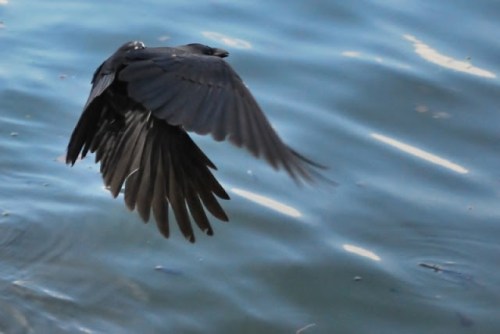
Birds appear to offer, in their behavior, neurophysiology, and neuroanatomy a striking case of parallel evolution of consciousness. Evidence of near human-like levels of consciousness has been most dramatically observed in African grey parrots. Mammalian and avian emotional networks and cognitive microcircuitries appear to be far more homologous than previously thought. Moreover, certain species of birds have been found to exhibit neural sleep patterns similar to those of mammals, including REM sleep and, as was demonstrated in zebra finches, neurophysiological patterns, previously thought to require a mammalian neocortex. Magpies in articular have been shown to exhibit striking similarities to humans, great apes, dolphins, and elephants in studies of mirror self-recognition.
In humans, the effect of certain hallucinogens appears to be associated with a disruption in cortical feed-forward and feedback processing. Pharmacological interventions in non-human animals with compounds known to affect conscious behavior in humans can lead to similar perturbations in behavior in non-human animals. In humans, there is evidence to suggest that awareness is correlated with cortical activity, which does not exclude possible contributions by subcortical or early cortical processing, as in visual awareness. Evidence that human and nonhuman animal emotional feelings arise from homologous subcortical brain networks provide compelling evidence for evolutionarily shared primal affective qualia.”
**Special thanks to “White Wolf Pack”, http://www.whitewolfpack.com/2012/08/scientists-sign-declaration-that.html, for providing this information!
Read Full Post »


 The Wolf Preservation Blog