Feeds:
Posts
Comments

Archive for September, 2013


snow wolf

“Recently an international group of prominent scientists have signed The Cambridge Declaration on Consciousness. This declaration proclaims their support for the idea that animals are conscious and aware to the degree that humans are. The list of animals includes all mammals, birds, and even the octopus.

The group consisted of cognitive scientists, neuropharmacologists, neurophysiologists, neuroanatomists, and computational neuroscientists. They were all attending the Francis Crick Memorial Conference on Consciousness in Human and Non-Human Animals. The declaration was signed in the presence of Stephen Hawking, and included such signatories as Christof Koch, David Edelman, Edward Boyden, Philip Low, Irene Pepperberg, and many others.

What is important here is the acknowledgement by the scientific community that many nonhuman animals possess conscious states. Because the body of scientific evidence is increasingly showing that most animals are conscious in the same way that we are, we can no longer ignore this fact when it comes to how we treat the animals in our world.

What has also been found is very interesting. It has been shown consciousness can emerge in those animals that are very much unlike humans, including those that evolved along different evolutionary tracks, namely birds and some encephalopods. The group of scientists have stated, “The absence of a neocortex does not appear to preclude an organism from experiencing affective states. Convergent evidence indicates that non-human animals have the neuroanatomical, neurochemical, and neurophysiological substrates of conscious states along with the capacity to exhibit intentional behaviors.”

The following are the observations made that were the reason for the signing of this declaration:

The field of Consciousness research is rapidly evolving. Abundant new techniques and strategies for human and non-human animal research have been developed. Consequently, more data is becoming readily available, and this calls for a periodic reevaluation of previously held preconceptions in this field. Studies of non-human animals have shown that homologous brain circuits correlated with conscious experience and perception can be selectively facilitated and disrupted to assess whether they are in fact necessary for those experiences. Moreover, in humans, new non-invasive techniques are readily available to survey the correlates of consciousness.

The neural substrates of emotions do not appear to be confined to cortical structures. In fact, subcortical neural networks aroused during affective states in humans are also critically important for generating emotional behaviors in animals. Artificial arousal of the same brain regions generates corresponding behavior and feeling states in both humans and non-human animals. Wherever in the brain one evokes instinctual emotional behaviors in non-human animals, many of the ensuing behaviors are consistent with experienced feeling states, including those internal states that are rewarding and punishing.

Deep brain stimulation of these systems in humans can also generate similar affective states. Systems associated with affect are concentrated in subcortical regions where neural homologies abound. Young human and nonhuman animals without neocortices retain these brain-mind functions. Furthermore, neural circuits supporting behavioral/electrophysiological states of attentiveness, sleep and decision making appear to have arisen in evolution as early as the invertebrate radiation, being evident in insects and cephalopod mollusks (octopus, etc.).

Raven with beautiful wings in the down stroke flying over water.

Birds appear to offer, in their behavior, neurophysiology, and neuroanatomy a striking case of parallel evolution of consciousness. Evidence of near human-like levels of consciousness has been most dramatically observed in African grey parrots. Mammalian and avian emotional networks and cognitive microcircuitries appear to be far more homologous than previously thought. Moreover, certain species of birds have been found to exhibit neural sleep patterns similar to those of mammals, including REM sleep and, as was demonstrated in zebra finches, neurophysiological patterns, previously thought to require a mammalian neocortex. Magpies in articular have been shown to exhibit striking similarities to humans, great apes, dolphins, and elephants in studies of mirror self-recognition.

In humans, the effect of certain hallucinogens appears to be associated with a disruption in cortical feed-forward and feedback processing. Pharmacological interventions in non-human animals with compounds known to affect conscious behavior in humans can lead to similar perturbations in behavior in non-human animals. In humans, there is evidence to suggest that awareness is correlated with cortical activity, which does not exclude possible contributions by subcortical or early cortical processing, as in visual awareness. Evidence that human and nonhuman animal emotional feelings arise from homologous subcortical brain networks provide compelling evidence for evolutionarily shared primal affective qualia.”

**Special thanks to “White Wolf Pack”, http://www.whitewolfpack.com/2012/08/scientists-sign-declaration-that.html, for providing this information!

 

Read Full Post »


dog in trap

“With the support of the Ontario government, children ages 12 to 15 will be taught how to cruelly kill wildlife by two hunting and trapping lobby groups.

In a press statement issued Wednesday, the Ontario Federation of Hunters and Anglers (OFAH) and the Ontario Fur Managers Federation (OFMF) ‘congratulated’ the Ontario Ministry of Natural Resources (MNR) on the introduction of a youth trapping program.

“Trapping is considered an activity of significant historical, social, cultural and economic value in Ontario for centuries, and one that results in economic benefits to the communities and individuals,” said Minister of Natural Resources David Orazietti in the statement. “Ontario trappers have worked tirelessly for many years towards a program like this which will guide youth to be safe and responsible trappers.”

This disturbing news begs the question: why are our tax dollars supporting a trade that most residents abhor? Why are we supporting an activity that is wholly dependent on the suffering of innocent wild animals? And why is history being ignored?

The history of trapping in Canada is not a glorious, character-building activity. It led to the extinction of the sea mink; it nearly destroyed beaver populations across the continent; it has ripped apart ecosystems; and it has caused suffering to immeasurable levels.

We ask MPP Orazietti if he has ever held a dying animal in his arms, looked into its eyes and seen the fear, the pain and terror it must experience while in the clutches of a trap. We ask him if he has sat with the growing number of families who have lost pets to the mindless devices. We ask him if, after making this deal, he has any humanity left.

Send a letter to your local MPP and MPP Orazietti to tell them to end this madness. Tell them the truth behind trapping and the fur trade. And tell them that any politician that supports this archaic and cruel activity will never represent you.

Use our form letter below to let your MPP know what you think. MPP and Minister of Natural Resources David Orazietti can be reached by email, phone, fax, or snail mail with these details:”

dorazietti.mpp@liberal.ola.org

Room 202, 2nd Floor
432 Great Northern Road
Sault Ste Marie, Ontario P6B 4Z9

Phone: 705-949-6959
Fax: 705-946-6269

**Special thanks to “The Association for the Protection of Fur Bearing Animals (http://www.furbearerdefenders.com/blogs/blog/63-08-2013/361-ontario-wants-to-teach-kids-to-kill)” for providing this information!

Read Full Post »


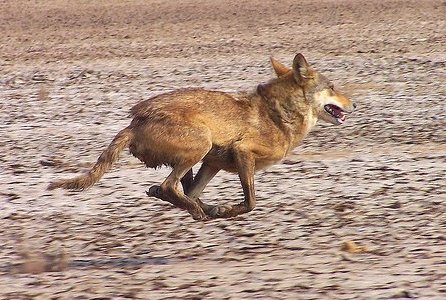
arabian wolf

“Although it became well known in 2010 that all dogs originated from wolves in the Middle East instead of Asia, the fear of them is still very ingrained in the people there. It was over 15,000 years ago that the first non-nomadic hunter/gatherer communities began to intervene in the breeding patterns of wolves, thereby turning them into the first domesticated dogs. But this fact has been long forgotten by many in that region.

There are currently two subspecies of the Gray wolf that live in the Middle East. One is the Iranian wolf which is the only wolf species in the world that is not in danger of extinction. They can be found in diminishing numbers throughout Iran, Israel, Turkey, and Saudi Arabia. The other Middle Eastern wolf is the Arabian wolf, which is found in Israel, Iraq, Jordan, Oman, Saudi Arabia, and Yemen, and possibly some parts of the Sinai Peninsula in Eygpt.

Although these wolves are all over the Middle East, there are only two countries that subscribe to the notion that wolves have the right to coexist with man as part of the natural ecosystem. Those two countries are Oman and Israel and they have both given the wolves legal protection. In Israel for example, they have taken extraordinary measures to protect the wolves. Some of these measure include paying for electric fencing, using various species of guard dogs to deter wolves and the government also offers partial compensation for livestock losses. In the country of Oman the wolf population is on the rise. This has been attributed to a hunting ban that was put in place there. Oman has a very strong conservationist stance in comparison to the rest of it’s Middle Eastern neighbors.

As for the rest of the Middle Eastern countries such as in Iran, Jordan, Iraq, Turkey, Syria etc. the wolves are not doing as well. Here they are often looked as a pests that needs to be eradicated. In Saudi Arabia for example, the bodies of wolves can often be seen hanging from billboards as a message. It is widely claimed that many Saudis still kill the wolves as trophies. In other Middle Eastern countries wolves are hunted, poisoned, and run over.

This kind of outlook towards the wolves will not change however until the populations there become better educated. Currently in several of the Middle Eastern countries there are a few environmental organizations that are trying to work with the communities to help them better understand the wolves and their habitats and in turn minimize human and wolf conflicts. Godspeed to these organizations and may there be many more soon.”

**Special thanks to “White Wolf Pack” for providing this information (http://www.whitewolfpack.com/2011/12/only-2-countries-in-middle-east-protect.html)!

Read Full Post »


Dog protector

(photo above: Great Pyrenees protecting its flock at the Marcia Barinaga Ranch in Marin County, CA – Keli Hendricks/ProjectCoyote.org )

“In the picturesque community of Marin County California- just North of San Francisco- public controversy over the use of poisons, snares, “denning” (the killing coyote and fox pups in their dens), and other lethal methods led to a majority decision by the Marin County Board of Supervisors to stop contracting with the U.S. Department of Agriculture’s Wildlife Services predator control program in 2000. Instead the Board approved an alternative community-based program to assist ranchers with livestock-predator conflicts known as the Marin County Livestock and Wildlife Protection Program (hereafter MCLWPP), a collaborative effort involving multiple stakeholders from local wildlife protection organizations to ranchers, scientists, and county government officials (Fox 2008).

The MCLWPP initiated cost-sharing to help ranchers install or upgrade fencing and other livestock-protection infrastructure, install predator-deterrents and detectors, and purchase and sustain guard dogs and llamas, coupled with indemnification for any ensuing verified livestock losses to predators.  Improved animal husbandry practices combined with these economic and technological incentives led to its early success (Agocs 2007, Fox 2008). Participants do not give up their rights to kill predators consistent with state and federal laws. Rather than contract with the USDA Wildlife Services (WS) for the provision of personnel to kill coyotes and other wildlife, the county assigns personnel and allocates money to help stock-owners prevent depredations solely through non-lethal means. To qualify for the MCLWPP, ranchers must have 25 or more head of livestock and must utilize at least two non-lethal predation deterrent methods verified through inspection by the office of the Marin County Agricultural Commissioner, thereby becoming eligible for cost-share indemnification for any ensuing losses to predation.

Five years after implementation of the MCLWPP, a research assessment was conducted (Fox 2008) that compared the former Wildlife Services program to the MCLWPP, with regard to rancher satisfaction and preferences, lethality to predators, livestock losses, use of non-lethal predator deterrent techniques, and costs. The study, conducted through a variety of quantitative and qualitative methods, including a comprehensive survey of ranchers who participated in the MCLWPP, documented the non-lethal cost-share program (1) had support from a majority of participating ranchers, (2) was preferred over the USDA Wildlife Service’s traditional predator management program by a majority of participating ranchers, (3) helped to reduce livestock losses, (4) resulted in an increase in the use of non-lethal predation deterrent methods by a majority of participating ranchers, (5) likely reduced the total number of predators killed to protect livestock, (6) reduced the spectrum of species of predators killed to protect livestock, and (7) fewer species of predator were killed.

In 2012, the San Francisco Chronicle (Fimrite 2012) reported that 26 Marin County ranchers participated in the County program[1] utilizing 37 guard dogs, 31 llamas and over 30 miles of fences, to protect 7,630 sheep that were pastured on 14,176 acres. Coyote depredation on sheep in the county, though it fluctuated, declined steadily from 236 in fiscal year 2002-03 to 90 in fiscal year 2010-11 – a 62% reduction – with fourteen ranchers recording no predation losses and only three ranchers losing over ten sheep during the following year. According to Marin Agricultural Commissioner, Stacy Carlsen, who oversees implementation of the non-lethal cost-share program, “losses fell from 5.0 to 2.2 percent while program costs fell by over $50,000. For the first couple of years we couldn’t tell if the loss reductions were a trend or a blip. Now, we can say there’s a definite pattern and livestock losses have decreased significantly.” Carlsen also noted “This innovative model sets a precedent for meeting a wider compass of community needs and values where both agriculture and protection of wildlife are deemed important by the community. The success of our county model has set the trend for the rest of the nation.”

The heart of Marin County’s results-driven program lies in its eschewing of a governmental role in assisting in the destruction of wildlife, which makes the assistance in preventing depredations all the more attractive and ultimately successful. Though some specific methods in the MCLWPP may not prove equally efficacious or even feasible in other environments – for example fencing on federal lease lands that could disrupt wildlife migration corridors – the MCLWPP provides a provides a cost-effective and ecologically beneficial model to address carnivore-livestock conflicts by integrating modern science, ethics, and economics. Such innovative prototyping that incorporates adaptive management strategies provides a template to guide the development of other non-lethal programs across differing landscapes to address the age-old predicament of raising livestock in an environment that includes predators (Fox 2008).

LITERATURE CITED:

Agocs, C.  2007.   Making Peace with Coyote.   Bay Nature (January 1, 2007). Berkeley, CA. Available from: http://baynature.org/articles/making-peace-with-coyote/   (accessed May 5, 2013)

Fimrite, P.  2012.  Ranchers shift from traps to dogs to fight coyotes.  San Francisco Chronicle (P. 1, April 27, 2012). San Francisco, CA. Available from: http://www.sfgate.com/science/article/Ranchers-shift-from-traps-to-dogs-to-fight-coyotes-3514405.php  (accessed May 5, 2013)

Fox, C. H.  2008.  Analysis of the Marin County strategic plan for protection of livestock and wildlife, an alternative to traditional predator control. M.A. thesis, Prescott College, AZ. 120 pp. Larkspur, CA.

Project Coyote is a national non-profit organization based in Marin County, California promoting compassionate conservation and coexistence between people and wildlife through education, science, and advocacy. For more information visit: ProjectCoyote.org


[1] According to Marin County Agricultural Commissioner Stacy Carlsen, all commercial ranches were participating in the MCLWPP as of May 2013.”

Project Coyote
P.O. Box 5007
Larkspur, CA 94977

Read Full Post »


Trap Law

Courtesy              

Gov. Jerry Brown’s dog Sutter puts his paw of approval on AB 789. From left: Jennifer Fearing, California Senior State Director for the Humane Society of the United States; Assembly member Das Williams; and Leslie Villegas, legislative aide to Williams.

“A wildlife trapping bill authored by Assemblymember Das Williams to protect animals from potentially cruel and unusual deaths was signed into law by Governor Jerry Brown this Tuesday.

AB 798, which amends a section of California’s Fish and Game code, imposes new restrictions on a particularly brutal kind of trap — the conibear — and makes it illegal for private nuisance wildlife control operators (NWCOs) to kill the animals they catch with disturbing but previously lawful methods such as drowning, chest crushing, and the injection of chemical solvents like nail polish remover.

“We must take great care with all of our animals,” said Williams. “Even so-called ‘nuisance wildlife’ deserves to be treated humanely. It is time we hold trappers to a higher standard and demand that they end their severely cruel killing practices.”

Supported by 20 different animals rights groups and organizations — but opposed by the California Department of Fish and Wildlife — the bill prohibits the use of body-gripping conibear traps that are bigger than six inches by six inches (unless they’re in water) and mandates the posting of warning signs when they’re set on public land. Domestic dogs and cats, Williams said, are often accidentally killed by conibears.

“We share this planet with wildlife,” Williams said. “Animals cannot speak for themselves so we must speak for them and stop their torturous, slow and painful deaths.”

**Special thanks to Tyler Hayden, http://www.independent.com/news/2013/aug/28/dass-wildlife-trapping-bill-signed-law/, for providing this information!

Read Full Post »


Raccoon 1

Photo provided by National Geographic

“An Ottawa man is charged with torturing and killing a mother racoon and her baby in a days-long ordeal, the Ottawa Humane Society said Monday.

“We needed to do a postmortem on the raccoons and those indicated there were multiple wounds before the animals were killed,” said Bruce Roney, executive director of the OHS, explaining why it took from the June 11 discovery of the animals’ bodies until late August to press charges.

The man is alleged to have tortured and killed the pair after trapping the mother raccoon June 10. The examination found that both animals were alive while they were beaten.

“We see a lot of terrible things. I’ve been here 24 years and this was just horrific,” said Ottawa humane Society inspector Miriam Smith. When OHS was called to Armstrong’s home in Ottawa south by neighbours who saw the mother trapped in a cage for two days, they discovered a grisly sight. The mother raccoon was found with a barbecue rotisserie rod skewered through its mouth and out the back of its head. And the baby’s body was discovered nearby beaten to death with a hammer.

“This is certainly in the top five worst cases I’ve seen,” said Roney, who has been with OHS for 13 years and was at a loss to explain why the animals had been trapped and tortured.

Roney added that by law, wildlife that is trapped can only be moved one kilometre from the trap site.

“If there is a conflict with wildlife, people need to deal with how they’re getting into the house,” he said. “It’s about wildlife-proofing your house or garbage can. There are products available,” he urged.

Forty-nine-year old Gregory Armstrong faces two counts of causing unnecessary pain, suffering and injury to an animal. He faces a maximum sentence of five years in jail and a lifetime ban on owning animals if convicted.”

“Footloose Montana” adds, “People that abuse animals are a threat to society. Trapping legally allows and perpetuates that threat. Trapped animals experience suffering and are offered no protection in the manner in which they are treated and killed. Because of the photograph, Footloose Montana posted that went viral, of the disrespectful and inhumane treatment of a trapped wolf, Montana requires the immediate killing of trapped wolves. The killing method now for trapped wolves must be by gunshot to eliminate the choking to death some trappers obviously were choosing. Montana Trappers Association rep said, “Some trappers don’t own a gun.”

**Special thanks to Graham Lanktree of Metro Ottawa, http://metronews.ca/news/ottawa/777287/man-charged-with-torturing-killing-mother-and-baby-raccoons/, for providing this information!

Read Full Post »

« Newer Posts