Feeds:
Posts
Comments

Archive for November, 2014


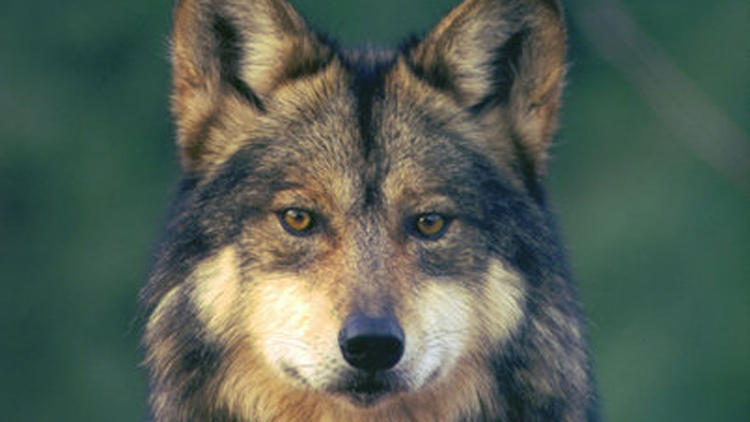
mexican gray wolf recovery

“Conservation organizations on Wednesday sued the U.S. Fish and Wildlife Service to force it to complete a long overdue, legally required recovery plan for the Mexican gray wolf, the lobo of Southwestern lore.

The lawsuit, filed in U.S. District Court in Arizona, aims to enforce compliance with rules the agency adopted 38 years ago to guide recovery of the federally endangered species driven to near extinction by wolf extermination campaigns of the 19th and 20th centuries.

It asks the court to declare the agency in violation of the Endangered Species Act, and order it to “prepare and implement a scientifically based, legally valid” final recovery plan within a year of the court’s judgment.

The Mexican gray wolf was reintroduced into a small area of eastern Arizona and western New Mexico in 1998 as part of a strategy to reach a population of 100 wolves, including 18 breeding pairs, by 2006.

Today, the population stands at 83 wolves, and five breeding pairs. They are managed under restrictions that do not permit the mobile, clannish hunters to colonize new territory, increasing the likelihood of inbreeding, according to the lawsuit. The restrictions also allow excessive killing and removal of wolves that take livestock, the lawsuit says.

By the agency’s own assessment in a recent draft environmental impact report, the existing population is “considered small, genetically impoverished, and significantly below estimates of viability appearing in the scientific literature.”

Sherry Barrett, the U.S. Fish and Wildlife Service’s Mexican gray wolf recovery coordinator, was unavailable for comment.

Plaintiffs including the Defenders of Wildlife, the Center for Biological Diversity, the Endangered Wolf Center, the Wolf Conservation Center and David R. Parsons, a biologist who served as the agency’s Mexican gray wolf recovery coordinator from 1990 to 1999, accuse the agency of yielding to political pressure from ranchers, hunting groups and state officials in Utah, Arizona and Colorado.

In a letter to former Interior Secretary Ken Salazar in late 2011, for instance, Utah Gov. Gary R. Herbert urged that Colorado and Utah be excluded from what he described as “the Mexican gray wolf equation,” on grounds that those states were not “within its core historic range.”

The agency, in 2013, published documents based on recent genetic research showing that the species scientists know as Canis lupus baileyi ranged as far north as Utah and Nebraska.

“Unfortunately, when confronted with views from various interest groups — particularly livestock industry organizations, state wildlife agencies and the less enlightened hunting organizations – the agency takes a head-in-the-sand approach,” Parsons said in an interview. “What seems to be driving things in this case are the politics surrounding the Mexican gray wolf.”

Since 1982, the agency has convened three different scientific teams to prepare a formal recovery plan for the Mexican gray wolf.

The most recent effort produced a draft recovery plan in 2012 that recommended establishing two additional Mexican gray wolf populations, one in the Grand Canyon and another in the southern Rocky Mountains of New Mexico. The overall goal was to create three self-sustaining sub populations totaling 750 wolves.

The plan also suggested several areas of suitable habitat for reintroduction efforts including land in Arizona, New Mexico, southern Utah and southern Colorado.

That plan, however, was never published, and the recovery team that produced it never reconvened to review the proposal’s viability, according to the lawsuit.

“The agency has caved in to demands of the anti-wolf states,” Noah Greenwald, endangered species director at the Center for Biological Diversity, said. “Meanwhile, decades after it decided to reintroduce it into the wilds, the Mexican gray wolf remains on the precipice of extinction.”

Read Full Post »


Posted: Wednesday, November 12, 2014 1:15 pm

“Consider this loaded question: Should grizzly bears, wolves and cougars be hunted for sport? Worldwide, given their rarity and declining numbers, should lions, leopards, cheetahs, jaguars and tigers?

Across North America we find ourselves in another big game hunting season. For many the harvest is as much about putting meat in the freezer — a form of modern subsistence — as it is about the profoundly personal act of communing with nature.

From an early age, a lot of us were taught two guiding ethical principles: Don’t take the life of an animal unless you intend to eat it, and, if you do kill, there ought to be a good reason.

As states sanction hunts of iconic predators (grizzlies and black bears, wolves, mountain lions and coyotes), there remains a fact: People will eat little of those animals that they kill.

The search for a rationale in targeting predators must necessarily speak to reasoning beyond the simplistic argument advanced by fish and game departments that selling hunting tags generates revenue.

The issue of whether there’s an underlying moral — and compelling biological — justification for killing predators is taken up by two university professors in a new thought-provoking scientific analysis, “Wolf Hunting and the Ethics of Predator Control,” soon to be included in a new book, “The Oxford Handbook of Animal Studies.”

Author John Vucetich is a well-known Midwest wolf researcher and conservation biologist at Michigan Tech University; Michael P. Nelson is on the faculty at Oregon State University. In their paper they examine why large carnivores — which possess undeniable ecological value — are hunted.

Before we proceed let it be clear that Vucetich and Nelson did not write the paper to advance an anti-hunting agenda. They wanted to determine if any “good reason” for hunting predators exists.

“What counts as an adequate reason to kill a sentient creature?” they ask. “The hunting community has long recognized the value of this question to understanding the conditions under which various kinds of hunting is appropriate.”

Vucetich and Nelson consider the spectrum of societal attitudes toward predator hunting as expressed by trophy hunters, government wildlife managers, those who hunt for food, those who eat no meat and animal rights advocates.

They dissect the premise that predators must be controlled to ensure healthy populations of elk, deer, moose and pronghorn — and even, as is sometimes asserted, to protect people. They test the assertion that the best way of promoting conservation of a species is to place a value on its head and hunt it.

They also scrutinize the attitudes of so-called “wolf haters,” pointing out that unlike hunters of edible big game, whose pursuit seems to make humans more respectful of the animal, many who kill wolves are actually driven by a lack of empathy.

In a statement certain to spark debate, they charge: “Many instances of wolf poaching … are wrong because they are primarily motivated by a hatred of wolves. These instances of poaching qualify as wrongful deaths, if not hate crimes.

“To legalize such killing does not make them any less wrong. Moreover, people who threaten to poach wolves unless wolf killing is legalized are engaging in a kind of ecological blackmail … .”

Vucetich and Nelson also share thoughts about trapping: “A trophy is a kind of prize, memento or symbol of some kind of success. To kill a sentient creature for the purpose of using its body or part of it as a trophy is essentially killing it for fun or as a celebration of violence.

“And although there was once a time when trapping wolves for their pelts might have been a respectable means of making a living because wolf pelts were then a reasonable way to make warm clothing,” they state, “we no longer live in that time.”

Ultimately Vucetich and Nelson conclude that killing predators for sport isn’t justified biologically or on moral and ethical grounds.

They take government agencies and universities to task for not brokering honest discussions about such controversial issues as wolf management and predator control with citizens and students.

So often we do things in our society, they suggest, without bothering to provide the “good reason” for why.

Readers can judge for themselves. A copy of the analysis is attached to the online version of this story.”

**Special thanks to Todd Wilkinson, who has been writing his column here every week for 25 years. He is author of the critically acclaimed book “Last Stand: Ted Turner’s Quest to Save a Troubled Planet.”

Read Full Post »


Updated 4:23 pm, Thursday, November 13, 2014

“BOISE, Idaho (AP) — Four environmental groups filed a lawsuit late Thursday to prevent a federal agency from extending a wolf- and coyote-hunting derby onto additional public lands in east-central Idaho.

The lawsuit filed in federal court in Idaho came less than two hours after the U.S. Bureau of Land Management approved Idaho for Wildlife’s request for the derby permit near Salmon.

Defenders of Wildlife, the Center for Biological Diversity, Western Watersheds Project and Project Coyote say the BLM’s actions are contrary to the federal government’s wolf reintroduction efforts.

Amy Atwood of the Center for Biological Diversity called the decision “repugnant” and a “slap in the face” to thousands of people who commented against the derby.

She said the BLM “has the authority to make sure wolves are protected and secure on land that’s supposed to be a refuge for this fragile population.”

BLM officials in approving the permit said the impacts of an estimated 500 hunters on about 3 million acres of BLM land over a three-day period on Jan. 2 to 4 will not be significant.

“We are aware of the social controversy regarding the event,” Joe Kraayenbrink, the BLM’s district manager in Idaho Falls, said in a statement. “However, from our analysis, we could not find significant conflicts with other environmental resources that would prohibit the competitive event from occurring.”

The derby last winter was held on private land and U.S. Forest Service land but not BLM land because Idaho for Wildlife didn’t have a permit required by that agency for a competitive event. The BLM permit roughly doubles the hunting area.

“It’s wonderful,” said Steve Alder of Idaho for Wildlife. “That’s going to give us a lot more real estate to hunt on. We expect to get a lot more coyotes, and maybe a wolf or two.”

Hunters killed 21 coyotes but no wolves last year. Alder said the addition of the BLM land, which is usually at a lower elevation than Forest Service land, will likely hold more coyotes.

“We have the right and privilege to do this,” he said.

The BLM permit the group received Thursday is good for five years, and Alder said he plans to hold an annual coyote and wolf derby. He said his group is prepared for the court challenge.

In 2013, Idaho for Wildlife offered two separate, $1,000 prizes — one for the hunter who killed the biggest wolf, the other for the hunter who bagged the most coyotes. The event drew 230 people, about 100 of them hunters.

Alder said he expected up to 150 hunters this winter, and likely more who would take part in some way but not hunt.”

(http://www.sfgate.com/news/science/article/Feds-extend-land-available-for-Idaho-wolf-derby-5891334.php)

Read Full Post »