Feeds:
Posts
Comments

Archive for the ‘Uncategorized’ Category


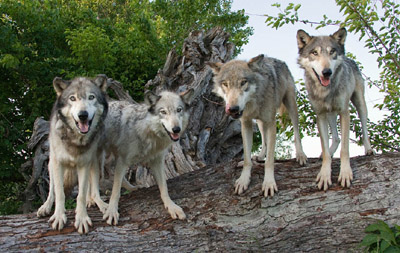
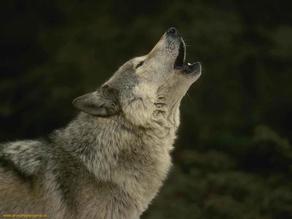
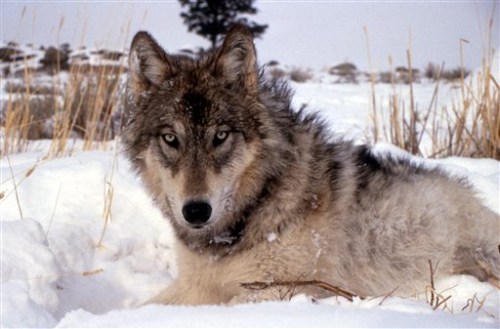
three wolves

April 06, 2013 12:00 am

“Recently I attended a hearing in Helena where I heard numerous people,  including many in the state Legislature, asserting that wolves were “decimating”  Montana’s game herds. Unfortunately due to the widespread repetition of the lies  and distortions, the only thing being decimated is the truth.

According to MDFWP in 1992, three years before wolves were reintroduced into  Yellowstone and Idaho, there were an estimated 89,000 elk in Montana. By 2010,  elk had been so “decimated” that MDFWP estimated that elk numbers had grown to  140,000-150,000 animals.

Indeed, in 2012, according to MDFWP statistics, out of 127 elk management  units in the state, 68 are above objectives, 47 are at objectives, and only 12  are considered to be below objectives. And even among these 12 units, the causes  for elk declines are often complex and involve more than wolf predation. In at  least a few instances, overhunting by humans is the primary factor.

Beyond hunting, the presence of wolves has many other benefits. Wolves cull  sick animals such as those with brucellosis and Chronic Wasting Disease from  herds that could threaten both humans as well as livestock. Wolves shift  ungulates away from riparian areas, resulting in greater growth of willows and  other streamside vegetation. This, in turn, creates more habitat for wildlife  including songbirds, and beaver. Healthier riparian areas also results in  greater trout densities.

It is disturbing to me as a hunter and ecologist that MDFWP repeatedly fails  to aggressively counter the distortions and misinformation.

**Special thanks to George Wuerthner, for providing the information in this article! (http://billingsgazette.com/news/opinion/mailbag/article_357bf3f3-40aa-5bd1-90b5-0dfdf8c70446.html#.UWCFuBxtCGA.facebook)


Read Full Post »


Food and Farm-Targeting Wolves

“The resumption of wolf-hunts in Idaho, Montana and Wyoming illustrates why citizens must continue to oppose such unnecessary and senseless slaughters.

The wolf-hunts are predicated upon morally corrupt and inaccurate assumptions about wolf behavior and impacts that is not supported by recent scientific research. State wildlife agencies pander to the lowest common denominator in the hunting community—men who need to booster their own self esteem and release misdirected anger by killing.

Wolf-hunts, as Montana Fish and Game Commission Chairman Bob Ream noted at a public hearing, are in part to relieve hunters’ frustrations—frustration based on inaccurate information, flawed assumptions, and just plain old myths and fears about predators and their role in the world.

Maybe relieving hunter frustration is a good enough justification for wolf-hunts to many people. However, in my view permitting hunts to go forwards without even registering opposition is to acquiesce to ignorance, hatred, and the worse in human motivations. Thankfully a few environmental groups, most notably the Center for Biological Diversity, Wildearth Guardians, Alliance for Wild Rockies and Western Watersheds had the courage and gumption to stand up to ignorance and hatred.

All of the usual justifications given for wolf-hunts are spurious at best. For instance, one rationale given for hunting wolves is to reduce their presumed affects on big game populations. Yet in all three states, elk and deer populations are at or exceed population objectives for most hunting units.

For instance in Wyoming, one of the most vehement anti wolf states in the West, the 2010 elk population was 21,200 animals over state-wide objectives, and this did not include data for six herds, suggesting that elk populations are likely higher. Of the state’s elk herds most were at or above objectives and only 6 percent were below objectives. Similar data is found for Idaho and Montana elk herds as well.

However, you would not know that from the “howls” of hunters who characterize the elk populations as suffering from a wolf induced Armageddon. And Fish and Game departments are loath to counter the false accusations from hunters that wolves are somehow “destroying” hunting throughout the Rockies.

Experience in other parts of the country where wolves have been part of the landscape longer suggests that in the long term, wolves while they may reduce prey populations in certain locales generally do not reduce hunting opportunities across a state or region. Despite the fact that there more than double the number of wolves in Minnesota (3000+) as in the entire Rocky Mountain region, Minnesota hunters experienced the highest deer kills ever in recent years, with Minnesota deer hunters killing over 250,000white-tailed deer during each of those hunting seasons – an approximate five-fold increase in hunter deer take since wolves were listed under the ESA in 1978.

Another claim made by wolf-hunt proponents is that hunting will reduce “conflicts” with livestock owners. Again this assertion is taken as a matter of faith without really looking into the veracity of it. Given the hysteria generated by the livestock industry one might think that the entire western livestock operations were in jeopardy from wolf predation. However, the number of livestock killed annually by wolves is pitifully small, especially by comparison to losses from other more mundane sources like poison plants, lightning and even domestic dogs.

For instance, the FWS reported that 75 cattle and 148 sheep were killed in Idaho during 2010. In Montana the same year 84cattle and 64 sheep were verified as killed by wolves. While any loss may represent a significant financial blow to individual ranchers, the livestock industry as a whole is hardly threatened by wolf predation. And it hardly warrants the exaggerated psychotic response by Congress, state legislators and state wildlife agencies.

In light of the fact that most losses are avoidable by implementation of simple measures of that reduce predator opportunity, persecution of predators like wolves is even more morally suspect. Rapid removal of dead carcasses from rangelands, corralling animals at night, electric fencing, and the use of herders, among other measures, are proven to significantly reduce predator losses—up to 90% in some studies. This suggests that ranchers have the capacity (if not the willingness) to basically make wolf losses a non-issue.

However, since ranchers have traditionally been successful in externalizing many of their costs on to the land and taxpayers, including what should be their responsibility to reduce predator conflicts, I do not expect to see these kinds of measures enacted by the livestock industry any time soon, if ever. Ranchers are so used to being coddled; they have no motivation or incentives to change their practices in order to reduce predator losses. Why should they change animal husbandry practices when they can get the big bad government that they like to despise and disparage to come in and kill predators for them for free and even get environmental groups like Defenders of Wildlife to support paying for predator losses that are entirely avoidable?

But beyond those figures, wolf-hunting ignores a growing body of research that suggests that indiscriminate killing—which hunting is—actually exacerbates livestock/predator conflicts. The mantra of pro wolf-hunting community is that wolves should be “managed” like “other” wildlife. This ignores the findings that suggest that predators are not like other wildlife. They are behaviorally different from say elk and deer. Random killing of predators including bears, mountain lions and wolves creates social chaos that destabilizes predator social structure. Hunting of wolves can skew wolf populations towards younger animals. Younger animals are less skillful hunters. As a consequence, they will be more inclined to kill livestock. Destabilized and small wolf packs also have more difficulty in holding territories and even defending their kills from scavengers and other predators which in end means they are more likely to kill new prey animal.

As a result of these behavioral consequences, persecution of predators through hunting has a self fulfilling feedback mechanism whereby hunters kill more predators, which in turn leads to greater social chaos, and more livestock kills, and results in more demands for hunting as the presumed solution.

Today predator management by so called “professional” wildlife agencies is much more like the old time medical profession where sick people were bled. If they didn’t get better immediately, more blood was let. Finally if the patience died, it was because not enough blood was released from the body. The same illogical reasoning dominates predator management across the country. If killing predators doesn’t cause livestock losses to go down and/or game herds to rise, it must be because we haven’t killed enough predators yet.

Furthermore, most hunting occurs on larger blocks of public lands and most wolves as well as other predators killed by hunters have no relationship to the animals that may be killing livestock on private ranches or taking someone’s pet poodle from the back yard. A number of studies of various predators from cougars to bears show no relationship between hunter kills and a significant reduction in the actual animals considered to be problematic.

Again I hasten to add that most “problematic predators” are created a result of problem behavior by humans—for instance leaving animal carcasses out on the range or failure to keep garbage from bears, etc. and humans are supposed to be the more intelligent species—though if one were to observe predator management across the country it would be easy to doubt such presumptions.

Finally, wolf-hunting ignores yet another recent and growing body of scientific evidence that suggests that top predators have many top down ecological influences upon the landscape and other wildlife. The presence of wolves, for instance, can reduce deer and elk numbers in some places for some time period. But rather than viewing this as a negative as most hunters presume, reduction of prey species like elk can have many positive ecological influences. A reduction of elk herbivory on riparian vegetation can produce more song bird habitat. Wolves can reduce coyote predation on snowshoe hare thus competition for food by lynx, perhaps increasing survival for this endangered species. Wolves have been shown to increase the presence of voles and mice near their dens—a boon for some birds of prey like hawks. These and many other positive effects on the environment are ignored by wolf-hunt proponents and unfortunately by state wildlife management agencies as well who continue to advocate and/or at least not effectively counter old fallacies about predators.

Most state agencies operate under the assumption that production of elk and deer for hunters to shoot should have priority in wildlife management decisions. All state wildlife agencies are by law supposed to manage wildlife as a public trust for all citizens. Yet few challenge the common assumption that elk and deer exist merely for the pleasure of hunters to shoot.

I have no doubt that for many pro wolf-hunt supporters’ predators represent all that is wrong with the world. Declining job prospects, declining economic vitality of their rural communities, changes in social structures and challenges to long-held beliefs are exemplified by the wolf. Killing wolves is symbolic of destroying all those other things that are in bad in the world for which they have no control. They vent this misdirected anger on wolves– that gives them the illusion that they can control something.

Nevertheless, making wolves and other predators scapegoats for the personal failures of individuals or the collective failures of society is not fair to wolves or individuals either. The entire premises upon which western wolf-hunts are based either are the result of inaccurate assumptions about wolf impacts or morally corrupt justifications like relieving hunter anger and frustrations over how their worlds are falling apart.

I applaud the few environmental groups that had the courage to stand up for wolves, and to challenge the old guard that currently controls our collective wildlife heritage. More of us need to stand up against persecution of wildlife to appease the frustrations of disenfranchised rural residents. It is time to have wildlife management based on science, and ecological integrity, not based upon relieving hunter frustrations over the disintegration state of their world.”

For on predator studies and management see http://www.thewildlifenews.com/wp-content/uploads/2011/06/Predator-report.pdf

**Special thanks to George Wuerthner,  an ecologist and former hunting guide with a degree in wildlife biology, for providing this information!

Read Full Post »


HUNTER

This information is from the 1980’s and 1990’s but gives all of you stat lovers out there some great facts.  As you can see, clearly hunters have the greatest impact on deer populations.  Enjoy!

Appendix E Impact of Wolves on Deer in Wisconsin. by Ronald N. Schultz, Keith R. McCaffery, and Adrian P. Wydeven

“Many hunters continue to be concerned about the impact wolves may have on deer populations. During fall 1997 hunters became aware of the lower deer numbers across northern Wisconsin, and some blamed the deer decline on the increasing wolf population. The severe winters of 1995-1996 and 1996-1997 were the main factor that caused the deer decline across northern Wisconsin. Because such deer declines do create concerns over the impact of wolf predation, careful monitoring of wolf and deer populations will continue to be important aspects of management for both species.

Winter mortality is the main factor affecting deer numbers in northern Wisconsin. (Figure E1) During winter 1995-96 as many as 170,000 deer died in northern Wisconsin due to harsh winter weather. In the 1996-97 winter another 70,000 may have died. Winter Severity Indices correspond to severe winters and declines in the deer population.

There have been a few cases where wolves have limited ungulates (hooved mammals) to low population densities (Mech and Karns 1977; Gasaway et al. 1992). Generally such wolf impact would occur when ungulate populations are also stressed by severe winters, habitat deterioration, and/or overharvest. Fuller (1990) monitored a deer herd decline in Minnesota wolf range that went from 28 to 10 deer per square mile, but wolves accounted for only 10% of the deer mortality. Mech (1984) indicated that wolves rarely limit deer populations. Deer populations would normally need to be reduced to fewer than 3 deer/mi2 for wolves to limit growth of the deer population (Mech 1984). Generally wolf predation is not a major mortality factor to deer populations until deer densities drop to fewer than 10 deer/mi2 (Wydeven 1995). Deer densities of fewer than 10 deer/mi2 occur infrequently in Wisconsin.

Wolves in the Great Lakes region normally consume 15-18 deer per wolf per year (Fuller 1995). At a rate of 18 deer per wolf pack per year an average Wisconsin wolf pack of four wolves on a 70-square mile territory would consume about 72 deer or about 1 deer per square mile. Wisconsin’s wolf population in 1999 consisting of about 200 wolves probably consumed 3,000 -3,600 deer. The total 1998 harvest within the central and northern forest zones where wolves occur was 112,936 by firearm hunters, 29,266 by bow hunters and another 10,000 by motor vehicles.

Mortality due to wolves occurs year round which is much different than hunting mortality which is compressed into one season and has less effect on herd dynamics and hunter opportunity, because some wolf predation is compensatory.

The projected potential wolf population in Wisconsin could be 300-500 wolves (Appendix C). At a rate of 18 deer per wolf year, wolves would annually remove 5,400-9,000 deer. This rate of wolf predation would occur across 6000+ square miles, therefore would consist of 0.9 to 1.5 deer per square mile. Deer population density over winter across this region would generally range from 10 to 25 deer per square mile

The overall deer population and deer density were compared for 4 deer management units with wolves and 4 deer management units without wolves across northern Wisconsin (Table E1). Population fluctuations were relatively similar across deer management units with or without wolves. Deer density was slightly more in units without wolves than units with wolves, but the results were not statistically different (t-test P>0.10). The over winter management goals for the units with wolves is 18.7 deer per square mile. The management goals for the units without wolves is 21.3 deer per square mile. These goal differences reflect habitat and climatic effects unrelated to wolves. It appears that habitat and climatic effects have greater impacts on deer population trends than wolf predation.

Table E1     Comparison of deer population densities from 4 deer management units with wolves in    Wisconsin and 4 deer management units without wolves
Deer Management Units with wolves (1473 sq. miles) Deer Management Units     without wolves (1536 sq.miles)
Wolf No. Deer No. Deer/mi2 Wolf No. Deer No. Deer/mi2
1987-1988 28 28.900 19.6 0 35,900 23.4
1988-1989 33 35,600 24.2 0 41,300 26.9
1989-1990 33 35,300 24.0 0 38,600 25.1
1990-1991 37 37,800 25.6 0 44,000 28.6
1991-1992 22 33,800 22.9 0 35,200 22.9
1992-1993 24 24,400 16.6 0 25,200 16.4
1993-1994 31 24,300 16.5 0 29,400 19.2
1994-1995 31 33,400 22.7 0 42,400 27.6
1995-1996 30 46,200 31.3 0 50,900 33.1
1996-1997 37 31,400 21.3 0 41,800 27.2
Avg. Density 22.5 25.0
Mgt Goal 18.7 21.3
Population Density     Over Mgt. Goal 3.8 3.7

Furthermore, the average rate of herd increase from post-harvest to subsequent pre-harvest (1981-1997) was 1.33 for units without wolves and 1.31 for units with wolves which shows similar recruitment (net increase in herd size) in both sets of management units.

Overall it does not appear that wolves are likely to be a major mortality factor to deer in northern Wisconsin under current conditions or in the near future. Even with a population of 500 wolves, annual predation of 9000 deer would represent only 2.6% of the overwinter population of 343,000 deer in the Northern Forest and Central Forest. The area has an average fall population of about 450,000. Much of the predation by wolves would probably compensate for other natural mortality because it occurs year-round. A large proportion of northern Wisconsin deer die from natural causes, which can vary drastically depending on severity of winter (Creed et al. 1984). Wolves would probably remove some of these animals that would die from other causes. A deer killed by wolves won’t be killed by winter stress or other mortallities.

Wolves may also displace other predators such as coyotes (Peterson 1995); under some circumstances coyote predation may have more of an impact on deer populations than wolves (Mech 1984). The current deer management system in Wisconsin adjusts antlerless deer harvest in individual deer management units by limiting the number of hunter choice permits per unit (VanderZowen and Warnke 1995). This system should be able to adequately adjust for the impacts of wolf predation in deer management units. Generally, wolf predation would have very limited impact on the number of hunter-choice permits issued, or the overall deer harvest within specific management units.”

Literature Cited:

  • Creed, W.A., F.P. Haberland, B.E. Kohn, and K.R. McCaffery. 1984. Harvest management:    The Wisconsin experiences. Pages 243-260 in L.K. Halls, ed. White-tailed Deer Ecology    and Management. Wildl. Manage. Inst., Stackpole Books, Harrisburg, PA. 870 pp.
  • Fuller, T.K. 1990. Dynamics of a declining white-tailed deer population in    north-central Minnesota. Wildl. Monogr. 110. 37 pp
  • Fuller, T.K. 1995. Guidelines for gray wolf management in the northern Great Lakes    region. International Wolf Center, Tech. Publ. #271. Ely, Minnesota. 19 pp.
  • Gasaway, W.C., R.D. Boiertje, D.V. Grangaard, D.G. Kellyhouse, R.O. Stephenson, and D.G.    Larsen. 1992. The role of predation in limiting moose at low densities in Alaska and    Yukon and implications for conservation. Wildl. Monogr. 120. 59 pp.
  • Mech, L.D. 1984. Predator and predation. pp. 189-200 in L.K. Halls, ed. White-tailed    Deer: Ecology and Management. Stackpole Books, Harrisburg, PA. 870 pp.
  • Mech, L.D. and P.D. Karns. 1977. Role of the wolf in a deer decline in the Superior    National Forest. USDA. For. Serv. Res. Report. NC-148. 23 pp.
  • Peterson, R.O. 1995. Wolves as interspecific competitors in canid ecology. Pages    315-323 in L.N. Carbyn, S.H. Fritts, and D.R. Seip. Ecology and conservation of wolves in    a Changing World. Canadian Circumpolar Institute, Occ. Publ. No. 35, 642 pp.
  • VanderZouwen, W.J. and D.K. Warnke. 1995. Wisconsin deer population goals and harvest    management: Environmental assessment. Wisconsin Department of natural Resources,    Madison, WI. 305 pp.
  • Wydeven, A. Wolf carrying capacity. Pages 43-47 in W.J. VanderZouwen and D.K. Warnke,    eds. Wisconsin deer population goals and harvest management: Environmental assessment. Wisconsin    Department of Natural Resources, Madison, WI 305 pp.

Read Full Post »


wolf gang (Photo from Wolf Park, www.wolfpark.org)

“Wolves live in groups of between two and twenty (averaging about six to eight) animals.  These groups are called packs.  Each pack of wolves maintains an area, called a territory, which belongs to it and which it defends from other wolves.  Within this territory, the pack hunts, sleeps, plays, and raises pups.  Territories range in size from 50 to 1,000 square miles, depending on how much prey is available.  Packs also vary in size depending on what kind of prey is available.  Wolf packs which hunt deer as a primary source of food will have fewer wolves than packs which hunt bison or moose.  These large animals are harder to catch and kill, and can also feed more wolves once caught.

Wolves have a linear rank order, or hierarchy, which helps keep peace within the pack.  There is a separate line of rank for each sex: one for males and one for females.  At the top of the rank order is the alpha male and female.  The beta male and female are next highest in status.  At the bottom of the rank order is the omega “scapegoat” wolf, which may be either male or female.  In the rank order, each wolf has a set place.  When two wolves from the same pack cross paths, one is always dominant to the other, or higher in status than the other wolf.  The lower-ranking wolf is said to be submissive to the higher-ranking, dominant wolf.

The alpha wolves are not necessarily the strongest, the fastest, or the smartest.  High rank has more to do with attitude and confidence than size or strength.  Dominance also does not favor gender — either the alpha male or the alpha female may be the overall “leader of the pack”.

While dominant wolves generally act more self-confident than lower-ranking ones, wolves do not walk around constantly displaying their status.  They most often adopt a neutral pose, changing their expression towards dominance or submission depending on which other wolves are around.  (A wolf will show dominance to a lower-ranking animal, and submission to a higher-ranking one.)  A wolf displaying dominance stands up tall, looks directly at the other wolf, puts its ears forward, and will lift its tail (usually not much higher than its back, unless it is very excited).  A wolf displaying submission crouches down to look small, lowers or even tucks its tail, looks away from the other wolf, and puts its ears down and back.  This is usually all that happens when two wolves meet: wolves cannot afford to spend all their time fighting, and these subtle displays are all that is needed to maintain social stability.

Wolf communication involves a lot of signals like these.  The postures and facial expressions used will vary in intensity, or strength, depending on the context: an alpha wolf will often simply look hard at a wolf to send it a dominance message, and a submissive wolf will often just look away from a dominant wolf to give the appropriate response.  An excited alpha may give a stronger dominance message, and growl at a lower-ranking wolf or even hold it down.  Stronger submission signals include whining and pawing at the dominant wolf.  Mostly, signals just get louder and stronger the more excited the wolves get, and fighting rarely occurs.

The alpha wolves are not necessarily “in charge” or “leaders of the pack” at every moment.  They may decide where and when to hunt or they may not.  An alpha wolf is not always a leader so much as a wolf who has the right to do whatever it wants, whenever it wants.  Since they have so much social freedom to do what they like, alpha wolves often have more opportunity than lower-ranking wolves to start hunting or to choose a resting place.  The rest of the pack will then often follow and join in.  But when in home range, often younger wolves will take the lead on an outing.

The omega wolf ranks lower than any other wolf.  It usually sleeps away from the other pack members and may not engage in much social behavior, like howling or greeting.  The other wolves may make a “game” of picking on the omega wolf, biting it and driving it away from food.  At other times, the omega may be tolerated or even accepted into group activities.  This wolf may be able to eventually work itself back higher in the rank order or it may eventually choose to leave and form a new pack.

Rank order is not always linear and may be somewhat flexible in certain circumstances.  Puppies and yearlings, for example, have a rank order, but this order may change from month to month, week to week, or even from day to day in the case of young puppies.  (The rank order for adult wolves is usually more stable.)  “Playing” wolves, who are engaging in behaviors such as chasing and running for fun, may “switch” rank temporarily, and a lower-ranking wolf will be allowed to mock-dominate a higher-ranking one.  Some rank orders may be circular, with wolf A dominating wolf B who dominates wolf C who dominates wolf A, but this is rarely permanent.  Also, low-ranking wolves of one gender may be able to dominate high-ranking wolves of the other, without changing their rank in the social order of their respective sex.”

**Special thanks to Wolf Park for providing the information in this post! (http://www.wolfpark.org)

Read Full Post »


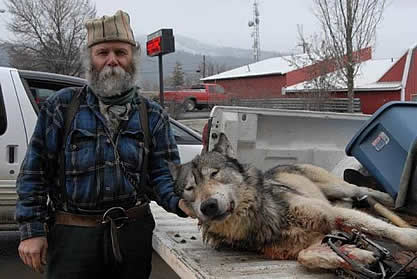
snow wolf

“How much more despicable can the DNR be when catering to their bear hounder puppet masters? You are not going to like the answer. The Wisconsin DNR is proposing to allow hounders to pit their dogs against wolves with very few restrictions and even believing that Judge Anderson’s recent ruling gives them full endorsement to do so. If you care anything for wolves or wildlife this document will make you furious:

http://dnr.wi.gov/About/NRB/2013/February/02-13-2B1.pdf

Essentially the DNR document that outlines this disgusting proposal uses hearsay from bear hounders and their propaganda to justify what they will be doing to wolves. They even contradict themselves numerous times while openly admitting that bear hounders broke the law by “accidentally” “trailing” wolves when they were and endangered species. To sum up what the document allows:

  • No breed restrictions will be in place. This means that hounders can choose breeds specifically bred to fight wolves to pit against them. This is perfectly fine according to the DNR because Wisconsin has a “law” that makes it illegal to kill wild animals with dogs. And we know how honest bear hounders are.
  • No leashes will be required. This is because we all know just how difficult it would be for the hounder to have to leave the comfort of their vehicle to actually observe their vicious dog packs terrorizing wildlife. The DNR then talks about how hard it would be for the hounder to “harvest the animal humanely” if they have to keep their dogs on a leash. As we all know they are such humanitarians and care so much about the pain and suffering they inflict on wildlife.
  • DNR will trust hounders to teach other hounders how to go after wolves with no certification required because the DNR has no “expertise” in this area? Really? So how are they expected to “enforce” what they have no knowledge of?
  • No restrictions about where hounders can let their dogs run rampant in wolf habitat. Remember that hounders will be allowed to let their packs of vicious dogs run completely unsupervised through wolf, bear, and other wildlife habitat during times that coincide with bear hibernation. Whose to say that hibernating bears will not be harassed or even killed by these packs of vicious dogs? The DNR obviously doesn’t care.
  • Finally they want to allow hounders to “train” their dogs on wolves with no restrictions right through the breeding, denning, and birthing seasons until the end of March. When pregnant females need to be preparing for the birth of their litters they will be harassed or even attacked by unlimited packs of vicious dogs. The fine print reads that they can “only” use packs of “six” dogs at a time to “train”but that they can switch out to new packs of dogs if the original pack gets tired. So essentially unlimited dogs will be allowed to go after wolves during this very sensitive time. The DNR even has the gall to call this a “reasonable fair-chase restriction.”

And here are the few “restrictions” the DNR will be placing on hounders:

  • Hounders cannot go after wolves at night. How generous of them.
  • Hounders cannot be reimbursed for dogs killed by wolves while hunting or training against wolves. But of course nothing stops a hounder from claiming that they were “hunting coyotes” so they can get that nice fat $2500 check for their “beloved” dog. In this document the DNR even goes so far as to repeat the bear hounder propaganda about how much they “care” about their dogs.
  • The DNR will trust hounders to “call off” their dogs when they think there are more than “1 or 2″ wolves in the vicinity. Of course how can they “call them off” when they are sitting in their trucks and the dogs are running rampant through the woods?
  • The the DNR brags about how there were “only” 11 dog “depredations” in 2012. They claim that hounders are being more “careful” about where they let their dogs run. That’s funny considering now they are going to now pit those very same dogs that they claim to “care” for up up against wolves in the same areas. Remember one of the reasons Rep. Scott Suder (R-ALEC) and his anti-wolf allies claimed for the the wolf kill bill was that wolves were “decimating” hunting dogs. Now the DNR refutes that. Wow.
  • Finally, hounders can use radio receiving devices to “track” their dogs but can’t use those same devices to seek out radio collared wolves. Of course again we all know how “honest” and “ethical” hounders are.

Then we have the DNR even going so far as to claim that it has been “legal” to “train” dogs against wolves since they were delisted on January 27, 2012. Really? At this time the wolf kill bill had not even passed and wolves were not considered a “game” species yet. So according to the DNR hounders could legally put their dogs up against wolves from the day they were removed from the ESA list? So does this mean hounders can “train” their dogs against any “non-game” species that they want with no restrictions? Then the DNR points out that hounders have let their dogs “unintentionally” chase wolves for years even when they were under federal protection. This is ok? Do these sadists have any rules they are required to follow?

Then we have the quote of all quotes. If you are drinking anything swallow it before reading this:

“We have strived to base our season on science, social desires, and regulations that are reasonable, practical, and acceptable.”

Reasonable, practical, and acceptable to whom? The only ones who find this abomination to be acceptable and reasonable are the bear hounders, their puppets in the DNR, and legislature. There is nothing “science” based about allowing packs of vicious dogs to go after wolves with almost no restrictions. When even the wolf hating states out west do not allow this that tells you something. Wisconsin is the ONLY state that allows this insanity and has the gall to call it “science.” And this garbage about “social desires” is just that, garbage. These anti-wolf zealots will never be satisfied as long as on free wolf is allowed to live. I have it from well placed sources that many within the DNR do not at all agree with the Stepp/Thiede propaganda and their zeal for allowing doges to go after wolves, but they are afraid to speak out. They need to speak out or this is only going to get more extreme and sadistic if that is even possible.

It is also shameful the the Department of Interior under “Cowboy Ken” Salazar has allowed plans like Wisconsin’s to be implemented unchecked. So much for that “five year monitoring” they claim to have in place. This also falls on President Obama who should be ashamed that this is happening under his watch. So much for being a “Progressive.”

The HSUS better use this document as a focal point of their lawsuit to prove this is nothing more than an eradication/revenge hunt to placate bear hounders and anti-wolf zealots. We must also be fully involved by attending the Spring Election of the “Conservation Congress” in each of our counties on April 8th. There will be several “advisory” questions about the use of dogs against wolves. We must mobilize ethical hunters and living wildlife advocates to attend and vote for proposing a law to ban the use of dogs against wolves, and vote against the various anti-wildlife proposals being offered. The DNR continues to spit in the face of anyone who cares about wolves and wildlife and it is up to us to stop them. No more apathy, the time is now to step up and take our wildlife and wild lands back from the bear hounders/trappers and their sadistic allies. The DNR can no longer use the veil of “science” to justify their pandering to the most sadistic and anti-wildlife groups out there.”

**Special thanks toWisconsin Wildlife Ethic-Vote Our Wildlife,  http://wiwildlifeethic.org/2013/02/16/wisconsin-dnr-proposes-allowing-packs-of-dogs-to-train-on-wolves-during-march-denning-and-birthing-season/ for providing this information!

Read Full Post »


woman riding wolf

As 2012 comes to an end, I’ve put together a few wolf sayings and poems.  As you read through them, please share one of your own or favorites with Wolf Preservation and all it’s viewers.  Thank you for ongoing support of  WOLF PRESERVATION!

“They’re throwing me to the wolves early, huh? I feel as though I can run with all those guys. All I need to do is go out and focus on my assignment, and I’ll be all right.”

 Mike Adams

“A Native American grandfather talking to his young grandson tells the boy he has two wolves inside of him struggling with each other. The first is the wolf of peace, love and kindness. The other wolf is fear, greed and hatred. “Which wolf will win, grandfather?” asks the young boy. “Whichever one I feed,” is the reply.”

 Native American Proverb

“Let’s not let the Farm Bureau ruin a good thing. The wolves are doing great. They’re staying away from livestock except in a few cases where Defenders compensates for any losses. The ecosystem is returning to a more healthy, natural state. Tourism is up and the wolves are adding to the region’s economy. Why negate 20-some years of work and lots of money just to start over?”

 Bob

The wolf changes his coat, but not his disposition.”

 Proverb

For the strength of the Pack is the Wolf…
And the strength of the Wolf is
the Pack

“Wolves are mirror images of our soul”

“A Wolf, it is said, can hear a cloud pass overhead”

“He who cannot howl, will not find his pack.”

“We have doomed the Wolf not for what it is, but for what we have
deliberately and mistakenly perceived it to be..the mythologized epitome of a
savage, ruthless killer..which is, in reality no more than a reflexed images of
ourself”-Farley Mowat

The difference between men and Wolves is that Wolves are more humane.

While we call ourselves civilized, we kill our own. The Wolf is content to lay
at our feet, with the rank of the uncivilized, yet they will not destroy their
own.

Wolf Prayer
Follow me down the path
I will walk beside you
Guiding and
showing you the way
I will not leave you
I will be standing on the path
watching you
If you ever feel alone
Close your eyes
You will see 6 sets
of foot prints
2 belonging to you, 4 to me
Then you will know that I have
not left you.

**Some of these quotes were provided by http://www.angelfire.com/tx2/wolveswithin/Quotes.html so special thanks!


Read Full Post »


Wolf supporters, as the wolf hunt continues, even when a certain quota is reached, many do not realize how the loss of a pack member effects the rest of their unit.  With the loss of any older, more experienced members of a wolf pack, the younger ones struggle to learn about how to hunt.  Eventually, this can lead to starvation.  I encourage you to share your comments, feedback, and tell me how losing a member of a wolf pack can effect rest of the pack after reading the article below:

November 20th, 2012

“Wolf hunting season has begun in several states, and hundreds of the animals already have been killed. It’s the first time in years that wolves have been legally hunted in Wyoming and Minnesota, and the decision has drawn the ire of many conservationists and some scientists.

Gray wolves have long been a point of contention between ranchers, who see them as pests that eat their livestock, and conservationists, who see the critical part the play in the ecosystem. Recently, as state laws changed and the animals were taken off the federal endangered species list, hunters have taken aim.

About 50 wolves have been killed in Wyoming, where they can be shot on sight without a permit in about 85 percent of the state, according to news reports. Seven of the dead wolves once lived in Yellowstone National Park, where wolves are still protected; they wandered outside the park and were legally shot, Reuters reported. (Scientists put collars on the Yellowstone wolves as part of a park research program.)

Wyoming’s wolf population was estimated at 328 before the hunt. The state’s plan, approved by the U.S. Fish and Wildlife Service, requires that the population of wolves remain above 100 outside Yellowstoneand the Wind River Reservation. That figure is cited by conservationists as dangerously low.

In nearby Idaho, 96 wolves have been killed, according to the Coeur d’Alene Press.

During last year’s hunting season, 545 wolves in Idaho and Montana were killed. This year both states got rid of their statewide quotas, or upper limit on number of kills, according the Center for Biological Diversity. The center, along with the Natural Resources Defense Council and other environmental groups, is suing the U.S. Fish and Wildlife Service, accusing it of failing to adequately protect the animals. Other suits are pending in various states.

Back from the brink?

Wolves were hunted, trapped and poisoned to the brink of extinction in the 20th century, and they rebounded only after being protected under the Endangered Species Acts of the 1960s and subsequently being re-introduced to Yellowstone. Much of the Northern Rockies sub-population of gray wolves lost federal protections last year following a controversial rider placed in U.S. budget legislation.

The wolf hunt in Minnesota is also under way and has met with opposition.  The 147 wolves killed in that state are about twice what the Department of Natural Resources expected, according to the Associated Press. The second phase of the hunting season begins Saturday (Nov. 24), during which wolves can be trapped, a technique that conservationists and some hunters call cruel.

Minnesota’s earlier wolf-management plan stated that the animals couldn’t be hunted for five years after being removed from the federal protection provided by the Endangered Species Act — which happened in January, 2012. Instead of opening a formal comment period, the DNR offered only an online survey, according to the Center for Biological Diversity. More than 75 percent of people taking the poll opposed the wolf hunt: Of 7,351 responses, only 1,542 people supported a wolf season. Even so, that five-year waiting period was not upheld.

In Wisconsin, hunters had killed 83 wolves as of Nov. 18, according to the Badger Herald. The hunting season there will run through the end of February unless hunters reach the 116-wolf quota before then.”

**Special thanks to “Live Science” for providing this information! (http://www.livescience.com/24942-wolf-hunt-begins.html)

Read Full Post »


 While this an older story, let’s not forget the positive impacts wolves have in Yellowstone.  Take a look and share your comments!

December 30,  2011  By

“Fifteen years after wolves were returned to Yellowstone National Park the health  of the overall ecosystem is overwhelming and obvious.

This is the observation made by scientists in a new report published in the  journal Biological Conservation.

For the first time in 70 years, the young aspen and willow trees are not  being eaten before they have a chance to flourish and grow by the elk  populations in northern Yellowstone, thanks to the introduction of wolves back  into the park. The elk are beginning to decline and are also beginning to fear  wolf predation.

As such, trees and shrubs are recovering along some streams, which in turn  provide improved habitat for beaver and fish, and provide more food for birds  and bears.

“Yellowstone increasingly looks like a different place,” said William Ripple,  a professor in the Department of Forest Ecosystems and Society at Oregon State  University, and lead author of the study. “These are still the early stages of  recovery, and some of this may still take decades. But trees and shrubs are  starting to come back and beaver numbers are increasing. The signs are very  encouraging.”

The findings released in the report are based on a recent analysis conducted  by Oregon State University researchers as well as a review of several other  studies.

The report outlines four streams that were studied in the Lamar River basin.  100 percent of the tallest young aspen sprouts were being browsed in 1998, but  that number has dropped to just 20 percent in 2010. As a result of the total  browsing by elk, the new aspen trees were unable to grow and expand, grinding to  a halt in the mid to late 1990s. And all because the wolves weren’t around to  snack on the snackers.

This is the observation made by scientists in a new report published in the  journal Biological Conservation.

Among the observations in this report:

  • Since their reintroduction in 1995-96, the wolf population generally  increased until 2003, forcing changes in both elk numbers and behavior due to  what researchers call the “ecology of fear.”
  • The northern range elk populations decreased from more than 15,000  individuals in the early 1990s to about 6,000 last year, and remaining elk now  have different patterns of movement, vigilance, and other traits.
  • By 2006, some aspen trees had grown tall enough they were no longer  susceptible to browsing by elk, and cottonwood and willow were also beginning to  return in places.
  • Improved willow growth is providing habitat that allows for a greater  diversity and abundance of songbirds such as the common yellowthroat, warbling  vireo and song sparrow.
  • The number of beaver colonies in the same area increased from one in 1996 to  12 in 2009, with positive impacts on fish habitat.
  • Increases in beaver populations have strong implications for riparian  hydrology and biodiversity – Wyoming streams with beaver ponds have been found  to have 75 times more abundant waterfowl than those without.
  • The coyote population decreased with the increase in wolf numbers,  potentially allowing more small mammals that provide food for other avian and  mammalian predators, such as red foxes, ravens and bald eagles.

Evidence of improved ecosystem health following the return of wolves is “becoming increasingly persuasive,” the scientists said in their report, though  they also note that an increasing population of bison is continuing to impact  young woody plants in the Lamar Valley.

“The wolves have made a major difference in Yellowstone,” said Robert  Beschta, a professor emeritus of forestry at OSU and co-author on the study.

“Whether similar recovery of plant communities can be expected in other  areas, especially on public lands outside national parks, is less clear,” Beschta said. “It may be necessary for wolves not only to be present but to have  an ecologically effective density, and mechanisms to deal with human and wolf  conflicts also need to be improved.”

“Predation and predation risk associated with large predators appear to  represent powerful ecological forces,” the researchers concluded in their  report, “capable of affecting the interactions of numerous animals and plants,  as well as the structure and function of ecosystems.”

Read Full Post »


“Living With Wolves” sums up the answer to this question nicely (http://www.livingwithwolves.org/index.html)

Do wolves kill for sport?

“Answer: Wolves, like all wild carnivores, do not kill for sport. They kill to sustain themselves. Though it is uncommon, “surplus killing” (killing more prey animals than can be immediately consumed) has been observed in many predator species. If given the opportunity to secure future meals, many animals will sometimes do so. It is a survival mechanism. It is this survival tactic that has led to the misplaced notion of “sport killing” arises. It has nothing to do with sport. Only people kill for sport.

Surplus killing occurs when prey is at an unusual disadvantage, offering an opportunity to significantly lower both the risk of injury to the predator and the amount of energy required to kill the prey. It is for this reason that surplus killing by wolves, although rare, occurs more with livestock than it does with wild prey.

Typically, when a pack of wolves kills an elk or a deer, by the time the pack has subdued its prey, the rest of the herd has fled and is no longer in the area. This is not the case with livestock introduced by humans. Unlike their wild cousins, livestock have lost much of their survival instinct. Spending a good amount of their existence fenced in or being herded, their reaction to a predator in their midst is very different from that of wild prey. Calves and yearling cattle, for instance, flee during the chaos of the chase, but once the wolves have made a kill, rather than continuing to move away from danger, they have been known to stand nearby, watching in curiosity, perhaps unable to comprehend the threat and what might happen next. Instead of fleeing, as a wild prey animal would, sheep, when confronted with danger, often run in frantic circles, triggering predatory instinct in wolves and increasing the opportunity for multiple kills.

Wolves are further mischaracterized as killing for sport when people happen upon a dead animal or animals, killed by wolves, but the wolves are no longer present. This leads people to assume that the wolves abandoned their kill and therefore, must have killed for recreation or pleasure. This is far from the reality. The fact is that wolves are easily frightened away from their kill by the approach of human beings, whom they regard as a predator and tend to fear. Wolves may be also chased away by other, larger carnivores, eager to take advantage of an easy meal. So a presumably abandoned carcass is not what it seems. In nature, where the margins of survival are narrow, surplus food is not forgotten. Research shows that wolves return repeatedly, almost always eating the entire carcass.

For wolves, more so than bears and mountain lions, hunting can be very risky work. Unlike the larger, solitary mountain lion that relies on the element of surprise, ambushing and then quickly overpowering its prey, wolves work together as a pack, chasing their prey and wearing it down, looking for vulnerabilities. This is very difficult and dangerous, and they are often fatally wounded while hunting, gored by antlers or horns or kicked by a hoof. 80 to 90% of the time, their efforts to make a kill fail. When they succeed, if any food is left unfinished by wolves, it feeds scavengers or other animals.

Misinterpretation of animal behavior and motives often perpetuate a bad reputation for wolves, but reality does not support the theory that wolves kill for sport.”

Read Full Post »


Article by: DOUG SMITH, Star Tribune

  • Updated: June 22, 2012 – 9:25 AM

Critics call methodology flawed. DNR says the hunt is on.

“About 80 percent of the more than 7,000 people responding to an online survey by the Minnesota Department of Natural Resources (DNR) opposed a wolf hunting and trapping season.

But the results won’t stop this fall’s planned wolf season.

The question of whether to have a season was resolved by the Legislature, said Dennis Simon, DNR wildlife chief. “It was a public input process, it wasn’t a poll. … The Legislature and governor directed us to have a wolf season. So we will have a season.”

The DNR’s survey, which was not limited to Minnesota residents, closed Wednesday after accepting public comments for a month. The agency received 7,351 responses — 1,542 people supported a wolf season, 5,809 opposed it.

“Frankly, I’m not a bit surprised,” said Howard Goldman, senior Minnesota director of the Humane Society of the United States, which opposes the wolf hunting-trapping season.

Mark Johnson, executive director of the Minnesota Deer Hunters Association, which supports the wolf season, said the survey is flawed and doesn’t reflect public opinion in northern Minnesota.

“I took the survey, and it didn’t ask where you live,” said Johnson. “It’s totally unscientific. What’s the use of it when it’s not limited to Minnesotans? I’d say zip.”

Simon said it’s uncertain whether the DNR will be able to determine how many comments came from outside Minnesota. “It was wide open — anyone could go on the site and take it,” he said.

Goldman said his group did not encourage out-of-state anti-hunting groups to take the DNR’s online survey. “I thought it should reflect the opinions of Minnesotans,” he said.

Nancy Gibson, co-founder of the International Wolf Center in Ely, said the results clearly indicate the public is still divided on the question of a wolf hunt, even if the survey was hijacked by anti-hunting groups. “It’s a surprise to me,” she said of the number who responded, and the overwhelming anti-hunting sentiment they expressed.

Both Johnson and Goldman had wanted the DNR to hold public meetings around the state, which the DNR decided not to do, citing time constraints.

Simon said the agency had hoped to get public reaction to the specific wolf hunting proposals. The agency will analyze those comments and release details of the survey next week.

The DNR also plans to finalize the wolf hunting rules next week, Simon said, so that the regulations can be included in the DNR’s hunting and trapping season regulation handbook.

The proposal was to split the season into two parts, an early hunting-only season, beginning Nov. 3, to coincide with the firearms deer season and a late one, Nov. 24 to Jan. 6, that would permit trapping and hunting. DNR officials have suggested the season would close if a 400-wolf quota is reached. Simon wouldn’t say whether the final rules will deviate from those proposals.”

Staff writer Josephine Marcotty contributed to this report. Doug Smith • 612-673-7667

Read Full Post »

« Newer Posts - Older Posts »