Feeds:
Posts
Comments

Archive for the ‘Uncategorized’ Category


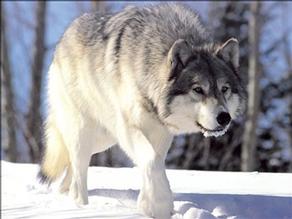
Pat Goodmann, head animal curator at Wolf Park in Battleground, Indiana weighs in on the film, “The Grey.”  Pat was a guest column in the Lafayette Journal and Courier posted below:

“The Grey,” a movie about an oil drilling team stranded by a plane crash in the Alaskan wilderness that is hunted by a pack of wolves, was released today. Dearfilm.net calls it “a brutal, devastating treatise on nature and the divine, life and death.”

Wolves being portrayed inaccurately as vicious hunters is nothing new, but that’s not why I wrote this. But did filmmakers get away with ignoring basic ethical standards of animal treatment?

“The Grey” is not just a film that shows actors killing wolves on the screen. For the filming, four wild wolves that had been trapped and killed in Canada were utilized, according to The Province. Meat from two of those wolves was eaten on set.

Pat Goodmann, Wolf Park’s primary wolf curator, contributes her two cents in a guest column in the Lafayette Journal and Courier.

“Wolves being portrayed inaccurately as vicious hunters is nothing new, but that’s not why I wrote this. But did filmmakers get away with ignoring basic ethical standards of animal treatment?”

Dermot Mulroney, during an interview on “Jimmy Kimmel Live,” said that director Joe Carnahan had wolf meat served to the cast in the form of a stew and barbecue.

 A source at the National Wolfwatcher Coalition informed Wolf Park that the animal handlers used on the set of the film were not on the approved handler list. On top of that, the film’s publicist, Liz Biber, was so unaware of how wild wolves react to humans that she asked Wolfwatcher if they could get OR-7, the first wild wolf to cross into California in 80 years, to walk the red carpet at the movie’s opening. A little ironic, considering that the film portrays wolves as violent mankillers.

 Do wild wolves pose a serious threat to humans? Just because an animal can potentially be dangerous doesn’t mean that it necessarily will be. Dave Mech, one of the top wolf researchers, says there were only about two dozen nonfatal attacks in North America on humans in the past century. Those wolves had not only become habituated to humans, but associated them with food.

On Isle Royale, the late Purdue University professor, Durward Allen, started a research project on wolf and moose ecology more than 50 years ago, which continues today. Rangers, researchers and campers hike the island through wolf territories regularly. No humans have ever been harmed by the Isle Royale wolves.

 Using “The Grey” to understand wolves is like using Hannibal Lecter to understand humans. This film, which perpetuates the myth that wolves and humans cannot coexist, is being released at a time when wolves have been taken off of the endangered species list. We fear that conservation efforts will be hindered by misinformation disseminated by popular fiction such as “The Grey,” and, of course, Wolf Park deplores harming of animals for human entertainment.”  

**Special thanks to

Jconline.com for providing this information (http://www.jconline.com/article/20120127/OPINION03/120126023/Guest-column-Can-t-get-past-ethical-Grey-area) and to Pat Goodmann, head animal curator of Wolf Park in Battle Ground for being guest column (http://blog.wolfpark.org/?p=652).  Wolf Preservation supports Wolf Park so please visit their site!

Read Full Post »

Wisdom of Wolves


It’s a society where teamwork, loyalty and communication are the norm rather than the exception. Sound like utopia? Actually, it’s already present in nature – in a wolf pack. The wolf pack knows who it is. Those in the pack exist for each other.

Twyman Towery, Ph.D., a professional speaker and consultant who studied the lessons of leadership in nature, has captured them in a book for Simple Truths called Wisdom of Wolves. Twyman shares the parallels between the wolf pack and human behavior…in business life, family life, and personal life.


An excerpt from
Wisdom of Wolves
by Twyman Towery

The attitude of the wolf can be summed up simply: it is a constant visualization of success. The collective wisdom of wolves has been progressively programmed into their genetic makeup throughout the centuries. Wolves have mastered the technique of focusing their energies toward the activities that will lead to the accomplishment of their goals.

Wolves do not aimlessly run around their intended victims, yipping and yapping. They have a strategic plan and execute it through constant communication. When the moment of truth arrives, each understands his role and understands exactly what the pack expects of him.

The wolf does not depend on luck. The cohesion, teamwork and training of the pack determines whether the pack lives or dies.

There is a silly maxim in some organizations that everyone, to be a valuable member, must aspire to be the leader. This is personified by the misguided CEO who says he only hires people who say they want to take his job. Evidently, this is supposed to ensure that the person has ambition, courage, spunk, honesty, drive – whatever. In reality, it is simply a contrived situation, with the interviewee jumping through the boss’s hoops. It sends warnings of competition and one-upmanship throughout the organization rather than signals of cooperation, teamwork and loyalty.

Everyone does not strive to be the leader in the wolf pack. Some are consummate hunters or caregivers or jokesters, but each seems to gravitate to the role he does best. This is not to say there are not challenges to authority, position and status – there are. But each wolf’s role begins emerging from playtime as a pup and refines itself through the rest of its years. The wolf’s attitude is always based upon the question, “What is best for the pack?” This is in marked contrast to us humans, who will often sabotage our organizations, families or businesses, if we do not get what we want.

Wolves are seldom truly threatened by other animals. By constantly engaging their senses and skills, they are practically unassailable. They are masters of planning for the moment of opportunity to present itself, and when it does, they are ready to act.

Because of training, preparation, planning, communication and a preference for action, the wolf’s expectation is always to be victorious. While in actuality this is true only 10 percent of the time or less, the wolf’s attitude is always that success will come – and it does.

(http://store.simpletruths.com/wisdom-of-wolves-with-free-dvd-and-wolf-credo-print-p2190.aspx?cm_mmc=CheetahMail-_-TH-_-01.19.12-_-TWOW-CorpLdr&utm_source=CheetahMail&utm_medium=01.19.12&utm_campaign=TWOWca)

Wisdom of Wolves

Get a free print with this book today!
Shop Now


Read Full Post »


“HELENA — Montana is looking to recreational hunters for help in enforcing more of its wildlife management policies, but one regulator worries they are being asked to cross an ethical line in doing so.

The question is whether the state is unwittingly putting those hunters in a fix: Does their new role fall within ethical hunting guidelines or does it reduce them to wildlife management mercenaries whose actions could give hunting a black eye? That’s the concern of Fish, Wildlife and Parks commissioner Ron Moody, who recently questioned whether the agency’s policies and proposals are asking hunters disregard what it means to be an ethical hunter. “I think we’re either at those limits, or what I really think is we’ve gone past them,” Moody said. FWP already uses hunters to help keep the wolf population down and in game-damage hunts to disperse elk or deer that are damaging private property.

Now the commission is considering expanding their role. In December, commissioners passed a policy allowing hunters to kill wolves that prey on livestock, a task that had been exclusively filled by wildlife enforcement officials. The commission is now considering one proposal that would extend this year’s wolf hunt well into the animals’ breeding season and another that would use hunters to shoot bison that roam beyond designated areas. The first proposal would extend the wolf hunt in the Upper Bitterroot Valley from Feb. 15 to April 1. Hunters have killed four gray wolves out of a quota of 18 there so far, and the extension of the season would help fill that quota with the aim of helping the declining elk herds there. But wolves aren’t the top elk predator in that part of the Bitterroot – mountain lions have that distinction – and April 1 is well into the wolves’ breeding season when females are near the end of their pregnancies. Moody said the sportsman’s code mandates that hunters don’t shoot game in their reproductive season. “It’s just one of those things you don’t do,” he said.

The second proposal Moody took issue with is to allow recreational hunters to shoot wild Yellowstone National Park bison that wander beyond designated areas north of the park and outside of areas where the animals are transplanted, such as two northeastern Montana Indian reservations. FWP Director Joe Maurier has said the proposal was written with the intent of trying to increase public tolerance for expanding the areas outside the park where bison can roam. Plans to reintroduce bison to Montana’s landscape have been met with stiff resistance from the agricultural industry, which fears the spread of disease and property damage. But Moody said killing bison that stray outside a containment area is more akin to vermin control than fair-chase hunting in which hunters pursue free-roaming game animals. “It makes a difference what you do before the public and then go call yourself a fair-chase hunter. There’s a jury out there judging you,” he added.

The commission gave initial approval to the wolf and bison proposals 3-2 and 4-1. They now go out to public for comment before a final vote in February FWP spokesman Ron Aasheim said it is the agency’s policy to use hunters to help manage wildlife populations when appropriate in a responsible and ethical manner. “Hunters have asked for this opportunity. They appreciate the opportunity to take those bison and help manage wolves,” he said. As far as hunting wolves while the females are pregnant, Aasheim said the agency had considered the implications. But this is a special, one-time proposed extension in one specific area – and the plan has not gotten final approval, he said. The man who wrote the book on ethical and fair-chase hunting, Jim Posewitz, said public perception is very important for hunters. The FWP’s use of hunters to enforce wildlife management policies can work, provided the agency uses the right hunters, he said. FWP should provide training so the hunters used have an understanding of the last century’s conservation efforts in North America and also understand that the overall goal is to have sustainable, manageable wildlife populations, he said. “We need to make sure they’re very elite and a very respected group of hunters. We’re not sending out assassins or SWAT teams. We are sending out sensitive, trained hunters to handle a very sensitive situation,” Posewitz said. Aasheim said additional hunting training has previously been suggested, but has not been implemented.

Currently, the state provides a basic hunter education course and each person who participates in the annual bison hunt receives a 30-minute DVD that discusses ethics and hunting, he said. Posewitz worked for the FWP for 32 years and founded Orion – The Hunters Institute, an organization that advocates for ethical hunting. More than 600,000 copies of his book, “Beyond Fair Chase: The Ethic and Tradition of Hunting” have been handed out as part of hunter-education programs. He cited Helena’s program to control urban deer as a model of how it can be done right. Each year, the city receives authorization from FWP to kill a number of deer to maintain a manageable density of animals within the city. This year, that number is 220. “They’re not out there liquidating the deer. They’re keeping the deer in balance with the carrying capacity of the city, and they’re doing an excellent job of that,” Posewitz said. ”

**Special thanks to “Billings Gazette” for providing this information!

Read Full Post »


“With the arrival of the first wolf in California since the 1920s, no doubt the California Department of Game and Fish is receiving many comments from the public. The quality of this support, opposition and advice probably varies all over the map (the maps in our heads). Norman Bishop, who played a key role as a Yellowstone Park naturalist educating the public about the wolves that were coming to Yellowstone and then after their arrival until 1997, has compiled a fact-filled piece “What Good are Wolves.” This morning he announced he had sent it to the Director of the California Department of Fish and Game. In the current politically charged and cognitively challenged atmosphere of wolf mythology, the contents of this letter should be shared with the public because summarizes what had been learned in recent years so compactly and lucidly. What good are wolves? Compiled by Norman A. Bishop In 1869, General Phil Sheridan said, “The only good Indians I ever saw were dead.” Others said, “The only good wolf is a dead wolf.” Barry Lopez wrote of an American Pogrom, not only of Native Americans and wolves, but of the bison on which both depended. Between 1850 and 1890, 75 million bison were killed, mostly for their hides; perhaps one or two million wolves. “Before about 1878, cattlemen were more worried about Indians killing their cattle than they were about wolves. As the land filled up with other ranchers, as water rights became an issue, and as the Indians were removed to reservations, however, the wolf became, as related in Barry Lopez’s book, Of Wolves and Men, ‘an object of pathological hatred.’”

 Lopez continues: “(T)he motive for wiping out wolves (as opposed to controlling them) proceeded from misunderstanding, from illusions of what constituted sport, from strident attachment to private property, from ignorance and irrational hatred.” In 1884, Montana set a bounty on wolves; in the next three years, 10,261 wolves were bountied. “In 1887, the bounty was repealed by a legislature dominated by mining interests.” *** “By 1893,… desperate stockmen were reporting losses that were mathematical impossibilities. The effect of this exaggeration was contagious. The Montana sheep industry, which up to this time had lost more animals to bears and mountain lions than to wolves, began to blame its every downward economic trend on the wolf. *** Men in a speculative business like cattle ranching singled out one scapegoat for their financial losses.” Not until wolves were functionally extinct from much of the West did anyone begin to ask, “What good are wolves?” to study wolves, and to report their beneficial effects on their prey species and on the ecosystems where they lived. Adolph Murie realized that wolves selected weaker Dall sheep, “which may be of great importance to the sheep as a species.” His brother, Olaus J.Murie, thought predators may have an important influence during severe winters in reducing elk herds too large for their winter range.

Douglas H. Pimlott pointed out that wolves control their own densities . Yellowstone National Park wolf project leader Douglas W. Smith says that restoration of wolves there has added exponentially to our knowledge of how natural ecosystems work. It has also reminded us that predation is one of the dominant forces in all of nature, present in ecosystems worldwide over millions of years. Bob Crabtree and Jennifer Sheldon note that predation by wolves is important to the integrity of the Yellowstone ecosystem, but we should realize that, before their return to Yellowstone’s northern range, 17 mountain lions there killed 611 elk per year, 60 grizzly bears killed 750 elk calves annually, and 400 coyotes killed between 1100 and 1400 elk per year. P.J. White et al wrote that climate and human harvest account for most of the recent decline of the northern Yellowstone elk herd, coupled with the effects of five predators: wolves, grizzly bears, black bears, cougars, and coyotes. These are parts of a system unique in North America by its completeness.

Joel Berger et al demonstrated “a cascade of ecological events that were triggered by the local extinction of grizzly bears…and wolves from the southern greater Yellowstone ecosystem.” In about 75 years, moose in Grand Teton National Park erupted to five times the population outside, changed willow structure and density, and eliminated neotropical birds; Gray Catbirds and MacGillivray’s Warblers.

Dan Tyers informs us that wolves haven’t eliminated moose from Yellowstone. Instead, burning of tens of thousands of acres of moose habitat in 1988 (mature forests with their subalpine fir) hit the moose population hard, and it won’t recover until the forests mature again. Mark Hebblewhite and Doug Smith documented that wolves change species abundance, community composition, and physical structure of the vegetation, preventing overuse of woody plants like willow, reducing severity of browsing on willows that provide nesting for songbirds. In Banff, songbird diversity and abundance were double in areas of high wolf densities, compared to that of areas with fewer wolves . Fewer browsers lead to more willows, providing habitat for beaver, a keystone species, which in turn create aquatic habitat for other plants and animals. By reducing coyotes,which were consuming 85% of the production of mice in Lamar Valley, restored wolves divert more food to raptors, foxes, and weasels. By concentrating on killing vulnerable calf elk and very old female elk, wolves reduce competition for forage by post-breeding females, and enhance the nutrition of breeding-age females. Wolves promote biological diversity, affecting 20 vertebrate species, and feeding many scavengers (ravens, magpies, pine martens, wolverines, bald eagles, gray jays, golden eagles, three weasel species, mink, lynx, cougar, grizzly bear, chickadees, Clark’s nutcracker, masked shrew and great grey owl). In Yellowstone, grizzly bears prevailed at 85% of encounters over carcasses, and they usurp nearly every kill made by wolves in Pelican Valley from March to October. Some 445 species of beetle scavengers benefit from the largess of wolf-killed prey. In Banff and Yellowstone, no other predator feeds as many other species as do wolves. Wolf-killed elk carcasses enhance local levels of soil nutrients; 20-500% greater nitrogen, phosphorous and potassium. Dan Stahler and his colleagues saw an average of four ravens on carcasses in Lamar Valley pre-wolf. Post-wolf, that increased to 28 average, with as many as 135 seen on one carcass. Eagles seen on carcasses increased from an average of one per four carcasses to four per carcass. P.J. White and Bob Garrott observed that, by lowering elk numbers, wolves may contribute to higher bison numbers; by decreasing coyote populations, result in higher pronghorn numbers. They also said wolves may ameliorate ungulate-caused landscape simplification. Daniel Fortin and others saw that wolves may cause elk to shift habitat, using less aspen, and favoring songbirds that nest in the aspen. Christopher Wilmers and all tell us that hunting by humans does not benefit scavengers the way wolf kills do. Carrion from wolf kills is more dispersed spatially and temporally than that from hunter kills, resulting in three times the species diversity on wolf kills versus hunter kills. Wolves subsidize many scavengers by only partly consuming their prey; they increase the time over which carrion is available, and change the variability in scavenge from a late winter pulse (winterkill) to all winter. They decrease the variability in year-to-year and month to-month carrion availability. Chris Wilmers and Wayne Getz write that wolves buffer the effects of climate change. In mild winters, fewer ungulates die of winterkill, causing loss of carrion for scavengers. Wolves mitigate late-winter reduction in carrion by killing ungulates all year. Mid-sized predators can be destructive in the absence of large keystone predators. In the absence of wolves, pronghorn have been threatened with elimination by coyotes. Wolves have reduced coyotes, and promoted survival of pronghorn fawns. Pronghorn does actually choose the vicinity of wolf dens to give birth, because coyotes avoid those areas, according to Douglas W. Smith. Mark Hebblewhite reviewed the effects of wolves on population dynamics of large-ungulate prey, other effects on mountain ecosystems, sensitivity of wolf-prey systems to top-down and bottom-up management, and how this may be constrained in national park settings. Then he discussed the implications of his research on ecosystem management and long term ranges of variation in ungulate abundance. He cites literature that suggests that the long-term stable state under wolf recovery will be low migrant elk density in western montane ecosystems. Noting that wolves may be a keystone species, without which ungulate densities increase, vegetation communities become overbrowsed, moose and beaver decline, and biodiversity is reduced. But as elk decline, aspen and willow regeneration are enhanced. In this context, wolf predation should be viewed as a critical component of an ecosystem management approach across jurisdictions. Chronic wasting disease could wipe out our elk and deer. Tom Hobbs writes that increasing mortality rates in diseased populations can retard disease transmission and reduce disease prevalence. Reduced lifespan, in turn, can compress the time interval when animals are infectious, thereby reducing the number of infections produced per infected individual. Results from simulations suggest that predation by wolves has the potential to eliminate CWD from an infected elk population. Wildlife veterinarian Mark R. Johnson writes that wolves scavenge carrion, such as aborted bison or elk calves. By eating them, they may reduce the spread of Brucellosis to other bison or elk. Scott Creel and John Winnie, Jr. report that wolves also cause elk to congregate in smaller groups, potentially slowing the spread of diseases that thrive among dense populations of ungulates. John Duffield and others report that restoration of wolves has cost about $30 million, but has produced a $35.5 million annual net benefit to greater Yellowstone area counties, based on increased visitation by wolf watchers. Some 325,000 park visitors saw wolves in 2005. In Lamar Valley alone, 174,252 visitors observed wolves from 2000 to 2009; wolves were seen daily in summers for nine of those ten years. Wolves cause us to examine our values and attitudes. Paul Errington wrote, “Of all the native biological constituents of a northern wilderness scene, I should say that the wolves present the greatest test of human wisdom and good intentions.” Aldo Leopold, father of game management in America, said, “Harmony with land is like harmony with a friend; you cannot cherish his right hand and chop off his left. That is to say, you cannot love game and hate predators; … The land is one organism.” Leopold also pointed out that the first rule of intelligent tinkering with natural ecosystems was to keep all the pieces. Eliminating predators is counter to that advice. Wolves remind us to consider what is ethically and esthetically right in dealing with natural systems. As Leopold wrote in his essay “The Land Ethic,” “A land ethic …does affirm (animals’) right to continued existence…in a natural state.” He concluded, “A thing is right when it tends to preserve the integrity, stability, and beauty of the biotic community. It is wrong when it tends otherwise.” What good are wolves? References cited Berger, Joel , Peter B. Stacey, Lori Bellis, and Matthew P. Johnson. 2001. A mammalian predator-prey imbalance: grizzly bear and wolf extinction affect avian neotropical migrants.

Ecol. Applications 11(4):947-960. Crabtree, Robert L., and Jennifer W. Sheldon. Coyotes and Canid Coexistence in Yellowstone. Pages 127-163 in Clark, Tim W., A. Payton Curlee, Steven C. Minta, and Peter M. Kareiva. 1999. Carnivores in Ecosystems: The Yellowstone Experience. Yale U. Press. 429 pp. Creel, Scott, and J.A. Winnie, Jr. 2005. Responses of elk herd size to fine-scale spatial and temporal variation in the risk of predation by wolves. Animal Behaviour 69:1181-1189. Duffield, J., C. Neher, and D. Patterson. 2006. Wolves and People in Yellowstone: Impacts on the Regional Economy. Department of Mathematical Sciences, The University of Montana. Errington, Paul L. 1967. Of Predation and Life. Iowa State Univ. Press, Ames. 277 p. Fortin, D., H. Beyer, M.S. Boyce, D.W. Smith, T. Duchesne, and J.S. Mao. Wolves influence elk movements: behavior shapes a trophic cascade in Yellowstone National Park. Ecology 86(5):1320-30. Hebblewhite, Mark. 2010. Predator-Prey Management in the National Park Context: Lessons from a Transboundary Wolf, Elk, Moose and Caribou System (Pp. 348-365 in Transactions of the 72nd North American Wildlife and Natural Resources conference. Hebblewhite, Mark, and Douglas W. Smith. 2007. Wolf Community Ecology: Ecosystem Effects of Recovering Wolves in Banff and Yellowstone National Parks in Musiani, M., and P.C. Paquet. The World of Wolves: new perspectives on ecology, behaviour, and policy. U. of Calgary Press. Hobbs, N. Thompson. 2006. A Model Analysis of Effects of Wolf Predation on Prevalence of Chronic Wasting Disease in Elk Populations of Rocky Mountain National Park. Johnson, Mark R. 1992. The Disease Ecology of Brucellosis and Tuberculosis in Potential Relationship to Yellowstone Wolf Populations. Pp. 5-69 to 5-92 in Varley, J.D., and W.G. Brewster, Ed’s. Wolves for Yellowstone? A report to the United States Congress. Volume IV, Research and Analysis. Leopold, Aldo. 1938. Unpublished essay, “Conservation,” on Pp. 145-6 of Round River, 1953.) Leopold, Aldo. 1949. A Sand County Almanac. Oxford University Press. P. 204 and Pp. 224-225. Lopez, Barry H. 1978. Of Wolves and Men. Charles Scribner’s Sons. New York. 308 p. Murie, Adolph. 1944. The Wolves of Mount McKinley. Fauna of the National Parks of the United States. Fauna Series No. 5. USGPO, Washington, D.C. Murie, Olaus J. The Elk of North America. 1951. Stackpole Co., Harrisburg, Pa., and Wildl. Mgmt. Inst., Wash., D.C. 376 pp. Pimlott, Douglas H. 1967. Wolf Predation and Ungulate Populations. Amer. Zool. 7: 267-78. Smith, Douglas W. Personal communication. Stahler, Daniel, Bernd Heinrich, and Douglas Smith. 2002. Common ravens, Corvus corax, preferentially associate with grey wolves, Canis lupus, as a foraging strategy in winter. Animal Behaviour 64:283-290. El Sevier. Tyers, Daniel B. 2003. Winter Ecology of Moose on the Northern Yellowstone Winter Range. Ph.D. Dissertation, MSU, Bozeman. White, P.J., and R.A. Garrott. 2005. Yellowstone’s ungulates after wolves – expectations, realizations, and predictions. Biological Conservation 125:141-52. White, P.J., Robert Garrott, and Lee Eberhardt. 2003. Evaluating the consequences of wolf recovery on northern Yellowstone elk. YCR-NR-2004-02. Wilmers, C.C., and W.M. Getz. 2005. Gray wolves as climate change buffers. PLoS Biology 3 (4):e92. Wilmers, C.C., R.L. Crabtree, D.W. Smith, K.M Murphy, W.M. Getz. 2003. Trophic facilitation by introduced top predators: grey wolf subsidies to scavengers in Yellowstone National Park. Journal of Animal Ecology 72(6):909-16. About the compiler After university work in Botany, Zoology, Forest Recreation, and Wildlife Management, and 4 years as a naval aviator, Norman A. Bishop was a national park ranger for 36 years. He was the principal interpreter of wolves and their restoration at Yellowstone National Park from 1985 to 1997, when he retired to Bozeman. For his educational work on wolves, he received a USDI citation for meritorious service. He also received the National Parks and Conservation Association’s 1988 Stephen T. Mather Award, the Greater Yellowstone Coalition’s 1991 Stewardship Award, and the Wolf Education and Research Center’s 1997 Alpha Award. He led many field courses on wolves for the Yellowstone Association Institute until 2005. He is the greater Yellowstone region field representative for the International Wolf Center. He serves on the boards of the Wolf Recovery Foundation, and Wild Things Unlimited. He is also on the advisory board of Living with Wolves. Norman A. Bishop Bozeman, MT 59715

**Special thanks to The Wildlife News for providing this information (http://www.thewildlifenews.com/2011/12/30/what-good-are-wolves/)

Read Full Post »


December 22, 2011

“Yesterday, the Obama Administration, via the U.S. Department of the Interior, announced a final rule de-listing wolves in the Great Lakes Region, officially removing all federal protection for wolves in the states of Michigan, Minnesota, and Wisconsin. State wildlife management officials, along with the trophy hunting, trapping, and ranching lobbies—and the politicians beholden to them—have been clamoring for years to de-list wolves, and only a series of successful HSUS lawsuits have prevented that from happening. We’ll now be examining our legal options and may again urge a federal court to block this premature removal of wolves from the list of threatened species. 

The HSUS and a coalition of conservation groups succeeded in a series of legal actions to block de-listing in the Northern Rockies, but eight months ago, Congress de-listed that population through the unprecedented step of attaching a rider to a massive budget bill. As we predicted, sport hunters and trappers have proceeded, hastily and recklessly, to slaughter wolves in Idaho and Montana, and the killing is now set to ramp up next in Wyoming.

Wolves in the United States have suffered a long history of human persecution, with state and federal officials and private citizens amassing a grisly and enormous body count. These actions over time resulted in the extirpation of wolves from everywhere in the Lower 48 except the far northern reaches of Minnesota and Isle Royale National Park in Michigan. Now, with wolf populations allowed to reclaim just a small portion of their habitats, the same anti-wolf hysteria of the 19th century that nearly exterminated them has resurfaced, with irrational claims being made about the impacts that wolves have on deer, elk, and livestock populations. These notions are not grounded on fact, but upon the mythology of the wolf as a rapacious predator that slaughters everything in its path.

Even with protection under the Endangered Species Act in place for some wolves over the last 35 years, wolves now occupy less than five percent of their historical range in the lower 48 states. There are some 4,000 wolves in the Northern Great Lakes and fewer than half that number in the Northern Rockies. The listing of these wolves under the provisions of the ESA has shielded them from run-away exploitation, but the political pressure to de-list them has been great, and the resolve of the Bush and Obama administrations to protect these animals proved weak.

The anti-wolf crusaders have staked out an anti-science, anti-ecological posture. There is superabundant scientific evidence that wolves have had an enormously beneficial ecological impact in the range they inhabit. They cull weak, old, and sick animals from populations, reducing total numbers of prey populations, and thereby mitigating the browsing on vegetation and bringing great vitality to the entire ecosystem. With less grazing pressure, new saplings have taken hold to form young groves. Stream flow and quality has improved. Other predators, like coyotes, have also been reduced in density, and there’s been a cascade effect that’s restored many of the original characteristics and dynamics of the animal and plant and forest communities.

Still, wolf recovery in the Great Lakes region is far from complete. And hostile state management plans in the region—some of which would allow a nearly 50 percent reduction of the region’s wolf population—make it likely that the recovery that has thus far been achieved could be reversed by high levels of trapping, poisoning and recreational hunting.

Claims of wolf depredation on livestock are often sensationalized. Last year in Wisconsin wolf depredations occurred on only 47 farms out of 7,000 in the state, and only 63 cattle and 6 sheep were killed. Many people complain about impacts from abundant deer populations—whether deer-auto collisions or browsing on commercial or ornamental shrubbery—but somehow the beneficial social and economic factors of having predators in the ecosystem are omitted from their analysis. It’s plain that the economics work in favor of wolf protection, not against it.

A small, vocal segment, driven by an irrational hatred of wolves, is driving the decision-making. Political leaders in these states are all too ready to bow to the pressure and to buy into the rhetoric and false framing, and it’s the wolves who suffer. It’s yet another example of adverse policy actions by this Administration on animal welfare and conservation. It talks a good game of science-based decision-making and sound policy, but in the end kowtows to traditional special interests (most of which will never vote for Obama). There’s not much “change” to be found, but just more of the same old ways of Washington.”

**Special thanks to “The Humane Society” for providing this information http://hsus.typepad.com/wayne/2011/12/double-barreled-attack-on-wolves.html#.TvPjydTB1gg.facebook

Read Full Post »


Read Maggie’s story and learn how you can help the family honor Maggie and protect others from similar tragedy.   Watch her families heart felt story of that dreadful moment….and share this with everyone you know!  These traps are far from humane and many animals suffer much before taking their last breathe.  A huge thank you to “Predator Defense” for letting the McCurtain family tell their story…http://www.predatordefense.org/traps_maggie.htm

Family’s border collie strangled to death in trap near yard

“In a pristine suburb of Portland, OR, a family’s border collie named Maggie was killed by a deadly trap set in a community common area just 45 feet from their back yard. This is an area where kids play. This trap could have easily injured or killed a child.
No compliant warning signs were posted, nor were instructions for removing the trap or whom to call for help. The trap’s placement violated both Oregon state law and the internal directives of Wildlife Services, the government agency responsible. This crime was committed with the help of your tax dollars. “

Read Full Post »


“On Wednesday, Judge Michael Caldwell of the East Baton Rouge District Court ruled in favor of a motion filed by the Animal Legal Defense Fund (ALDF) to free Tony, a siberian-bengal tiger, from his concrete prison at the Tiger Truck Stop in Grosse Tete, LA, where he exists as an attraction for his owner Michael Sandlin.

The ruling will force the Louisiana Department of Wildlife and Fisheries (LDWF) to revoke the permit that has allowed Sandlin to keep Tony for all these years. Not only will the current permit be revoked, but the LDWF will also be prohibited from issuing the Tiger Truck Stop any new permits to keep tigers.

Tony has lived at the Tiger Truck Stop since 2000, he’s been alone there since 2003. His plight has garnered the attention of travelers, animal lovers and celebrities including Leonardo DiCaprio and Kristin Bauer who have been fighting for years to have him freed from the cage where he’s been stuck surrounded by the constant sound and smell of trucks and diesel engines.

Last May, Caldwell issued a similar ruling granting the ALDF’s request for a permanent injunction against the LDWF, preventing them from renewing Sandlin’s annual permit as of December on the grounds that it was illegal for them to issue one in the first place, but the Louisiana Court of Appeals overturned the ruling on the basis that Sandlin should have been part of the lawsuit, which led to a new trial.

“We are thrilled that the court made the right decision,” said ALDF Executive Director Stephen Wells. “We will continue to do everything we can to make sure Tony’s next home is a reputable, accredited sanctuary that can give Tony the life he deserves.”

Special thanks to  http://www.care2.com/causes/victory-tiger-truck-stops-permit-revoked.html#ixzz1fWpwNhuW for providing this information.

Read Full Post »


According to Wikipedia, “A canned hunt is essentially a trophy hunt in which the animal is kept in a more confined area, such as in a fenced-in area, increasing the likelihood of the hunter obtaining a kill. According to one dictionary, a canned hunt is a “hunt for animals that have been raised on game ranches until they are mature enough to be killed for trophy collections.”

Please contact the Arizona Governor about your objections! ( http://www.governor.state.az.us/Contact.asp)

PHOENIX (KPHO) –

“A hunting organization based in Arizona is under fire for defending a controversial type of hunting that is against the law in Arizona.

Records show the Safari Club International has lobbied Congress and spoken out against bills that would make the practice of hunting exotic game in fenced-in preserves illegal. The organization also accepts trophies from these operations in its prestigious record books.

Safari Club officials deny they support captive or “canned” hunting.

“We don’t defend captive hunting. Safari Club International supports preserve or estate hunting,” said Dr. Larry Rudolph, who is the chief communications officer for the Safari Club.

Rudolph told CBS 5 News the type of operations his organization supports allow animals a fair chance to escape from the hunters.

But the Humane Society of the United States disagrees.

“The basic premise is animals trapped within a fenced enclosure from which they cannot escape, then people go in and pay a fee to kill those animals,” said Andrew Page, who is the senior director of the Humane Society’s wildlife abuse campaign.

“You can kill a zebra. You can kill and ibex, an oryx, a black buck antelope. These are animals that are indigenous to Africa or Asia, but they’re bred here in the U.S. for this kind of activity,” said Page.

According to the Humane Society’s own investigation, many of the animals used in canned hunts come from private breeders and zoos.

The practice is against the law or severely restricted in 25 states, including Arizona. Of the estimated 1,000 canned hunting ranches in the United States, roughly half are located in Texas.

“We don’t know exactly where those animals go once they enter the state, but we know they don’t leave. And they’re usually the animals of the huntable variety. The big horns or big antlers. The ones that guys like to hang on their walls to show off to their friends,” said Page.

Hidden camera video obtained by the Humane Society shows a hunter with little apparent skill shooting a small ram with a bow and arrow. It takes several minutes for the ram to die, with arrows sticking out of its back, through its hind leg and rear. Finally, someone from off camera shoots the ram but fails to strike the animal in the head, which would have killed it instantly. The hunt took place in a fenced pasture.

Additional video shows a ranch hand talking about tranquilizing animals so hunters can shoot them more easily.

Safari Club officials say they are not to blame for this type of hunting. They point out that ethical hunting lodges actually breed and keep species alive, which are otherwise endangered and extinct in the wild.

“It provided them a possible way where they have grown, thrived and are now expanding in many parts of the country,” said Rudolph.

Nearly two dozen members of Congress have co-sponsored a bill known as the Sportsmanship in Hunting Act, which would make it illegal to transport exotic species between states for the purposes of hunting. The Safari Club is registered to lobby on that bill.”

**Special thanks t0 Morgan Loew  http://www.kpho.com/story/16022205/arizona-organization-protects-canned-hunting#.TsAPh0ukflQ.facebook for providing this information.  WARNING:  the video through this link is graphic but shows the true nature of “canned hunting.”

Read Full Post »


Wolf Preservation recognizes and thanks “The Animal Rescue Site” for being on the front lines to help animals in desperate need.  Please visit their site and help donate to a worthy cause simply by signing petitions, send e-cards, and purchase items from their gift shop. 

“The Animal Rescue Site provides simple, effective, feel-good ways to address an urgent, specific need: providing food and vital care for some of the eight million unwanted animals given to shelters every year in the U.S., as well as animals in desperate need around the world. Over four million animals are put to death every year in the U.S. alone because they are abandoned and unwanted. Thank you for your caring online actions. Each click on the purple “Click Here to Give – it’s FREE” button at The Animal Rescue Site provides food and care for a rescued animal living in a shelter or sanctuary. Funding for food and care is paid by site sponsors and distributed to animals in need at the Fund for Animals’ renowned animal sanctuaries, pet shelters supported by the Petfinder Foundation, North Shore Animal League America, amazing International Fund for Animal Welfare programs that save animals in dire situations worldwide, Rescue Bank, and other worthy animal care facilities and programs supported by the GreaterGood.org foundation. 100% of sponsor advertising fees goes to our charitable partners.

 The Animal Rescue Site is owned and operated by Tim Kunin and Greg Hesterberg, co-owners of CharityUSA.com (parent company of GreaterGood Network). Long-time friends and activists, they met at the University of Michigan while working on the Michigan Bottle Bill ballot campaign in 1976. In the late 1990s, they recognized that broad consumer-adoption of the Internet offered a new opportunity to raise funds for good causes. As enthusiastic supporters of The Hunger Site, they realized the power of providing busy Internet users with a fast, free and easy way to make a difference and launched EcologyFund.com to give people the means to support wilderness preservation efforts worldwide. They launched The Animal Rescue Site in July 2002. Tim Kunin is a life-long lover of wilderness, who has canoed and hiked for thousands of miles in the United States, Canada and Patagonia. He started working for environmental causes at the University of Michigan, where he walked 200 miles across the state to publicize the need for recycling. He has a wife, two children and a dog, Scout. Tim has traveled extensively to visit charity partners and purchase some of the fair-trade products available on our sites.”

*Special thanks to The Animal Rescue Site for providing this information!  http://www.theanimalrescuesite.com/clickToGive/aboutus.faces?siteId=3&link=ctg_ars_aboutus_from_home

Read Full Post »


“Recent incidents of household pets getting caught in leg-hold traps intended to snare bobcats, coyotes and a variety of foxes and other fur-bearing animals have spurred heated debate in the Silver State.

Opponents say trapping wild animals is a barbaric practice that threatens domestic pets.

Trappers — who get about $500 for each bobcat pelt and $40 to $50 for a coyote pelt — say the predators they catch and kill for their pelts are responsible for far more pet deaths in Nevada.

State wildlife officials are in the unenviable position of trying to please both groups.

To that end commissioners with the Nevada Department of Wildlife and Chief Game Warden Rob Buonamici met with trappers and animal rights activists in Las Vegas on Monday and will meet in Washoe County this week to discuss possible rule revisions on where traps can be set, what type of trap can be used, and how many hours a trapper can leave one unchecked.

On Monday, Wildlife Department Commissioner David McNinch said existing rules that bar trapping within 1,000 feet of homes and popular hiking trails “seemed reasonable” for a number of years until a feral cat was injured after being ensnared in a leg-hold trap at a Northern Nevada park in August 2010.

Last year, a family dog was caught in a leg-hold trap on Mount Charleston, but there were conflicting reports on whether the animal was injured.

A bill seeking to change the rules was introduced in the 2011 Legislature. Lawmakers did not take action other than to order wildlife officials to hear from both sides before implementing “reasonable” revisions, said McNinch.

McNinch noted the situation is much different in Southern Nevada than in the north, where a greater variety and higher number of fur-bearing animals roam the range.

Trappers are barred from trapping within 1,000 feet of homes and many of the state’s more popular hiking trails. Trappers want the current rules in effect to remain while Trailsafe and other animal welfare groups seek a 1,000-yard limit — and they want it to apply to hiking trails as well as homes.

Both sides agree private property owners should be exempt.

Animal advocates also seek to ban the leg-hold traps commonly used and instead want trappers to use box or cage traps that don’t injure animals, whether they are wild animals or domestic pets.

They also want to shorten the length of time trappers must check their traps, from 96 hours to 24 hours, and they want those traps to bear identification to enhance enforcement.

But trappers say their traps are often stolen and they fear putting their names on them would enable someone to set a trap either in a prohibited location or by using unlawful baiting techniques to set them up.

Karen Lane, president of the Las Vegas Valley Humane Society, acknowledged the problem is more severe in Northern Nevada, “But we’ve had our fair share,” she said, “particularly on Mount Charleston.”

Indeed, it is in the mountains where most Southern Nevada trappers work. She advocates outlawing trapping in areas where it is already illegal to hunt.

Gina Greisen of Nevada Voters for Animals supports forcing trappers to put their identities on the traps they set, but both trappers and wildlife officials disagree.

“It’s like a license plate,” said Buonamici, a 32-year game warden. “When you have a bank robbery you can get the (plate) number but it’s probably a stolen car.”

Trailsafe on its website claims about 100 pet dogs become trapped in leg-holds each year. Buonamici said he gets between six and 12 calls a year in Southern Nevada, most of them in the Mount Charleston area.

McNinch said any revisions to trapping laws would not be discussed until February or March.

Contact reporter Doug McMurdo at dmcmurdo@reviewjournal.com or  702-224-5512″      

**Special thanks to Doug McMurdo, Las Vegas Review-Journal for providing this information (http://www.lvrj.com/news/wildlife-officials-meet-with-trappers-animal-rights-activists-133410043.html)


Read Full Post »

« Newer Posts - Older Posts »