Feeds:
Posts
Comments

Archive for the ‘Uncategorized’ Category


  • “You stand a better chance of being struck by lightening than being killed by a wolf.
    In general, wolves fear humans and do not approach them. In fact, very few incidents involving wolves attacking humans have occurred in North America. Those rare occurrences were reportedly caused because wolves associated humans as a source for food like garbage or scraps, or because a wolf was likely reacting to the presence of dogs (McNay 2002). To prevent conflicts with wildlife, people must act responsibly by never feeding or approaching wild animals or take other actions that cause wild animals to lose fear of humans. Learn more about coexisting with carnivores.
  • Wolves and large grazing animals lived side-by-side for tens of thousands of years before the first settlers arrived.
    Recent studies on Yellowstone elk and wolves have found that weather and hunter harvest affect elk declines more than wolf predation. In fact, wolves often enhance prey populations by culling weak and sick animals from the gene pool, leaving only the strongest animals to reproduce. Food availability and weather regulate wolf populations. When their prey is scarce, wolves suffer too. They breed less frequently, have fewer litters, and may even starve to death.
  • Wildlife tourism is a major part of the economic base of the northern Rockies.
    For instance, in the counties around Yellowstone National Park , livestock production accounts for less than 4% of personal income, while tourism-related industries account for more than 50%. Moreover the effect of wolves on the livestock industry as a whole is negligible, with wolves accounting for less than 1% of livestock losses.
  • In portions of the northern Rockies and Southwest, the U.S. Fish and Wildlife Service (FWS) designated wolves as “experimental, nonessential” populations.
    This special designation gave landowners a limited right to kill wolves caught in the act of preying on livestock on private property and increased the ability of FWS to remove or destroy problem wolves. Since 1978, wolves, listed as threatened in Minnesota, have been managed under a special regulation that controls individuals that kill livestock and pets.
  • According to the U.S. Fish and Wildlife Service, very few land use restrictions have proven necessary to facilitate wolf recovery in Montana and Minnesota.
    The service reports that land use restrictions are necessary only if illegal mortality of wolves occurs at high levels.
  • Numerous polls taken throughout the United States consistently demonstrate that more people support wolf recovery than oppose it.
    In fact, a 2002 quantitative summary of human attitudes towards wolves found that 61% of the general population samples had positive attitudes towards wolves.”

    Works Cited: McNay, Mark E. A Case History of Wolf-Human Encounters in Alaska and Canada. 2002. Alaska Department of Fish and Game. Wildlife Technical Bulletin 13

**Special thanks to “Defenders of Wildlife” for providing this information! (http://www.defenders.org/programs_and_policy/wildlife_conservation/imperiled_species/wolves/wolf_facts/index.php)


Read Full Post »


October 14, 2011

“The city of Calabasas, California, in Los Angeles County, prides itself on being an environmentally-conscious community. So when resident Randi Feilich Hirsch pointed out that the city’s contract with Los Angeles County to trap and kill coyotes was not only inhumane but threatened to upset the ecological balance of the area, officials took notice. City council suspended all coyote trapping to review the issue.

That was back in July. Now, three months later, Calabasas City Council has made the ban on coyote trapping permanent and adopted a model plan for coexistence.

Feilich Hirsch wasn’t alone in this battle. As the Southern California Representative for Project Coyote, she had the organization and its expertise behind her. Project Coyote, working with the Animal Welfare Institute (AWI), started a campaign on Change.org to build public support for ending the city’s coyote killing policy. By the time city council voted, the groups had more than 9,000 people backing them up.

(more…)

Read Full Post »


“CASPER, Wyo. – The most highly-efficient predator hunting elk is not the wolf.

A new study of wolves’ elk-hunting abilities finds that Mother Nature didn’t give wolves the best set of tools – and that they would be more successful if they were built more like cats or bears.

It’s also not uncommon for wolves to be mortally wounded by elk hooves and horns, according to the study. One of its co-authors, wildlife ecologist Dan MacNulty, an assistant professor in Utah State University’s Department of Wildland Resources, shares another finding:

“This impression that we have of larger packs being more dangerous in terms of their ability to hunt is incorrect.”

In fact, he found, hunting success levels out with four wolves in a pack. MacNulty says wolves do tend to gather in large packs, but the reasons why are unrelated to food.

“One of those problems is maintaining territories. Bigger packs tend to be more successful at maintaining a territory than are smaller packs.”

MacNulty says he has encountered a general belief that elk are highly vulnerable to wolves – but he has found that’s clearly not true. He explains why wolves target aging animals.

“Those younger, prime-aged individuals are extremely feisty, and they will stand and defend themselves. Very common for elk to simply just confront wolves and run them off.”

The wolves and elk studied were in Yellowstone National Park.

The study, “Nonlinear Effects of Group Size on the Success of Wolves Hunting Elk,” is in the September-October issue of the journal Behavioral Ecology, and is online at beheco.oxfordjournals.org.”

**Special thanks to Deb Courson Smith, Public News Service – WY (http://www.publicnewsservice.org/index.php?%2Fcontent%2Farticle%2F22776-1) for providing this information in the article!

Read Full Post »


“ZANESVILLE, Ohio — Sheriff’s deputies shot nearly 50 wild animals — including 18 rare Bengal tigers and 17 lions — in a big-game hunt across the Ohio countryside Wednesday after the owner of an exotic-animal park threw their cages open and committed suicide in what may have been one last act of spite against his neighbors and police.

As homeowners nervously hid indoors, officers armed with high-powered rifles and shoot-to-kill orders fanned out through fields and woods to hunt down about 56 animals that had been set loose from the Muskingum County Animal Farm by its owner, Terry Thompson, before he shot himself to death Tuesday.

 After an all-night hunt that extended into Wednesday afternoon, 48 animals were killed. Six others — three leopards, a grizzly bear and two monkeys — were captured and taken to the Columbus Zoo. A wolf was later found dead, leaving a monkey as the only animal still on the loose.

 Those destroyed included six black bears, two grizzlies, a baboon and three mountain lions.

 Jack Hanna, TV personality and former director of the Columbus Zoo, defended the sheriff’s decision to kill the animals, but said the deaths of the Bengal tigers were especially tragic. There are only about 1,400 of the endangered cats left in the world, he said.

 “When I heard 18 I was still in disbelief,” Hanna said. “The most magnificent creature in the entire world, the tiger is.”

 As the hunt dragged on outside of Zanesville, population 25,000, schools closed in the mostly rural area of farms and widely spaced homes 55 miles east of Columbus. Parents were warned to keep children and pets indoors. And flashing signs along highways told motorists, “Caution exotic animals” and “Stay in vehicle.”

 Officers were ordered to kill the animals instead of trying to bring them down with tranquilizers for fear that those hit with darts would escape in the darkness before they dropped and would later regain consciousness.

 “These animals were on the move, they were showing aggressive behavior,” Sheriff Matt Lutz said. “Once the nightfall hit, our biggest concern was having these animals roaming.” 

Lutz said at an afternoon news conference that the danger had passed and that people could move around freely again, but that the monkey would probably be shot because it was believed to be carrying a herpes disease.

 The sheriff would not speculate why Thompson killed himself and why he left open the cages and fences at his 73-acre preserve, dooming the animals he seemed to love so much.

 Thompson, 62, had had repeated run-ins with the law and his neighbors. Lutz said that the sheriff’s office had received numerous complaints since 2004 about animals escaping onto neighbors’ property, and that Thompson had been charged with animal-related offenses.

 Thompson had gotten out of federal prison just last month after serving a year for possessing unregistered guns.

 John Ellenberger, a neighbor, speculated that Thompson freed the animals to get back at neighbors and police. “Nobody much cared for him,” Ellenberger said.

 Angie McElfresh, who lives in an apartment near the farm and hunkered down with her family in fear, said “it could have been an ‘f-you’ to everybody around him.”

 Thompson had rescued some of the animals at his preserve and purchased many others, said Columbus Zoo spokeswoman Patty Peters.

 It was not immediately clear how Thompson managed to support the preserve and for what purpose it was operated. It was not open to the public. But Thompson had appeared on the “Rachael Ray Show” in 2008 as an animal handler for a zoologist guest, said show spokeswoman Lauren Nowell.

 The sheriff’s office started getting calls Tuesday evening that wild animals were loose just west of Zanesville. Deputies went to the animal preserve and found Thompson dead and all the cages open. Several aggressive animals were near his body and had to be shot, the sheriff said.

 “It’s like Noah’s Ark, like, wrecking right here in Zanesville, Ohio,” Hanna lamented.

 Sheriff’s Deputy Jonathan Merry was among the first to respond Tuesday. He said he shot a number of animals, including a gray wolf and a black bear. He said the bear charged him and he fired his pistol, killing it with one shot when it was about 7 feet away.

 “All these animals have the ability to take a human out in the length of a second,” said Merry, who called himself an animal lover but said he knew he was protecting the community.

 “It was like a war zone with all the shooting and so forth with the animals,” said Sam Kopchak, who was outside Tuesday afternoon when he saw Thompson’s horses acting up. Kopchak said he turned and saw a male lion lying down on the other side of a fence.

 “The fence is not going to be a fence that’s going to hold an African lion,” Kopchak said.


Danielle Berkheimer said she was nervous as she drove home Tuesday night and afraid to let her two dogs out in the yard.


“When it’s 300-pound cats, that’s scary,” she said. She said it had been odd Tuesday night to see no one out around town, and the signs warning drivers to stay in their cars were “surreal.”

 Some townspeople were saddened by the deaths. At a nearby Moose Lodge, Bill Weiser said: “It’s breaking my heart, them shooting those animals.”

 “What a tragedy,” said Barb Wolfe, a veterinarian with The Wilds, a nearby zoo-sponsored wild animal preserve. She said she managed to hit a tiger with a tranquilizer dart, but the animal charged toward her and then turned and began to flee before the drug could take effect, and deputies shot the big cat.

 Ohio has some of the nation’s weakest restrictions on exotic pets and among the highest number of injuries and deaths caused by them. At least nine people have been injured since 2005 and one person was killed, according to Born Free USA, an animal advocacy group.

 On Wednesday, the Humane Society of the United States criticized Gov. John Kasich for allowing a statewide ban on the buying and selling of exotic pets to expire in April. The organization urged the state to immediately issue emergency restrictions.

 “How many incidents must we catalog before the state takes action to crack down on private ownership of dangerous exotic animals?” Wayne Pacelle, president and CEO, said in a statement.

 Kasich said Wednesday during a meeting of Dix Communications editors: “Clearly, we need tougher laws. We haven’t had them in this state. Nobody’s dealt with this, and we will. And we’ll deal with it in a comprehensive way.”

 Barney Long, an expert at the World Wildlife Fund, noted that tigers in general are endangered. He said there appear to be fewer of them living in the wild than there are in captivity in the U.S. alone. Over the last century, the worldwide population has plunged from about 100,000 in the wild to as few as 3,200, he said.

 More than half are Bengal tigers, which live in isolated pockets across Nepal, Bhutan, Myanmar, India and Bangladesh, he said in a telephone interview

 “The tragic shooting of 18 tigers in Ohio really highlights what is happening on a daily basis to tigers in the wild throughout Asia,” Long added in an email. “Their numbers are being decimated by poaching and habitat loss, and that is the real travesty here.”

**Special thanks to IndyStar.com for providing this information!


Read Full Post »

Jay Mallonee is a research biologist with a master’s degree in neurobiology/animal behavior. Through

his business of Wolf & Wildlife Studies, he has researched wolves in various states since 1992, along

with a 9-year study of the Fishtrap pack in northwest Montana (Project HOWL). Previous research has

included the documentation of traumatic stress displayed by a wild wolf placed into captivity, and

behavioral studies on rodents, primates, and a variety of cetaceans, such as gray whales and bottlenose

dolphins. Details of his studies can be found at

http://www.wolfandwildlifestudies.com. He also authored the book

Timber – A Perfect Life, that chronicles the profound 16 year journey with his canine companion.

Mallonee is a college professor and has taught a wide range of science classes for Michigan Tech

University, U. C. Santa Barbara, San Francisco State University, and several community colleges.  Below is a revealing article about how no sufficient data supports the wolf hunts!  Click on the link at the bottom to read the rest of his article and special thanks to the multiple sources he uses:


“Abstract

Management agencies have claimed that the recovery and public hunting of wolves is based in science.

A review of their statistics demonstrated that data collection methods did not follow a scientific protocol

which resulted in flawed and often blatantly incorrect data. Consequently, agencies do not know the

total number of wolves in Montana, a major reference point used by wolf managers. Therefore, the

quotas proposed for public wolf hunts are completely arbitrary, and management decisions in general

have not been based on facts. Management methods, and now hunting, contribute to the current

ecological crisis produced by the elimination and manipulation of predator species, which form the top

of food chains. These consumers produce a powerful “top-down” influence throughout ecosystems

which can even determine the surrounding vegetation species. Also reviewed were public attitudes

toward wolves, along with political approaches to solving the “wolf problem.” The total effect of these

processes has produced a wolf management system that lacks scientific perspective and does not utilize

what is known about the wolves’ role in sustaining healthy ecosystems. Instead, the data demonstrates

that management decisions have been based on agenda and propelled by opinion, bigotry, and politic.”  He adds, ”

Ultimately we have the greatest influence on how many deer, elk, wolves, and other predators are

present in our ecosystems. Until the current management paradigm changes, along with public attitude,

there is no permanent solution to the apparent “wolf problem.”

I can appreciate how hard FWP works to

obtain data on wolves and I know they do their best. Their best, however, is not science as they have

claimed.

Future solutions will have to take into account the full range of what science knows about

wolves. Until that happens, agendas, opinions, and politics will guide wolf management over problems

that are either mostly unknown (effects on prey populations) or rarely happen (depredations). This is a

social issue, not a biological one.”

http://www.wolfandwildlifestudies.com/downloads/huntingwolvesinmontana.pdf

Read Full Post »


  • In order for a new wolf cub to urinate, its mother has to massage its belly with her warm tongue.e
  • The Vikings wore wolf skins and drank wolf blood to take on the wolf’s spirit in battle. They also viewed real wolves as battle companions or hrægifr (corpse trolls).f
  • The earliest drawings of wolves are in caves in southern Europe and date from 20,000 B.C.b
  • Wolves do not make good guard dogs because they are naturally afraid of the unfamiliar and will hide from visitors rather than bark at them.g
  • The autoimmune disease Systemic Lupus Erythmatosus (SLE), or lupus, literally means wolf redness, because in the eighteenth century, physicians believed the disease was caused by a wolf bite.f
  • Wolves are the largest members of the Canidae family, which includes domestic dogs, coyotes, dingoes, African hunting dogs, many types of foxes, and several kinds of jackals.a
  • Wolves run on their toes, which helps them to stop and turn quickly and to prevent their paw pads from wearing down.e
  • Wolves have about 200 million scent cells. Humans have only about 5 million. Wolves can smell other animals more than one mile (1.6 kilometers) away.b
  • A wolf pup’s eyes are blue at birth. Their eyes turn yellow by the time they are eight months old.
    • A male and female that mate usually stay together for life. They are devoted parents and maintain sophisticated family ties.c
    • Wolf gestation is around 65 days. Wolf pups are born both deaf and blind and weigh only one pound.d
    • Under certain conditions, wolves can hear as far as six miles away in the forest and ten miles on the open tundra.a
    • Wolves were once the most widely distributed land predator the world has ever seen. The only places they didn’t thrive were in the true desert and rainforests.e
    • Among true wolves, two species are recognized: Canis lupus (often known simply as “gray wolves”), which includes 38 subspecies, such as the gray, timber, artic, tundra, lobos, and buffalo wolves. The other recognized species is the red wolf (Canis rufus), which are smaller and have longer legs and shorter fur than their relatives. Many scientists debate whether Canis rufus is a separate species.e
    • Immense power is concentrated in a wolf’s jaw. It has a crushing pressure of nearly 1,500 pound per square inch (compared with around 750 for a large dog). The jaws themselves are massive, bearing 42 teeth specialized for stabbing, shearing, and crunching bones. Their jaws also open farther than those of a dog.g
    • The North American gray wolf population in 1600 was 2 million. Today the population in North America is approximately 65,000. The world population is approximately 150,000.b
    • A hungry wolf can eat 20 pounds of meat in a single meal, which is akin to a human eating one hundred hamburgers.b
    • A wolf pack may contain just two or three animals, or it may be 10 times as large.e
    • Though many females in a pack are able to have pups, only a few will actually mate and bear pups. Often, only the alpha female and male will mate, which serves to produce the strongest cubs and helps limit the number of cubs the pack must care for. The other females will help raise and “babysit” the cubs.a
    • Lower-ranking males do not mate and often suffer from a condition of stress and inhibition that has been referred to as “psychological castration.” Lower-ranking females are sometimes so afraid of the alpha female that they do not even go into heat.d
    • An average size wolf produces roughly 1.2 cubic inches of sperm.b
    • Wolves evolved from an ancient animal called Mesocyon, which lived approximately 35 million years ago. It was a small dog-like creature with short legs and a long body. Like the wolf, it may have lived in packs.g
    • Wolves can swim distances of up to 8 miles (13 kilometers) aided by small webs between their toes.b
    • Between 1883 and 1918, more than 80,00 wolves were killed in Montana for bounty.d
    • Adolph Hitler (whose first name means “lead wolf”) was fascinated by wolves and sometimes used “Herr Wolf” or “Conductor Wolf” as an alias. “Wolf’s Gulch” (Wolfsschlucht), “Wolf’s Lair” (Wolfschanze), and “Werewolf” (Wehrwolf) were Hitler’s code names for various military headquarters.f
    • In the 1600s, Ireland was called “Wolf-land” because it had so many wolves. Wolf hunting was a popular sport among the nobility, who used the Irish wolfhound to outrun and kill wolves. The earliest record of an Irish wolfhound dates from Roman times in A.D. 391.f
    • Recent scientists suggest that labeling a wolf “alpha” or “omega” is misleading because “alpha” wolves are simply parent wolves. Using “alpha” terminology falsely suggests a rigidly forced permanent social structure.c
    human howling
    Although wolves are usually afraid of humans, they will respond to human howls
    • Biologists have found that wolves will respond to humans imitating their howls. The International Wolf Center in Minnesota even sponsors “howl nights” on which people can howl in the wilderness and hope for an answering howl.b
    • Wolves have historically been associated with sexual predation. For example, Little Red Riding Hood, who wears a red cape that proclaims her sexual maturity, is seduced off the moral path by a wolf. The sex link endures in common clichés, such as describing a predatory man as “a wolf” or a sexy whistle as a “wolf whistle.”f
    • Biologists describe wolf territory as not just spatial, but spatial-temporal, so that each pack moves in and out of each other’s turf depending on how recently the “no trespassing” signals were posted.d
    • The Greek god Apollo is sometimes called Apollo Lykios, the wolf-Apollo, and was associated with the wind and sun. In Athens, the land surrounding the temple of Apollo became known as the Lyceum, or the “wolf skin.”f
    • In 1927, a French policeman was tried for the shooting of a boy he believed was a werewolf. That same year, the last wild wolves in France were killed.f
    • When Europeans arrived in North America, wolves became the most widely hunted animal in American history and were nearly extinct by the beginning of the twentieth century. The U.S. Federal government even enacted a wolf eradication program in the Western states in 1915.a
    • Dire wolves (canis dirus) were prehistoric wolves that lived in North America about two million years ago. Now extinct, they hunted prey as large as woolly mammoths.e
    • A wolf can run about 20 miles (32 km) per hour, and up to 40 miles (56 km) per hour when necessary, but only for a minute or two. They can “dog trot” around 5 miles (8km) per hour and can travel all day at this speed.g
    • The smallest wolves live in the Middle East, where they may weigh only 30 pounds. The largest wolves inhabit Canada, Alaska, and the Soviet Union, where they can reach 175 pounds.e
    • Wolves howl to contact separated members of their group, to rally the group before hunting, or to warn rival wolf packs to keep away. Lone wolves will howl to attract mates or just because they are alone. Each wolf howls for only about five seconds, but howls can seem much longer when the entire pack joins in.c
    • A light-reflecting layer on a wolf’s eye called the tapetum lucidum (Latin for “bright tapestry”) causes a wolf’s eyes to glow in the dark and may also facilitate night vision. While a wolf’s color perception and visual acuity maybe be inferior to a human’s, a wolf’s eyes are extremely sensitive to movement.d
    wolves ravens
    Ravens, or “wolf-birds,” seem to form social attachments with wolves
    • Where there are wolves, there are often ravens (sometimes known as “wolf-birds”). Ravens often follow wolves to grab leftovers from the hunt—and to tease the wolves. They play with the wolves by diving at them and then speeding away or pecking their tails to try to get the wolves to chase them.g
    • In ancient Rome, barren women attended the Roman festival Lupercalia (named for the legendary nursery cave of Romulus and Remus) in the hopes of becoming fertile.f
    • According to Pliny the Elder, a first-century Greek scholar, wolf teeth could be rubbed on the gums of infants to ease the pain of teething. He also reported that wolf dung could be used to treat both colic and cataracts.f
    • The Aztecs used wolf liver as an ingredient for treating melancholy. They also pricked a patient’s breast with a sharpened wolf bone in an attempt to delay death.f
    • During the Middle Ages, Europeans used powdered wolf liver to ease the pain of childbirth and would tie a wolf’s right front paw around a sore throat to reduce the swelling. Dried wolf meat was also eaten as a remedy for sore shins.f
    • The Greeks believed that if someone ate meat from a wolf-killed lamb, he or she ran a high risk of becoming a vampire.f
    • During the reign of Edward the Confessor, which began in 1042, a condemned criminal was forced to wear a wolf-head mask and could be executed on a “wolf’s head tree” or the gallows where a wolf might be hanged next to him.f
    • Werewolf (wer “man” + wulf “wolf”) trials (which can be distinguished from witchcraft trials) led to hundreds of executions during the 1600s. Men, women, and children—many of whom were physically and mentally handicapped—were put to death.f
    • The Cherokee Indians did not hunt wolves because they believed a slain wolves’ brothers would exact revenge. Furthermore, if a weapon were used to kill a wolf, the weapon would not work correctly again.f
    • In approximately the year 800, Charlemagne founded a special wolf-hunting force, the Louveterie, which remained active until 1789. It was reactivated in1814, and the last French wolf was killed in 1927.a
    • Britain’s King Edgar imposed an annual tax of 300 wolf skins on Wales. The Welsh wolf population was quickly exterminated.a
    • In 1500, the last wolf was killed in England. In 1770, Ireland’s last wolf was killed. In 1772, Denmark’s last wolf was killed.a
    • After hearing of “frightening spirits” in the woods with human features that walked on four legs, Reverend Singh in 1920 discovered a den with two cubs and two human girls, one around age 7 or 8, the other around 2. After being brought back to “civilization,” the younger one died within a year. Recently, authors have questioned the validity of this story as modern knowledge has revealed that wolf-like behavior is often seen in autistic or abused children.d
    • Sextus Placitus, in his fifth-century B.C. Medicina de quadrupedibus (Medicinals from Animals), claims that sleeping with a wolf’s head under one’s pillow would cure insomnia.f
    • In 1934, Germany became the first nation in modern times to place the wolf under protection. Influenced by Friedrich Nietzsche’s (1844-1900) and Oswald Spengler’s (1880-1936) belief that natural predators possessed more vigor and virility than their prey, the protection was probably more for an “iconic” wolf than the actual wolf, particularly since the last wolves in Germany were killed in the middle of the nineteenth century.f
    facial expression
    Wolves are one of the few animals that communicate using a great range of facial expressions
    • Unlike other animals, wolves have a variety of distinctive facial expressions they use to communicate and maintain pack unity.c
    • The Japanese word for wolf means “great god.”f
    • Between 6,000 and 7,000 wolf skins are still traded across the world each year. The skins are supplied mainly by Russia, Mongolia, and China and are used mainly for coats.a
    • In India, simple wolf traps are still used. These traps consist of a simple pit, disguised with branches or leaves. The wolves fall in and people then stone them to death.a
    • Wolves were the first animals to be placed on the U.S. Endangered Species Act list in 1973.a
    • John Milton’s famous poem “Lycidas” derives its title from the Greek for “wolf cub,” lykideus.f
    • In the Harry Potter universe, werewolf Remus Lupin’s name is directly related to the Latin word for wolf (lupus) and suggests an association with one of the founders of Rome, Remus, who was suckled by a wolf. The dual nature of Lupin’s werewolf nature suggests that in the Potter realm, there are two sides to everything.f
    • The last wolf in Yellowstone Park was killed in 1926. In 1995, wolves were reintroduced and, after just ten years, approximately 136 wolves now roam the Park in about 13 wolf packs.b
    • Currently, there are about 50,000 wolves in Canada; 6,500 in Alaska; and 3,500 in the Lower 48 States. In Europe, Italy has fewer than 300; Spain around 2,000; and Norway and Sweden combined have fewer than 80. There are about 700 wolves in Poland and 70,000 in Russia.b*

*Special thanks to “Random Facts” (http://facts.randomhistory.com/interesting-facts-about-wolves.html) for providing this information!


Read Full Post »


“1) Palin offered a bountyof $150 for each left front leg of freshly killed wolves

2) Palin promoted aerial hunting of wolves even though Alaskans voted twice to ban it

3) Palin used $400,000 of state money to fund a propaganda campaign in support of aerial hunting

4) Palin believes man-made global warming is a farce

5) Palin strongly supports drilling in the Arctic National Wildlife Refuge

6) Palin is a champion for big oil and her slogan has become “Drill, baby, drill!”

7) Palin  sued the federal government to prevent listing the polar bear as an endangered species 

8) Palin sued the federal government over listing Cook Inlet beluga whale as an endangered species

rah Palin spent $400,000 of state moneyto “educate” Alaskans about aerial hunting of wolves and bears.  State tax money was used to directly influence the outcome of proposition 2 which would have limited aerial shooting of predators.  Since Alaskans had previously voted twice to ban aerial shooting of predators, Palin used state tax money to buy support for aerial shooting. Buying votes with tax money worked – proposition two was voted down on 8/26/08.  

Read more about Governor Palin’s “predator control” policies and the use of state money to slaughter bears and wolves.  In 2008 the Alaska Dept. of Fish and Game  exterminated 1,400 bears out of a population of 2,000 in an area west of Anchorage. The Alaskan Board of Game even approved the hunting of black bear mothers and cubs with the goal of killing 60 percent of the black bear population.  Although biologists have known since the 60’s that predators actually keep prey populations healthy, Alaskan wolves and bears are being exterminated (using cruel practices such as baiting, trapping, and aerial shooting) to “boost” dwindling moose populations.  Do we really want a leader who doesn’t believe in science?  


The Alaska Board of Game makes most wildlife decisions in Alaska.  The board is comprised entirely of trophy hunters with ties to the sport hunting industry and NRA.  Not a single wildlife biologist or scientist is a member.  For years Alaskans have been asking for  representation on the board of game from non consumptive wildlife industries such as wildlife viewing.  There has never been any representation from Alaska’s huge wildlife viewing and tourism industry.  The most important decisions about wildlife in Alaska are decided by ignorant sport hunters with a total disregard for science.  Palin even appointed her former middle school basketball coach to the board.   In 2009 Palin appointed Teresa Sager-Albaugh, 45, of Tok.  “Sager-Albaugh is a former president of the Alaska Outdoors Council, a federation of outdoors’ clubs and the official state association of the National Rifle Association.”  (Anchorage Daily News).


Alaskan Government Spends Millions to Shoot Wolves


Sarah Palin claims that aerial hunting is necessary to help poor Alaskans who need to hunt moose for food. But it costs $500/hr. to charter a bush plane, and double that to charter a helicopter.  Let’s do the math – with over 800 wolves killed  by aerial shooting, with an average of four hours to kill them (low estimate), times $500/hr. to charter a plane, that’s at least $1.6 Million spent on air travel to kill wolves!  Wouldn’t it be easier to spend that money giving the poor food vouchers?  Add the nearly half a million dollars that Palin spent to “educate” Alaskans about aerial hunting, and you could probably feed the whole state.  It’s obvious that aerial hunting of wolves is not about helping to feed the poor.For more information about Sarah Palin and Alaska’s wildlife policies visit the Alaska Wildlife Alliance

To read more of this article, please visit, “http://www.grizzlybay.org/SarahPalinInfoPage.htm


Read Full Post »


Read Full Post »


Read Full Post »


(Please check outhttp://www.examiner.com/wildlife-advocacy-in-indianapolis/michael-heath)

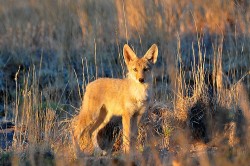
For unknown reasons, a rash of coyotes has decended upon the more domesticated parts of Indiana and residents will soon be seeing a thick furred canine-like animals roaming around, if they haven’t already. 

 As a precaution, it is of absolute necessity to be aware of these animals and the potential danger to everyone involved including the coyote. First, it is important to be able to identify these coyotes and understand their behaviors.  While coyotes are usually shy and elusive, they can become bold and increasingly curious if an individual is walking a pet. Pet owners should always keep their pets on a leashes, and never allow them to roam free, as coyotes have could potentially see these animals as a free meal or view them as territorial competition.  Secondly, It is important to properly dispose of trash since coyotes sense of smell will lead them to the area; in addition, it is highly inadvisable for any person to attempt to feed a coyote as doing so will only encourage them to continue roaming throughout domestic areas. Coyotes are typically not a threat to people but it is imperative that they must not learn not to habituate themselves to people.    Thirdly, it is never a good idea for a person to turn their back on a coyote. This could potentially demonstrate submissveness and encourage the coyote to further investigate. Should a person encounter a coyote, the best reaction is not to run, however simply leave the area as quickly as possible. Coyotes generally will only threaten if they are threatened so pet owners are advised to leave quickly if they encounter a coyote with their pet. Also, individuals should not be alarmed at the coyotes high pitched “yipping,” as this sound most likely serves as a claim of territory or warning to others to respect their boundaries.

Read Full Post »

« Newer Posts - Older Posts »