Feeds:
Posts
Comments

Archive for the ‘Wolf Current Events’ Category


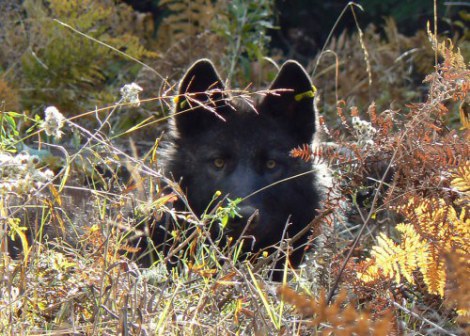
OR-4 Wolf

OR-4, the alpha male of the Inmaha pack of wolves that lived in Eastern Oregon, before he was shot to death Thursday. (Photo: Courtesy Center for Biological Diversity)

APR 2, 2016

“The bullet he’d been dodging for many years finally caught up with the great Oregon wolf, OR4, on March 31. In the early afternoon, officials from the Oregon Department of Fish and Wildlife shot to death the patriarch of the Imnaha Pack from a helicopter over Wallowa County, an area where gray wolves dispersing from Idaho first began returning to Oregon, where they’d been killed off in the mid-20th century. Shot along with OR4 was his likely pregnant partner, OR 39, known as Limpy for an injured and badly healed leg, and their two pups.

The animals were killed for being presumed guilty of the deaths of four calves and a sheep on private pastureland on the fringes of the pack’s territory in northeast Oregon.

Rob Klavins, who has been a wolf advocate on the frontlines of the cultural and political battles that have accompanied the reemergence of wolves in the West as field coordinator for the conservation group Oregon Wild, heard the helicopters take off and knew the sound spelled doom for OR4. “It was hard for a lot of people,” said Klavins, reached on Friday at his home near the town of Joseph in Wallowa County. “Even some of his detractors had a begrudging respect” for OR4, the fourth wolf to be fitted with a location-tracking radio collar in Oregon. He weighed at least 115 pounds, the largest known wolf in Oregon at the time of his death, and survived for 10 years, three years longer than most wolves in the wild.

OR4 and his progeny have been largely responsible for the gray wolf’s intrepid return to lands where the species was long ago hunted, poisoned, trapped, burned, and otherwise chased nearly to extinction.

Cattle farmers, who receive a subsidy from taxpayers to graze their animals on vast ranges of publicly-owned land where the wolves also dwell, worry about wolves killing their property. Hunters want first shot at the game, such as deer and elk, that wolves favor. But livestock depredations in Oregon are extremely rare, and have become scarcer even as the wolf population has increased. Meanwhile, ODFW’s data shows that Oregon’s wolves are having no effect on elk, deer, and wild sheep populations. Of course, those statistics are small consolation to the rancher who suffered the loss of property in March.

In early 2008, OR4 and his mate at the time, OR2, were among the first wolves to swim the Snake River, scale enormous mountains, and establish a foothold for wolves in game-rich Wallowa County. Since then, more than 110 Oregon wolves have spread from the remote northeast corner of the state, over the Cascades, and to near the California border. Many of these pioneering wolves were spawned by OR4.

Beginning with his first pack in 2009, OR4 fathered, provided for, and protected dozens of wolf pups that survived in the Oregon wild—and made their way all the way south to California, where OR7, known as the “lone wolf,” trekked in 2012. Today, OR7 has his own pack in the California-Oregon border region. The alpha female of the Shasta pack—the first gray wolf pack to make California home since 1924—is the offspring of OR4.

That OR4 lasted this long is source of wonder to those who have followed his starring role in Oregon’s gray-wolf comeback story. In 2011, a brief cattle-killing spree by the Imnaha pack had him slated for execution. A suit by Oregon Wild and other conservation groups stayed the execution order and OR4 settled into a mostly incident-free life as Oregon’s biggest and baddest-ass wolf.

There is good reason to believe OR4 was cast out of his pack early this year, and his decision to move into livestock calving ground was borne of the need of an old, slowing, and dull-toothed male—no longer able to bring down elk—to fend for his hobbled mate, to whom he was endearingly loyal, and his yearling pups.

“He was an outlaw wolf with a heart of gold,” said Amaroq Weiss, the West Coast Wolf Coordinator for the Center for Biological Diversity. Weiss recalled a 2009 video of OR4 leading his Imnaha pack up a snowy mountainside as a defining image from the early days of Oregon’s wolf recovery. “He was definitely a father figure.”

The Shasta Pack that is part of OR4’s legacy will soon be coming into its second litter. It is protected by the California Endangered Species Act. In Oregon, though, wolves were removed from the endangered species list in November, which allowed OR4’s pack to be shot to death Thursday. Activists have sued to re-list the animals.

The wolf management plan that provided the legal justification for the killing of OR4, Limpy, and their pups is up for review in Oregon this year. The state has determined that the wolf population met benchmarks that allow livestock producers more lethal options when dealing with depredating wolves. Klavins and others would like to make sure the updated plan calls for every non-lethal option to be exhausted before wolves are killed.

“What was done [Thursday] was sufficient for an agency that views wildlife as agents of damage and whose primary job is to protect private interests at taxpayer expense,” Klavins said. “But it’s not good enough for a public agency whose mission is to ‘protect and enhance Oregon’s fish and wildlife and their habitats for use and enjoyment by present and future generations,’ ” he continued, quoting from the agency’s official documents. “They need to do better. Oregonians deserve better.”

Wolf advocate Wally Sykes is one of the few to have encountered OR4 in the wild. “I was kind of initially prepared for something to happen, but the visual image of an old wolf being hunted down by a helicopter, with his hobbling mate by his side and his two freaked out pups along with him, is an ugly picture to carry in your head,” said. He said officials he spoke with were “not at all happy to have killed these wolves.”

**Special thanks to Joe Donnelly, an award-winning journalist and author, for providing this information!  (http://www.takepart.com/article/2016/04/02/oregon-just-killed-family-wolves)

Read Full Post »


wolf noel

Photo courtesy of Steve Bloom

The OlympianSeptember 16, 2014

“The state Department of Fish and Wildlife has mismanaged another conflict between an Eastern Washington rancher and an important wolf pack. This time the department accidently killed the breeding alpha female of the Huckleberry pack, one of the state’s most stable and prolific packs. Gray wolves are an endangered species in Washington.

This is a catastrophic mistake that will likely lead to more conflict between the pack and livestock. The loss of a breeding adult in a pack is well-known to wildlife experts to cause chaos within the pack and unpredictable future behavior.

But the department’s mishandling didn’t end there. The agency knew the rancher had refused conflict avoidance resources from the DFW and Washington State University and proceeded to put 1,800 sheep in the wolf pack’s territory in difficult terrain without state-advised deterrents in place and protected by only a single herder and four dogs.

State wildlife officials surely knew this was a recipe for disaster.

When dead sheep started appearing on Department of Natural Resources-owned land, DFW should have been prepared to take quick and effective nonlethal deterrent action. It was not, and instead issued a secret kill order without notifying members of the Washington Wolf Advisory group in advance.

The DFW sharpshooter, working from a helicopter, was authorized to kill four of this year’s pups. But he mistakenly killed the pack’s alpha female.

Diane Gallegos, executive director of Wolfhaven International, located in Thurston County, said the conservation community is unanimous that the DFW and the rancher didn’t follow the state wolf plan and that the DFW shouldn’t have issued a kill order.

“This is an endangered species, and it is unconscionable that they accidently killed the breeding female of an endangered species,” Gallegos said. We agree.

In 2012, the DFW killed the entire Wedge Pack, even though it had failed to effectively implement the non-lethal measures required by the state’s wolf conservation management plan.

When ranchers engage in cooperative agreements with DFW, the state saves money, ranchers protect their livestock and wolves survive on other food sources.

Ranchers can also call on nonprofits, such as Conservation Northwest, to reduce conflicts between wolves and livestock. Conservation Northwest is using private funds and staff to train and provide range riders to oversee livestock sharing range with wolves. They are currently engaged in five separate projects, and in three seasons have not lost any livestock to wolves.

After the Huckleberry blunder, some of the most passionate gray wolf advocates are questioning whether DFW has a tendency to favor the interests of livestock operators. Clearly, the agency should be doing more to protect an endangered species.

Hundreds of thousands of gray wolves once roamed the West. When their natural food sources dwindled after human settlements, they sometimes turned to livestock earning the ire of pioneers. By the middle of the last century, most wolves had been killed off.

Today, thanks to protected status, wolves are making a comeback. They are a natural resource that belongs to the people of this state.

Gov. Jay Inslee should order a review of the department’s wolf plan management, and state lawmakers must legislate a requirement that ranchers engage in good-faith cooperative agreements with the state Department of Fish and Wildlife.”


**Special thanks to The Olympian for providing this information! (http://www.theolympian.com/2014/09/16/3319768_another-mistake-in-managing-wolf.html?sp=%2F99%2F109%2F&rh=1)

Read Full Post »


wolf in trees

Photo courtesy of “Howling for Justice.”

“Eastern Oregon Wolves Could Be Removed From State’s Endangered Species Act

OPB | Sept. 16, 2014 2:21 p.m. | Portland

Gray wolf populations are on the rise in Oregon, but that may not necessarily be good news for the animals.

The Statesman Journal reports  that the state may have enough potential wolf couples in 2015 for the minimum requirements to delist the animal.

“We were told in the beginning that when wolves first came to the county, we were waiting for that day,” said Todd Nash, wolf committee chairman for the Oregon Cattleman Association, in an interview with the newspaper.

According to Oregon’s Endangered Species Act, the state Department of Fish and Wildlife must verify four breeding pairs in eastern Oregon for three consecutive years.

In 2012, there were six pairs and last year the organization located four pairs. It’s predicted that 2014’s count won’t be complete until early next year, but early reports show more than four couples.

By removing wolves from the state’s endangered species list, ranchers would be permitted to use lethal force to defend their animals in more situations.

According to ODFW , shooting a wolf is considered a misdemeanor, which carries a maximum penalty of $6,250 fine and a year in jail.

http://www.opb.org/news/blog/newsblog/eastern-oregon-wolves-could-be-removed-from-states-endangered-species-act/

===

Anyone who’s read the Oregon wolf “management plan” could see this coming a mile away. There was major push-back against “the plan”  in 2010. The number of breeding pairs needed, to reach delisting, was ridiculously low.  Here’s part of what Oregon’s wolf plan states:

Oregon Wolf Conservation and Management Plan

Wolves may be considered for statewide delisting once the population reaches four breeding
pairs for three consecutive years in eastern Oregon.1

Four breeding pairs are considered the minimum conservation population objective, also described as Phase 1. The Plan calls for managing wolves in western Oregon as if the species remains listed until the western Oregon wolf population reaches four breeding pairs. This means, for example, that a landowner would be required to obtain a permit to address depredation problems using injurious harassment.

While the wolf remains listed as a state endangered species the following will be allowed: Wolves may be harassed (e.g. shouting, firing a shot in the air) to distract a wolf from a livestock operation or area of human activity.

Harassment that causes injury to a wolf (e.g., rubber bullets or bean bag projectiles) may be employed to prevent depredation, but only with a permit.

Wolves may be relocated to resolve an immediate localized problem from an area of human activity (e.g., wolf inadvertently caught in a trap) to suitable habitat. Relocation will be done by ODFW or Wildlife Services personnel but will not occur with wolves known or suspected to have depredated livestock or pets.

Livestock producers who witness a wolf ‘in the act’ of attacking livestock on public or private land must have a permit before taking any action that would cause harm to the wolf.

Once federally delisted, wolves involved in chronic depredation may be killed by ODFW or Wildlife Services personnel. However, non lethal methods will be emphasized and employed first in appropriate circumstances.

Once the wolf is delisted, more options are available to address wolf-livestock conflict. While
there are five to seven breeding pairs, livestock producers may kill a wolf involved in chronic
depredation with a permit. Five to seven breeding pairs is considered Phase 2.

Seven breeding pairs for three consecutive years in eastern or western Oregon is considered the management objective, or Phase 3. Under Phase 3 a limited controlled hunt could be allowed to decrease chronic depredation or reduce pressure on wild ungulate populations.

The Plan provides wildlife managers with adaptive management strategies to address wolf predation problems on wild ungulates if confirmed wolf predation leads to declines in localized herds.

In the unlikely event that a person is attacked by a wolf, the Plan describes the circumstances under which Oregon’s criminal code and federal ESA would allow harassing, harming or killing of wolves where necessary to avoid imminent, grave injury. Such an incident must be reported to law enforcement officials.

A strong information and education program is proposed to ensure anyone with an interest in wolves is able to learn more about the species and stay informed about wildlife management activities.

Several research projects are identified as necessary for future success of long-term wolf conservation and management. Monitoring and radio-collaring wolves are listed as critical components of the Plan both for conservation and communication with Oregonians.

An economic analysis provides updated estimates of costs and benefits associated with wolves in Oregon and wolf conservation and management.

Finally, the Plan requires annual reporting to the Commission on program implementation.

http://www.dfw.state.or.us/Wolves/docs/Oregon_Wolf_Conservation_and_Management_Plan_2010.pdf

===

This was posted in June 2010 on Howling for Justice, written by wolf advocate Katie, a Oregon resident, explaining why the plan was insufficient and should be changed.

Help Change Oregon’s Wolf Management Plan, PLEASE COMMENT BY JUNE 30th

June 21, 201o

 “Wolves may be considered for statewide delisting once the population reaches four breeding pairs for three consecutive years in eastern Oregon…. The plan calls for managing wolves in western Oregon as if the species remains listed until the western Oregon wolf population reaches four breeding pairs.”

This means when there are four packs in eastern Oregon and four in western Oregon, wolves will be stripped of ESA protection statewide.

The average gray wolf pack size is about 8 wolves. If packs in Oregon follow the norm, then roughly 64 wolves will be present when they are delisted. A recent study suggests Oregon could support up to 2200 wolves and still maintain a healthy ecosystem. I don’t know about you, but 64 wolves doesn’t sound like recovered to me.

READ MORE: http://howlingforjustice.wordpress.com/2010/06/21/help-change-oregons-wolf-management-plan-please-comment-by-june-30/

===

So it’s come to this. Oregon, one of the friendliest of wolf states, may soon subject Eastern Oregon wolves to delisting because of the state’s weak management plan. This is the defining statement in their “plan”. “Seven breeding pairs for three consecutive years in eastern or western Oregon is considered the management objective, or Phase 3. Under Phase 3 a limited controlled hunt could be allowed to decrease chronic depredation or reduce pressure on wild ungulate populations.” 

Howling for Justice does not support managing wolves. Wolves are self-regulating and do not need to be “managed” Managing wolves is a catch phrase for the lead up to eventually hunting and killing them,  as you can see by the statement above, quoted from Oregon’s wolf management plan.  IMO, management includes continually harassing wolves through collaring, counting their numbers, treating them as though they are terrorists, needing to be watched every second. Wolf management plans are driven by agribusiness and unfortunately state fish and game agencies bow to that pressure. Ranchers lose thousands of livestock annually to non-predation, yet tiny wolf/livestock issues get headlines.

In 2010, Oregon ranchers lost 51, 200 calves and cows to non-predation. Yes, 51,200 and those numbers come from NASS ( National Agricultural Statistics Service). At the time, two members of the Imnaha pack, including the alpha male, father of OR7, were under a kill order for supposedly killing a few cattle. But ranchers lost thousands and thousands of cows that year to digestive problems, respiratory problems, metabolic problems, mastitis, lameness/injury, other diseases, weather related issues, calving problems, poisoning and theft. 51.200 to be exact. Can everyone see how ridiculous it is that ranchers complain wolves affect their bottom line when in fact it’s non-predation that takes a toll on their business. And remember ranchers are compensated for every confirmed wolf kill but aren’t reimbursed for non-predation deaths.  To put this all in perspective, concerning predation losses for all predators in the lower 48  in 2010, including coyotes, mountain lions, bobcats, dogs, vultures, wolves, bears. other predators and unknown predators, “coyotes and
dogs caused the majority of cattle and calf predator losses….”. NASS

 Wolf predation is a red herring and an excuse to kill wolves, period.  How could 14 wolf predations in 2010, blamed on the Imnaha Pack, have any effect on Oregon ranching’s bottom line, compared to the 51,200 cows and calves lost to non-predation? It would laughable if it wasn’t so deadly serious for wolves.

I know ranching is going to be pushing hard for delisting Eastern Washington wolves in the coming months, sadly because the Oregon Wolf Management Plan falls far short. It should be revisited and revised to allow Oregon wolves to continue to grow and prosper.”

**S

Eastern Oregon Wolves Could Be Removed From State’s Endangered Species Act

OPB | Sept. 16, 2014 2:21 p.m. | Portland

Gray wolf populations are on the rise in Oregon, but that may not necessarily be good news for the animals.

The Statesman Journal reports  that the state may have enough potential wolf couples in 2015 for the minimum requirements to delist the animal.

“We were told in the beginning that when wolves first came to the county, we were waiting for that day,” said Todd Nash, wolf committee chairman for the Oregon Cattleman Association, in an interview with the newspaper.

According to Oregon’s Endangered Species Act, the state Department of Fish and Wildlife must verify four breeding pairs in eastern Oregon for three consecutive years.

In 2012, there were six pairs and last year the organization located four pairs. It’s predicted that 2014’s count won’t be complete until early next year, but early reports show more than four couples.

By removing wolves from the state’s endangered species list, ranchers would be permitted to use lethal force to defend their animals in more situations.

According to ODFW , shooting a wolf is considered a misdemeanor, which carries a maximum penalty of $6,250 fine and a year in jail.

http://www.opb.org/news/blog/newsblog/eastern-oregon-wolves-could-be-removed-from-states-endangered-species-act/

===

Anyone who’s read the Oregon wolf “management plan” could see this coming a mile away. There was major push-back against “the plan”  in 2010. The number of breeding pairs needed, to reach delisting, was ridiculously low.  Here’s part of what Oregon’s wolf plan states:

Oregon Wolf Conservation and Management Plan

Wolves may be considered for statewide delisting once the population reaches four breeding
pairs for three consecutive years in eastern Oregon.1

Four breeding pairs are considered the minimum conservation population objective, also described as Phase 1. The Plan calls for managing wolves in western Oregon as if the species remains listed until the western Oregon wolf population reaches four breeding pairs. This means, for example, that a landowner would be required to obtain a permit to address depredation problems using injurious harassment.

While the wolf remains listed as a state endangered species the following will be allowed: Wolves may be harassed (e.g. shouting, firing a shot in the air) to distract a wolf from a livestock operation or area of human activity.

Harassment that causes injury to a wolf (e.g., rubber bullets or bean bag projectiles) may be employed to prevent depredation, but only with a permit.

Wolves may be relocated to resolve an immediate localized problem from an area of human activity (e.g., wolf inadvertently caught in a trap) to suitable habitat. Relocation will be done by ODFW or Wildlife Services personnel but will not occur with wolves known or suspected to have depredated livestock or pets.

Livestock producers who witness a wolf ‘in the act’ of attacking livestock on public or private land must have a permit before taking any action that would cause harm to the wolf.

Once federally delisted, wolves involved in chronic depredation may be killed by ODFW or Wildlife Services personnel. However, non lethal methods will be emphasized and employed first in appropriate circumstances.

Once the wolf is delisted, more options are available to address wolf-livestock conflict. While
there are five to seven breeding pairs, livestock producers may kill a wolf involved in chronic
depredation with a permit. Five to seven breeding pairs is considered Phase 2.

Seven breeding pairs for three consecutive years in eastern or western Oregon is considered the management objective, or Phase 3. Under Phase 3 a limited controlled hunt could be allowed to decrease chronic depredation or reduce pressure on wild ungulate populations.

The Plan provides wildlife managers with adaptive management strategies to address wolf predation problems on wild ungulates if confirmed wolf predation leads to declines in localized herds.

In the unlikely event that a person is attacked by a wolf, the Plan describes the circumstances under which Oregon’s criminal code and federal ESA would allow harassing, harming or killing of wolves where necessary to avoid imminent, grave injury. Such an incident must be reported to law enforcement officials.

A strong information and education program is proposed to ensure anyone with an interest in wolves is able to learn more about the species and stay informed about wildlife management activities.

Several research projects are identified as necessary for future success of long-term wolf conservation and management. Monitoring and radio-collaring wolves are listed as critical components of the Plan both for conservation and communication with Oregonians.

An economic analysis provides updated estimates of costs and benefits associated with wolves in Oregon and wolf conservation and management.

Finally, the Plan requires annual reporting to the Commission on program implementation.

http://www.dfw.state.or.us/Wolves/docs/Oregon_Wolf_Conservation_and_Management_Plan_2010.pdf

===

This was posted in June 2010 on Howling for Justice, written by wolf advocate Katie, a Oregon resident, explaining why the plan was insufficient and should be changed.

Help Change Oregon’s Wolf Management Plan, PLEASE COMMENT BY JUNE 30th

June 21, 201o

 “Wolves may be considered for statewide delisting once the population reaches four breeding pairs for three consecutive years in eastern Oregon…. The plan calls for managing wolves in western Oregon as if the species remains listed until the western Oregon wolf population reaches four breeding pairs.”

This means when there are four packs in eastern Oregon and four in western Oregon, wolves will be stripped of ESA protection statewide.

The average gray wolf pack size is about 8 wolves. If packs in Oregon follow the norm, then roughly 64 wolves will be present when they are delisted. A recent study suggests Oregon could support up to 2200 wolves and still maintain a healthy ecosystem. I don’t know about you, but 64 wolves doesn’t sound like recovered to me.

READ MORE: http://howlingforjustice.wordpress.com/2010/06/21/help-change-oregons-wolf-management-plan-please-comment-by-june-30/

===

So it’s come to this. Oregon, one of the friendliest of wolf states, may soon subject Eastern Oregon wolves to delisting because of the state’s weak management plan. This is the defining statement in their “plan”. “Seven breeding pairs for three consecutive years in eastern or western Oregon is considered the management objective, or Phase 3. Under Phase 3 a limited controlled hunt could be allowed to decrease chronic depredation or reduce pressure on wild ungulate populations.” 

Howling for Justice does not support managing wolves. Wolves are self-regulating and do not need to be “managed” Managing wolves is a catch phrase for the lead up to eventually hunting and killing them,  as you can see by the statement above, quoted from Oregon’s wolf management plan.  IMO, management includes continually harassing wolves through collaring, counting their numbers, treating them as though they are terrorists, needing to be watched every second. Wolf management plans are driven by agribusiness and unfortunately state fish and game agencies bow to that pressure. Ranchers lose thousands of livestock annually to non-predation, yet tiny wolf/livestock issues get headlines.

In 2010, Oregon ranchers lost 51, 200 calves and cows to non-predation. Yes, 51,200 and those numbers come from NASS ( National Agricultural Statistics Service). At the time, two members of the Imnaha pack, including the alpha male, father of OR7, were under a kill order for supposedly killing a few cattle. But ranchers lost thousands and thousands of cows that year to digestive problems, respiratory problems, metabolic problems, mastitis, lameness/injury, other diseases, weather related issues, calving problems, poisoning and theft. 51.200 to be exact. Can everyone see how ridiculous it is that ranchers complain wolves affect their bottom line when in fact it’s non-predation that takes a toll on their business. And remember ranchers are compensated for every confirmed wolf kill but aren’t reimbursed for non-predation deaths.  To put this all in perspective, concerning predation losses for all predators in the lower 48  in 2010, including coyotes, mountain lions, bobcats, dogs, vultures, wolves, bears. other predators and unknown predators, “coyotes and
dogs caused the majority of cattle and calf predator losses….”. NASS

 Wolf predation is a red herring and an excuse to kill wolves, period.  How could 14 wolf predations in 2010, blamed on the Imnaha Pack, have any effect on Oregon ranching’s bottom line, compared to the 51,200 cows and calves lost to non-predation? It would laughable if it wasn’t so deadly serious for wolves.

I know ranching is going to be pushing hard for delisting Eastern Washington wolves in the coming months, sadly because the Oregon Wolf Management Plan falls far short. It should be revisited and revised to allow Oregon wolves to continue to grow and prosper.”

**Special thanks to Howling for Justice for providing this information! (http://howlingforjustice.wordpress.com/2014/09/18/eastern-oregon-wolves-could-be-facing-delisting-in-2015/)


Read Full Post »


NEW wolf

Photo courtesy of DAWN VILLELLA, AP)

9:06 a.m. EDT August 27, 2014

“When the Legislature considers a proposal Wednesday that would maintain a wolf hunt in the Upper Peninsula, it will be the fourth time in two years that they have taken an issue away from being decided by a statewide vote of the people.

They have done it with issues ranging from insurance coverage for abortion to raising the minimum wage and appointing emergency financial managers for economically struggling cities.

They’ve also added appropriations to some bills, like the controversial right to work law, that make it immune from repeal by a referendum vote of the people.

The actions have raised the ire of groups that have had their ballot proposals thwarted by the Legislature and by ordinary citizens who have seen controversial issues pass without the checks and balances that a ballot proposal could provide.

“Even though my campaign went nowhere, I view it as a background resistance against the Legislature,” said Bill Lucas, a Ferndale resident, who started a constitutional amendment petition drive to allow referendums on all issues, including ones that contain appropriations.

Without the financial support from some organizations that he hoped would join his effort, Lucas was only able to gather a couple thousand signatures. But he intends to refile his proposal for the 2016 election.

And that’s the way it’s supposed to work, said Eric Doster, a elections law attorney based in Lansing.

“The legislators are the people’s representatives and they’ve been given that authority,” he said. “If you’re upset that the Legislature has done something, go through the constitutional process to change it.”

The Keep Michigan Wolves Protected group, which has submitted two petitions to repeal two different laws that allowed for a hunt of gray wolves in the Upper Peninsula, want the Legislature to let the voters decide the issue. The first petition was superseded by a slightly different law passed by the Legislature and the second petition could be thwarted by the vote the Legislature takes Wednesday on a petition that the pro-wolf hunt group — Citizens for Professional Wildlife Management — submitted to the Legislature.

That petition, which gathered nearly 300,000 valid signatures, already has passed the Senate and if it passes the House, it automatically becomes law.

The states across the nation have a mishmash of laws regarding citizen initiatives, referendums and constitutional amendments. According to the National Conference of State Legislatures, 24 states have initiative process and nine of those states, including Michigan, have provisions that the Legislature can act on initiatives turned in by citizens. The other states have those petitions go directly to the ballot.

But other states have provisions that the Legislature can’t act to amend or repeal a voter-approved initiative for a given number of years after it passes: in Nevada, it’s three years and in Alaska and Wyoming, it’s two years.

There are no bills introduced in the Michigan House or Senate that would address the referendum or initiative process. Michigan does have a law that would allow for amending or repealing a voter-approved initiative, but only with a three-fourths vote of the Legislature, a difficult goal to reach.

The Legislature got around that in 2012 by passing a slightly different version of the emergency manager law that voters repealed just a month earlier.

“The situation is Michigan really seems disrespectful of the people’s right to act as lawmakers,” said John Matsusaka, executive director of the Initiative and Referendum Institute at the University of Southern California.

Kathleen Gray is a reporter for the Detroit Free Press.”


**Special thanks to Kathleen Gray, Lansing State Journal, for providing this information!

Read Full Post »


“On June 1st, Washington ranchers began turning out their cows and calves onto summer grazing lands. Some of those lands overlap with territory home to Washington’s recovering wolves. And that’s where you’ll find livestock under the watchful eye of range riders co-sponsored by Conservation Northwest.

This year we’re collaborating with even more cattle operations on the ground in wolf country to protect livestock and wolves.   

Working with the Washington Department of Fish & Wildlife (WDFW) and four ranchers from the Methow and Teanaway valleys, the Wenatchee area and Stevens County in northeast Washington, we’ll have at least six riders patrolling grazing allotments this season. For the first time, they’ll be covering the territory of five confirmed wolf packs on horse and ATV working to minimize wolf-livestock conflict.

Range riders work long, hard days in tough conditions, covering thousands of miles a season to make sure the cattle are calm and healthy and keep them away from wolves, the location of whom is often provided confidentially by WDFW through GPS and radio collar data.

Because of the difficult and specialized work, each rider can cost up to $20,000 plus gas and expenses for the five-month grazing season. To sign up with WDFW to participate in the program, ranchers must typically put up half that cost to receive a state match.

That’s where Conservation Northwest comes in.

As an incentive to participate in the program and put non-lethal predator management tools to work, with the help of generous donors we contribute as much as $10,000 a season to eligible ranchers for each range rider, greatly limiting their out-of-pocket costs.

“We hope this program spurs ranchers to do a practice that they did for hundreds of years, but when wolves were gone from the landscape there was no need,” said Jay Kehne, Conservation Northwest’s Okanogan County outreach associate. “There are incentives for doing this, you’re going to keep more weight on the cows and you’re going to lose fewer cows. Having a range rider is worthwhile for the ranchers because it’s going to save them money in the end.”

And with the range riders work resulting in wolves causing less problems for cattlemen, there’s less call to resolve wolf-livestock conflict by lethal management.

This is our third year organizing the range rider program in Eastern Washington, and we’re proud of what the range riders, cattlemen, state biologists and conflict specialists, and Conservation Northwest staff have accomplished.

Even as wolf populations have rebounded, last summer ranchers reported an increase in the number of cows returning from the summer spent grazing in wolf habitat, as much as 100 percent in some cases. And the valuable weight those cows have maintained is up as result of limited interaction with wolves and more stress-free time spent resting and feeding. As last year’s range rider program came to a close, one of the ranchers we partner with, John Dawson, was quoted in a Spokesman-Review article saying “we’ve lost nothing to wolves.” 

The program’s success hasn’t just been seen by the ranchers participating, other livestock owners are beginning to take notice as well.

“The success the Dawsons have had has gone a long way to helping promote nonlethal means and proactive measures to reduce conflict,” said Jack Field, the Washington Cattlemen’s Association’s executive vice president. We hope that continues to be the case and these modern cowboys and cowgirls catch on.

Much has been said about Washington’s recovering wolves in policy debates, newspaper comments and public meetings in recent years. But it’s only through public acceptance in the communities living, working and recreating in wolf country that we’ll see their complete and sustained recovery in our state for the long term.

That’s why we’re out there working one-on-one with ranchers, building partnerships with WDFW, and proving that time-tested non-lethal management tools like range riders (and fladry too) can have real results protecting both cattle and these iconic native predators. 

Conservation Northwest is thrilled to see this program succeeding, and hopeful the benefits will be spread even wider this summer with more riders out on the range.””

**Special thanks to “Conservation Northwest” for providing this information!

http://www.conservationnw.org/news/updates/range-riders-update

Read Full Post »


Wolf Hunting

A gray wolf in a wooded area near Wisconsin Dells, Wis. (AP Photo/Jayne Belsky via the Wisconsin Department of Natural Resources, File)

“MADISON, Wis. — A state appeals court ruled Thursday that hunters can train dogs to chase down wolves, rejecting arguments from a group of humane societies that wildlife officials are allowing deadly wolf-dog clashes and cementing one of the most contentious elements of Wisconsin wolf hunting.

The 4th District Court of Appeals’ ruling marks another chapter in the bruising political battle over the state’s wolf hunt. Republicans and farmers contend that the hunt is necessary to control a burgeoning wolf population that’s preying on livestock and deer; conservationists and animal lovers say the population is still fragile and that the animal is too majestic to kill.

A Republican-authored law establishing the wolf hunt permits hunters to use up to six dogs to track and trail wolves after the state’s 9-day gun deer hunt ends every November, making Wisconsin the only state that allows dogs to track wolves.

The Department of Natural Resources crafted emergency rules implementing those provisions. The rules contained just two restrictions: hunters can’t use dogs at night and the dogs must be tattooed or wear an identification collar.

The humane societies and the National Wolfwatcher Coalition sued. They alleged that the DNR failed to adopt any meaningful restrictions on hunting wolves with dogs, clearing the way for bloody dog-wolf fights in the woods and violating both the wolf hunt’s track-and-trail limitations and animal cruelty statues.

Dane County Judge Peter Anderson rejected those arguments last year. But he did declare DNR rules stating anyone can train dogs on wild animals without a license to be invalid as they apply to wolves. The humane societies, the DNR and dog trainers interpreted that ruling to mean people can use dogs in the hunt but can’t train them on wolves.

The appellate court concluded that the lack of restrictions in the DNR’s rules doesn’t conflict with the wolf hunt law or animal cruelty statutes. The court said it’s unclear how many restrictions the agency would have to impose to achieve compliance.

The DNR made a rational decision on the extent of restrictions, the court added. Hunters with experience with dogs tracking wolves during coyote hunts told the agency they had never seen any violent encounters and wolves typically try to outrun the dogs.

As for Anderson’s ruling invalidating training, the court said Wisconsin residents have a common law right to hunt. The freedom to use dogs extends from that right, not from DNR regulations. Therefore Anderson’s ruling invalidating dog training rules as they apply to wolves has no legal effect, the court found.

Jodi Habush Sinykin, an attorney for the humane societies, said she was saddened by the ruling. The decision creates more urgency to change state law to prohibit using dogs on wolves outright “so Wisconsin can be like the rest of the country and the civilized world,” she said. She had no immediate comment on a possible appeal to the state Supreme Court.

A coalition of sportsmen’s groups, including United Sportsmen of Wisconsin, Wisconsin Bear Hunters and the Safari Club International, had joined the DNR in defending the dog-hunting rules. Coalition attorneys said Thursday they were happy with the decision.

DNR spokesman Bill Cosh said the agency was pleased with the decision.

The agency examined 27 of the 35 wolves killed by hunters using dogs this past season. The DNR couldn’t find any evidence of fights or law violations but the evaluation was inconclusive; the carcasses had already been skinned when the agency examined them.

The DNR has been working on permanent rules governing dogs in wolf hunts. Agency officials have said those regulations would restrict training on wolves to daylight hours during the wolf season and the month of March and mirror the law’s six-dog restriction.

The rules were supposed to be ready by the 2014 season’s October start. But Cosh said agency officials couldn’t get them done in time and now hope to have them in place by the 2015 season.”

**Special thanks to Tom Richmond, Associated Press, for providing this information!  

http://www.twincities.com/localnews/ci_26125375/wisconsin-hunters-can-train-dogs-chase-wolves-court

Read Full Post »


Bend Bulletin: June 23, 2014

 — Three years into a state program to help counties contending with wolves, the focus has been on preventing attacks on livestock.

“I think the program was set up with the intention that prevention is the preferred model,” said Jason Barber, who oversees the grant program for the Oregon Department of Agriculture. “. Kind of a no-brainer, you’d want to prevent the depredation if you can.”

Depredation is when wolves attack livestock, such as cattle or sheep. Money from the wolf grant program helps pay for efforts such as removing cattle bones that could attract wolves, installing flagging along fence lines to spook wolves, and patrolling rangeland by horseback or on ATVs.

State-sponsored hunts helped lead to the elimination of wolves in Oregon, with the last bounty paid out in the late 1940s. But since the late 2000s, wolves have been making a comeback, having moved in from Idaho where the U.S. Fish and Wildlife Service reintroduced wolves nearly 20 years ago.

The latest Oregon Department of Fish and Wildlife wolf count, which the agency released at the end of last year, has at least 64 wolves in the state. Most are in the northeast corner, but they are expanding their territories. Through 2013, there had been 75 animals, either livestock or domestic animals, killed by wolves since the wolves started returning to Oregon.

The prevention money in the state grant program comes with a use-by date, Jan. 31 of the year after the state issues the grant. If the county doesn’t use the money by then, it has to give it back. Such was the case last year when Crook County gave $3,000 back after a cattle bone removal project didn’t come together in time. This year’s grants include a new $3,000 grant for Crook County to try the project again.

The grants also include compensation money, which goes to ranchers whose livestock has been killed or injured by wolves or has gone missing and was likely taken by a wolf. According to state records, $296,620 total has been given out for prevention, compensation and some smaller administrative costs in the three years of the wolf grant program. Of that, $71,653 was for livestock that had either been attacked or injured or had gone missing probably because of a wolf. That’s 24 percent of the grants. Another $178,150, or 60 percent, went to wolf attack prevention projects.

Although he is glad the state helps ranchers cover the cost of livestock lost to wolves, Todd Nash, an Enterprise rancher and wolf committee chairman for the Oregon Cattlemen’s Association, said it’s not a lasting solution.

“Compensation is a Band-Aid fix,” he said. “It will never be acceptable to livestock producers to have wolves kill their livestock, but it does help.”

Sally Mackler, state carnivore representative for Predator Defense, said she would rather see that state wolf money all go to projects aimed at preventing attacks on livestock, rather than for compensation.

“I think that would be a better use of that money,” she said. The Eugene-based group advocates for predators, such as wolves.

Mark Lane, 42, a rancher from Morrow, said he thinks the state should compensate livestock producers like him for animals lost to wolves. He’s in the process of figuring out how to collect some of the money himself, having had wolves from the Umatilla River pack attack one of his cows earlier this month.

He said he is hopeful he’ll be able to save the 3-year-old pregnant cow that had been grazing on private land near Pendleton when attacked.

“I’m just a small producer,” Lane said. “I don’t have many animals, (so) every one I lose … hurts me big time.”

Separate from the state wolf grant program, the Oregon Department of Fish and Wildlife runs its own wolf program. For the two-year funding cycle spanning 2013 to 2015, the program’s budget is $641,004, according to the agency. The budget covers wolf-monitoring programs, response to livestock attacks, equipment needs and the pay for two full-time wolf-management workers.

“That’s collaring, that’s everything,” said Meg Kenagy, an agency spokeswoman in Salem.

Scientists with ODFW have been affixing GPS collars to wolves since the animals started returning to the state from Idaho. Tracking them allows scientists to understand their behavior and habits. The ODFW also offers a warning system, in which it will call or text ranchers when wolves are detected near livestock.

A GPS collar led to fame for one wolf as the device enabled scientists to record his remarkable journey in recent years. Known as OR-7, the seventh wolf collared in Oregon, the gray wolf traveled thousands of miles from Northeast Oregon into California.

Scientists said OR-7 probably was looking for a mate and this spring found one. He now has pups with her, the beginnings of a new pack, in the southern Cascades between Klamath Falls and Medford.”


**Special thanks to Dylan Darling, Idaho Statesman, for providing this information!  http://www.idahostatesman.com/2014/06/23/3249894/oregon-wolf-money-focused-on-preventing.html?sp=/99/103/


Read Full Post »


Alaskan Wolf Pup

Photo courtesy of “Be a Voice for the Gray Wolf”

ALERT!!  I’m asking you all to help contact Alaska Governor Sean Parnell and express your outrage about this.  Feel free to e-mail or call his office.   As emotional as this is, please don’t threaten anyone.  But Alaskan resident or not, we need to continue to make our voices heard on this!  Wolf pups have a high enough mortality rate without trigger happy hunters involved.  In addition, contact your local state representatives, newspaper, and even set up a booth in a library to inform the public so they too can educate others about these horrific acts.  Even if these atrocities can’t be stopped in the short term, WE can educate our youth and work on stopping this in the long run!

PLEASE do not stand by and let this go unnoticed. http://gov.alaska.gov/parnell/contact/email-the-governor.html


by Nicole Rivard, Friends of Animals Correspondent

“Shame on Alaska governor Sean Parnell for allowing the “kill-on-site” policy for wolf pups and bear cubs orphaned by state predator control to continue. Friends of Animals has learned from Rick Steiner, professor and conservation biologist, that despite the wildly popular rescue of wolf pups abandoned in the Kenai fire last week, which was covered on national television news, the State of Alaska announced June 2 that it would not alter its “kill-on-site” policy for newborn wildlife orphaned by the state’s predator control programs across western and northern Alaska.

These pups escaped death because they were rescued by firefighters before the Alaska Department of Fish & Game could get their hands on them, and have been adopted by the Minnesota Zoo instead of being killed.

But the future is bleak for future pups orphaned after the State of Alaska kills their parents.

After killing all of the adult wolves from two wolf packs on the South Alaska Peninsula in their spring 2008 predator control effort, ADFG biologists pulled 14 newborn wolf pups from the two dens, and shot each in the head. Subsequent public outrage led to the adoption of the state’s wolf pup protocol in Nov. 2008, which called for the live collection and placement of orphaned wolf pups in zoos and other facilities.

Then in May 2009, with no public notice, prior to the continuation of the Alaska Peninsula wolf control program, the state adopted a new wolf pup protocol that called for the lethal gassing of wolf pups orphaned by predator control efforts in western and northern Alaska. Although there has never been a reported case of rabies in wolf pups, the rationale the state gave for adopting its new lethal protocol in western and northern Alaska was a purported risk of rabies in wolf pups.

But given the lack of rabies risk, many wildlife advocates feel the new “kill-on-site” protocol was actually adopted for other reasons, including: the current state administration, and its political supporters, harbor an irrational disdain, even hatred, for wolves; in remote areas, without the watchful eye of the news media, the state feels it is more expedient to just kill orphaned pups than to arrange their collection and placement; the state doesn’t want to attract attention to the inhumane consequences of its scientifically unjustified predator control programs by providing an opportunity for news media to cover the live collection and placement of orphaned young; and the state doesn’t want the public to understand that the “hidden” effects of its predator control programs are far greater than just the number of adults killed.

Wolf pups and bear cubs remain dependent on their parents for more than a year, thus parents killed by state predator control or liberalized hunting and trapping regulations also results in the death of dependent cubs and pups, which are not added to the kill count.

A month after the new kill-on-site protocol was adopted, on June 7, 2009, two newborn wolf pups that had been orphaned by the state wolf control effort in the area, were lethally gassed in their dens with carbon monoxide by ADFG biologists. Their carcasses were not collected and tested for rabies, and left to decompose in the den. This was the first, and so far only, time in state history that newborn wildlife has been lethally gassed. This remains state policy today.

In Feb 2014, ADFG was asked to rescind its 2009 (lethal) wolf pup protocol, and revert to its 2008 (non-lethal) protocol, but the agency declined, again citing its concern for rabies in wolf pups. Then, after the rescue of the five Kenai wolf pups last week the state was asked again to apply this non-lethal collect-and-place protocol to the entire state, arguing not only that there has never been a report of rabies in wolf pups, but also that the half dozen reports of rabies in adult wolves in the historical record (the past 70 years) were all from the Arctic. Thus the risk of rabies from wolf pups, or even adult wolves in the rest of Alaska, is exceedingly low.

Despite this argument, ADFG announced yesterday, in a June 1, 2014 email from Division of Wildlife Conservation Director Doug Vincent-Lang, the following: “We stand by our new wolf pup protocol given advice from our vet regarding rabies. Rabies is a serious disease and I trust the advice of my professionals on this issue. It is fortunate that the wolf pups from the Kenai were from a rabies free zone and could be placed.”

The agency did not provide an explanation for why its veterinarians feel rabies in wolf pups presents a risk when there has never been a reported case. Thus, any wolf pups found orphaned by the state’s predator control programs in western and northern Alaska will continue to be lethally gassed. Additionally, in a May 29, 2014 press release, ADFG admitted that its biologists had recently (this spring) killed newborn black bear cubs in its Kuskokwim (GMU 19A) predator control effort.   Apparently there was no effort made to collect-and-place the newborn bear cubs.

Many Alaskans feel that the government killing of healthy newborn bear cubs and wolf pups is inhumane, unethical and unacceptable and Friends of Animals couldn’t agree more. “It takes a troubling, cold-hearted detachment from life to rationalize the killing of innocent newborn animals,” said Steiner. “Is this really what Alaska has come to? The state’s predator control program is bad enough, but to kill innocent weeks-old wolf pups and bear cubs whose parents have just been killed by gunners in helicopters, exposes a callous depravity that should concern us all. “Perhaps ADFG officials should go before an elementary school assembly and explain to the kids why, after their biologists gun down the parents of bear cubs and wolf pups from helicopters, they then order the orphaned pups and cubs to be gassed or shot instead of rescuing and placing them in facilities to live out their tragically altered lives.”


**Special thanks to Nicole Rivard, Friends of Animals Correspondent, for providing this information!  (https://www.thedodo.com/alaska-governor-allows-kill-on-580469041.html)

Read Full Post »


LEAVE THESE ANIMALS ALONE AND LET MOTHER NATURE DO IT’S JOB.  WOLVES AND ELK BALANCE EACH OTHER JUST FINE WITHOUT INTERFERENCE.

by  on JUNE 2, 2014

“Recently the Montana Dept of Fish, Wildlife and Parks (MDFWP) commission approved a new “Wolf Conservation Stamp”. The purpose of the stamp is ostensibly to get non hunters to pay for wildlife “management”, especially the “management” of wolves.  The stamp would be voluntary.  Despite the fact that I support the idea of non-hunters/anglers paying to support wildlife agencies, I do so only with the condition that the agency changes their entire philosophical approach to wildlife.

In theory the wolf stamp is a good idea. It could demonstrate that keeping wolves alive is more valuable than killing them. And there are ways I could envision how such a wolf stamp might lead to greater appreciation for wolves as a valued part of Montana’s heritage. However, as now presented, I am very skeptical that positive outcomes will result.

The details of this wolf stamp proposal demonstrates to me that MDFWP still has the same unscientific and unethical attitude towards predators as it has always demonstrated. Without a change in its overall philosophy, all this stamp will do is help the Department perpetuate the same old myths and misinformation about predators that it currently dishes out—only wolf supporters will be helping to fund it. According to MDFWP, funding from the stamp would cover the following three areas.

  1.  One third would be made available to Montana livestock owners to help pay for nonlethal ways to protect their animals from predators like wolves, bears and mountain lions.  By keeping both livestock and large carnivores alive, this would be a good deal for ranchers and wolves alike.
  2. Another third would be used to pay for studying wolves, educating the public about wolves, and improving or purchasing suitable wolf habitat.  This would benefit everyone, by increasing our knowledge about wolves, ensuring the public has access to accurate information about wolves, and securing habitat in which wolves and other wildlife can thrive.
  3. The final third would be used to hire additional MDFWP wardens—essentially, wildlife police—in occupied wolf habitat.  This would enhance enforcement of our wildlife management laws as they pertain to wolves and other species, and reduce incidents of poaching, trespassing, wasting animals, unlawful use of or failure to check traps, and other violations.  This is something every Montanan and every American—hunters, non-hunters, property owners, public land users, agency officials, recreationists, and wildlife enthusiasts alike—should encourage and support.

RESPONSE TO PAYING FOR NON-LETHAL MEANS OF LIVESTOCK PROTECTION

One has to ask what is MDFWP thinking. Let’s see, we will help ranchers with non-lethal means of protecting livestock so we can allow hunters and trappers to blow away more wolves? That is essentially what they are suggesting. As long as MDFWP has a vindictive and unethical attitude towards predators, there is no reason to “save” any of them—just so someone else can shoot them. Asking predator supporters to pay ranchers to adopt non-lethal means of protecting livestock is analogous to asking those who cherish clean air to pay for air pollution devices on coal fired power plants.

Ranchers have EXTERNALIZED the cost of their operations through predator control.

Ranchers should pay to protect their own herds—it is part of the cost of doing business—a cost that they have successfully avoided for a century because they were able to get the government to kill off most predators from the landscape. Just as the coal power plants must install pollution control devices or get out of business, ranchers must practice better animal husbandry. It is not the responsibility of wildlife supporters to subsidize their business. Ultimately the additional costs should be borne by those who want to eat beef, just as the users of electricity from coal-fired power plants should pay more per Kilowatt Hour to reduce air pollution from power generation.

The last part of this is that wolves are simply not a big deal for ranchers. Last year in Montana fewer than 60 cattle out of 2.5 million in the state  were killed by wolves. If MDFWP were truly interested in educating the public it would be countering the myth that wolves are “destroying” the livestock industry.

Basically livestock depredation is a non-issue and even giving it credibility by pretending that wolves are somehow a significant cost for ranchers is nothing less than deceptive. I think the real reason MDFWP wants non-hunters to pay for non-lethal livestock protection is to reduce ranchers’ hostility towards the department so that more ranches are left open to hunting, not because MDFWP has any goal of helping wolves.

Worse, the livestock industry has many negative impacts on predators besides simply lethal killing. Every blade of grass consumed by cows is that much less for elk, deer, and other wildlife.  Not to mention that the mere presence of cattle, often socially displaces other wildlife like elk. In effect, there are numerous “costs” to livestock that the ranching industry externalizes.

RESPONSE TO FUNDING WOLF STUDIES AND EDUCATING THE PUBLIC

The second part of the proposal to use stamp funds to study wolves, educate the public about wolves, and purchase suitable wolf habitat I seriously object to the way MDFWP has “educated’ the public about wolves already.

The problem is that MDFWP doesn’t even use the existing scientific information it has available to ecologically and ethically treat predators. So why should I or anyone else believe more studies would result in “better” outcomes.

Although Tom Dickson’s recent piece in Montana Outdoors that provided some more factual information about what wolves were doing and weren’t doing to Montana’s hunting opportunities (wolves are not destroying elk herds), it is a small effort.

Indeed, I fear giving MDFWP more funds to “educate” the public about wolves. They have repeatedly demonstrated that they are unwilling to counter mythology and misinformation. And they will promote the idea that we “need” to “manage” predators. Predators do not “need” management. They need to be left alone. They are perfectly capable of self regulating, primarily because of social intolerance among packs helps to reduce and limit wolf numbers.

Paying MDFWP to “educate” the public about wolves is like handing over more money to the Rocky Mountain Elk Foundation to educate the public about wolves. For those of you who are unfamiliar with RMEF, they promote the idea that wolves are “destroying” elk herds, and “need to be managed like other wildlife.”

If MDFWP were using science, it would be “educating” the public that wolves pose little threat to big game herds as proven by their statistics. For instance, elk numbers have risen in Montana from 89,000 just prior to wolf restoration to 150,000 animals now. Most elk management units are “over objectives”.

They would manage for social stability rather than having kill quotas based on nothing more than the idea that fewer wolves will mean more elk and deer—as if that should be the goal of wildlife management. MDFWP like all agencies has a mission to promote all wildlife not just the ones that hunters like to kill. But the philosophical bias of the agency, like all state wildlife agencies, is grossly skewed towards promoting animals that hunters like to shoot.

Furthermore, MDFWP when it does discuss wolves sees them only as a “problem” instead of educating the public on the many benefits associated with wolves and other predators like a reduction in disease spread in ungulates, reduction in some herbivory pressure in some places due to a reduction in elk numbers and/or changes in habitat use, and changes in predator effects on other species like a reduction in coyotes that in some cases has lead to an increase survival of pronghorn. And these are only a few of the benefits that the department could be extolling.

As far as buying wolf habitat, there is nothing special about wolf habitat. It’s basically anyplace where there is sufficient prey for wolves to eat. You don’t buy “wolf habitat”, you buy wildlife habitat. I have no problem with buying wildlife habitat, and if this stamp only did that, I would support it. But I fear this will be a minor effect of the stamp.

RESPONSE TO HIRING MORE WARDENS AND MANAGEMENT

Finally, the third part of the stamp receipts would go to fund more wardens to enforce wildlife management laws. The problem isn’t with poaching or any other illegal activities. The problem is what is legal. MDFWP legal actions towards predators are archaic, vindictive and unethical. The agency says its new wolf stamp will prevent, among other things suggested, the “wasting” of wildlife? Huh? What is more wasteful than shooting predators just for fun, or worse, out of vengeance?

If the Department were truly interested in avoiding “waste”, it would call for the ethical treatment of wildlife and outlaw the killing of all predators except for very special situations like when an animal that is habituated to humans.

As for poaching, much of the poaching of predators is done because hunters and others believe that wolves are “destroying” hunting opportunities—a perception that MDFWP does little to counter. If MDFWP were doing its job, and using scientific findings to educate hunters, it would at least be saying to hunters that wolves haven’t caused the sky to fall.

DON’T SUPPORT MORE ‘MANAGEMENT” OF WOLVES AND OTHER PREDATORS

We don’t need more management of wolves and other predators. What we need is to leave them alone. There is simply no reason to “manage” predators. The science is clear on this—they have many ecological benefits to ecosystems. The idea that we should manage predators is a throwback to the early days of wildlife management—it’s time for MDFWP and other wildlife agencies to enter the 21st Century and start treating predators as a valued member of the ecological community instead of a “problem” that needs to be solved—usually by killing them.

If a wolf stamp is developed with good sidebars that guarantees a better outcome for wolves than I would be happy to support it. Here’s a couple of ideas that could be the beginning for discussion. MDFWP would eliminate all hunting and trapping of wolves if a certain threshold of annual funding support were generated.  Alternatively, MDFWP would reduce the wolf quota by so many animals for every $100 generated by the wolf stamp. Or to reduce livestock conflicts, Wolf Stamp Funds would go for permanent buyout of grazing permits on public lands in areas inhabited by wolves. These and other concrete changes would definitely benefit wolves, and I could endorse the Wolf Stamp concept. However, at this point in time, as outlined, the terms are too vague and there is too much room for mischief to be done at the expense of wolf supporters.”


**Special thanks to George Wuerthner, 

Montana’s Wolf “conservation” Stamp A Wolf In Sheep’s Clothing 

,  for providing this information!

Read Full Post »


“STEVENSVILLE – A 2-year-old wolf tracked from Oregon east through Idaho and Montana’s Big Hole Valley has been illegally shot and killed in the Bitterroot Valley, Montana wildlife officials said Thursday.

The male, fitted with a GPS collar in Oregon a year ago, was found dead near a road between Sawmill Saddle and Ambrose Saddle in upper Haacke Creek last Saturday, May 31.

Montana Fish, Wildlife and Parks officials say GPS data provided an estimated time of death between 6 p.m. and 9 p.m. The wolf had arrived in the Bitterroot Valley earlier in May.

The animal’s killing is considered an illegal poaching, according to FWP.

Agency officials asked anyone with information about the incident to call 1-800-847-6668. Callers can remain anonymous and may be eligible for a reward up to $1,000 for providing information that leads to a conviction.

Oregon Department of Fish and Wildlife spokeswoman Michelle Dennehy said that her agency was aware of the wolf’s death, but was leaving the investigation to Montana authorities.

“It was a wolf of the Snake River Pack, which lives on the border with Idaho,” Dennehy said late Thursday. “We designated that one OR18. He was a subadult male when he was collared in March 2013.”

Dennehy said several Oregon wolves have dispersed from their home packs, including OR18. And like OR18, most head east toward Idaho and Montana where larger wolf populations can be found. The Snake River Pack is a relatively new group, having been first identified two years ago.”


**Special thanks to Ravalli Republic, http://ravallirepublic.com/news/local/article_fe3411ce-ed1f-11e3-bd22-001a4bcf887a.html, for providing this information!

Read Full Post »

Older Posts »