Feeds:
Posts
Comments

Archive for the ‘Wolf Current Events’ Category


Wednesday, October 19th, 2011

“A gray wolf dispersing from the Imnaha pack in Wallowa County has been confirmed in Harney County. Over the past week or so it came down from the Strawberry Mountains and through the Silvies Valley, keeping to the more forested and vegetated sections of the national forest lands. It moved in a straight, deliberate line as wolves do when they are intent on serious long-distance travel. For the past few days it has been hanging around west of Burns, mainly on private ranch land. The wolf has a GPS collar so its location information can be downloaded periodically via satellite.

OR-3, the dispersing Imnaha wolf that was located in the Ochoco Mountains last month is still believed to be in the area. At least one person has reported seeing it, but as of last week efforts by US Fish and Wildlife biologists to find it during ground searches have been unsuccessful.

Because the Ochoco wolf, which has a VHF radio collar emitting radio signals allowing it to be tracked, has been moving fairly slowly since it left its home pack and has been lingering for long periods of time in small areas before moving on, biologists are speculating that it might indicate he is traveling with another wolf or wolves. However, it must be emphasized that is only speculation at this point based on OR-3’s behavior and multiple wolves would need to be seen by a reliable observer or multiple wolf tracks found to make a confirmation.

The Imnaha wolf that dispersed into Idaho earlier this year had its radio collar signal detected north of Weiser in late July.

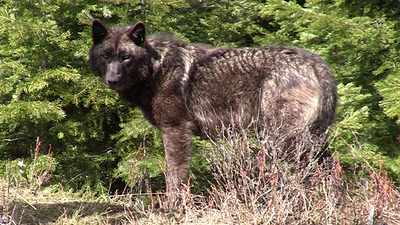
 The photo accompanying this post is of OR-3, currently a resident of the Ochoco Mountains. Photo by ODFW.”

*Special thanks to Oregon Wildlife News and Views for providing this information (http://sneakcat.blogspot.com/2011/10/wolf-confirmed-in-harney-county.html)

Read Full Post »


Arizona Daily Star, October 18, 2011 (posted 10/19/11) Show support with a letter to the editor!

Tim Steller

“Mexican officials have released five wolves in the Sierra San Luis mountains of northeastern Sonora, a Mexican environmental group said in a news release.

The wolf release occurred Oct. 11, the group Naturalia said. It gave no specific information about where the release occurred, but that mountain range abuts the New Mexico and Arizona borders with Sonora and ends about 80 miles south of the international border at Douglas.

The release came after years of planning by Mexican officials and opposition by U.S. ranchers, who are worried the wolves will cross into the United States and be completely protected from capture or killing.

Environmental groups have said they hope the wolves cross into the U.S. and mix with wolves living in the White Mountains of eastern Arizona.

Please write a letter to the editor celebrating this historic accomplishment!!  
Letters can be submitted to: letters@azstarnet.com.

Tips for your letter:
* Keep it short, no more than two or three paragraphs.
* Start by thanking the paper for their story and tie your letter to the article.
* Write from your own experience, in your own words. Talk about why Mexican wolves are important to you.

* Some talking points you could include are:
* With only around 50 Mexican gray wolves in the wild, new releases are critically important to increase the size and genetic health of the wild population.
* Mexico, along with Arizona, New Mexico, and western Texas, is part of the Mexican wolf’s historic range.
* True recovery of these highly endangered wolves requires several populations that have connectivity; this release in Mexico is a critical step towards making this happen.
* The wolves reintroduced in Mexico should receive full endangered species protections and not be restricted in their movements by arbitrary boundaries.”

**Special thanks to “Lobos of the Southwest” for providing this information! Check them out at:  http://www.mexicanwolves.org/index.php/news/553/51/In-the-Press-Wolves-released-in-Mexico-mountains-near-Arizona

Read Full Post »


“All the members of the Wolf Park community are in mourning today after the loss of the Park’s founder, Dr. Erich Klinghammer.  He passed away the morning of October 6, at  Lafayette’s  IU Health Arnett Hospital, at the age of 81.   Dr. Klinghammer had suffered from polycystic kidney disease for much of his adult life, and had been on dialysis for 12 years.

As a professor of ethology at Purdue University, Dr. Klinghammer started Wolf Park in 1972 using his own property, and his personal funds to create the 75 acre facility outside Battle Ground, Indiana. With the support of many who donated both their valuable time and money, the Park has grown and thrived.  As a 501 ( c ) 3 non-profit organization, it now maintains a Board of Directors, staff of eight, and dozens of volunteers who do the work to keep the organization strong.

Dr. Klinghammer is well known for his study of wolf behavior, contributions to the process of socializing captive wolves, and his English translation of the sixteen-volume Grzimek’s Animal Life Encyclopedia.  A native of Germany, he came to the U.S. after World War II, attended the University of Chicago, and became a professor at Purdue University in the 1960s.

The passing of Dr. Klinghammer leaves hundreds or perhaps thousands of people saddened, those whose lives he touched.  But they are also ready to carry on the Park’s mission and to carry this passion for wolf advocacy and education into the future.  This will mean that Dr. Klinghammer’s legacy will be ensured for generations to come.
A viewing and funeral service will be held on Sunday, October 9 at the
Soller Baker Funeral Home in West Lafayette, Indiana.  The viewing is
4-7 pm, and the service 7-8 pm, Eastern Daylight Time.

The Park is planning an event celebrating Dr. Klinghammer’s memory,
but the date has not been set.  It will probably be sometime in
November.”

**Special thanks to Wolf Park for providing this information (http://blog.wolfpark.org/?p=522)

Read Full Post »


Rob Klavins, Oregon Wild, has a message for you:

‘Wolf news has once again faded from the headlines of the states major papers. But we’re still working hard to protect the Imnaha Pack. Unfortunately anti-wolf interests are hard at work too. Worse yet – the state is listening.

Make sure your elected leaders hear from you!

In news that left us shaking our heads, we learned that the state is going to actively fight the temporary stay of execution for the alpha male and young Imnaha wolf. Despite thousands of calls, letters, and e-mails, ODFW seems hell-bent on killing wolves and doesn’t want to wait for a judge to tell them whether it’s legal or not.

If ODFW is determined to appease anti-wolf interests and Governor Kitzhaber won’t listen to the thousands of Oregonians (and people around the world) who have weighed in over the past few weeks, perhaps he’ll listen to the state legislature.

Please take a moment and contact your state legislators. Let them know that you support wolf recovery. Tell them you don’t want more of your money wasted on fighting to kill endangered wolves.

With anti-wildlife interests expected to continue their attacks on Oregon’s already weak wolf protections in the next legislative session, it’s important that your representatives know that this issue is important to you.

Wolf opponents are well-funded, vocal, and politically powerful. But one thing they don’t have is the support of the majority of Oregonians who value native wildlife. The extermination of Oregon’s wolves in the last century was one or our greatest environmental tragedies. Their recovery has the potential to be one of our greatest success stories. But it’s not going to happen if the state continues to bend to special interests with no interest in meaningful wolf recovery.

Tell your state legislator that it’s time to stop the killing.

For Wolves,

Rob Klavins
Oregon Wild

PS – Wolf opponents know the last kill order catalyzed the Oregon public and hope  they’ll forget about the kill order issued at their request. Kudos to those of you who wrote and had published letters to the editor. Don’t forget to take a moment to contact your state legislator today, but if your letter wasn’t accepted, I hope you’ll try again.”

Read Full Post »


“Wolf advocates headed to the state capitol today, demanding an end to wolf slaughtering.

Members of Friends of Animals, Predator Defense, and Howl Across America held a rally outside of the state capitol to tell Governor Schweitzer to stop the assault on gray wolves.

They say Montana does not know how many wolves live in the state, and it should not allow Montanans to hunt the animals.

They are encouraging supporters to boycott Montana and the states that persecute wolves.

Dr. Catherine Feher-Elston, Author of the Naturesong book series, pleads, “Stop killing wolves because wolves are an essential part of a strong ecological system and they contribute many millions of dollars to the state of Montana just in tourism alone.”

Advocates claim that there is no evidence that wolves negatively affect cattle or elk.

There were speakers on hand, posters, and loud chants to try to get the government’s attention.”

 
**Special thanks to KFBB.com for providing this information!

Read Full Post »


“LAS CRUCES – Two men in separate cases in federal court last week each pleaded guilty to fatally shooting a Mexican gray wolf, a misdemeanor.

Jack Bruton, 60, of Magdalena in Socorro County, and Ron Rains, 57, of Reserve in Catron County, said they initially thought they were shooting a coyote, for which no permit is needed.
 
Bruton was cited for shooting a Mexican gray wolf, which is protected under the Endangered Species Act, on April 15, 2010. Rains was cited for shooting a lobo on Dec. 2, 2010.
 
According to monthly reports from the U.S. Fish and Wildlife Service, a female wolf that roamed alone, designated F1154, was discovered dead under suspicious circumstances in April 2010. The wolf Rains shot appears to have been a 13-year-old female, designated F521, that was a member of the Fox Mountain Pack in New Mexico.
 
According to the U.S. Attorney’s Office, after Bruton shot and killed a wolf he thought was a coyote, he took the wolf to his home where he removed a collar, fitted with a GPS device. …
  
A U.S. magistrate judge fined Bruton $250 and ordered him to pay $4,095 in restitution, including $2,095 to cover the cost of the collar and GPS device.
 
In the other case, Rains was driving through the Apache National Forest near his home in Reserve when he shot and killed a wolf he believed was a coyote. After realizing he had shot a wolf, Rains reported the matter to local law enforcement.
 
Rains had been told two days before the shooting that a wolf was in the area where it was shot, according to court records.
 
The judge fined Rains $250 and ordered him to pay $1,000 in restitution.
 
Wildlife officials last month discovered a female wolf from the Arizona-based Rim Pack dead in a case that is under investigation.”

**Special thanks to Rene Romo / Journal South Reporter from Lobos of the Southwest for providing this information!

Read Full Post »


The wolf hunts are underway and Idaho plans to assassinate over 800 wolves, including pups and pregnant females.

PBS reports, “For the first time in years, hunting season for the once-endangered gray wolf is underway in Idaho and Montana to reduce the predator’s population. Cattle ranchers say the hunts are necessary to protect their herds, but environmentalists disagree. Science correspondent Miles O’Brien reports.”

Click on the link below to watch the video:

http://www.pbs.org/newshour/bb/science/july-dec11/wolves_09-19.html

*Special thanks to PBS News Hour for providing this information!

Read Full Post »


 Friday, September 23, 2011 6:12 pm (information provided by http://wallowa.com/free/odfw-to-kill-two-more-imnaha-pack-wolves/article_c3c8d792-e64a-11e0-bb05-001cc4c002e0.html)

“ODFW to kill two more Imnaha pack wolves 2 comments Oregon Department of Fish and Wildlife staff will kill two wolves from the Imnaha pack after confirming they were involved in another livestock loss.

The two wolves that will be targeted are the alpha male and an uncollared wolf in the pack. Data from the alpha male’s GPS collar confirm he was at the scene where the calf was killed earlier this week.

 Removing two wolves will reduce the size of Imnaha pack to two—the adult/alpha female and a pup born in spring 2011. Other wolves from the Imnaha pack moved to new areas earlier this year. “Today’s decision was not made lightly,” said ODFW Director Roy Elicker. “We’re working hard to conserve wolves in Oregon, yet be sensitive to the losses suffered by livestock owners.”

Yesterday’s investigation brings to 14 the number of livestock animals confirmed to be killed by the Imnaha pack in the past year and a half. ODFW or U.S. Fish and Wildlife Service confirmed seven losses this year (two in February, and on April 30, May 4 and 17, June 5, and Sept. 22) and seven last year. The 2011 losses are repeating a pattern similar to 2010, when the Imnaha pack wolves killed livestock April through early June and again in the fall (September). An additional two losses were determined to be probable wolf kills by this pack, including one on Sept. 7, 2011. ODFW assumed responsibility for wolf management in the eastern third of Oregon May 5, 2011, after wolves in this area were delisted from the federal Endangered Species Act. After four confirmed livestock losses in spring 2011, ODFW killed two wolves from the Imnaha pack in mid-May. Under the Wolf Conservation and Management Plan, ODFW kills wolves after chronic livestock depredation. Yesterday’s investigation scene showed clear evidence of a wolf attack. The large spring calf had been dead less than two days, yet was almost completely consumed, suggesting the entire pack had fed on it. The alpha female was observed near the investigation site the following day, and GPS collar data indicates the alpha male was with her at the time. This latest confirmed depredation occurred in the same area where livestock losses had been confirmed in May and June 2011, on private property with livestock operations near Joseph. Landowners in this area have been using numerous non-lethal measures to avoid wolf-livestock problems.”

Read Full Post »


Santa Fe Reporter, September 21, 2011  Wren Abbott
 
“There’s no gray in this issue,” Cerrillos activist Cindy Roper told attendees at a panel on animal trapping held in Albuquerque last week. “It’s very black and white.” No gray, that is, except the Mexican gray wolf, a federally listed endangered species barely hanging on to its southern New Mexico habitat. The wolf was the beneficiary of a 2010 ban on trapping in its territory enacted by former New Mexico Gov. Bill Richardson—and the victim of that regulation’s recent reversal under a vote by the state Game Commission. As far as the People’s Forum on Public Lands Trapping attendees were concerned, the issue was every bit as clear-cut as Roper described. The 30 members of the public who signed up to speak at the Sept. 14 event were all in favor of overturning state regulations that currently allow trapping on public lands, including wolf territory. State law allows use of steel-jawed leg traps at least 25 feet away from trails on public land in New Mexico for catching and killing “furbearer” animals including bobcats, coyotes, badgers, weasels, raccoons and other native mammals. The regulation has drawn fire because of the traps’ penchant for catching (and often injuring or killing) nontarget animals, including domestic dogs. In fall 2010, Richardson temporarily banned trapping in the southwestern part of the state, where Mexican gray wolves were introduced in a pilot program to bolster dwindling wild populations. The wolf has been listed as endangered since the 1970s, and the federal program to assist in its recovery also began at that time. The Game Commission lifted the wolf territory trapping ban on July 21 at a meeting held in Clayton, in the far northeast corner of the state. Activists complained at the forum that the meeting was deliberately held in a noncentral location; nevertheless, the commission received letters and emails from 12,000 New Mexicans who argued to leave the ban in place. Just 2,000 weighed in on the opposite side of the argument, but the commission voted in the minority’s favor. The seven-member commission is appointed by the governor; … Martinez has voiced concern that the wolf introduction program could hurt cattle ranchers, even though US Department of Agriculture statistics show that depredation by any animal, let alone endangered wolves, accounts for a tiny fraction of cattle losses Although only approximately 50 of the wolves are left in the wild, their current status is less restrictive than a full “endangered” designation, US Fish and Wildlife Service spokesman Tom Buckley tells SFR. … According to a recent federal report on the effect of trapping on the Mexican wolf population, traps have killed at least two of the wolves in New Mexico and injured seven. Two of those each had a leg amputated. Activists argue that those seemingly small numbers are substantial in proportion to the total gray wolf population. In addition, the death of an individual wolf can have larger effects because of wolves’ complex social order, causing a pack to fracture and decreasing its chances for survival, Sierra Club Rio Grande Chapter activist Mary Katherine Ray says. “It is such a small population that I think Richardson felt like we can’t afford any losses,” Ray says. “Any loss that we can do something about, we should do something about until this population gets better on its feet.” The Mexican Wolf Recovery Program set a goal of boosting the Mexican wolf population to 100 by 2006, and since the population is still just half that, the reasons for reversing the trapping ban are unclear. None of the Game Commission members returned calls for comment before press time. But retired New Mexico wildlife biologist John Klingel didn’t pull any punches when he told the forum what he thinks. “The Game Commission’s decision to open trapping in the Mexican wolf recovery area is illogical, irresponsible and unethical,” Klingel said.”

**Special thanks to “Lobos of the Southwest” for providing this information! (http://www.mexicanwolves.org/index.php)

Read Full Post »

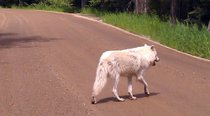
“When Mark Earls saw a shaggy, white wolf crossing a road in North Idaho’s Hoodoo Valley, he pulled out his cellphone to snap a picture of it. “What boggled him was that the wolf didn’t run away,” said his wife, Chelsea. “It didn’t appear to be afraid of him.” The wolf escaped from Wolf People, which operates a retail store on U.S. Highway 95 near Cocolalla, Idaho, and keeps captive wolves for viewing and filming, according to the Idaho Department of Fish and Game. The wolf apparently got out by digging underneath the fence, said Chip Corsi, Fish and Game’s regional manager. By some neighbors’ accounts, it has been seen in the area since June, acting like a stray dog. A captive wolf on the lam is a concern because it’s used to being around people. “It’s a habituated Canis lupus and it’s potentially dangerous,” Corsi said. “This thing either needs to go back into captivity or it needs to be euthanized.” Fish and Game officials have told the Bonner County Sheriff’s Department and neighbors in the Hoodoo Valley that it’s OK to shoot the animal on sight. Since it’s not a wild wolf, it’s not regulated under Idaho’s wolf season, which requires hunters to purchase a hunting license and wolf tag. A Fish and Game officer took the wolf’s picture to Wolf People owner Nancy Taylor, who confirmed that the wolf belonged to her, Corsi said. She also said that she had previously reported the wolf as dead, he said. “This was not reported to us like it was supposed to be,” Corsi said. “That’s a problem … I believe she’s required to report escapees pretty quick.” Neighbors said that a Wolf People volunteer had been taking fliers around, advertising a “lost dog” that looked like a wolf. Taylor has a state permit to keep captive wolves, and Wolf People’s website said the facility has 18 wolves. Several white wolves are pictured on the site, including a 135-pound male described as an arctic/timber wolf cross, and a 75-pound male. Some of the wolves are taken to a visitor center at the store on a daily basis, but others are kept in large enclosures at another site near Lake Cocolalla, the website said. Wolf People has been in operation for 21 years, Taylor said Wednesday, but she declined to discuss the incident. “I don’t feel free to comment at this time,” she said. “I can’t comment without knowing the facts, and I haven’t had a chance to investigate the situation.” Teresa Gavin lives in the Hoodoo Valley, about 8 miles southeast of Priest River. The picture of the white wolf was snapped on a road adjacent to her property. She keeps a sharp eye on her 4-year-old twins when they’re playing outside but thinks the wolf poses more danger to her dogs and her horse. “Let’s hope that someone finds him before any harm is done to anyone or their animals,” Gavin said of the wolf. She thinks Wolf People would have had a better chance of getting the animal back alive if the escape had been reported immediately. Chelsea Earls keeps a gun handy when her children are playing outside. She said that she and her husband have been vigilant about predators since a coyote killed the family dog last winter. “It’s not reassuring knowing there’s a wolf around,” she said. “It may be used to people, but it’s still a wild animal.” **Special thanks to Becky Kramer The Spokesman-Review for providing this information.

Michael Heath of Wolf Preservation states, “they have a duty and obligation to safely capture this animal.  Residents should report any sightings to proper authorities and guarantee it’s protection from human threats.  Authorities should properly educate residents regarding factual information about wolves and take pro-active measures to co-exist with them, not to hunt or destroy this important species.”

Read Full Post »

« Newer Posts - Older Posts »