Feeds:
Posts
Comments

Archive for the ‘Wolf Current Events’ Category


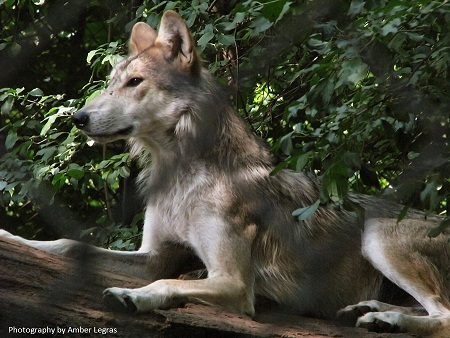
Mexican Wolf on log

“As the Arizona Daily Sun’s recent editorial, “Wolf expansion plan needs more details” points out, Flagstaff residents can provide a significant voice in restoring this ecologically critical, charismatic creature to its rightful place in northern Arizona.

The potential for wolves to return, as the Daily Sun reported back in 2007, has been considered for well over a decade.

The Mexican wolf is one of America’s most endangered mammals. With only an estimated 75 of these wolves in the wild, several management actions are urgently required for its survival. In mid-June, the U.S. Fish and Wildlife Service (USFWS) proposed to remove the gray wolf from the list of threatened and endangered species, except the Mexican wolf, which will remain an endangered subspecies subject to certain provisions that have proven problematic in the past.

Because the entire existing Mexican wolf population is derived from only seven survivors rescued from extinction, the agency’s proposal to allow direct releases of Mexican wolves throughout the existing Blue Range Wolf Recovery Area is absolutely critical. This action can and should be done immediately.

Twelve years ago a panel of four imminent carnivore scientists urged a revision of the Mexican Wolf Recovery Plan, laying the scientific foundation and imperative to enlarge the recovery area. The USFWS needs to quit stalling and complete a comprehensive recovery plan addressing the current plan’s shortcomings — and let the public see it — and at the same time allow wolves to be reintroduced into additional suitable locations as described above.

The Daily Sun’s editors brought up a good question: Why stop northern wolf migration at Interstate 40 as the USFWS proposes? There is nothing sacred and nothing scientific about the I-10 southern recovery area boundary, nor I-40 to the north. In fact, the USFWS suggests extending the recovery area south of I-10 to the Mexican border. However, the agency completely ignores the recommendations of its own Mexican wolf science team, who emphasize the wolf’s long-term survival requires connected habitats north of I-40, including the Grand Canyon region and portions of southern Utah and Colorado.

Wolves are legendary wanderers. While highways present serious hazards to all wildlife, wolves are capable of finding a way across. For example, one female traveled a circuitous route of more than 3,000 miles from Yellowstone to Colorado. She successfully crossed I-80 three times before she was poisoned in 2009. Closer to home, a female Mexican wolf traveled more than 200 miles and successfully crossed I-40. Sadly, a vehicle later struck and killed her in the fall of 2000, 12 miles north of Flagstaff on U.S. 89.

Wolves are social, family-oriented creatures that play a critical role in healthy, resilient ecosystems by affecting the behavior and numbers of prey species. The overabundance of grazing and browsing wildlife often results in degradation of forests, streams and grasslands.

For example, the wholesale slaughter of carnivores, including wolves, in the early 20th century on the North Kaibab forest and Grand Canyon National Park, precipitated an explosion of mule deer populations that dramatically reduced forbs, grass, aspen saplings, and other native vegetation. Elk, a recent migrant to Grand Canyon National Park and the Kaibab and Coconino national forests, continue to damage riparian vegetation as well as aspen and other native plants.

The recovery of viable wolf populations can dramatically improve the health and resilience of forest, stream, and grasslands. For example, the return of the wolf to Yellowstone discouraged elk from lounging and trashing streamside willow and cottonwood vegetation.  Now, increased vegetation stabilizes stream banks while shading and cooling many sections of creeks and rivers. Increased willow and other native vegetation allowed beaver to return and create numerous ponds providing sanctuary for fish and other wildlife.

Wolves kill and harass coyotes, benefiting hawks and foxes that depend on rodents hunted by coyotes. By killing and scaring off coyotes that otherwise prey on pronghorn antelope, pronghorn fawns are much more likely to survive in areas dominated by wolves. That’s because wolves favor larger prey and generally leave pronghorn alone.
As the most recent polls confirm, most Arizona residents recognize the critical role wolves play in nature, and believe they belong in northern Arizona.  While the deadline for requesting locations for public meetings has passed, you can submit your wolf recovery comments online at: http://www.regulations.gov/#!submitComment;D=FWS-R2-ES-2013-0056-0001

**Special thanks to “Lobos of the Southwest” and Kim Crumbo, a conservation director at Grand Canyon Wildlands Council in Flagstaff, for providing this information!  www.grandcanyonwildlands.org or (928) 606-5850.

Read Full Post »


mexican wolf

“SILVER CITY – A yearling Mexican gray wolf died over the weekend in the Apache-Sitgreaves National Forest in Arizona during what Fish and Wildlife called “routine handling,” according to a news release from them. Members of the Mexican wolf interagency field team from the Arizona Game and Fish Department were conducting an intentional capture effort using the approved protocol to fit radio-telemetry collars on members of the Bluestem Pack that remained uncollared, when f1289, a previously collared animal, was captured in a padded foot trap.

The trap sent a signal when it sprung and experienced team members were on site within 15 minutes. The animal moved the trap into rocky terrain on the edge of a slope, making it difficult for the team to process the wolf. Using a catch pole and Y-pole (like those used for capturing and restraining domestic dogs), the team removed f1289 from the trap and during processing found that she was no longer breathing. Emergency treatment including CPR was unsuccessful in reviving the wolf.

The team on site had years of wolf capture experience and had just completed a refresher capture training course the week prior, the release states. The death was the third capture-related mortality in the wild in the 15-year history of the Mexican wolf reintroduction project, according to Fish and Wildlife.

“The loss of this wolf is a very unfortunate and unusual outcome to a routine management activity that is necessary to the recovery of the Mexican wolf,” said Chairman John Harris of the Arizona Game and Fish Commission. “Radio collars are the best method for tracking wolves and knowing where the wolves are is critical for effective management.”

The Service will be conducting a necropsy at a veterinary diagnostic lab in Albuquerque, to determine the cause of death.

The Mexican gray wolf was added to the federal endangered species list in 1976 after it was nearly wiped out by government trapping and poisoning designed to help cattle ranchers.”

**Special thanks to The Associated Press for their contribution of this article and reposted through “Lobos of the Southwest,” http://www.mexicanwolves.org/index.php/news/1082/51/Young-Mexican-gray-wolf-dies-during-handling-in-Arizona

Read Full Post »


Kentucky Wolf

This photo posted on KentuckyHunting.net shows the first wolf to wander Kentucky in over 150 years, dead and exhibited as a trophy.

“According to a recent announcement by state wildlife officials, a 73-pound, federally endangered female gray wolf was shot dead by a hunter in Munfordville, Kentucky earlier this year. Were it Alaska or Idaho this wouldn’t be news, but Kentucky has not seen wild roaming wolves since the mid 1800s. The gray wolf was shot in March —but state officials were skeptical that it was even a wolf, believing that it was more likely someone’s German shepherd.  But following months of DNA analysis, scientists confirmed it was indeed Kentucky’s first wolf in over a century and also its last.

DNA from the wolf was analyzed by the U.S. Department of Agriculture’s National Wildlife Research Center in Colorado. According to the analysis, the Kentucky gray wolf had genetic traits akin to wolves in the Great Lakes Region. The U.S. Fish and Wildlife Service Forensics Laboratory in Oregon carried out independent analysis and confirmed the USDA’s findings.

How the wolf came to be in Kentucky is a mystery.

Wildlife officials identified the man who killed the wolf as Hart County resident James Troyer, who shot the animal believing it to be a coyote.

Its unlikely that charges will be brought against Troyer as, until now, there would have been no reason to believe that a wolf existed in Kentucky. However, state and federal law prohibits the possession of gray wolves, live or in parts, so officials took the pelt from Troyer.

Gray wolves are on the federal endangered species list, but following a controversial proclamation that wolves are “recovered” by the US Fish and Wildlife Service, the agency has proposed to remove wolves from the list.”

**Special thanks to Russ McSpadden / Earth First! News, http://earthfirstnews.wordpress.com/2013/08/19/wild-wolf-in-kentucky-first-in-150-years-killed-by-hunter/, for providing this information!

Read Full Post »


Royale Isle Wolves

“The wolves of Michigan’s Isle Royale National Park have not been doing well, but there’s some unexpected good news.

Earlier this year, researchers from Michigan Technological University who study the wolves reported there were just eight wolves left – and they reported they were unable to find any evidence of pups born to those wolves.

But now, that has changed. Michigan Tech researcher Rolf Peterson heard two or three wolf pups in July.

Peterson doesn’t have phone access on the island. But by email, he told me he thinks the pups were born this spring, and they were probably born to a pack called the West End Trio. Here’s an excerpt from his email:

“The pups born this year mean that the wolves have not completely lost all genetic viability, but it doesn’t mean they’re about to recover, and it doesn’t mean that they have somehow escaped from genetic problems.  Twenty years ago the population was in approximately the same situation, with a dozen wolves present (the difference now is that the population is lower, because of the mortality from the mine shaft incident) – only two of the three packs present were reproducing, and litter size was small.  Now we have one of two packs that reproduced (this year, no packs reproduced last year), and litter size was small.  In the early 1990’s the situation was resolved by the arrival of an immigrant male with some more competitive genes, and the wolf population was strong for another 15 years.”

The National Park Service is in the process of figuring out what to do about the island’s wolves.

Park Superintendent Phyllis Green says the pups’ birth might buy the NPS a little more time to make that decision.

“We are excited that there are pups this summer and in that sense the wolves of Isle Royale continue to surprise us with their resiliency. And I think that’s one of the questions that we have, is whether we disrupt the current pack orders or whether we let them live their lives there until such time as it passes. So at this point in time we’re still in the deliberative stage. We’re happy to hear there’s an addition to the wolf population but they’re still tenuous and it’s still a significant decision,” she says.

The three main options on the table are:

  • Let the current population go extinct, and do nothing.
  • Let the current population go extinct and then reintroduce wolves to the island.
  • Attempt to genetically rescue the current population by bringing in some new wolves.

Green says the NPS might add one or two more options. They’re preparing material for the “scoping process,” which is when the public gets a chance to weigh in.

Isle Royale is mostly wilderness. I asked Green how difficult it is for the Park Service to consider stepping in to help the wolves in this situation:

“Wilderness is a factor but it doesn’t preclude action, is what I would tell you. It’s a combination of a number of policies. I think most of the American public does want their parks to be relatively hands-off with nature taking the lead in how change occurs at a park. For the most part, that’s what happens at Isle Royale. The question that is raised of course is the fact that with climate change and the potential loss of this ice bridge being frequent enough for genetic replenishment – should you make a change in policy at this point in time? And that’s why we’re taking the time to discuss it pretty thoroughly,” she says.”

You can let the Park Service know what you think should be done about the island’s wolves by emailing:  isro_wildlife@nps.gov

**Special thanks to , http://michiganradio.org/post/wolf-pups-good-sign-struggling-population-isle-royale, for providing this information!

Read Full Post »


Center for Biological Diversity

Agency  Backtracks on Attempt to Exclude Wolf Experts From Review of Delisting Proposal

“WASHINGTON— The U.S.  Fish and Wildlife Service today announced that it will put on hold the  scientific peer review of its proposal to remove protections for gray wolves  across the country while it reviews its own actions leading to the  disqualification of three scientists from the review panel.

Last week it was revealed  that three scientists were excluded from the peer review because they signed a letter calling into question some of the science behind the proposal to delist the  gray wolf. While the Service initially claimed that it had not asked for the  three scientists to be removed, emails between the contractor supervising the  peer review process and the scientists themselves confirmed that the Service  had in fact done exactly that.

“We’re glad to see the Fish and Wildlife Service  admit this mistake and hope this means there will be a true independent review  of this deeply flawed proposal to remove protections for gray wolves,” said  Brett Hartl, endangered species policy director with the Center for Biological  Diversity. “Unfortunately, this is but one example of how the Fish and Wildlife  Service has been twisting the scientific process to get the desired political  result of no more protections for wolves.”

Peer review, a step required  by the Endangered Species Act, is critical in ensuring that federal protections  are not lifted before a species is fully recovered. In the case of the wolves,  the Fish and Wildlife Service is contracting with a private company to conduct  the peer review. Recognizing their scientific expertise, the private contractor  hired for the review contacted several of the signers to the letter to  participate in the review, including Dr. John Vucetich, Dr. Robert Wayne and  Dr. Roland Kays.  As part of its  contract, the outside contractor was required to submit the résumés  of each peer reviewer to the Service with the names redacted. However, because  each of these scientists has published hundreds of articles, it was easy for  the Service to deduce who the contractor had selected. The Service then sent  the contractor a copy of the letter asking that any signers be removed.

“The Service should take a moment to reflect on why  it felt it was necessary to go to such lengths to control the peer review  process of this proposal,” said Hartl. “Perhaps it’s because the decision to  delist the gray wolf is based on politics, not solely on the best available  science.”

This is the first time the Fish and Wildlife Service  has imposed restrictions at the outset for whether scientists could be involved in peer review based on  what it termed an “affiliation with an advocacy position.” In contrast, during  the review of the 2012 proposal to designate critical habitat for the northern  spotted owl, the agency invited 40 scientists to participate, a number of whom  had spoken out for stronger protections for the owl, to review the proposal and  none were preemptively disqualified from the review. In what was a clear  attempt to limit meaningful scientific comment, the peer review process was put  in jeopardy.

The Service also appears to have circumvented proper  scientific channels in concluding that there are two different wolf species in  the United States, the gray wolf (Canis  lupus) and the eastern wolf (Canis  lycaon), a determination that formed a primary basis for removing  protections. Rather than attempting to publish their taxonomic findings in an independent,  outside journal subject to normal peer review processes, the Service revived North American Fauna, an internal agency  publication that had been dormant for more than 20 years, just to publish this  one taxonomic proposal on wolves.

The letter from the scientists and another from the American Society of Mammalogists raised a number of scientific  questions about the agency’s proposal to remove protections for wolves, which  today survive in just 5 percent of their historic range in the lower 48. In  particular, they questioned how wolves could be considered recovered when the  species is absent from significant portions its range, and a determination by  the Service that there are two species of wolves in the United States, the gray  wolf (Canis lupus) and the eastern  wolf (Canis lycaon). These are  important questions that should be thoroughly vetted.

Background  on Scientists Excluded from Review:

The following scientists were excluded based on the  Service’s new restrictions on peer reviewers:

  • Dr. John  Vucetich of Michigan Technological University. Vucetich has been studying the  wolves of Isle Royale National Park for the past 20 years and is one of  nation’s leading wolf researchers. Vucetich was a member of the Mexican wolf  recovery team and in 2011 participated as a peer reviewer of the Service’s  decision to drop federal protections for the gray wolf in Wyoming.
  • Dr. Robert Wayne  of the University of California, Los Angeles. Wayne is a leading wildlife  geneticist and has studied the evolutionary and ecological relationship between  wolves and other canine species in the United States and around the world.
  • Dr. Roland Kays  of North Carolina State University. Kays is a zoologist whose research focuses  on the ecology and conservation of mammals. Kays’ research has focused on the  genetic relationship and evolution of wolves and coyotes in North America.”

**Special thanks to Center for Biological Diversity, http://www.biologicaldiversity.org/news/press_releases/2013/wolf-08-12-2013.html,  for providing this information! 

Read Full Post »


Wolf
By 
Published: July 17, 2013

“There is a unit within the Agriculture Department’s Animal and Plant Health Inspection Service called Wildlife Services. Its official mission, according to its Web site, is “to resolve wildlife conflicts to allow people and wildlife to coexist.” This has meant, since 2000, some two million dead animals. The list includes coyotes, beavers, mountain lions, black bears and innumerable birds. The agency’s real mission? To make life safer for livestock and game species.

There will obviously be times when livestock and predators come into conflict, when coyotes kill lambs and black bears become too accustomed to humans and cause genuine harm. But Wildlife Services’ lethal damage is broad and secretive, according to a series in The Sacramento Bee last year. The techniques are old-fashioned — steel traps and cyanide cartridges — and the result, according to a new study in the journal Conservation Letters, is a program that is wasteful, destructive to the balance of ecosystems and, ultimately, ineffective.

Under one name or another — for years it was part of the Interior Department — the agency has been doing its work as quietly as possible, though not without protest from Congress, scientists and members of the public who got wind of what was going on. Two House members — John Campbell, a California Republican; and Peter DeFazio, an Oregon Democrat — have pressed for Congressional hearings and have asked the Agriculture Department’s inspector general to investigate Wildlife Services.

The agency, opponents say, has not scientifically evaluated the consequences of its actions and has consistently understated the damage it does to “nontarget” species, like songbirds. Its work also undercuts other programs intended to protect the balance of natural ecosystems.

It is time the public got a clear picture of what Wildlife Services is up to, and time for the Department of Agriculture to bring the agency’s work into accord with sound biological practices. Resolving wildlife conflicts need not involve indiscriminate killing.”

**Special thanks to “The Editorial Board” for providing this information (http://www.nytimes.com/2013/07/18/opinion/agricultures-misnamed-agency.html)

Read Full Post »


wolf in harney county

“McIrvin says killing the wolves is the only solution. He believes the calf carcass should have been laced with poison to get the “culprits.”

“Until somebody gets serious about opening season on these wolves, I don’t know that there is any answer,” he said.

Just as he did last year, McIrvin plans to continue to refuse compensation from the state.<


Excerpted from:

Another calf found dead as ranchers question state wolf investigations

By MATTHEW WEAVER

Capital Press

A northeast Washington cattle rancher says wolves killed a three-day-old calf from his operation last week.

Len McIrvin is owner of the Diamond M Ranch in Laurier, Wash. That’s the ranch where Washington State Department of Fish and Wildlife officials in September 2012 killed six wolves from the Wedge Pack. The wolves had killed at least 17 cattle from the ranch.

The killed calf was dragged from a barbed wire calving enclosure 200 yards from human presence, McIrvin said. There were fresh wolf tracks nearby in the river, he said.

“We know it was a wolf, but they can’t confirm it because the calf was 95 percent eaten up,” he said, noting coyote tracks were also found in the area.

Stephanie Simek, WDFW wildlife conflict section manager, said the case was unconfirmed as a wolf kill because there were signs of coyotes in the area. The six-strand barbed wire fence did not show signs of a larger carnivore entering the area, she said.

“The issue was the carcass was so far gone, you really couldn’t get a lot of those measurements,” said Dave Ware, WDFW game program manager. “You just couldn’t tell for sure what killed it.”

The department has been monitoring wolf activity, but didn’t find anything that would merit setting a trap to try to collar wolves.

“We’re certain there are wolves in the Wedge area again,” Ware said. “We’re seeing plenty of activity.”

McIrvin said his cattle are on the range, so he hasn’t found other kills or injuries.

“We know the wolves have been harassing them,” he said. “We know they’re there, we hear them howling, they’ve got the cows all chased off the range again. We put them back weekly, but the wolves are running them daily.”

The Stevens County Cattlemen’s Association believes the department’s unconfirmed ruling on the calf shows a “troubling trend” in which the department does not confirm wolf kills, a determination that could lead to killing the predators.

Association spokesperson Jamie Henneman said WDFW needs to clearly outline how they will deal with wolves.

“Right now we are seeing the department buckle under pressure from environmental groups who have absolutely no skin in the game,” she said. “There is no impact to their finances or livelihood if wolf management is done in a poor, watery or slipshod fashion. Band-aid payments of compensation will not solve this problem.”

Ware believes the department’s history proves it is willing to kill wolves, but said it will not always completely be on the same page as ranchers.

“Second-guessing what our field staff does seems to be a popular sport for both sides,” he said. “In their hearts, most (ranchers) feel, ‘Wolves are the things different from the landscape — it must be wolves that caused this.’ In some cases, we can verify that, in some cases, we just can’t.”

McIrvin says killing the wolves is the only solution. He believes the calf carcass should have been laced with poison to get the “culprits.”

“Until somebody gets serious about opening season on these wolves, I don’t know that there is any answer,” he said.

Just as he did last year, McIrvin plans to continue to refuse compensation from the state.

“We are not in the business of raising cattle to feed wolves. We’re in the business of raising cattle to be a cow ranch,” he said.”

Information

Washington Department Fish and Wildlife:

http://wdfw.wa.gov/conservation/gray_wolf/

Stevens County Cattlemen Association:

http://stevenscountycattlemen.wordpress.com

Read Full Post »


fladry_wind

Fladry is a line of rope mounted along the top of a fence, from which are suspended strips of fabric or colored flags that will flap in a breeze, intended to deter wolves from crossing the fence-line.[1] Fladry lines have been used for this purpose for several centuries, traditionally for hunting wolves in Eastern Europe.[1] They are effective temporarily, as the novelty may soon wear off, usually between three to five months, and can be used to protect livestock in small pastures from wolves.[1]

This technique is sometimes also used to alert horses and cattle to the presence of a fence, as the use of smoothwire fences and one strand of electric may not be seen by an animal unfamiliar with a new home.


“GRANTS PASS, Oregon — The Oregon Fish and Wildlife Commission on Friday adopted provisions of a lawsuit settlement that will make Oregon the only state in the West where killing wolves that attack livestock is a last resort.

The rules adopted by the commission amend Oregon’s Wolf Management Plan, along with statutory provisions enacted by the Legislature that will be signed by Gov. John Kitzhaber.

The rules require ranchers to show they have taken non-lethal steps, such as alarm boxes and low strings of fluttering plastic flags known as fladdery, to protect their herds before the state will send out a hunter to kill a wolf. There must also be hard evidence, such as GPS data showing a radio-collared wolf was in the area when a cow was killed, that wolves have attacked four times.

In return, ranchers get new rights to shoot wolves that they see attacking their herd, but only if those non-lethal protections are in place, and attacks have become chronic.

The settlement represents a new level of cooperation between conservation groups and ranchers, who have long fought over restoring wolves in the West, where they were wiped out by bounty hunters in the early part of the 20th century.

Ranchers downplayed the significance of the settlement.

“I don’t think it’s a whole lot different from the wolf plan already being implemented,” said Kate Teisl, executive director of the Oregon Cattlemen’s Association. “Now there’s just more documentation. Ranchers are out there doing all they can to keep their animals alive, including the non-lethal measures.”

But wolf advocates said it was that documentation of non-lethal steps that was groundbreaking.

Rob Klavins of Oregon Wild said the old plan talked about conservation of wolves being a priority, but it was so ambiguous that it was ineffective.

“It’s now up to the Oregon Department of Fish and Wildlife, the livestock industry, and the conservation community to honor the agreements that we have made,” he said. “If we do so, I am optimistic we will continue to see conflicts between wolves and livestock continue to be rare, and the need to kill wolves even rarer still.”

Brett Brownscombe, natural resources adviser to the governor, said making the rules clear was important as Oregon’s wolf population continues to grow, and the Obama administration moves toward lifting federal protections for wolves in areas they have yet to repopulate.

Oregon Wild and other conservation groups had sued the Oregon Department of Fish and Wildlife, claiming that a kill order on the Imnaha pack, the first to establish in Oregon as well as the first to attack livestock, threatened to wipe out the pack. Conservation groups claimed the actions violated the Oregon Endangered Species Act, which still protects wolves in the eastern two thirds of the state, where federal protections have been lifted.

The Imnaha pack only has one more strike against it before a kill order can be imposed, but so far, it has not been linked to an attack.

The Oregon Court of Appeals barred the state from killing wolves for more than a year before the settlement was reached between conservation groups, the Oregon Cattlemen’s Association, and the governor’s office. During that time, the number of wolves in Oregon went up, while the lethal attacks on livestock went down. In Idaho, where the Oregon packs had migrated from, the numbers of lethal livestock attacks went up, along with the numbers of wolves killed, primarily by trophy hunters and trappers.”

**Special thanks to JEFF BARNARD  Associated Press, for providing this information! (http://www.dailyjournal.net/view/story/27bc716ebcfd4046b4ba205ed9310261/OR–Wolf-Settlement/)

Read Full Post »


Mexican Wolf on log

“ALBUQUERQUE, N.M. (AP) — The effort to return the endangered Mexican gray wolf to the American Southwest has hit another stumbling block.

Federal and state wildlife officials confirmed Friday that a female wolf that was released into the wild in early May was found dead just one month later in southwestern New Mexico.

The animal, dubbed F1108, had been shot. Authorities released no other details and said the investigation was ongoing.

Top officials with the U.S. Fish and Wildlife Service have long pointed to illegal shootings as one of the challenges to reintroducing Mexican gray wolves in New Mexico and Arizona. Since reintroduction efforts began in 1998, there have been 50 illegal killings documented, with four occurring just last year.

Environmental groups called the latest wolf death a tragedy.

“The Mexican gray wolf population cannot afford the loss of another individual, let alone a breeding female with pups,” said Nancy Gloman, vice president of field conservation for Defenders of Wildlife. “This wolf and her pups were another critical step toward the promise of recovery.”

A survey at the beginning of the year indicated there were at least 75 wolves in the wild in the two states, marking the largest population since the reintroduction program began. Environmentalists have been pushing the federal government to release more captive animals to boost those numbers.

The Fish and Wildlife Service has cited genetic concerns for moving cautiously with any releases, while ranchers and some rural community leaders have voiced concerns about their safety and livelihoods being compromised by more wolves on the landscape.

Ranchers have blamed the predators for numerous cattle deaths over the years. In June, officials investigated the deaths of three calves in Arizona. Two of the deaths were found to have been caused by wolves.

The wolf found shot in late June was one of four captive animals that the Fish and Wildlife Service had hand-picked for release this spring with the hope of bolstering the wild population. The wolves were to be released in pairs — one in the Gila Wilderness and the other in southeastern Arizona.

After weeks of waiting, the agency pulled the plug on the Arizona release and returned that pair to captivity. The pair in New Mexico fared no better with the male being captured for roaming outside of the recovery area just days after his release.

Soon afterward the pair’s pups were presumed dead, and the female started roaming. She was last located in the northeastern corner of the Gila forest near Kline Mountain.”

**Special thanks to SUSAN MONTOYA BRYAN, Associated Press, for providing this information! (http://www.sfgate.com/news/science/article/Mexican-gray-wolf-shot-killed-in-NM-4663523.php)

Read Full Post »


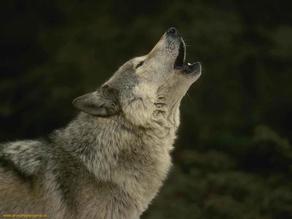
howling wolf

“Yellowstone officials expressed displeasure at a Montana state plan to increase grey-wolf hunting that also rejects the idea of a no-hunting buffer near the Park.The new wolf-hunting rules, as they stand now, would allow a hunter to bag five wolves during a longer season and set quotas in areas outside Yellowstone. When setting the new Montana wolf hunt rules, the Montana Legislature specifically prohibited a no-hunting zone near the Park.

Still, there’s some wiggle room, and Montana wildlife commissioners are expected to use that wiggle room to lessen the impact on Yellowstone wolves. Hunters near the Park would be allowed only one wolf, and the areas where quotas would apply is expanded.

That may not be enough to placate Yellowstone officials, who say the new Montana wolf hunt law targets Yellowstone wolves. Wildlife doesn’t respect human boundaries like Park limits and state lines, and given the propensity of wolves to wander over a large range in the course of a year, it’s inevitable that many will go into Montana — where, Montana Fish, Wildlife and Parks officials say, the wolves become Montana’s problem. Last year 12 Yellowstone wolves were killed in Montana, Idaho and Wyoming after leaving Yellowstone.

From AP:

Yellowstone’s chief scientist Dave Hallac said he appreciated the changes but added that it was unclear whether the commissioners will accept the agency’s recommendations.

“The park is not anti-hunting,” Hallac said. “What we’re trying to do is balance the conservation of wolves in Yellowstone, which are not an exploited population right now, with some level of reasonable harvest.”

Wildlife commission chairman Dan Vermillion said the move to lower the bag limit to one wolf near Yellowstone – versus five animals elsewhere in the state – was about increasing hunter opportunity, so that one hunter couldn’t fill the entire quota.

The presence of wolves in Yellowstone is still a contentious issue for sportsmen, who argue wolves diminish the number of elk in the region, and area ranchers who say their livestock is threatened by wolves.”


**Special thanks to the “Yellowstone Insider” for providing this information (http://yellowstoneinsider.com/2013/07/09/officials-montana-wolf-hunt-sets-sights-on-yellowstone-wolves/)!

Read Full Post »

« Newer Posts - Older Posts »