Feeds:
Posts
Comments

Archive for the ‘Wolf Current Events’ Category


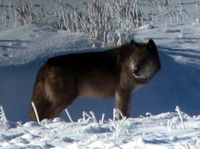
snow wolf

“How much more despicable can the DNR be when catering to their bear hounder puppet masters? You are not going to like the answer. The Wisconsin DNR is proposing to allow hounders to pit their dogs against wolves with very few restrictions and even believing that Judge Anderson’s recent ruling gives them full endorsement to do so. If you care anything for wolves or wildlife this document will make you furious:

http://dnr.wi.gov/About/NRB/2013/February/02-13-2B1.pdf

Essentially the DNR document that outlines this disgusting proposal uses hearsay from bear hounders and their propaganda to justify what they will be doing to wolves. They even contradict themselves numerous times while openly admitting that bear hounders broke the law by “accidentally” “trailing” wolves when they were and endangered species. To sum up what the document allows:

  • No breed restrictions will be in place. This means that hounders can choose breeds specifically bred to fight wolves to pit against them. This is perfectly fine according to the DNR because Wisconsin has a “law” that makes it illegal to kill wild animals with dogs. And we know how honest bear hounders are.
  • No leashes will be required. This is because we all know just how difficult it would be for the hounder to have to leave the comfort of their vehicle to actually observe their vicious dog packs terrorizing wildlife. The DNR then talks about how hard it would be for the hounder to “harvest the animal humanely” if they have to keep their dogs on a leash. As we all know they are such humanitarians and care so much about the pain and suffering they inflict on wildlife.
  • DNR will trust hounders to teach other hounders how to go after wolves with no certification required because the DNR has no “expertise” in this area? Really? So how are they expected to “enforce” what they have no knowledge of?
  • No restrictions about where hounders can let their dogs run rampant in wolf habitat. Remember that hounders will be allowed to let their packs of vicious dogs run completely unsupervised through wolf, bear, and other wildlife habitat during times that coincide with bear hibernation. Whose to say that hibernating bears will not be harassed or even killed by these packs of vicious dogs? The DNR obviously doesn’t care.
  • Finally they want to allow hounders to “train” their dogs on wolves with no restrictions right through the breeding, denning, and birthing seasons until the end of March. When pregnant females need to be preparing for the birth of their litters they will be harassed or even attacked by unlimited packs of vicious dogs. The fine print reads that they can “only” use packs of “six” dogs at a time to “train”but that they can switch out to new packs of dogs if the original pack gets tired. So essentially unlimited dogs will be allowed to go after wolves during this very sensitive time. The DNR even has the gall to call this a “reasonable fair-chase restriction.”

And here are the few “restrictions” the DNR will be placing on hounders:

  • Hounders cannot go after wolves at night. How generous of them.
  • Hounders cannot be reimbursed for dogs killed by wolves while hunting or training against wolves. But of course nothing stops a hounder from claiming that they were “hunting coyotes” so they can get that nice fat $2500 check for their “beloved” dog. In this document the DNR even goes so far as to repeat the bear hounder propaganda about how much they “care” about their dogs.
  • The DNR will trust hounders to “call off” their dogs when they think there are more than “1 or 2″ wolves in the vicinity. Of course how can they “call them off” when they are sitting in their trucks and the dogs are running rampant through the woods?
  • The the DNR brags about how there were “only” 11 dog “depredations” in 2012. They claim that hounders are being more “careful” about where they let their dogs run. That’s funny considering now they are going to now pit those very same dogs that they claim to “care” for up up against wolves in the same areas. Remember one of the reasons Rep. Scott Suder (R-ALEC) and his anti-wolf allies claimed for the the wolf kill bill was that wolves were “decimating” hunting dogs. Now the DNR refutes that. Wow.
  • Finally, hounders can use radio receiving devices to “track” their dogs but can’t use those same devices to seek out radio collared wolves. Of course again we all know how “honest” and “ethical” hounders are.

Then we have the DNR even going so far as to claim that it has been “legal” to “train” dogs against wolves since they were delisted on January 27, 2012. Really? At this time the wolf kill bill had not even passed and wolves were not considered a “game” species yet. So according to the DNR hounders could legally put their dogs up against wolves from the day they were removed from the ESA list? So does this mean hounders can “train” their dogs against any “non-game” species that they want with no restrictions? Then the DNR points out that hounders have let their dogs “unintentionally” chase wolves for years even when they were under federal protection. This is ok? Do these sadists have any rules they are required to follow?

Then we have the quote of all quotes. If you are drinking anything swallow it before reading this:

“We have strived to base our season on science, social desires, and regulations that are reasonable, practical, and acceptable.”

Reasonable, practical, and acceptable to whom? The only ones who find this abomination to be acceptable and reasonable are the bear hounders, their puppets in the DNR, and legislature. There is nothing “science” based about allowing packs of vicious dogs to go after wolves with almost no restrictions. When even the wolf hating states out west do not allow this that tells you something. Wisconsin is the ONLY state that allows this insanity and has the gall to call it “science.” And this garbage about “social desires” is just that, garbage. These anti-wolf zealots will never be satisfied as long as on free wolf is allowed to live. I have it from well placed sources that many within the DNR do not at all agree with the Stepp/Thiede propaganda and their zeal for allowing doges to go after wolves, but they are afraid to speak out. They need to speak out or this is only going to get more extreme and sadistic if that is even possible.

It is also shameful the the Department of Interior under “Cowboy Ken” Salazar has allowed plans like Wisconsin’s to be implemented unchecked. So much for that “five year monitoring” they claim to have in place. This also falls on President Obama who should be ashamed that this is happening under his watch. So much for being a “Progressive.”

The HSUS better use this document as a focal point of their lawsuit to prove this is nothing more than an eradication/revenge hunt to placate bear hounders and anti-wolf zealots. We must also be fully involved by attending the Spring Election of the “Conservation Congress” in each of our counties on April 8th. There will be several “advisory” questions about the use of dogs against wolves. We must mobilize ethical hunters and living wildlife advocates to attend and vote for proposing a law to ban the use of dogs against wolves, and vote against the various anti-wildlife proposals being offered. The DNR continues to spit in the face of anyone who cares about wolves and wildlife and it is up to us to stop them. No more apathy, the time is now to step up and take our wildlife and wild lands back from the bear hounders/trappers and their sadistic allies. The DNR can no longer use the veil of “science” to justify their pandering to the most sadistic and anti-wildlife groups out there.”

**Special thanks toWisconsin Wildlife Ethic-Vote Our Wildlife,  http://wiwildlifeethic.org/2013/02/16/wisconsin-dnr-proposes-allowing-packs-of-dogs-to-train-on-wolves-during-march-denning-and-birthing-season/ for providing this information!
Read Full Post »


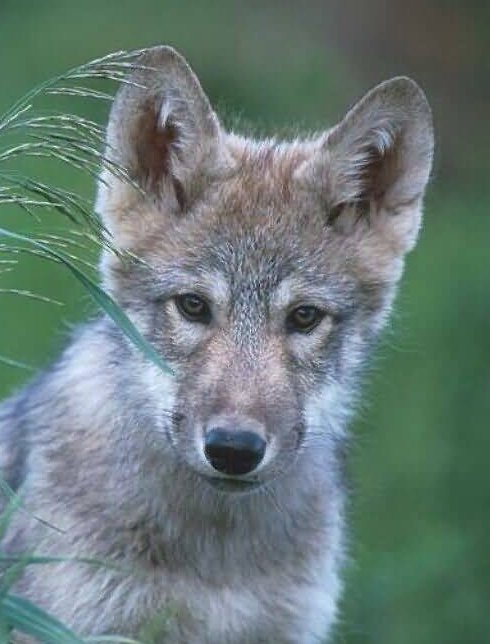
Wolf

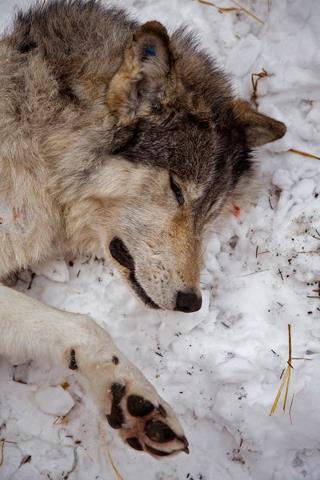
“**UPDATE** Remember these are only allegations at this time, but they are backed up by some very serious statements from people with impeccable integrity. We will keep digging for more information, and update as more information becomes available. All of us are still trying to wrap our minds around this.


Yesterday we were made aware of some very disturbing information. According to multiple reliable sources, with direct links to the the Wisconsin Department of Natural Resources, a DNR employee or employees have given confidential research data regarding the precise GPS coordinates of wolf dens to wolf hunters/hounders/trappers. The sources are reluctant to go on the record with this information, but if true it would answer many questions about this past falls wolf killing season.

One of the most common questions asked during the wolf killing season last fall was, “how are they killing them so quickly?” I think that we may have found our answer. This revelation has led two two highly respected and well known wolf trackers to resign because much of the data allegedly given to wolf hunters/trappers/hounders, they gathered. If these allegations are indeed true, and I have no reason to doubt otherwise, the DNR has much to answer for. The unholy alliance between the Wisconsin Bear Hunters Association and the DNR is disturbing enough but the possibility that confidential research data compiled from dedicated volunteer winter trackers is being fed to these people is borderline criminal if true.

As expected the talking heads at the DNR are saying that these are just “rumors” and they have no knowledge that the data was given to wolf hunters/trappers/hounders. This is what one had to say today:

Thank you for writing. I have checked with my coworkers. We are aware that there is a rumor going around that DNR has provided someone with locations of all known wolf den sites. However, we have not heard of such a request and are not aware of sharing of any such data.

Scott Loomans Wildlife Regulations Policy Specialist Bureau of Wildlife Management Wisconsin Department of Natural Resources (*) phone: (608) 267-2452 (*) fax: (608) 267-7857 (*) e-mail: scott.loomans@wisconsin.gov

While the DNR may hope this “rumor” goes away we will keep digging up facts to confirm what we have been told. I must reiterate that this comes from MULTIPLE sources with direct ties to the DNR who are truly fearful of retaliation if it is known that they have spoken about this. If these allegations prove to be true they are likely criminal violations at both the state and federal level, according to several wildlife experts. Several wildlife advocates have also made the Humane Society of the United States aware of these allegations and they will be investigating as they prepare to move forward with their lawsuit.

These disturbing allegations, if verified, are just another example of how the current DNR administration, Governor, and Legislature have no intention of ethically “managing” wolves. Each day there are more and more examples of how extreme the DNR has become and how a select few in the killing cartels control not only the DNR, but the Legislature as well. Wisconsin has become a massive killing ground for a select few with no consideration given to the rest of us.

More to come……”

*Special thanks to Wisconsin Wildlife Ethic-Vote Our Wildlife, http://wiwildlifeethic.org/2013/02/21/multiple-sources-wisconsin-dnr-employees-giving-wolf-hunters-gps-coordinates-of-wolf-dens/ for providing this information!
Read Full Post »


“A typical wolf about to take your children and eat your job”..Rational Wikimean wolf


This article and picture comes from “Wolf Warriors” (http://howlingforjustice.wordpress.com/2013/02/08/governor-bullock-dont-buy-into-the-wolf-hysteria-veto-hb-73/) so special thanks to them!

UPDATE: February 7, 2013

“Well today the rubber met the road in the Montana Senate.  HB 73 was rammed through and is on its way to Governor Bullock’s desk for signing.

The Governor heard NO, NO, NO  from people all over the country and the world, concerning the wolf hating legislation.  But apparently that wasn’t enough to change his mind. It looks like he’s going to sign it and if he does we’ll know there has been little change in Helena.  Montanans, who voted for Governor Bullock, believing he wouldn’t  jump on the wolf persecution train, will be proved dead wrong.  The same-old same-old wolf hysteria,  that has nothing what-so-ever to do with science or reality is still permeating the Montana Capital.

“Gov. Steve Bullock on Thursday indicated support for the legislation, noting it had been backed by Montana Fish, Wildlife and Parks.”

“The department did support it, and at the end of the day we need to base these decisions on science, not on politics, and allowing more than one, three wolves to be taken, it fits in with the science,” he said.

What science is he talking about? There are 2.5 million cows in Montana and wolves were responsible for just 74 losses last year.  Montana elk numbers grew 66% from 1984 to 2009 while wolves were on the landscape 14 of those years. Wolves who dispersed back into Northwestern Montana in the early eighties, have been around for over 30 years.

In case the Governor isn’t aware there are wolf and wildlife advocates in Montana who enjoy viewing wildlife ALIVE.  Millions of tourists visit Glacier and Yellowstone National Parks in hopes of  catching a glimpse of a wild wolf.

Wolf viewing generates over 35 million dollars a year in the  GYA (Great Yellowstone Area).  It makes no sense to slaughter hundreds of wolves because a small, vocal,  wolf hating minority demands it. But how do you fight a  state legislature who’s  ready and willing to persecute wolves on behalf of that minority? Do wolves have even one friend in either the Montana House or Senate?  Hunters and ranchers don’t own Montana but they sure own the politicians.

I think what the Governor really meant to say is we need to base these decisions on politics, not science!”

Read Full Post »


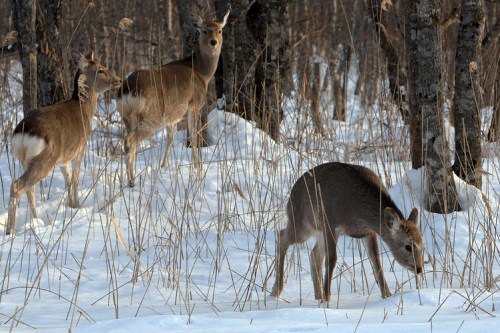
Japanese Deer

“Rural Japan is being over-run by deer that are damaging crops and timber groves. But there’s another problem, too: a shortage of deer hunters. WSJ’s Chester Dawson reports from Bungo-Ono.

As the Ruminants Run Rampant, Nation Considers Introducing Predators, Venison Lunches.

BUNGO-ONO, Japan—For Yusuke Hashimoto, mayor of this small hamlet in southwestern Japan, desperate times call for desperate measures. The town is one of the country’s top producers of shiitake mushrooms, but they are also popular with local deer. And that’s the rub.

“Deer are encroaching on farmers’ ability to make a living,” said Mr. Hashimoto, who has become part of a growing movement to reinstate four-legged carnivores to control the herd.

Japan’s last native canine—the extinct Canis lupus hodophilax—was killed off in 1905 as national policy.

Bringing out a stack of books about wolf folklore, Mr. Hashimoto explained reintroducing wolves began to appeal to him when he read material published by the Japan Wolf Association, a grass-roots lobbying group.

“As wild as it sounds, the more I read about them the less ludicrous it seemed,” he said.

Japan isn’t the only country with deer issues. Suburbs across the U.S. battle deer foraging in gardens, spreading Lyme disease and causing traffic accidents. But the roots of Japan’s deer problem—and some of the proposed solutions—are unusual.

Japan’s deer crisis is aggravated by extreme demographic trends: intense urbanization and depopulation of rural areas, record low birthrates and the world’s most rapidly aging society. Plus, there’s a cultural legacy: Venison isn’t a staple of Japanese cuisine, and gun ownership is subject to strict regulation.

Now, too few hunters prowl through rural Japan’s thick bamboo and cedar groves, and deer account for an estimated $33 million in annual crop loss, triple the total a decade ago, according to Japan’s environment ministry.

So Japanese national and local authorities are laying more traps, and ring-fencing vulnerable rice paddies and timber groves. They’re also trying to make hunting fashionable for young urbanites and introducing venison to school lunches.

Wolf advocates submitted a petition with 94,468 signatures to the Environment Ministry in April. It urged the ministry to import and release Tibetan wolves, which are regarded as genetically close to the wolves once roaming Japan.

At the head of the pack is the Japan Wolf Association, set up in 1993 to re-establish wolf habitats here. “Without any mistake, we’ll be successful in this,” said JWA chairman Naoki Maruyama, a professor emeritus at Tokyo University of Agriculture and Technology and the author of several books.

In Parliament, the pro-wolf movement has brought together more than a dozen national lawmakers of different parties, including a former environment minister, who set up a Wolf Reintroduction Study Group.

“We need to consider reinserting wolves to local ecosystems,” says caucus founder Tsurunen Marutei, a member of Japan’s upper house of Parliament. The naturalized Japanese citizen was born and raised in Finland, where wolves are a protected species.

Environmental authorities in Japan see a wolf in sheep’s clothing: a solution with fangs worse than the problem it attempts to solve. “Setting wolves loose is a nonstarter,” said Toru Nagano, an official in the environment ministry’s wild animal protection department. “They’d be more of a threat to livestock, dogs or humans than wild deer are,” he said.

Instead, Japan’s government is trying to lure more city slickers into the woods armed with shotguns and rifles. This year, the environment ministry began sponsoring “Joy of Hunting” forums across the country, where hunters discuss the hobby and show off their hardware.

Publicity for the forums—promoted via FacebookFB +2.73% and printed posters—feature a hunter wearing a ponytail and brandishing a pump-action shotgun. “We want to make hunting seem more approachable to youth and women,” said Mr. Nagano.

Traditionally, Japan’s deer herd has been kept at bay by local hunting associations comprising farmers mostly, but their average age is now 65 years. The total number of licensed Japanese hunters and trappers has fallen to an all-time low of 186,000—down sharply from a peak of 531,000 in 1970.

No one knows how many deer are roaming the Japanese underbrush since the government doesn’t formally keep tabs, but experts say they likely number in the millions—up from the 500,000 or so thought to exist just two decades ago.

The spike in Japanese, or sika, deer looms large in rural areas that retain significant political power, even as their human populations shrink. Many local governments like Bungo-Ono offer hunters bounties of up to ¥10,000 (about $128) per head for any deer bagged and tagged. Most prefectures in Japan have effectively waived the notion of a hunting season, granting special permits to allow kills year-round.

That can dull the thrill of the hunt. “We can bag up to 18 deer in a single day. They’re just everywhere,” laments Yoichi Kodama, the 60-year-old head of a local hunting group, who says that after shooting thousands he finds traps more sporting.

Some policy makers think hunters might get more excited if there were more appetite for their kill. Hence, stepped-up efforts to promote venison consumption. Groups like the Japan Gibier (Wild Game) Promotion Association have gone nationwide to broaden Japanese palates everywhere from school cafeterias to trendy cafes. Last month, it held an event designed to drum up publicity in Tokyo’s Akihabara district. Waitresses served traditional bento box lunches with a twist: The main entrees featured deep-fried nuggets of wild boar, venison meatloaf and black crow meatballs.

And yet, at a recent street fair in central Tokyo, few young Japanese seemed ready to wolf down curried rice with chunks of venison served by one food stall sponsored by the agriculture ministry. “Deer are too cute to eat. Besides, it probably tastes gamy,” said Tetsuomi Takeuchi, a 33-year-old financial planner.

Wolves are less fussy about their diets.

Wolf advocate Mr. Murayama plays down fears wolves would attack human beings, noting that historically Japanese farmers worshiped wolf deities in appreciation of their worldly embodiment’s appetite for crop-destroying deer.

The cult of the wolf deity remains popular at dozens of shrines throughout Japan. Wolves have even become stars in the country’s thriving anime cartoon subculture.

This past summer, one of the highest-grossing Japanese movies was an animated feature film called “The Wolf Children Ame and Yuki.” It tells the story of two bushy-tailed offspring of a human character and her werewolf lover—described as the only living descendant of the Japanese wolf.”

Special thanks to  CHESTER DAWSON, The Wall Street Journal  (Karin Ito contributed to this article) for providing this information!
Read Full Post »


Members of Footloose Montana, from left, Anja Heister, Dave Taylor and Connie Poten, spent a frigid Saturday on Higgins Avenue in downtown Missoula protesting the opening day of wolf trapping season and trapping in general.


“Montana’s 2012 wolf hunt shifted to a new gear on Saturday as trapping became a legal way to take the predators.

However, state Fish, Wildlife and Parks officials don’t expect a rush of activity over the weekend. Trappers could not place traps before Saturday, and may leave them unchecked for up to 48 hours. They must report any kills within 24 hours.

Experienced trapper Mike Day of Missoula said he didn’t expect much success at all from the state’s new trapping program. Between the unhelpful weather and the difficult rules, he doubted the wolves had much to fear.

“We’re going to have a bunch of dingbats running around with great big traps not knowing what they’re doing,” Day said on Friday. “It’s designed to fail.”

FWP rules prohibit setting traps within 150 feet of a road or trail, as well as 1,000 feet from trailheads and campgrounds. Day said because wolves tend to travel on the same roads and trails humans do, they’ll never encounter the traps.

“It’s just like real estate – location, location,” Day said. “If your location’s wrong, you’re not going to catch nothing.”

*****

About 10 members of Footloose Montana braved the December wind to stage a protest on the Higgins Avenue on Saturday. The group’s director, Filip Panusz, said members in Helena, Great Falls and Bozeman planned similar demonstrations.

“Myself, I’m a strong supporter of fair-chase hunting and bow-hunting,” Panusz said on Saturday. “But trapping is not fair chase. It’s not a clean kill. The animal suffers, maybe for days. You don’t know your target, so you could catch all kinds of other, non-target species. And you’re using bait, which is an unfair advantage that’s not allowed in any other kind of hunting.”

Panusz said Footloose Montana members were widely divided on the issue of killing wolves, but were unified in opposition to using traps. In addition to injuring or killing pet dogs and hunting dogs, trapping hurts Montana’s image and economy, he said. While U.S. Fish and Wildlife Agency surveys report the Montana economy annually brings in $310 million a year from hunters and $376 million from wildlife watchers, Panusz said trapping produces barely 1 percent of that amount.

Montana’s rifle season for wolves continues through Feb. 28. But big game hunters took only 93 wolves during the regular October-November season. The state set a quota of 220 wolves in its 2011 hunting season but recorded only 166 kills. This year, FWP opted to forego a quota but monitor kills to ensure the state did not get close to a low threshold of 150 wolves. Going below that figure could trigger resumption of federal Endangered Species Act controls in Montana. More than 600 wolves are estimated to live in Montana.

In Idaho, rifle hunters have killed 116 wolves while trappers have taken another seven, according to Idaho Fish and Game reports. During the 2011-12 season, Idaho reported 255 wolves shot and 124 trapped. The state has no upper quota for wolf kills. Its season runs through March 31, 2013, in most parts of the state except in remote areas west of Montana’s Bitterroot Mountain Range, where hunters can remain active until June 30.

Wyoming, which added a wolf hunt this year after gaining state control of its wolf population in early 2012, has reported at least 58 kills . The state has a quota of 52 wolves in a “trophy zone” around Yellowstone and Teton national parks, and hunters there have reported taking 39 animals. The rest of the state has no quota. Hunters have reported killing 19 wolves in that “predatory zone.” The Wyoming wolf season lasts through Dec. 31.”

**Special thanks to Missoulian (http://missoulian.com/news/state-and-regional/wolf-trapping-season-begins-protest-held-in-missoula/article_188067f4-470d-11e2-aa57-0019bb2963f4.html) for providing this information.

Read Full Post »


Center for Biological Diversity

For Immediate Release, December 10, 2012

Contact: Michael Robinson, (575) 534-0360

Lawsuit Filed to Protect Mexican Gray Wolf as Endangered Subspecies

Bureaucratic Limbo Threatens 58 Wolves Left in Arizona, New Mexico

“SILVER CITY, N.M.— The Center for Biological Diversity sued the U.S. Fish and Wildlife Service today over the agency’s rejection of a 2009 scientific petition from the Center that sought classification of the Mexican gray wolf as an endangered subspecies or population of gray wolves. Mexican wolves are currently protected as endangered along with all other wolves in the lower 48 states, with the exception of those in the northern Rocky Mountains and Great Lakes region. In filing today’s suit, the Center said specific protection for Mexican wolves is needed to ensure their recovery.

“Mexican wolves are the smallest, most genetically distinct of all gray wolves in North America, uniquely adapted to the dry lands of the Southwest,” said Michael Robinson, the Center’s wolf specialist. “We’re filing our second lawsuit in three weeks on their behalf because these very rare animals are on the razor edge of extinction due to federal mismanagement, persecution and neglect. We don’t want to look back in 10 years and wonder if there was anything else we could have done to save them.”

Both lawsuits aim to help Mexican wolves recover. In November the Center sued the Fish and Wildlife Service to compel it to reform its ongoing wolf-reintroduction program in accordance with recommendations made by its own scientific panel in 2001. More than 10 years ago the agency promised to consider the reforms, and then, in 2007, it renewed this promise to a court; but it has never followed through. In seeking separate recognition of Mexican wolves through today’s lawsuit, the Center hopes to force the agency to implement the reforms and complete a new recovery plan, in the works since as far back as 1995.

“Fish and Wildlife has consistently failed to take action to ensure the survival and recovery of the Southwest’s one-of-a-kind wolves,” said Robinson. “The government’s stubborn refusal to follow the best science on wolf recovery is pushing the last Mexican gray wolves we have left way too close to the cliff of extinction.”

Nearly 15 years after Mexican wolves were first reintroduced to the Southwest, there are only 58 wolves in the wild; it has been four years since a new wolf was released from captive-breeding facilities. Scientists believe Mexican wolves may be suffering from genetic inbreeding, with reduced litter size and pup survivorship.

Following a lawsuit by the Center, reintroduction of Mexican wolves began in 1998. The reintroduction has been hampered by rules that require recapture of wolves who set up territories outside the narrowly defined recovery area and that do not allow release of captive wolves into New Mexico’s Gila National Forest, where there’s extensive suitable habitat. The reintroduction has also been hurt by an out-of-date 1980s recovery plan that does not specify a target for recovery. The Center’s two lawsuits seek to remedy both of these failings by getting the agency to enact reforms and protect Mexican wolves as a specific subpopulation. ”

The Center for Biological Diversity is a national, nonprofit conservation organization with more than 450,000 members and online activists dedicated to the protection of endangered species and wild places.

Read Full Post »


wolf hunted

Hunted. This male wolf, which was part of a study of wolf behavior in Yellowstone National Park, was killed by a hunter earlier    this month after it left the park.
Credit: Doug McLaughlin/Courtesy William Ripple
by    Virginia Morell    on 26 November 2012,  3:30 PM

“An estimated 10 wolves from Yellowstone National Park have been killed by hunters this month, adversely affecting the park’s wolf research program, one of    the longest studies of its kind.

“Losing the wolves has been a big hit to us scientifically,” says wildlife biologist Douglas Smith, leader of Yellowstone’s wolf project, which has tracked    the wolves since their reintroduction in 1995. The killings came just as researchers, who are partly funded by a 5-year U.S. National Science Foundation    grant, were set to begin the wolf project’s annual winter survey of the canids’ predatory habits.

The wolves were shot by licensed hunters outside the national park during the legal wolf hunting season that opened this fall in Montana, Idaho, and    Wyoming. Seven of the wolves were wearing radio-collars that help scientists track the wolves. Two “were the only collared members of their packs,” Smith    says. “So, now we can’t track those packs.” In addition, two of the wolves had specialized GPS collars that collect data every 30 minutes, which has helped    researchers better understand wolves’ movements and predatory behaviors. Only one wolf in the study program is now left with such a collar.

Smith says that all seven radio-collared wolves were within 1 to 3 miles of the park’s unmarked boundary when killed. “We don’t know why they left; one had    never gone outside before, and three of the others did so only infrequently,” he says. The wolves may have been in pursuit of prey, since the park’s elk    also migrate out of the park at this time of year; or they may have been enticed by the gut piles hunters leave behind after shooting and dressing out an    elk. Many professional hunting camps are set up around the park’s boundaries close to known elk migration routes. The wolves, too, are used to humans,    “which could make them more vulnerable to hunting,” Smith says.

The wolves’ deaths mark the second time in 3 years that collared Yellowstone research wolves have been shot by hunters. Some worry that hunters are    targeting the radio-collared animals. The hunters returned the collars to the park’s wolf project.

Although Yellowstone’s wolves are protected while they roam inside the park, they now can be legally shot as soon as they set foot outside. Wolves in    Montana and Idaho were removed from the federal endangered species list in May 2011; those in Wyoming were downlisted on 30 September. The Wyoming wolf    hunting season opened the next day.

While lamenting the loss of the wolves, some of whom were well-known to park visitors, park officials stressed that Yellowstone’s wolf population remains    healthy, with approximately 88 individuals. “These were loved, iconic wolves,” says Dan Hottle, a park spokesperson, but their loss does not “adversely    affect our ecosystem.” But the wolves’ social structure and stability may be affected, Smith says. There could also be an impact on tourism, observers say:    A 2006 University of Montana study estimated that the wolves draw in $35 million a year in tourist dollars to the park and surrounding areas.

Scientists predict that the loss of the collared wolves will have a big impact on both the park’s research project and numerous other independent studies    investigating a variety of issues, such as elk management and ecology. The collars collect data intended to help wildlife managers better understand wolf    behavior, particularly the canids’ effect on elk. And unless a wolf is wearing a collar, researchers say they can’t be sure that it is an animal that uses    the park. The killings are “very unfortunate, because of the harm it does to the research,” says Bob Ream, a retired wolf biologist from the University of    Montana, and chair of the state’s Fish, Wildlife & Parks Commission, which oversees the hunts. “I would like to think this was not done intentionally.”    Intentional or not, Smith notes that of the killed wolves that were known to have used the park, an estimated 70% were wearing collars.

Smith and others, including park officials and conservationists, have lobbied officials in the three states to establish buffer zones around the park to    protect the wolves from hunting. Only Montana, however, has made an effort to do so. It has reduced the quota in one hunting district north of the park    from 15 wolves to three.

Smith has teams out now in search of the two packs that no longer have collared individuals. “Scientifically, our goal was to study a population of wolves    that was not exploited by people,” he says. “Unfortunately, that is no longer the case.”

**Special thanks to Science Insider,  http://news.sciencemag.org/scienceinsider/2012/11/yellowstone-park-research-wolves.html?ref=hp, for providing this information!

Read Full Post »


SUSAN MONTOYA BRYAN, Associated  Press, Updated 3:45 p.m., Wednesday, November 21, 2012 (thank you for providing the information in this article):

“ALBUQUERQUE, N.M. (AP) — Two  six-month-old Mexican gray wolf pups are navigating southwestern New Mexico’s  Gila forest on their own now that their troubled pack has splintered, worrying  environmentalists who think the animals’ chances of survival are slim.

This week’s efforts to track the  Fox Mountain pack show the pups are miles apart and far from the pack’s alpha  male. Environmentalists blame federal wildlife managers, who ordered the pack’s  alpha female — the pups’ mother — captured and removed from the wild in response  to a string of cattle kills.

The fate of the pack is fueling  the latest wave of frustration over the U.S.  Fish and Wildlife Service‘s handling of the 14-year effort to reintroduce  wolves to the American Southwest. The frustration has taken the form of online  petitions, public records requests and now a lawsuit.

WildEarth Guardians, a Santa  Fe-based environmental group, announced Wednesday that it was asking a federal  court to force the Fish and Wildlife Service to release documents related to  management of the Fox Mountain pack. Another public records request filed by the Center  for Biological Diversity has gone unanswered. A third has netted hundreds of  pages of blacked-out documents, raising questions about decision-making within  the wolf program.

Fish and Wildlife Service  regional spokeswoman Charna  Lefton said Wednesday she could not comment on the  pending litigation.

Wendy  Keefover, director of WildEarth Guardians’ carnivore protection program,  questioned the veracity of the evidence used by wildlife managers to link the  alpha female to the cattle kills.

“We have yet to see proof that  the loba actually killed livestock, and none appears to be forthcoming,” she  said, adding that the female wolf should be reunited with the pack.

The pack has been blamed for six  cattle deaths, including four that happened outside the wolf recovery boundaries  within a four-month period.

Ranchers have long voiced their  opposition to wolf reintroduction, pointing to economic losses as well as safety  issues for rural residents. Gov. Susana  Martinez even asked the Fish and Wildlife Service to capture and relocate  the entire Fox Mountain pack.

Michael  Robinson of the Center for Biological Diversity said no livestock killings  had been reported in the pack’s territory for months leading up to the alpha  female’s capture. He said the wolf’s removal was unnecessary and now the pups  could end up starving.

“The U.S. Fish and Wildlife  Service has treated the removal of this animal as just removing a piece from a  chess board,” Robinson said. “What we see again is that these are social animals  and that the remainder of the pack is no longer a pack at this point.”

Wildlife managers have been  struggling to boost the wolf population and the number of packs in New Mexico  and Arizona since the reintroduction program began in 1998. Efforts have been  hampered by everything from politics to lawsuits and illegal shootings.

An annual survey done at the  beginning of the year showed at least 58 wolves in the wild — far below what  biologists had initially expected.

The next survey will begin in  January, and Lefton said the hope is that some of the pups born this year will  make it through the winter.

Wolf program managers said they  are monitoring the Fox Mountain pups but no supplemental feeding  is planned.

Managers are considering several  options for releasing wolves in Arizona to replace three wolves that were killed  over the past year, but no final decisions have been made.”


Read Full Post »


This was Alpha Fe, the mother of the late Basin Butte Pack. This is where she …fell.


“Two of us and Lynne Stone of the Boulder White Cloud Council went out early one frigid winter morning in search of what we feared had happened.  What we found was a trail of blood that led us to a tragic scene.  In the meadow next to Alpha Fe’s lifeless body, was the place the Wildlife Service’s helicopter had touched down just long enough for the gunner to walk over to her body and remove her radio collar.  Her collar, attached in the name of science, was also the homing tool used to betray her location, giving her no chance to elude the aerial pursuit.  This is the little-known dark side of radio collars, and their unfortunate dual purpose.

It has been three years since The Thanksgiving Day Massacre of Idaho’s most known and most viewed pack of wolves.  People traveled great distances to come see them.  In November of 2009, the Basin Butte Pack was destroyed for allegedly preying on a few calves early in the summer, many months before Wildlife Services killed them off with semi-automatic shotguns from a helicopter and an airplane in a two day aerial assault.  We all paid for it, but not just with our tax dollars. She and her pack mates lived in the Sawtooth National Recreation Area (SNRA), Idaho’s spectacular scenic and outdoor recreation centerpiece and home of the majestic Sawtooth Mountains where the Sawtooth Pack once lived. They inhabited the same land, the Basin Butte Pack and the Sawtooth Pack.

What we set out to achieve with our documentaries of the Sawtooth Pack was that they would act as ambassadors for the wolves that would follow in there footsteps.  Killing this pack was unnecessary. Should Idaho’s leading tourism and recreation attraction be a place utilized to graze some of Idaho’s 2,200,000 million cows?  If so, should the wildlife that inhabits the SNRA be annihilated if no effort is made to implement non-lethal methods to protect livestock from predation?  Wildlife Services still operates in this manner and wolves are killed for preying on livestock that are left without any protective measures unattended on the open range, very often on your public lands. Clearly there is much more work to be done, as this story continues to repeat itself.  Cooperation and good will are essential if man and wolf are to coexist.   Solutions have been proven to work by those who are willing to try.

This is a reminder of the need to demand the reform of the USDA’s Wildlife Services, the government agency that spends taxpayer money to kill “problem” wildlife.  Their practices are currently in question and being challenged.  Please read the article in the link written by Tom Knudson of the Sacramento Bee.  Two Congressmen, Peter Defazio, a democrat from Oregon and John Campbell, a republican from California, have been pushing the House Oversight Committee to investigate Wildlife Services and their current practices.  Please support them in their efforts to reform Wildlife Services.”

**Special thanks to “Living With Wolves” for providing this information!  For more on this story,  please visit http://archive.constantcontact.com/fs021/1102459385062/archive/1102886320092.html

Read Full Post »


Wolf supporters, as the wolf hunt continues, even when a certain quota is reached, many do not realize how the loss of a pack member effects the rest of their unit.  With the loss of any older, more experienced members of a wolf pack, the younger ones struggle to learn about how to hunt.  Eventually, this can lead to starvation.  I encourage you to share your comments, feedback, and tell me how losing a member of a wolf pack can effect rest of the pack after reading the article below:

November 20th, 2012

“Wolf hunting season has begun in several states, and hundreds of the animals already have been killed. It’s the first time in years that wolves have been legally hunted in Wyoming and Minnesota, and the decision has drawn the ire of many conservationists and some scientists.

Gray wolves have long been a point of contention between ranchers, who see them as pests that eat their livestock, and conservationists, who see the critical part the play in the ecosystem. Recently, as state laws changed and the animals were taken off the federal endangered species list, hunters have taken aim.

About 50 wolves have been killed in Wyoming, where they can be shot on sight without a permit in about 85 percent of the state, according to news reports. Seven of the dead wolves once lived in Yellowstone National Park, where wolves are still protected; they wandered outside the park and were legally shot, Reuters reported. (Scientists put collars on the Yellowstone wolves as part of a park research program.)

Wyoming’s wolf population was estimated at 328 before the hunt. The state’s plan, approved by the U.S. Fish and Wildlife Service, requires that the population of wolves remain above 100 outside Yellowstoneand the Wind River Reservation. That figure is cited by conservationists as dangerously low.

In nearby Idaho, 96 wolves have been killed, according to the Coeur d’Alene Press.

During last year’s hunting season, 545 wolves in Idaho and Montana were killed. This year both states got rid of their statewide quotas, or upper limit on number of kills, according the Center for Biological Diversity. The center, along with the Natural Resources Defense Council and other environmental groups, is suing the U.S. Fish and Wildlife Service, accusing it of failing to adequately protect the animals. Other suits are pending in various states.

Back from the brink?

Wolves were hunted, trapped and poisoned to the brink of extinction in the 20th century, and they rebounded only after being protected under the Endangered Species Acts of the 1960s and subsequently being re-introduced to Yellowstone. Much of the Northern Rockies sub-population of gray wolves lost federal protections last year following a controversial rider placed in U.S. budget legislation.

The wolf hunt in Minnesota is also under way and has met with opposition.  The 147 wolves killed in that state are about twice what the Department of Natural Resources expected, according to the Associated Press. The second phase of the hunting season begins Saturday (Nov. 24), during which wolves can be trapped, a technique that conservationists and some hunters call cruel.

Minnesota’s earlier wolf-management plan stated that the animals couldn’t be hunted for five years after being removed from the federal protection provided by the Endangered Species Act — which happened in January, 2012. Instead of opening a formal comment period, the DNR offered only an online survey, according to the Center for Biological Diversity. More than 75 percent of people taking the poll opposed the wolf hunt: Of 7,351 responses, only 1,542 people supported a wolf season. Even so, that five-year waiting period was not upheld.

In Wisconsin, hunters had killed 83 wolves as of Nov. 18, according to the Badger Herald. The hunting season there will run through the end of February unless hunters reach the 116-wolf quota before then.”

**Special thanks to “Live Science” for providing this information! (http://www.livescience.com/24942-wolf-hunt-begins.html)

Read Full Post »

« Newer Posts - Older Posts »