Feeds:
Posts
Comments

Archive for the ‘Wolf Preservation Efforts’ Category


Posted: 10/12/2015 2:08 pm EDT

“October 12-18 is Wolf Awareness Week.

North Americans are often quick to condemn the brutality of other cultures and countries, inserting ourselves, sometimes using violent force, to establish what we consider peace keeping and a “good life”. Why then, has this sense of empathy not reached the way that we treat and care for other magnificent and fascinating species with whom we share the North American landscape?

Wolves have been resurrected in Canada as the classic scapegoat. As the human population continues to expand around and within what have become islands of wilderness, we condemn wolves for being who they are; one of nature’s most awesome and important beings. In our lust for control, we continue to condone killing wolves on a massive scale. In Beautiful British Columbia, more wolves are being slaughtered – read murdered — for “recreation” in recent years due to government championing of the so-called sport than since record keeping began. Alberta hosts numerous wolf-killing bounty programs, both publicly and privately funded, where people are financially rewarded for bloodlust. Both of these provinces condone contests where wild canids are rampantly killed and dead bodies stock-piled. Yet, the motivations to kill wolves are ethically bereft and ecologically unsound.

Nonhuman animals (animals), having evolved over millennia to suit their environment, can be viewed as other Nations. In North America, we have largely accepted this status for highly intelligent and social animals on other continents. Primates, dolphins, lions and elephants are often regarded as worthy of preservation and more. We shame poachers and other purveyors of grisly wildlife deaths because we feel the individual’s and family’s pain on a personal level. Are we only willing to take this position with animals who live elsewhere?

Annually, the third week of October represents Wolf Awareness Week. Canada’s wolf population is considered stable, yet most provinces do not support areas where these animals can thrive without being gruesomely slaughtered. What most of us are not aware of is that many conservation organizations and esteemed scientists consider western Canada to be at war with wolves. Wolves are being killed for “sport” through hunting and trapping over livestock concerns, under the pretense of saving doomed caribou herds, and on transportation routes across the majority of the provinces. Wolf family members are rarely safe from the myriad ways they can be butchered in a human-dominated landscape – many provincial parks allow sport hunting and National Parks are too small to protect multiple wolf families. And, there often is a good deal of collateral damage when individuals of other species are unintentionally killed. Although wolves require an adequate prey base, the defining factor for maintaining sustainable populations of wolves is protection from humans.

Dr. Gordon Haber, a biologist who studied wolves for over four decades, was burdened with the knowledge of the emotional ties, lifelong bonds, and the importance of family to wolves. He dedicated his life to learning about and sharing his knowledge that wolves deserve more than minimum viable populations, that safeguards are required to protect various wolf cultures and traditions, and that the experiences learned and passed through generations could be lost by disrupting the social structure of wolf families. This knowledge was a “burden” because of the continuous pressure from Alaska’s Board of Game to allow hunters and trappers to kill wolves from Denali National Park and Preserve just beyond park boundaries, decimating the wolf families who taught him how very much wolves were like people.”

Much of Dr. Haber’s knowledge, well documented in his notes and gained through decades of direct observations while living in the wilderness alongside wolves, continues to be validated today by other wolf biologists. Simply put, what happens to an individual wolf happens to the family pack Wolves celebrate together and mourn together. The social structure and emotional lives of wolves must be recognized and applied in conservation plans and our treatment of these highly evolved beings; individuals who should not be wantonly slaughtered when it serves our, not their, best interests.

Compassionate conservation, a rapidly growing international field, stresses that we should “First do no harm” and that individuals matter. Emotional capacities and personalities vary among individual wolves and other animals, as with humans. Some wolves are leaders, some followers. Some are bold, others timid and shy. Each individual contributes something different to the family to which they belong.

As humans, we accept that dogs are emotional beings, and we know that dogs evolved from wolves. Indeed, humans go to great lengths to promote not only the humane treatment of companion animals, but to provide such a high quality of life that it often rivals or surpasses our own. Unfortunately, in most cases we have failed to extend these ethical priorities to wildlife, especially when it comes to wild canids, who are still treated as “pests” to be removed. Wolf management across Canada implicitly sanctions harm to individuals, which extends to entire families of wolves. And, we know that killing wolves can have serious ecological repercussions.

As our population and utilitarian footprint continue to explode across the globe, we need a paradigmatic shift in consciousness that changes our role from one of dominance and superiority to one of tolerance and peaceful coexistence. We need to expand our compassion footprint, which should drive our humane treatment of wolves and other animals. This will require allowing for individuals of different species to be who they are, not just what we want them to be. They are not our slaves.

The extremely important ecological role of wolves as an apex predator, influencing the numbers and behaviour of many other species and ecosystem processes, must be honoured. Like human babies, young wolves experience prolonged dependency on their parents, siblings and elders, often spending about one quarter of their lives being taught essential skills and lessons. The rearing of young is a shared responsibility, as are cooperative hunting and feeding, protection of territory, and defense of the entire family.

For these reasons, trophy hunting, trapping, aerial gunning, use of poisons, and bounties have grave consequences for wolves who survive these killing sprees. The ripple effects of losing one or more wolves cascade through the family, either wiping out entire packs as they hang around in concern for the injured or return to a site to mourn a loss. Those individuals that survive to make new wolf families must do so without access to the knowledge and culture held by their slain family members, something that takes generations to build. They become refugees on their own land.

Lax hunting and trapping regulations reflected in current policies are irresponsible and cruel in light of this. But there is an even darker truth. In North America we manipulate our knowledge of wolf social behaviour for cold-hearted killing when we radio-collar individuals, referred to as “Judas wolves”, so that when they rejoin their family every member can be killed. The Judas wolf is left alive until the entire blood line is annihilated – an unimaginable punishment for one who unknowingly betrays his or her entire family.

Canadian provincial governments accept, promote, and participate in mass killings of wolves. In some areas, such as BC’s South Selkirk and South Peace regions, as well as the area around central Alberta’s Little Smokey caribou herd, severe reduction programs – experimental killing campaigns — are occurring under the guise of caribou conservation while critical caribou habitat continues to be compromised for human industry and recreational uses. History has shown that wolves are a resilient species, capable of returning to landscapes where they have previously been eradicated, but this does not excuse the butchery or intense and enduring suffering for which we are responsible. What it does is condemn the newcomers and survivors to ongoing slaughter even if the root of the problem, our unbridled resource extraction and recreation, were halted now.

Habitat loss and fragmentation, combined with direct human persecution, put Canadian wolves in a position where positive conservation efforts are critical. Without protected areas large enough to safeguard multiple wolf families, wolves face a trajectory of reduced gene flow and inbreeding. Provincial governments consider wolf killing a means of acceptable recreation in most provincial parks in Canada and public lands permit killing wolves to appease ranchers. Private landowners can also kill wolves and government agencies continue plans for large-scale slaughter where wolves overlap with endangered species, regardless of the fact that our own species has pushed struggling populations such as caribou to their brink.

Canadians are often considered “peace-keepers”, yet within their own borders they fail to recognize the nation of wolves, struggling to get by in a changing world that devalues them. We must rewild our hearts as we move on. We become what we teach and future generations must not be left to inherit the messes we leave behind.”

**Special thanks to Sadie Parr, as this essay was written by her from Canada Wolf Awareness (http://www.huffingtonpost.com/marc-bekoff/saving-wolves-with-compas_b_8271088.html)

Read Full Post »


wolf basement

Photo courtesy of the Harmony Fund

“The stars hang expectantly above the summer meadow on Gledic Mountain in Serbia, a place which is about to become the cradle of recovery for 25 wolves aching for freedom. The wolves are living in small household nooks, a basement and backyard pens which have been salvaged by their rescuer Dejan Gacic, a man who would lay down his life for any animal in need.

Dejan began as a dog rescuer. Working alongside his mother Svetlana, he saved nearly 300 dogs who had been in dire need on the streets of Serbia. The dogs were housed at a home-based sanctuary and at a second sanctuary on the grounds of his deceased grandfather’s home.
Daily care of the dogs was a team effort, but when Svetlana (right) died quite unexpectedly during routine surgery, Dejan was suddenly alone in caring for the dogs. At the same time, local residents who had heard of his heroic efforts for the dogs began to ask if he might help with a wolf who had been in captivity for quite some time and the “owner” was about to release her to a canned hunt.

Dejan thought to himself, “What would my mother do?” and then he did the only thing he could. He leapt in with both feet. He purchased the wolf from the man for a single bottle of liquor.

“They usually call and tell me to come and take the wolf or it will be killed,” Dejan explains of the many times he has been granted permission to rescue a ‘defective’ wolf who simply won’t bring in a premium price when released from his cage and sent running into the woods to be chased by hunters. “I just have no strength to watch them suffer and I have no power to stop it. I never met a hunter who feels sorry for the wolves or for any other animals.”

Over the last three years, more than two dozen wolves have made their way into Dejan’s custody. And though he didn’t have a solid plan on what to do with them, Dejan couldn’t stand to see the wolves come to a terrible end. More times than he can count, he has simply hung his head and walked through a group of amused spectators who can’t fathom why on earth this man has arrived to save some “dumb” wolf.

“I’m going early in the morning at 4am to see injured wolves,” Dejan told us recently. “I am going with my uncle and a vet will come with us. God knows what we will find there. I’m very worried. The last information I have from 2 hours ago is that both injured wolves are still alive and have a chance to survive.”

How We’ve Been Helping …

“Without you all these animals would be lost,” Dejan told us at the Harmony Fund last year after receiving his first round of emergency funding to feed both the dogs and the wolves. “To live a hundred lives would not be long enough to thank you. I wish that my mother was alive to see all this. My animals just had their first proper meals after a long, long time.”

Over the past year, the Harmony Fund has provided monthly supplies of food and veterinary care for all of the animals at Dejan’s sanctuary. We’ve also relocated all the dogs to a single location. After a series of inquiries and applications at the goverment level, we are now poised to begin getting the wolves out of their cages and into the mountain air.

Please Help Us Build Them A Sanctuary!

Though it will not be possible to completely release the wolves, they will have a “soft” release in which they will be grouped in packs and set free on large, fenced enclosures. In the reality we’ve been handed, we will do absolutely everything in our power to return them to a natural habitat and keep them safe from those who wish them harm.

Harmony Fund has taken this on as their latest challenge in a planetary mission to “Love the Underdog”. Because we are simultaneously addressing crisis situations for shelters in the Ukraine, the closure of a decrepit zoo in Indonesia and a multitude of anti-cruelty operations, we are deeply concerned about how soon we can get the wolves out. If the Harmony Fund is able to raise sufficient funds to begin construction in mid-August, the first paws should touch ground here by October, just in time for the wolves to be welcomed by crisp autumn air.

Some people think that charities enjoy asking for money, but the truth is, it’s always uncomfortable for us. No matter how many ways we try to find free supplies, equipment and services, there is always a cost for the work we do – and for that- we have only you.”

**Special thanks to “Harmony Fund” for providing this information!  

Read Full Post »


“On June 1st, Washington ranchers began turning out their cows and calves onto summer grazing lands. Some of those lands overlap with territory home to Washington’s recovering wolves. And that’s where you’ll find livestock under the watchful eye of range riders co-sponsored by Conservation Northwest.

This year we’re collaborating with even more cattle operations on the ground in wolf country to protect livestock and wolves.   

Working with the Washington Department of Fish & Wildlife (WDFW) and four ranchers from the Methow and Teanaway valleys, the Wenatchee area and Stevens County in northeast Washington, we’ll have at least six riders patrolling grazing allotments this season. For the first time, they’ll be covering the territory of five confirmed wolf packs on horse and ATV working to minimize wolf-livestock conflict.

Range riders work long, hard days in tough conditions, covering thousands of miles a season to make sure the cattle are calm and healthy and keep them away from wolves, the location of whom is often provided confidentially by WDFW through GPS and radio collar data.

Because of the difficult and specialized work, each rider can cost up to $20,000 plus gas and expenses for the five-month grazing season. To sign up with WDFW to participate in the program, ranchers must typically put up half that cost to receive a state match.

That’s where Conservation Northwest comes in.

As an incentive to participate in the program and put non-lethal predator management tools to work, with the help of generous donors we contribute as much as $10,000 a season to eligible ranchers for each range rider, greatly limiting their out-of-pocket costs.

“We hope this program spurs ranchers to do a practice that they did for hundreds of years, but when wolves were gone from the landscape there was no need,” said Jay Kehne, Conservation Northwest’s Okanogan County outreach associate. “There are incentives for doing this, you’re going to keep more weight on the cows and you’re going to lose fewer cows. Having a range rider is worthwhile for the ranchers because it’s going to save them money in the end.”

And with the range riders work resulting in wolves causing less problems for cattlemen, there’s less call to resolve wolf-livestock conflict by lethal management.

This is our third year organizing the range rider program in Eastern Washington, and we’re proud of what the range riders, cattlemen, state biologists and conflict specialists, and Conservation Northwest staff have accomplished.

Even as wolf populations have rebounded, last summer ranchers reported an increase in the number of cows returning from the summer spent grazing in wolf habitat, as much as 100 percent in some cases. And the valuable weight those cows have maintained is up as result of limited interaction with wolves and more stress-free time spent resting and feeding. As last year’s range rider program came to a close, one of the ranchers we partner with, John Dawson, was quoted in a Spokesman-Review article saying “we’ve lost nothing to wolves.” 

The program’s success hasn’t just been seen by the ranchers participating, other livestock owners are beginning to take notice as well.

“The success the Dawsons have had has gone a long way to helping promote nonlethal means and proactive measures to reduce conflict,” said Jack Field, the Washington Cattlemen’s Association’s executive vice president. We hope that continues to be the case and these modern cowboys and cowgirls catch on.

Much has been said about Washington’s recovering wolves in policy debates, newspaper comments and public meetings in recent years. But it’s only through public acceptance in the communities living, working and recreating in wolf country that we’ll see their complete and sustained recovery in our state for the long term.

That’s why we’re out there working one-on-one with ranchers, building partnerships with WDFW, and proving that time-tested non-lethal management tools like range riders (and fladry too) can have real results protecting both cattle and these iconic native predators. 

Conservation Northwest is thrilled to see this program succeeding, and hopeful the benefits will be spread even wider this summer with more riders out on the range.””

**Special thanks to “Conservation Northwest” for providing this information!

http://www.conservationnw.org/news/updates/range-riders-update

Read Full Post »


Bend Bulletin: June 23, 2014

 — Three years into a state program to help counties contending with wolves, the focus has been on preventing attacks on livestock.

“I think the program was set up with the intention that prevention is the preferred model,” said Jason Barber, who oversees the grant program for the Oregon Department of Agriculture. “. Kind of a no-brainer, you’d want to prevent the depredation if you can.”

Depredation is when wolves attack livestock, such as cattle or sheep. Money from the wolf grant program helps pay for efforts such as removing cattle bones that could attract wolves, installing flagging along fence lines to spook wolves, and patrolling rangeland by horseback or on ATVs.

State-sponsored hunts helped lead to the elimination of wolves in Oregon, with the last bounty paid out in the late 1940s. But since the late 2000s, wolves have been making a comeback, having moved in from Idaho where the U.S. Fish and Wildlife Service reintroduced wolves nearly 20 years ago.

The latest Oregon Department of Fish and Wildlife wolf count, which the agency released at the end of last year, has at least 64 wolves in the state. Most are in the northeast corner, but they are expanding their territories. Through 2013, there had been 75 animals, either livestock or domestic animals, killed by wolves since the wolves started returning to Oregon.

The prevention money in the state grant program comes with a use-by date, Jan. 31 of the year after the state issues the grant. If the county doesn’t use the money by then, it has to give it back. Such was the case last year when Crook County gave $3,000 back after a cattle bone removal project didn’t come together in time. This year’s grants include a new $3,000 grant for Crook County to try the project again.

The grants also include compensation money, which goes to ranchers whose livestock has been killed or injured by wolves or has gone missing and was likely taken by a wolf. According to state records, $296,620 total has been given out for prevention, compensation and some smaller administrative costs in the three years of the wolf grant program. Of that, $71,653 was for livestock that had either been attacked or injured or had gone missing probably because of a wolf. That’s 24 percent of the grants. Another $178,150, or 60 percent, went to wolf attack prevention projects.

Although he is glad the state helps ranchers cover the cost of livestock lost to wolves, Todd Nash, an Enterprise rancher and wolf committee chairman for the Oregon Cattlemen’s Association, said it’s not a lasting solution.

“Compensation is a Band-Aid fix,” he said. “It will never be acceptable to livestock producers to have wolves kill their livestock, but it does help.”

Sally Mackler, state carnivore representative for Predator Defense, said she would rather see that state wolf money all go to projects aimed at preventing attacks on livestock, rather than for compensation.

“I think that would be a better use of that money,” she said. The Eugene-based group advocates for predators, such as wolves.

Mark Lane, 42, a rancher from Morrow, said he thinks the state should compensate livestock producers like him for animals lost to wolves. He’s in the process of figuring out how to collect some of the money himself, having had wolves from the Umatilla River pack attack one of his cows earlier this month.

He said he is hopeful he’ll be able to save the 3-year-old pregnant cow that had been grazing on private land near Pendleton when attacked.

“I’m just a small producer,” Lane said. “I don’t have many animals, (so) every one I lose … hurts me big time.”

Separate from the state wolf grant program, the Oregon Department of Fish and Wildlife runs its own wolf program. For the two-year funding cycle spanning 2013 to 2015, the program’s budget is $641,004, according to the agency. The budget covers wolf-monitoring programs, response to livestock attacks, equipment needs and the pay for two full-time wolf-management workers.

“That’s collaring, that’s everything,” said Meg Kenagy, an agency spokeswoman in Salem.

Scientists with ODFW have been affixing GPS collars to wolves since the animals started returning to the state from Idaho. Tracking them allows scientists to understand their behavior and habits. The ODFW also offers a warning system, in which it will call or text ranchers when wolves are detected near livestock.

A GPS collar led to fame for one wolf as the device enabled scientists to record his remarkable journey in recent years. Known as OR-7, the seventh wolf collared in Oregon, the gray wolf traveled thousands of miles from Northeast Oregon into California.

Scientists said OR-7 probably was looking for a mate and this spring found one. He now has pups with her, the beginnings of a new pack, in the southern Cascades between Klamath Falls and Medford.”


**Special thanks to Dylan Darling, Idaho Statesman, for providing this information!  http://www.idahostatesman.com/2014/06/23/3249894/oregon-wolf-money-focused-on-preventing.html?sp=/99/103/


Read Full Post »


Wolf Donations

Photo courtesy of “Speak for Wolves.”

“Hi everyone,

Speak for Wolves: Yellowstone 2014 is a mere 2 weeks away and we wanted to send you another important update!

The event kicks off Friday evening June 27 at 7pm, with film-producer Bob Landis screening his newest film about the infamous ’06 Alpha Female that was the fearless leader of the Lamar Canyon Pack in Yellowstone National Park until she was shot and killed in Wyoming. The footage from the documentary has only appeared on the National Geographic Channel. We are incredibly excited to have Mr. Landis kick-things-off, to say the least. The film is free and will be screened at the Gardiner Community Center.

Things will pick back-up at 10am on Saturday June 28 at Arch Park, with inspirational speakers, live music, children’s activities, education booths and food. The speaker list includes: Tom McNamee, Nathan Varley, Louisa Willcox, Ken Cole, George Nickas and Mike Hudak, with Anja Heister delivering an anti-trapping/snaring demonstration to close out the afternoon. Neil Haverstick will be providing music.

Grilled meats and veggies will be for sale and water will be provided for free. The afternoon’s festivities conclude at approximately 4pm.

After a short break, the event swings back over to the Gardiner Community Center for another film series starting at 7pm. There will be two film screenings on Saturday night: EXPOSED: USDA’s Secret War on Wildlife and Coexisting with Wildlife: The Marin Livestock & Wildlife Protection Program. Camilla Fox, Louisa Willcox and Dr. Robert Crabtree will lead a panel discussion following the films. The screenings are free.

Day-2 of the event will begin at Arch Park on Sunday June 29 at 9am with Jimmy St. Goddard providing a morning blessing and story of the buffalo. The list of speakers to follow include, Mike Mease, Doug Peacock, Dr. Catherine Feher-Elston and Bill Chamberlain. Goodshield Aguilar will be providing music, grilled meats and veggies will be for sale and water will be provided for free. The event wraps-up at approximately 2pm.

Please support the event:

Please consider making a tax-deductible donation today towards Speak for Wolves: Yellowstone 2014. All donations help pay for the event.www.speakforwolves.org/donate.html. We appreciate your support!

Keep spreading the word America! Wolves and our native wildlife need our voices right now. Hope to see you at Arch Park in lovely Gardiner, Montana in 2 weeks!

Sincerely,

Brett Haverstick
Organizer”

**Special thanks to Brett Haverstick of “Speak for Wolves” for providing this information!  You can visit the link below to help donate!  This is “AN OPPORTUNITY FOR THE AMERICAN PEOPLE TO UNITE AND DEMAND WILDLIFE MANAGEMENT REFORM AND TAKE STEPS TO RESTORE OUR NATIONAL HERITAGE.”

http://www.speakforwolves.org/donate.html

Read Full Post »


Alaskan Wolf Pup

Photo courtesy of “Be a Voice for the Gray Wolf”

ALERT!!  I’m asking you all to help contact Alaska Governor Sean Parnell and express your outrage about this.  Feel free to e-mail or call his office.   As emotional as this is, please don’t threaten anyone.  But Alaskan resident or not, we need to continue to make our voices heard on this!  Wolf pups have a high enough mortality rate without trigger happy hunters involved.  In addition, contact your local state representatives, newspaper, and even set up a booth in a library to inform the public so they too can educate others about these horrific acts.  Even if these atrocities can’t be stopped in the short term, WE can educate our youth and work on stopping this in the long run!

PLEASE do not stand by and let this go unnoticed. http://gov.alaska.gov/parnell/contact/email-the-governor.html


by Nicole Rivard, Friends of Animals Correspondent

“Shame on Alaska governor Sean Parnell for allowing the “kill-on-site” policy for wolf pups and bear cubs orphaned by state predator control to continue. Friends of Animals has learned from Rick Steiner, professor and conservation biologist, that despite the wildly popular rescue of wolf pups abandoned in the Kenai fire last week, which was covered on national television news, the State of Alaska announced June 2 that it would not alter its “kill-on-site” policy for newborn wildlife orphaned by the state’s predator control programs across western and northern Alaska.

These pups escaped death because they were rescued by firefighters before the Alaska Department of Fish & Game could get their hands on them, and have been adopted by the Minnesota Zoo instead of being killed.

But the future is bleak for future pups orphaned after the State of Alaska kills their parents.

After killing all of the adult wolves from two wolf packs on the South Alaska Peninsula in their spring 2008 predator control effort, ADFG biologists pulled 14 newborn wolf pups from the two dens, and shot each in the head. Subsequent public outrage led to the adoption of the state’s wolf pup protocol in Nov. 2008, which called for the live collection and placement of orphaned wolf pups in zoos and other facilities.

Then in May 2009, with no public notice, prior to the continuation of the Alaska Peninsula wolf control program, the state adopted a new wolf pup protocol that called for the lethal gassing of wolf pups orphaned by predator control efforts in western and northern Alaska. Although there has never been a reported case of rabies in wolf pups, the rationale the state gave for adopting its new lethal protocol in western and northern Alaska was a purported risk of rabies in wolf pups.

But given the lack of rabies risk, many wildlife advocates feel the new “kill-on-site” protocol was actually adopted for other reasons, including: the current state administration, and its political supporters, harbor an irrational disdain, even hatred, for wolves; in remote areas, without the watchful eye of the news media, the state feels it is more expedient to just kill orphaned pups than to arrange their collection and placement; the state doesn’t want to attract attention to the inhumane consequences of its scientifically unjustified predator control programs by providing an opportunity for news media to cover the live collection and placement of orphaned young; and the state doesn’t want the public to understand that the “hidden” effects of its predator control programs are far greater than just the number of adults killed.

Wolf pups and bear cubs remain dependent on their parents for more than a year, thus parents killed by state predator control or liberalized hunting and trapping regulations also results in the death of dependent cubs and pups, which are not added to the kill count.

A month after the new kill-on-site protocol was adopted, on June 7, 2009, two newborn wolf pups that had been orphaned by the state wolf control effort in the area, were lethally gassed in their dens with carbon monoxide by ADFG biologists. Their carcasses were not collected and tested for rabies, and left to decompose in the den. This was the first, and so far only, time in state history that newborn wildlife has been lethally gassed. This remains state policy today.

In Feb 2014, ADFG was asked to rescind its 2009 (lethal) wolf pup protocol, and revert to its 2008 (non-lethal) protocol, but the agency declined, again citing its concern for rabies in wolf pups. Then, after the rescue of the five Kenai wolf pups last week the state was asked again to apply this non-lethal collect-and-place protocol to the entire state, arguing not only that there has never been a report of rabies in wolf pups, but also that the half dozen reports of rabies in adult wolves in the historical record (the past 70 years) were all from the Arctic. Thus the risk of rabies from wolf pups, or even adult wolves in the rest of Alaska, is exceedingly low.

Despite this argument, ADFG announced yesterday, in a June 1, 2014 email from Division of Wildlife Conservation Director Doug Vincent-Lang, the following: “We stand by our new wolf pup protocol given advice from our vet regarding rabies. Rabies is a serious disease and I trust the advice of my professionals on this issue. It is fortunate that the wolf pups from the Kenai were from a rabies free zone and could be placed.”

The agency did not provide an explanation for why its veterinarians feel rabies in wolf pups presents a risk when there has never been a reported case. Thus, any wolf pups found orphaned by the state’s predator control programs in western and northern Alaska will continue to be lethally gassed. Additionally, in a May 29, 2014 press release, ADFG admitted that its biologists had recently (this spring) killed newborn black bear cubs in its Kuskokwim (GMU 19A) predator control effort.   Apparently there was no effort made to collect-and-place the newborn bear cubs.

Many Alaskans feel that the government killing of healthy newborn bear cubs and wolf pups is inhumane, unethical and unacceptable and Friends of Animals couldn’t agree more. “It takes a troubling, cold-hearted detachment from life to rationalize the killing of innocent newborn animals,” said Steiner. “Is this really what Alaska has come to? The state’s predator control program is bad enough, but to kill innocent weeks-old wolf pups and bear cubs whose parents have just been killed by gunners in helicopters, exposes a callous depravity that should concern us all. “Perhaps ADFG officials should go before an elementary school assembly and explain to the kids why, after their biologists gun down the parents of bear cubs and wolf pups from helicopters, they then order the orphaned pups and cubs to be gassed or shot instead of rescuing and placing them in facilities to live out their tragically altered lives.”


**Special thanks to Nicole Rivard, Friends of Animals Correspondent, for providing this information!  (https://www.thedodo.com/alaska-governor-allows-kill-on-580469041.html)

Read Full Post »


Wolf Journey

Photo: Courtesy Ann Sydow

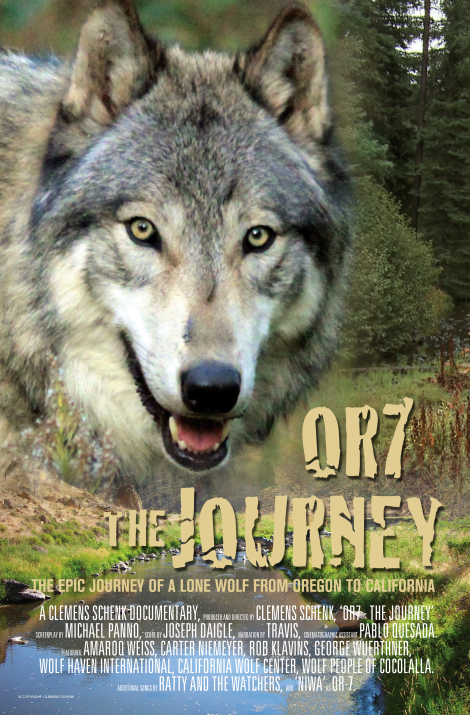
“‘OR7 – The Journey’,  is a mesmerizing new documentary film about one adventurous young wolf, from Northeast Oregon, who struck out for new country and ended up making history.

While the reasons behind the radio-collared wolf OR7′s extensive journey were most likely humble and based on instincts alone, the moment he stepped into the state of California, in the fall of 2011, OR-7 became a worldwide celebrity. He’s the first wild wolf known to make tracks in California in almost 90 years.

This amazing story has been recreated for the big screen by accomplished Oregon filmmaker, Clemens Schenk. While initially intrigued by this one wolf’s story, researching  the film led the producer to discover issues and social attitudes negatively impacting all wild wolves in the U.S. Exposing the shameful way American wildlife agencies are treating wild wolves became a driving force behind the movie. While telling the story of this captivating wolf’s journey, the film is interspersed with thought-provoking interviews and information that will shake the status quo of so-called “wolf management” in America.

OR7 – The Journey promises to be a treat for the eyes that will touch your heart and soul as well. Order your tickets for the world premiere of ‘OR-7 -The Journey’ in Portland, Oregon, on Sunday, May 25th, here:

http://prod3.agileticketing.net/websales/pages/info.aspx?evtinfo=78926%7E5f969332-ec94-41af-822d-5c7ec8f2ca2b&epguid=81b7db1a-39a9-4ae1-99ac-2b415fbbae48&

Starring in the film is Niwa, a captive-born ambassador wolf, named after the wolf advocacy group, the Northern Idaho Wolf Alliance, which also goes by “NIWA.” Clemens Schenk visited the Wolf People wolf education center in Northern Idaho three times throughout 2013,  to spend time filming Niwa running free in a five acre enclosure at the Wolf People compound. Niwa is a big, sociable, fun-loving wolf with a heart of gold, and he had no trouble at all charming Clemens into picking him as the star! Niwa’s petite and princess-like mate, Maiah, has a few cameo moments in the film, as do the rambunctious young Wolf People pups, Mahaway and Cuan.

Wolf People of Cocolalla is the exclusive dealer of the official OR7-The Journey tee shirts and other souvenirs. Check out the Wolf People online  store at http://www.wolfpeople.com/wolfstore/search.php?mode=search&page=1 to order your own OR7 tee-shirt today!

http://www.wolfpeople.com/index.php
http://www.or7themovie.com/

Howls To OR7,

Ann Sydow

Northern Idaho Wolf Alliance”

**Special thanks to “Howling for Justice” for providing this information!  (http://howlingforjustice.wordpress.com/2014/05/22/or7-the-journey-world-premiere-sunday-may-25-2014/)

Read Full Post »


Speak for wolves

Photo courtesy of “Speak for Wolves.”

Here is the link to watch their video: http://www.youtube.com/watch?v=FX1D33gEzpQ

“On June 28-29 2014, Americans of all-walks-of-life will meet in Arch Park in Gardiner, Montana to tell our elected leaders that we need to reform wildlife management, at both, the state and federal level. Approximately 3000 grey wolves have been killed in the northern Rockies and Great Lakes region since they were delisted from the Endangered Species Act. 

Speak for Wolves: Yellowstone 2014 is about taking an important step towards stopping the wolf slaughter that is currently taking place across the United States. We must take bold measures, however, and address the root-cause(s) of the wolf slaughter, the killing of other predators, as well as bison, wild horses and other members of the animal kingdom. The status quo for wildlife management in America is broken and it must be fixed.

This 2-day celebration of predators and our national heritage will feature prominent speakers, live music, education booths, children’s activities, food/drink vendors, local wildlife photography, screening of wildlife documentaries and more. 

This festival-type event is family-friendly, educational, inspirational and non-confrontational. Alcohol will not be served. Predator-friendly beef, chicken, pork, vegetarian and vegan options will be available for purchase. There is no admission fee. Arch Park is a public venue adjacent to the northwest entrance of Yellowstone National Park (Mammoth Hot Springs). 

The 5 Keys to Reforming Wildlife Management in America are as follows: 

1. Restructuring the way state Fish & Game departments operate: 
Western governors currently appoint agency commissioners, which essentially, tell the state Fish & Game Departments what to do. This is cronyism at its worst. State Fish & Game Departments are mostly funded by the sale of hunting/trapping/fishing licenses. These agencies are bound into serving the interest of “sportsmen” because it’s the hand that feeds them. Modern funding mechanisms, application of the best-available science and genuine public involvement in decision making are sorely lacking in these institutions and it must be addressed. Another option would be to empower the federal government to manage all wildlife on federal public lands. 

2. Removing grazing from all federal public lands: 
The “control” of native wildlife to benefit the livestock industry is ground zero for the badly-broken wildlife management status quo. For more than a century, the livestock industry has single-handedly transformed the once-wild west into a tamed pasture of cows and sheep, resulting in the reduction of native wildlife populations that compete with habitat and forage. It is also well documented the damage that grazing causes when livestock infests federal public wildlands. Livestock are non-native and largely responsible for soil compaction, a decrease in water retention and aquifer recharge, erosion, destruction of wetlands and riparian areas, flooding and a net-loss of biodiversity. Grazing enables invasive plant species to proliferate, which greatly affects the West’s historic fire regime. 

3. Abolishing Wildlife Services: 
Hidden within the US Department of Agriculture, is a rogue agency that is essentially, the wildlife killing-arm of the federal government. This federal tax-payer-supported agency works with the livestock industry to kill native wildlife like wolves, coyotes, black bears, cougars and many other non-predator species. Over the past century, Wildlife Services is responsible for the death of tens-of millions of native wildlife. Methods of killing include trapping, poisoning and aerial gunning. At the very least, the predator-control segment of Wildlife Services must be terminated.

4. Banning trapping/snaring on all federal public lands: 
We must evolve as a society and move away from this barbaric, unethical, cruel and torturous method(s) of killing native wildlife. Leg-hold traps, conibear traps and other devices are indiscriminate killers. Recently, there has been an increase in the number of dogs caught/killed by traps on public lands in states like Idaho. It’s only a matter of time before a child or adult steps into one of these bone-crushing devices. Some states currently require individuals to check their traps once every 72-hours, while other states do not require trappers to check them, at all. 

5. No killing of predators, except for extreme circumstances: 
The best available science suggests that predators, including wolves, are a self-regulating species. In other words, predators don’t overpopulate, nor do they kill for “fun”. Instead, their populations naturally fluctuate, as do prey or ungulate populations. We need to better understand and embrace the trophic cascade effect predators have within ecosystems. Non-lethal measures should be implemented in rare instances where there are actual human/predator conflicts. For example, an aggressive and/or habituated bear may need to be killed after non-lethal measures have failed.

While state fish and game agencies enable the slaughter of America’s wildlife, the best-available science suggests that predators, particularly wolves, play a crucial role across the landscape. 
Known throughout the scientific community as trophic cascade, gray wolves are apex predators whose behavior effects dozens of other species, leading to an increase in biodiversity. Soils, plant communities, other wildlife species, riparian areas and forests are all effected by the presence of wolves.

***Come to Arch Park in Gardiner, Montana June 28-29, 2014. The event is family friendly and will feature prominent speakers, live music, video production crews, education and outreach booths, food and drink vendors and the screening of wildlife documentaries. This is going to be the event of the year in the northern Rockies. Together we can make history and restore our wild national heritage!”

**Special thanks to “Speak for Wolves,” http://www.speakforwolves.org/, for providing this information!

Read Full Post »


Save the Lobo

**Photo courtesy from “Lobos of the Southwest.”

Arizona Daily Sun, March 6, 2014

“Talk about over-reacting.
The last time we visited the topic of endangered Mexican gray wolves in this space was to call for more details of a proposed expansion plan and consultation by federal officials with local communities.
That was back in August, and the U.S. Fish and Wildlife Service did agree to at least one public hearing in Arizona and entered talks with state Game and Fish officials.
But some state lawmakers took the expansion plan as a call to arms, and this winter they have introduced bills seeking not only to hamstring or kill off the recovery program but end the entire federal Endangered Species Act in Arizona.
The last was introduced by Flagstaff Rep. Bob Thorpe, who later withdrew that clause after staff officials said it would compromise tens of millions of dollars in federal aid given to the state for protecting endangered species and habitat restoration under their many cooperative agreements. Those programs include the California condor, black-footed ferret, Chiricahua leopard frog, native fish and other species.
He also took out the part about deporting any animal species in a federal recovery program not “cooperatively implemented” with the state, a direct assault on federal authority over endangered species.
But Thorpe did retain a clause in the bill calling on the federal government to establish a compensation fund for cattle losses, then turn it over to the state to be administered on state terms.
Other bills and resolutions would allow state employees for the first time to kill a problem wolf on public land, cap the number of wolves at 100 and relocate them to Mexico. And when the bills are inevitably challenged in court, another bill calls for a $250,000 litigation fund to be set up to defend them.
If the measures above came in response to hundreds of marauding wolves decimating cattle herds, we’d pay attention. But just the opposite true: There are about 80 wolves in the wild and the number of claims made by ranchers for wolf depredation is minuscule. Most cattle are killed by disease and by predators with much larger populations, such as coyotes or mountain lions. But if a cow is killed, there is a compensation fund in place and one proposal calls on ranchers to be paid extra simply for sharing their leased land with wolves.
Further, public opinion is solidly behind the wolves, not the ranchers. Poll after poll shows most citizens believe there is plenty of room on the national forest for cows and wolves with sensible management.
Does that mean we’re satisfied with the management plan to date and the expansion proposal? On the latter, we feel Fish and Wildlife owes residents of communities in the expansion zone (which extends northward to Interstate 40) some answers to specific questions:
— How often would they anticipate that wolves establishing new territories would roam into suburbs and other settled areas?
— How would wolves interact with pet dogs in particular?
— What tactics and strategies could be employed to keep those human-wolf contacts to a minimum?
These are the issues that lawmakers ought to be focusing on as part of diversifying and preserving Arizona’s wildlife heritage. Wolves are part of that heritage, and they deserve a chance to stay.
Please Act Today to stop these
anti-wolf bills!
You can help by contacting your Arizona House Members and submitting a letter to the editor of the Arizona Daily Sun.
If you don’t live in AZ, you can still help by submitting a letter to the editor.
The letters to the editor page is one of the most widely read, influential parts of the newspaper. One letter from you can reach thousands of people and will also likely be read by decision-makers. Tips and talking points for writing your letter are below, but please write in your own words, from your own experience. These are also good talking points for contacting your legislators.
Letter Writing Tips & Talking Points
  • At last official count, only 37 Mexican gray wolves were found in AZ, and only 83 were found total in the wild, making them critically endangered. We have a moral obligation to do everything we can to ensure their recovery and not push them closer to extinction as these bills aim to do.
  • The proposed legislation will waste taxpayer money on litigation to impede wolf recovery and embarrass the state by attempting to illegally override federal laws that protect endangered species.
  • Polling showed 77% of Arizona voters support the Mexican wolf reintroduction. Legislation to impede wolf recovery is a slap in the face to the majority of voters who want wolves to thrive.
  • People who care about wolves should call on their AZ House members to oppose anti-wolf measures. Information about how to do that is at mexicanwolves.org.
  • Wildlife biologists believe that Mexican wolves will improve the overall health of the Southwest and its rivers and streams – just as the return of gray wolves to Yellowstone has helped restore balance to its lands and waters.
  • Wolves generate economic benefits – a University of Montana study found that visitors who come to see wolves in Yellowstone contribute roughly $35.5 million annually to the regional economy.
  • Wolves once lived throughout Arizona and played a critical role in keeping the balance of nature in place. We need to restore this important animal that has been missing for too long.
  • The livestock industry has a responsibility to share public lands with wolves and other wildlife. Funds are available to help livestock growers implement nonlethal deterrents, better animal husbandry practices, and other innovative tools that minimize conflict.
Make sure you:
  • Thank the paper for publishing the editorial.
  • Do not repeat any negative messages, such as “cows may have been killed by wolves, but…” Remember that those reading your letter will not be looking at the article it responds to, so this is an opportunity to get out positive messages about wolf recovery rather than to argue with the original article.
  • Keep your letter brief, between 150-300 words.
  • Include something about who you are and why you care: E.g. “I am a mother, outdoors person, teacher, business owner, scientific, religious, etc.”
  • Provide your name, address, phone number and address. The paper won’t publish these, but they want to know you are who you say you are.
Please also contact AZ House members directly and tell them politely that you expect them to oppose these bills that embarrass Arizona, waste taxpayer money and fly in the face of overwhelming majority public support for wolf recovery.”
 **Special thanks to Lobos of the Southwest, http://www.mexicanwolves.org/index.php/news/1209/51/Editorial-Anti-Wolf-Bills-Clear-Case-of-Over-Reaction, and Arizona Daily Sun for providing this information!
 

Read Full Post »


Wolf Snare

Photo courtesy of The Association for the Protection of Fur Bearing Animals

01/30/2014

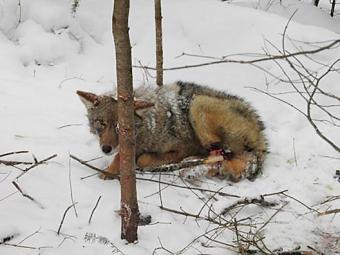
“Last week, about 30 minutes north of Huntsville, Ontario, Paula Tough was on a popular snowmobile trail with a friend, learning how to skijor. Her lead dog began barking and pulling to the side of the trail uncontrollably.

Something was wrong, Paula knew. She took a few steps and saw her: a wolf, laying down, next to a tree, only 10 feet from the trail.

Why was this wolf here? Was something wrong? And she saw it: wire digging in, cutting the flesh of the hind leg of the wolf. A snare had caught her.

Quickly returning to the car with the dogs, Paula grabbed wire cutters she kept for this very purpose. Not only did the cutters prove ineffective, but Paula also recognized that if she simply cut the wire, the wolf would escape and could suffer greatly from an infection of the bone.

“I was standing there trying to figure out what to do,” Paula told APFA. “She was looking at me and I was looking at her and thinking, what am I going to do here? This is horrific, but I can’t walk away, I can’t leave her like this.”

Paula got in her car and went home to get her son, along with blankets, a crate and stronger wire cutters. With the help of her son and a friend, Paula was able to get the wolf safely into a crate. Aspen Valley Wildlife Sanctuary received the wolf and began immediate assessment.

As of this posting, the fate of the wolf is uncertain. She will likely lose her leg – the severity of the cut to nerves and tendons may be irreparable. But that is not necessarily the end: amputation and reintroduction may still be possible. APFA is keeping in contact with Aspen Valley officials and will report more on this situation as it develops.

This serves as yet another example of the horrific, cruel nature of all traps across Canada and our call for immediate changes to regulations.

APFA would like to extend our sincerest gratitude to Paula and Aspen Valley Wildlife Sanctuary for their quick actions to save this wolf’s life. They are true heroes.

A full-length interview with Paula outlining the events, her reactions and what she thinks should happen next will be available in next week’s episode of Defender Radio.

YOU CAN HELP!

Contact your provincial government – MLA in BC or MPP in ON – and ask them to push for immediate changes to trapping regulations in your province.

Here is a sample letter:

Dear ________

I am very concerned about the use of bodygripping traps (leg-hold, Conibear and snare traps) that are used to restrain or kill wildife for the fashion fur trade.

I believe these traps are cruel, dangerous and have no place in a modern society.  Even so-called “certified humane traps” such as leg-holds and snares are indiscriminate machines and can harm and injury non-target animals and our domestic pets.

With ongoing cutbacks to conservation staff, a growing number of people using recreational spaces, unenforceable trap check times and a clear danger to public safety, it is time to overhaul all provincial trapping regulations.

I urge you to please push for the following actions:

  • Prohibition of all bodygripping traps including the leg-hold (YES IT’S STILL LEGAL), Conibear and snare (at least in urban areas and provincial parks).
  • Mandatory signage on all active traplines to warn the general public.
  • Mandatory identification tags for all traps so trappers breaking the law can be held accountable.

Thank you for making the welfare of our wildife and the safety of people and their pets a priority.

Sincerely,”

**Special thanks to “The Association for the Protection Of Fur Bearing Animals” for providing this information!  (http://furbearerdefenders.com/blog/snare-rips-apart-wolfs-leg-in-ontario)


Read Full Post »

Older Posts »