Feeds:
Posts
Comments

Archive for the ‘Wolf Preservation Efforts’ Category


Minnesota Wolf
As we have seen in our country’s history, cattlemen and trophy hunters decimated entire wolf populations throughout the lower 48 states.
Nicole Hendrickson, Educator, 04/01/2013, reports the following:

“I was appalled after seeing one-fourth of Minnesota’s wolf population killed in 2012, shortly after federal de-listing from Endangered Species status.

I have three primary concerns in regard to the wolf issue:

  • Public input was not acknowledged.
  • The Department of Natural Resources (DNR) failed to live up to its promise — as outlined in its Wolf Management Plan — to follow a 5-year wait after federal de-listing.
  • We need to be more careful when considering the longevity of the wolf.

In our democracy, prevailing public attitudes usually shape public policy. With the wolf hunt, it is small interest groups of trophy hunters and cattle raisers that are getting their way. In every poll that I have seen, the majority of Minnesotans do not want a wolf hunt. As Sen. Chris Eaten has pointed out, we’ve pumped a lot of money into wolf survival, and as soon as protection is removed that money is down the drain.

The International Wolf Center sponsored a study in 1999 by Stephen Kellert, Ph.D., of Yale University, to measure public attitudes toward wolves in Minnesota; and the DNR published a poll in 2012 to assess public attitudes on wolves. Dr. Kellert’s study concluded:

“The wolf is especially appreciated by Minnesota residents for its nonconsumptive value. By contrast, a majority of both northern and non-northern Minnesota residents remain skeptical about harvesting the animal for either fur or for sport, and are concerned that these forms of consumptive use could result in excessive and unsustainable mortality.”

The DNR’s 2012 poll had similar findings:

“79% of respondents oppose wolf hunting.”

So why aren’t our voices being considered? The majority of Minnesota’s residents value wolves.

‘Primary clients, hunters and trappers’

Last month, I became aware that the DNR feels that its primary clients are hunters/trappers and livestock producers. This was confirmed through an Internal email that the organization Howling for Wolves commissioned through the Data Practices Act. In the email DNR officials state that, “we owe it to our primary clients, hunters and trappers, and to livestock producers as secondary clients, to do what we can to establish a legitimate harvest opportunity now that the wolf is under our management authority.”

Now I understood why the hunt came to fruition so quickly.

Are we really leaving the protection of wolves up to hunters/trappers and cattle producers (the DNR’s primary clients)? It doesn’t look like a sound or logical plan to me. As we have seen in our country’s history, cattlemen and trophy hunters decimated entire wolf populations throughout the lower 48 states. I am confident that history often repeats itself.

Decline of the moose

Elk, moose, bison, caribou and wolves used to occupy most of Minnesota. Based on my knowledge about the DNR’s management of moose in Minnesota and their sudden population decline for reasons outside of our control, there is good reason to believe the wolf population is at stake. This has been evident in the DNR’s management of moose. According to the DNR Moose Management Plan, “Minnesota’s moose (Alces alces) population, currently concentrated in the northeast corner of the state, is facing a decline where the cause is not understood.”

In 2012, there are 4,230 moose; in 2005 there were double that at approximately 8,150 (2012 Aerial Moose Survey.) The balance of life is fragile, and we can’t always rely on mathematical population models to determine success.

In every argument, I believe that one should acknowledge the other side’s position and a solution should be addressed. Without the protection from the law, I fear for the longevity of the wolf. History has shown me that hunters and cattle raisers are not responsible stewards of wolves. I am even more fearful because the agency that is supposed to work without bias has demonstrated its preference in aligning with hunters/trapper and cattlemen.

Poor process

If the DNR had come up with some sound baseline data and research, considered public comment, abided by their wolf management plan, and consulted with tribal nations on the sacredness of wolves, maybe I would have just bit my tongue in opposing the wolf hunt.

For the sake of meeting in the middle, a more sustainable number — like 5 percent, as suggested by one biologist I spoke to during my research — would have been more appropriate.

So the battle goes on. Minnesotans are needed to take action and contact Sen. David Tomassoni, chair of the Environment, Economic Development and Agriculture Committee, and Gov. Mark Dayton to be the voice to help preserve Minnesota’s wolves and the future of our state.

WANT TO ADD YOUR VOICE?

If you’re interested in joining the discussion, add your voice to the Comment section below, or consider writing a Community Voices commentary. For more information about Community Voices, email Susan Albright at salbright@minnpost.com.”

**Special thanks to Nicole Hendrickson, educator and resident of Brooklyn Park, and a volunteer for Howling for Wolves and Northwoods Wolf Alliance.  She is an enrolled member of the Sokaogon Ojibwe community (http://www.minnpost.com/community-voices/2013/04/are-we-really-leaving-future-minnesotas-wolves-hunterstrappers-and-livestock).
Read Full Post »


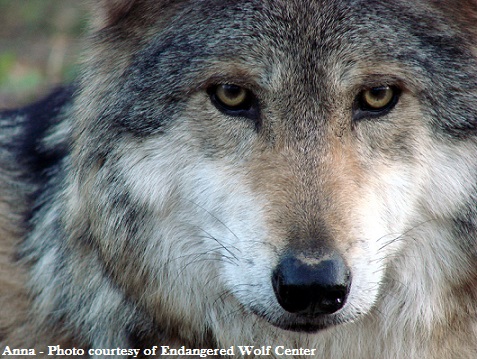
Close up of Mexican Gray Wolf

**To take action for Mexican Wolves, please use this linkhttp://www.mexicanwolves.org/index.php/news/1046/51/Take-Action-Comments-Needed-to-Ensure-Mexican-Wolves-Future and send your comments!!  WOLF PRESERVATION supports Lobos of the Southwest and their efforts!

Proposed USFWS Rule changes regarding reintroduction into the wild of the Mexican Gray Wolf:

“Recently the U.S. Fish and Wildlife Service (USFWS) proposed changes to the rules guiding the Mexican gray wolf reintroduction. The proposed rule is very important to the future of Mexican wolves in the wild. Please comment, using the following points:

One very good and many very bad changes are proposed:

The good change is to allow direct releases of Mexican wolves into parts of New Mexico and additional areas in Arizona.  This change has been recommended by experts for over 10 years and can be made faster and with less bureaucratic delay than any other part of the proposed rule

  • TELL USFWS TO PUT THE REST OF THEIR PROPOSED RULE ON HOLD AND SPEED UP APPROVAL FOR MORE DIRECT RELEASES INTO ADDITIONAL AREAS.
The bad changes include:

By labeling all of the wild wolves as “nonessential” the USFWS ignores science and the reality of 15 years of experience with reintroducing wolves
The USFWS claims that even if all of the 75 wolves in the wild are wiped out this is not “likely to appreciably reduce the likelihood” of recovery of Mexican wolves in the wild.
When the current rule declared wolves in the wild “nonessential” there were only 11 wolves, recently released from a captive breeding program and they made up only 7% of all Mexican wolves in the world.
Now the 75 wolves in the wild have up to four generations of experience in establishing packs and raising pups and are over 22% of all of the Mexican wolves in the world.
After four more generations of captive breeding with few releases (only one in the last five years), scientists warn that there may be serious genetic problems making captive wolves less able to thrive in the wild.

  • TELL USFWS THAT THE FOURTH GENERATION WILD LOBOS ARE NOT EXPENDABLE AND ARE AN ESSENTIAL PART OF RECOVERING THIS UNIQUE SUBSPECIES OF WOLF

The proposed rule puts the cart before the horse and should come with or after – not before – an updated recovery plan
USFWS admits that their present, typewritten, 1982 recovery plan is not scientifically sound and does not meet current legal requirements – yet in its proposed rule USFWS continues to emphasize a woefully inadequate population of only 100 wolves in the wild
When USFWS published the current rule in 1998 they said they expected to put out a new recovery plan for the public to comment on later that year; 15 years later, there still is no scientific or legally adequate recovery plan!

  • TELL USFWS TO QUIT STALLING AND COMPLETE A COMPREHENSIVE RECOVERY PLAN – AND LET THE PUBLIC SEE IT – BEFORE DOING ANY TINKERING WITH THE CURRENT RULE (except for allowing wolves to be reintroduced into additional suitable places)
USFWS’s decision on the proposed rule can help Mexican wolves finally thrive or can push them closer to extinction. Please submit your comments here and ask others who care about Mexican wolves to do the same.
Thank you!”
**Special thanks to “Lobos of the Southwest,” http://www.mexicanwolves.org/index.php/news/1046/51/Take-Action-Comments-Needed-to-Ensure-Mexican-Wolves-Future, for providing this information!

Read Full Post »


mexican gray wolf

Comments needed on proposed Rule changes regarding reintroduction into the wild of the Mexican Gray Wolf.

“Recently the U.S. Fish and Wildlife Service (USFWS) proposed changes to the rules governing the Mexican wolf reintroduction. The proposal, with one very good and many very bad changes, is very important to the future of Mexican wolves.

Please comment on the proposed changes and include the following key points:

1. The good change is to allow direct releases of Mexican wolves throughout the Blue Range Wolf Recovery Area.  The USFWS should put the rest of their proposed rule on hold and speed up approval for more direct releases in expanded areas.

This change has been recommended by experts for over 10 years and can be made faster and with less bureaucratic delay than any other part of the proposed rule.

2. The proposed rule effectively prevents wolves returning to the Grand Canyon region, including northern Arizona and southern Utah, or to northern New Mexico and southern Colorado. The USFWS should eliminate boundaries to the wolves’ movement.

Scientists say some of the last best places for wolves are in these areas, but currently wolves who set up territories outside the Blue Range Wolf Recovery Area are recaptured and moved back. Under the proposed change, the USFWS will recapture Mexican wolves just for going outside of the Mexican Wolf Experimental Population Area whether they establish territories or not. Additional populations of Mexican wolves are necessary to their recovery and genetic health, as is the ability for wolves to move between populations.

Capturing and moving wolves is always a risky business that can result in death or trauma to the wolf. And a bigger box is still a box.

3. The USFWS should not re-designate Mexican gray wolves as experimental, non-essential. By labeling all of the wild wolves as “nonessential” the USFWS ignores science and the reality of 15 years of experience with reintroducing wolves.

The USFWS claims that even if all of the 75 wolves in the wild are wiped out this is not “likely to appreciably reduce the likelihood” of recovery of Mexican wolves in the wild. When the current rule declared wolves in the wild “nonessential” there were only 11 wolves, recently released from a captive breeding program, and they made up only 7% of all Mexican wolves in the world.

Now the 75 wolves in the wild have up to four generations of experience in establishing packs and raising pups and are over 22% of all of the Mexican wolves in the world. And after four generations of captive breeding with few releases, scientists warn that there may be serious genetic problems making captive wolves less able to thrive in the wild.

The fourth generation wild lobos are not expendable and are essential to recovering this unique subspecies of wolf.

4. The USFWS needs to quit stalling and complete a comprehensive recovery plan – and let the public see it – at the same time as or before changing the current rule (except for allowing wolves to be reintroduced into additional suitable places).

USFWS admits that their present, typewritten, 1982 recovery plan is not scientifically sound and does not meet current legal requirements – yet in its proposed rule USFWS continues to emphasize a woefully inadequate population of only 100 wolves in the wild.

When USFWS published the current rule in 1998 they said they expected to put out a new recovery plan for the public to comment on later that year; 15 years later, there still is no scientific or legally adequate recovery plan!

The proposed rule puts the cart before the horse and should come with or after – not before – an updated recovery plan

USFWS’s decisions on the proposed rule can help Mexican wolves finally thrive or can push them closer to extinction.   Please comment today, and ask others to do the same.

You can submit your comments online here: http://www.regulations.gov/#!submitComment;D=FWS-R2-ES-2013-0056-0001
Or by mail addressed to: Public Comments Processing, Attn: FWS-R2-ES-2013-0056; Division of Policy and Directives Management; U.S. Fish and Wildlife Service; 4401 N. Fairfax Drive, MS 2042-PDM; Arlington, VA 22203

Letters received by July 29 requesting public hearing locations can be mailed to: Mexican Wolf Recovery Program, U.S. Fish and Wildlife Service, New Mexico Ecological Services Field Office, 2105 Osuna Road NE., Albuquerque, NM 87113. If you request a hearing location, please also ask for at least three weeks advance notice of the hearing.

Thank you for giving these special wolves a voice in their future.”

**Special thanks to “Lobos of the Southwest,” http://www.mexicanwolves.org/index.php/news/1059/51/Act-Now-to-Ensure-Wolf-Recovery for providing this information!

Read Full Post »


National Rally for Wolves

“Dear Rally attendees and supporters,

As a grassroots led and organized endeavor, we at The National Rally to Protect America’s Wolves! need your help.

The National Rally to Protect America’s Wolves! has reserved an area, just for OUR event, adjacent to the Washington Monument in Washington DC on Saturday, September 7, 2013. This historic and beautiful area is within sight of the South Lawn of the White House and the US Capitol building.

So far, we have 15 wonderful Rally Partners, they are all listed on the bottom of the Rally website, and seven excellent Rally speakers, including two Native Americans who are fighting hard to protect wolves in Minnesota. We will release the names of our first wave of speakers later this week. Additional inspiring and exciting speakers are on the way.

BUT, now we need YOU to come through for the Rally. We need funds to pay for OUR Rally for America’s wolves.

Together, we must pay for staging, podium, audio speakers, press area, trash service, portapotties, etc  along with a professional videographer who will be filming the Rally and creating a highlights DVD to post on YouTube and elsewhere and for distribution to the media. The total cost comes to approximately $10,000.

This is very doable within our devoted wolf defender community. If 500 wolf friends donate just $10 each, that equals $5,000. If twenty more wolf defenders, donate $250 each, that takes care of the remaining balance.

We are asking that you give: $500, $250, $100, $50, $25, $10, $5… whatever you can afford.

Please put your money where your heart is for wolves and help us pay for The National Rally to Protect America’s Wolves! As soon as we have the funds we need the donations page will be turned off.

Read Full Post »


Mexican Wolf on log

“As the Arizona Daily Sun’s recent editorial, “Wolf expansion plan needs more details” points out, Flagstaff residents can provide a significant voice in restoring this ecologically critical, charismatic creature to its rightful place in northern Arizona.

The potential for wolves to return, as the Daily Sun reported back in 2007, has been considered for well over a decade.

The Mexican wolf is one of America’s most endangered mammals. With only an estimated 75 of these wolves in the wild, several management actions are urgently required for its survival. In mid-June, the U.S. Fish and Wildlife Service (USFWS) proposed to remove the gray wolf from the list of threatened and endangered species, except the Mexican wolf, which will remain an endangered subspecies subject to certain provisions that have proven problematic in the past.

Because the entire existing Mexican wolf population is derived from only seven survivors rescued from extinction, the agency’s proposal to allow direct releases of Mexican wolves throughout the existing Blue Range Wolf Recovery Area is absolutely critical. This action can and should be done immediately.

Twelve years ago a panel of four imminent carnivore scientists urged a revision of the Mexican Wolf Recovery Plan, laying the scientific foundation and imperative to enlarge the recovery area. The USFWS needs to quit stalling and complete a comprehensive recovery plan addressing the current plan’s shortcomings — and let the public see it — and at the same time allow wolves to be reintroduced into additional suitable locations as described above.

The Daily Sun’s editors brought up a good question: Why stop northern wolf migration at Interstate 40 as the USFWS proposes? There is nothing sacred and nothing scientific about the I-10 southern recovery area boundary, nor I-40 to the north. In fact, the USFWS suggests extending the recovery area south of I-10 to the Mexican border. However, the agency completely ignores the recommendations of its own Mexican wolf science team, who emphasize the wolf’s long-term survival requires connected habitats north of I-40, including the Grand Canyon region and portions of southern Utah and Colorado.

Wolves are legendary wanderers. While highways present serious hazards to all wildlife, wolves are capable of finding a way across. For example, one female traveled a circuitous route of more than 3,000 miles from Yellowstone to Colorado. She successfully crossed I-80 three times before she was poisoned in 2009. Closer to home, a female Mexican wolf traveled more than 200 miles and successfully crossed I-40. Sadly, a vehicle later struck and killed her in the fall of 2000, 12 miles north of Flagstaff on U.S. 89.

Wolves are social, family-oriented creatures that play a critical role in healthy, resilient ecosystems by affecting the behavior and numbers of prey species. The overabundance of grazing and browsing wildlife often results in degradation of forests, streams and grasslands.

For example, the wholesale slaughter of carnivores, including wolves, in the early 20th century on the North Kaibab forest and Grand Canyon National Park, precipitated an explosion of mule deer populations that dramatically reduced forbs, grass, aspen saplings, and other native vegetation. Elk, a recent migrant to Grand Canyon National Park and the Kaibab and Coconino national forests, continue to damage riparian vegetation as well as aspen and other native plants.

The recovery of viable wolf populations can dramatically improve the health and resilience of forest, stream, and grasslands. For example, the return of the wolf to Yellowstone discouraged elk from lounging and trashing streamside willow and cottonwood vegetation.  Now, increased vegetation stabilizes stream banks while shading and cooling many sections of creeks and rivers. Increased willow and other native vegetation allowed beaver to return and create numerous ponds providing sanctuary for fish and other wildlife.

Wolves kill and harass coyotes, benefiting hawks and foxes that depend on rodents hunted by coyotes. By killing and scaring off coyotes that otherwise prey on pronghorn antelope, pronghorn fawns are much more likely to survive in areas dominated by wolves. That’s because wolves favor larger prey and generally leave pronghorn alone.
As the most recent polls confirm, most Arizona residents recognize the critical role wolves play in nature, and believe they belong in northern Arizona.  While the deadline for requesting locations for public meetings has passed, you can submit your wolf recovery comments online at: http://www.regulations.gov/#!submitComment;D=FWS-R2-ES-2013-0056-0001

**Special thanks to “Lobos of the Southwest” and Kim Crumbo, a conservation director at Grand Canyon Wildlands Council in Flagstaff, for providing this information!  www.grandcanyonwildlands.org or (928) 606-5850.

Read Full Post »


National Rally for Wolves

“A UW researcher is growing increasingly concerned about the plight of the gray wolf on Wisconsin’s landscape.

For 15 years, environmental studies associate professor Adrian Treves has studied the ecology of the carnivore’s interactions with people and has surveyed Wisconsin residents on wolf policy and management.

Treves predicts Wisconsin’s wolf hunts, at their current levels, are not sustainable. More than 250 gray wolves are expected to be slain in the state’s upcoming second annual wolf hunt season, which starts on October 15.

Treves says that number represents “a little more than 30% of the late winter wolf count,” which means Wisconsin has the highest or second highest wolf quota on the record in North America. Treves calls it an undeniably “aggressive wolf hunt.”

Treves says there is a high likelihood that by April 2015, the wolf hunt will have to be closed due to such a steep decline in the wolf population. That decline may result in the gray wolf being re-listed in Wisconsin as a threatened and endangered species by 2016.

He also warns that there’s real risk that the wolf population could be driven so low that it cannot recover, and the federal government would “have to step in, again, under emergency re-listing rules of The Endangered Species Act.”

It’s an interesting finding,  given the U.S. Fish and Wildlife Service announced plans earlier this summer to lift the creature from the threatened and endangered species list throughout the country. That’s already happened in Wisconsin, even as pro-wolf groups are trying to overturn the decision to delist the gray wolf in the Great Lakes region.

Treves – along with colleagues at Michigan Tech and Ohio State University – co-authored a scientific criticism of U.S. Fish and Wildlife Service plan.   The agency has stated that tolerance for wolves is higher within current wolf range.  Treves says that statement flies in the face of data gleaned from more than 100 scientific studies.  The researcher says, in general, the U.S. public supports gray wolf recovery in appropriate environments.  Further, Treves says, public tolerance of wolves is lower within currently existing wolf range.

Back at the state level, Treves this week is releasing public opinion results on the state’s first wolf hunt, held last year.

Treves says not only are the state’s wolf hunt practices not sustainable, they also contradict public opinion. His team’s  report found a five to seven percent increase in people opposing particular ways of hunting wolves. According to Treves, a majority of the Wisconsin public, outside the wolf range, do not support the current wolf hunt.

But Treves says public opinion is not carrying the weight it should. Instead, he says the proposal to eliminate federal protection for wolves seems “politically motivated” and “excessive,” while contradicting scientific evidence.

Treves and Masters candidate Jamie Hogberg will be sharing the results of their public opinion survey on Wisconsin wolf policy with a DNR advisory committee Thursday in Wausau.

The public can weigh in on the U.S. Fish and Wildlife Service proposal to remove the gray wolf from the national threatened and endangered species list – deadline Sept 11, 2013.”

**Special thanks to  and Gaby Magallanes, http://www.wuwm.com/post/researcher-state-wolf-hunt-unsustainable, for providing this information!

Read Full Post »


Royale Isle Wolves

“The wolves of Michigan’s Isle Royale National Park have not been doing well, but there’s some unexpected good news.

Earlier this year, researchers from Michigan Technological University who study the wolves reported there were just eight wolves left – and they reported they were unable to find any evidence of pups born to those wolves.

But now, that has changed. Michigan Tech researcher Rolf Peterson heard two or three wolf pups in July.

Peterson doesn’t have phone access on the island. But by email, he told me he thinks the pups were born this spring, and they were probably born to a pack called the West End Trio. Here’s an excerpt from his email:

“The pups born this year mean that the wolves have not completely lost all genetic viability, but it doesn’t mean they’re about to recover, and it doesn’t mean that they have somehow escaped from genetic problems.  Twenty years ago the population was in approximately the same situation, with a dozen wolves present (the difference now is that the population is lower, because of the mortality from the mine shaft incident) – only two of the three packs present were reproducing, and litter size was small.  Now we have one of two packs that reproduced (this year, no packs reproduced last year), and litter size was small.  In the early 1990’s the situation was resolved by the arrival of an immigrant male with some more competitive genes, and the wolf population was strong for another 15 years.”

The National Park Service is in the process of figuring out what to do about the island’s wolves.

Park Superintendent Phyllis Green says the pups’ birth might buy the NPS a little more time to make that decision.

“We are excited that there are pups this summer and in that sense the wolves of Isle Royale continue to surprise us with their resiliency. And I think that’s one of the questions that we have, is whether we disrupt the current pack orders or whether we let them live their lives there until such time as it passes. So at this point in time we’re still in the deliberative stage. We’re happy to hear there’s an addition to the wolf population but they’re still tenuous and it’s still a significant decision,” she says.

The three main options on the table are:

  • Let the current population go extinct, and do nothing.
  • Let the current population go extinct and then reintroduce wolves to the island.
  • Attempt to genetically rescue the current population by bringing in some new wolves.

Green says the NPS might add one or two more options. They’re preparing material for the “scoping process,” which is when the public gets a chance to weigh in.

Isle Royale is mostly wilderness. I asked Green how difficult it is for the Park Service to consider stepping in to help the wolves in this situation:

“Wilderness is a factor but it doesn’t preclude action, is what I would tell you. It’s a combination of a number of policies. I think most of the American public does want their parks to be relatively hands-off with nature taking the lead in how change occurs at a park. For the most part, that’s what happens at Isle Royale. The question that is raised of course is the fact that with climate change and the potential loss of this ice bridge being frequent enough for genetic replenishment – should you make a change in policy at this point in time? And that’s why we’re taking the time to discuss it pretty thoroughly,” she says.”

You can let the Park Service know what you think should be done about the island’s wolves by emailing:  isro_wildlife@nps.gov

**Special thanks to , http://michiganradio.org/post/wolf-pups-good-sign-struggling-population-isle-royale, for providing this information!

Read Full Post »


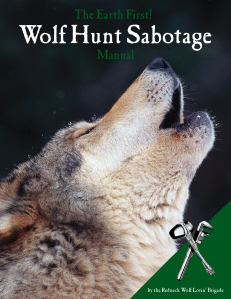
Wolf Hunt Sabotage

“And in that case, we choose to be saboteurs for the wild.”

The following text is from a press release of the Earth First! Media office, which provides correspondence to news outlets around the world.

“Earth First! Media has released a manual which provides detailed information for disrupting wolf hunting in those states that allow it. Titled The Earth First! Wolf Hunting Sabotage Manual, the text, complete with step-by-step graphics, explains how to find and destroy wolf traps, handle live trapped wolves in order to release them, and various methods, including the use of air-compressed horns and smoke-bombs, for stopping wolf hunts.

The authors of the manual describe themselves as,  “hunters and proud of it,” adding, “But we aren’t proud of what passes for hunting these days and especially for what passes as ‘sportsman’ hunting. Somehow, the National Rifle Association, yuppie trophy hunters, cattle barons, and the Obama Administration are in cahoots in an effort that promises to wipe wolves clean off the planet. And in that case, we choose to be saboteurs for the wild.”

The manual, which was sent to Earth First! Media by unknown persons calling themselves “the Redneck Wolf Lovin’ Brigade,” is being published electronically at Earth First! News and is being offered for others to print and distribute.

Panagioti Tsolkas, a correspondent with Earth First! Media, says the manual is being published in light of regional delistings of wolves in the Great Lakes region and the Northern Rockies since 2011 where subsequent wolf hunts have accounted for over 1,500 wolves hunted or trapped. “According to several wildlife agencies’ reports, there are fewer than 6,000 wolves left in the lower 48 states where wolves once numbered in the hundreds of thousands,” Tsolkas added.

In June of this year, the Obama administration announced that it plans to push for nearly all wolves, excepting those in the U.S. Southwest, to be stripped of Endangered Species Act protections despite compelling evidence from numerous scientists that wolves have not recovered as a species. “We are coming into a new era of wolf genocide,” said Tsolkas, adding, “It will be important for individuals and groups with a passion to protect wolves to take this manual into consideration. It will surely save lives, but it is also a very dangerous undertaking. Wolf hunters have guns and obviously little morals when it comes to what they shoot.”

Over its 33-year history, Earth First! activists have used hunt sabotage to disrupt hunts across the country. “This wolf hunting manual could very well spark a new version of Whale Wars. It’ll be called Wolf Wars.””

Earth First!,  an international radical environmental movement, for providing this information! The movement also publishes a quarterly magazine and online newswire (http://earthfirstnews.wordpress.com/2013/08/12/manual-for-sabotaging-wolf-hunts-released/)

Read Full Post »


National Rally for Wolves

“Dear Rally attendees and supporters,

As a grassroots led and organized endeavor, we at The National Rally to Protect America’s Wolves! need your help.

The National Rally to Protect America’s Wolves! has reserved an area, just for OUR event, adjacent to the Washington Monument in Washington DC on Saturday, September 7, 2013. This historic and beautiful area is within sight of the South Lawn of the White House and the US Capitol building.

So far, we have 15 wonderful Rally Partners, they are all listed on the bottom of the Rally website, and seven excellent Rally speakers, including two Native Americans who are fighting hard to protect wolves in Minnesota. We will release the names of our first wave of speakers later this week. Additional inspiring and exciting speakers are on the way.

BUT, now we need YOU to come through for the Rally. We need funds to pay for OUR Rally for America’s wolves.

Together, we must pay for staging, podium, audio speakers, press area, trash service, portapotties, etc  along with a professional videographer who will be filming the Rally and creating a highlights DVD to post on YouTube and elsewhere and for distribution to the media. The total cost comes to approximately $10,000.

This is very doable within our devoted wolf defender community. If 500 wolf friends donate just $10 each, that equals $5,000. If twenty more wolf defenders, donate $250 each, that takes care of the remaining balance.

We are asking that you give: $500, $250, $100, $50, $25, $10, $5… whatever you can afford.

Please put your money where your heart is for wolves and help us pay for The National Rally to Protect America’s Wolves! As soon as we have the funds we need the donations page will be turned off.”

**Special thanks to The National Rally to Protect Wolves, http://rallyforwolves.org/donate/, for providing this information!

Read Full Post »


Idaho Wolf

As a society, how far are we willing to go and what are we willing to sacrifice to preserve the wild?

“When the U.S. Fish and Wildlife Service reintroduced 66 gray wolves into Yellowstone National Park and adjacent wilderness areas in Idaho back in 1995-’96, conservationists and ranchers squared off across a fence and hurled insults at each other for months.

By then, both sides had had plenty of practice in the art of verbal warfare from previous battles over buffalo harvests and the ever-popular “elk shoots,” wherein surplus animals were herded by helicopters into a funnel of “hunters,” who thinned the herd back to manageable numbers in a hail of lead.  To call that a hunt would be akin to calling Wounded Knee a fair fight.  I never met anyone who participated in one of those culling events who wasn’t sickened by the slaughter.

When wolves began again to hunt prey in Yellowstone, many ranchers argued that Canis lupus would soon be lining up at their livestock operations like teenagers at a takeout window.  Here, for the taking, was an endless supply of Happy Meals.

As mitigation for those meals, the conservation group Defenders of Wildlife has spent $1.5 million (and counting) since 1987 compensating ranchers for their losses — though this has failed to mollify ranchers.

The argument for restoring wolves, however, was unassailable. When the last wolf was finally killed in Yellowstone back in 1926, the elk population soared and the ecosystem fell out of balance. The park’s riparian areas and aspen stands were devastated by the 8,000-plus elk herds, and an inventory of the park’s wildlife in the early 1970s failed to turn up more than a handful of deer. These, and dozens of other critters, could not compete with the elk.

By the mid-1990s, alarmed biologists told Congress that something had to be done. According to William J. Ripple, a leading researcher on the effect of wolves on the Yellowstone ecosystem who is based at the University of Oregon, bringing back wolves, the alpha predators, was the right move.

Since 1996, Yellowstone’s elk population has been cut by two-thirds. The number of beaver and birds has increased, along with deer and red foxes, and the aspen and riparian areas once devastated by overgrazing are making a slow but steady recovery.

But Ripple cautions: “We think this is just the start of the restoration process.  We have to sit back and wait for the ecosystem to continue responding.  We call this ‘passive restoration,’ because the ecosystem, with the wolf as a key component at the apex of the predator pyramid, is only now emerging.  The aspens, the berry-bearing bushes, the riparian areas, they all seem to be responding, but we went 70 years without the wolves in Yellowstone. … It’s much too early to draw conclusions.”

For those and many other reasons, the federal government’s decision this summer to remove the gray wolf from the endangered species list was not roundly applauded. Though Dan Ashe, director of the Fish and Wildlife Service, declared the decision to be “the next step forward in wolf conservation,” many questioned its wisdom.  Anticipating the inevitable storm of controversy, the agency invited the public to weigh in on whether wolves should be removed from the endangered species list. The deadline for comments is Sept. 11.

When Congress removed the Endangered Species Act protections from the gray wolf in 2011, it turned wolf recovery projects over to the states.  In minutes, Idaho legalized the hunting of wolves.  In two years, 1,175 wolves have been killed by hunters, including 10 “research wolves” that wandered out of protected zones in Yellowstone National Park.

Battles over restoring and protecting salmon and other endangered species have shown — time and again — that politicians can be quick to sacrifice science to political self-interest.  At the very least, many conservationists argue that wolves need a large “no-hunting” buffer around Yellowstone Park.

“If the packs are persecuted,” Ripple asks, “what will happen to the social structure of those remaining?  Do they still provide an ecologically beneficial function? We don’t know. This research is in its infancy. We need to err on the side of caution until we learn more about the role of the wolf in these ecosystems.”

The basic question remains: As a society, how far are we willing to go and what are we willing to sacrifice to preserve the wild?”

**Special thanks to Paul VanDevelder, a contributor to Writers on the Range, a service of High Country News for providing this information!

Read Full Post »

« Newer Posts - Older Posts »