Feeds:
Posts
Comments

Archive for the ‘Wolf Research’ Category


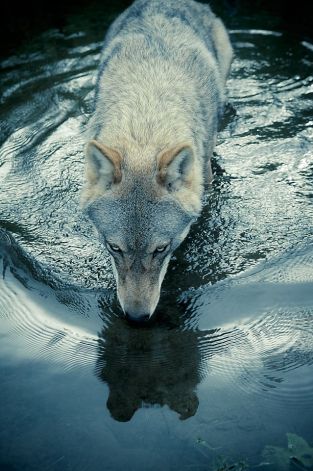
snow wolf

“Recently an international group of prominent scientists have signed The Cambridge Declaration on Consciousness. This declaration proclaims their support for the idea that animals are conscious and aware to the degree that humans are. The list of animals includes all mammals, birds, and even the octopus.

The group consisted of cognitive scientists, neuropharmacologists, neurophysiologists, neuroanatomists, and computational neuroscientists. They were all attending the Francis Crick Memorial Conference on Consciousness in Human and Non-Human Animals. The declaration was signed in the presence of Stephen Hawking, and included such signatories as Christof Koch, David Edelman, Edward Boyden, Philip Low, Irene Pepperberg, and many others.

What is important here is the acknowledgement by the scientific community that many nonhuman animals possess conscious states. Because the body of scientific evidence is increasingly showing that most animals are conscious in the same way that we are, we can no longer ignore this fact when it comes to how we treat the animals in our world.

What has also been found is very interesting. It has been shown consciousness can emerge in those animals that are very much unlike humans, including those that evolved along different evolutionary tracks, namely birds and some encephalopods. The group of scientists have stated, “The absence of a neocortex does not appear to preclude an organism from experiencing affective states. Convergent evidence indicates that non-human animals have the neuroanatomical, neurochemical, and neurophysiological substrates of conscious states along with the capacity to exhibit intentional behaviors.”

The following are the observations made that were the reason for the signing of this declaration:

The field of Consciousness research is rapidly evolving. Abundant new techniques and strategies for human and non-human animal research have been developed. Consequently, more data is becoming readily available, and this calls for a periodic reevaluation of previously held preconceptions in this field. Studies of non-human animals have shown that homologous brain circuits correlated with conscious experience and perception can be selectively facilitated and disrupted to assess whether they are in fact necessary for those experiences. Moreover, in humans, new non-invasive techniques are readily available to survey the correlates of consciousness.

The neural substrates of emotions do not appear to be confined to cortical structures. In fact, subcortical neural networks aroused during affective states in humans are also critically important for generating emotional behaviors in animals. Artificial arousal of the same brain regions generates corresponding behavior and feeling states in both humans and non-human animals. Wherever in the brain one evokes instinctual emotional behaviors in non-human animals, many of the ensuing behaviors are consistent with experienced feeling states, including those internal states that are rewarding and punishing.

Deep brain stimulation of these systems in humans can also generate similar affective states. Systems associated with affect are concentrated in subcortical regions where neural homologies abound. Young human and nonhuman animals without neocortices retain these brain-mind functions. Furthermore, neural circuits supporting behavioral/electrophysiological states of attentiveness, sleep and decision making appear to have arisen in evolution as early as the invertebrate radiation, being evident in insects and cephalopod mollusks (octopus, etc.).

Raven with beautiful wings in the down stroke flying over water.

Birds appear to offer, in their behavior, neurophysiology, and neuroanatomy a striking case of parallel evolution of consciousness. Evidence of near human-like levels of consciousness has been most dramatically observed in African grey parrots. Mammalian and avian emotional networks and cognitive microcircuitries appear to be far more homologous than previously thought. Moreover, certain species of birds have been found to exhibit neural sleep patterns similar to those of mammals, including REM sleep and, as was demonstrated in zebra finches, neurophysiological patterns, previously thought to require a mammalian neocortex. Magpies in articular have been shown to exhibit striking similarities to humans, great apes, dolphins, and elephants in studies of mirror self-recognition.

In humans, the effect of certain hallucinogens appears to be associated with a disruption in cortical feed-forward and feedback processing. Pharmacological interventions in non-human animals with compounds known to affect conscious behavior in humans can lead to similar perturbations in behavior in non-human animals. In humans, there is evidence to suggest that awareness is correlated with cortical activity, which does not exclude possible contributions by subcortical or early cortical processing, as in visual awareness. Evidence that human and nonhuman animal emotional feelings arise from homologous subcortical brain networks provide compelling evidence for evolutionarily shared primal affective qualia.”

**Special thanks to “White Wolf Pack”, http://www.whitewolfpack.com/2012/08/scientists-sign-declaration-that.html, for providing this information!
 

Read Full Post »


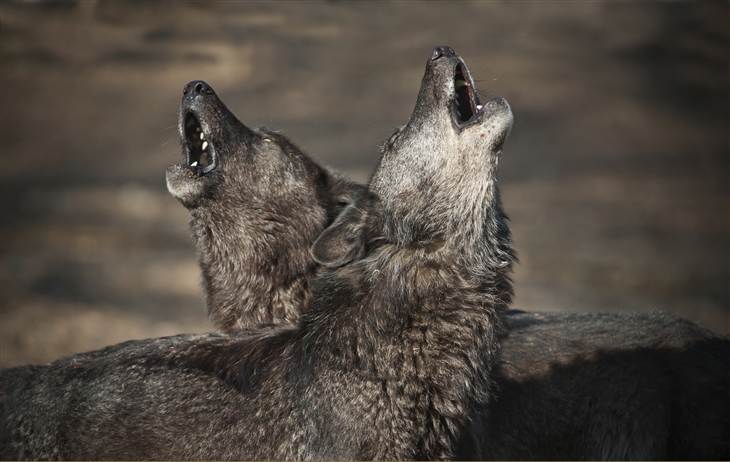
Two Wolves Howling

(Photo by Francesco Mazzini) Researchers found that wolves tend to howl more frequently when a leader or a partner leave the pack, as opposed to a less valued packmate.

“Wolves are skilled and ferocious hunters, but when it it comes to relationships, they’re real softies. When a playmate or partner leaves the pack, the wolves that are left behind will howl and howl and howl.

In a new study, researchers report that wolves will give their leaders and their closest allies a longer and stronger serenade if they leave. Those howls could be sonic breadcrumbs, meant to help a lone wolf find its way back to the pack. They could also be a long-distance message that simply says: “I miss you.”

“What exactly their motivation is, we will never know,” said Friederike Range, an animal behavior researcher at the University of Veterinary Medicine in Vienna and one of the authors of the study in Current Biology. But “there is an emotional response in there, for sure,” she told NBC News.

How much howling? Range and her colleagues have been studying the group dynamics of timber wolves for years. In the newly published study, they observed how nine wolves from two packs living at Austria’s Wolf Science Center changed their howling, depending on which member of the pack was absent from the group.

The researchers took each member of the pack away from the rest for a walk, and counted the howls from the remaining members for 20 minutes.

The howling would begin as soon as the departing wolf went out of sight. Wolves are social animals with a strict hierarchy. So if the wolf was a leader, more howls were recorded. And if the departing wolf was friendly with another member of the pack, its pack buddy sang a lengthy song.

The calls are similar to “children calling for their parents when the parents leave,” David Mech, an adjunct professor at the University of Minnesota who has been studying wolves since the late 1950s, explained in an email to NBC News. “To me it is communication.”

Socially savvy Dogs, the cuddlier relatives of the wolves, also howl. But wolves are more socially savvy, and their howling serves more strategic functions.

Mech, who was not involved with the new study, once observed howling behavior in 15 wild wolves that were separated during a hunt. He described the phenomenon in his 1966 book “The Wolves of Isle Royale.”

“After howling, the pack was then able to assemble again,” he explained. Mack said the newly published study provides “experimental evidence” supporting his view that the wolves’ howls helped them regroup.

Sometimes, wolves howl when they are stressed. Not these wolves. Range’s colleague, Francesco Mazzini, tested the saliva of the howlers for cortisol, a hormone that’s abundant in stressed-out animals. He found a slight increase in cortisol levels when a leader left, but no increase when the wanderer was a “preferred partner.”

Wandering wolves who are leaders will often call back to their pack, but Range’s wards didn’t. While they were out and about, they ignored their packmates and just enjoyed the walk, she said. ”

More about animal communication: 

Francesco Mazzini, Simon Townsend and Zsófia Virányi join Friederike Range as authors of “Wolf Howling Is Mediated by Relationship Quality Rather Than Underlying Emotional Stress,” published online Thursday by Current Biology. The study appears in the Sept. 9 issue of the journal.

**Special thanks to  Nidhi Subbaraman, NBC News, http://www.nbcnews.com/science/lonely-wolf-wolves-howl-when-they-miss-their-friends-6C10963185, for providing this information!

Read Full Post »


Minnesota Wolf
As we have seen in our country’s history, cattlemen and trophy hunters decimated entire wolf populations throughout the lower 48 states.
Nicole Hendrickson, Educator, 04/01/2013, reports the following:

“I was appalled after seeing one-fourth of Minnesota’s wolf population killed in 2012, shortly after federal de-listing from Endangered Species status.

I have three primary concerns in regard to the wolf issue:

  • Public input was not acknowledged.
  • The Department of Natural Resources (DNR) failed to live up to its promise — as outlined in its Wolf Management Plan — to follow a 5-year wait after federal de-listing.
  • We need to be more careful when considering the longevity of the wolf.

In our democracy, prevailing public attitudes usually shape public policy. With the wolf hunt, it is small interest groups of trophy hunters and cattle raisers that are getting their way. In every poll that I have seen, the majority of Minnesotans do not want a wolf hunt. As Sen. Chris Eaten has pointed out, we’ve pumped a lot of money into wolf survival, and as soon as protection is removed that money is down the drain.

The International Wolf Center sponsored a study in 1999 by Stephen Kellert, Ph.D., of Yale University, to measure public attitudes toward wolves in Minnesota; and the DNR published a poll in 2012 to assess public attitudes on wolves. Dr. Kellert’s study concluded:

“The wolf is especially appreciated by Minnesota residents for its nonconsumptive value. By contrast, a majority of both northern and non-northern Minnesota residents remain skeptical about harvesting the animal for either fur or for sport, and are concerned that these forms of consumptive use could result in excessive and unsustainable mortality.”

The DNR’s 2012 poll had similar findings:

“79% of respondents oppose wolf hunting.”

So why aren’t our voices being considered? The majority of Minnesota’s residents value wolves.

‘Primary clients, hunters and trappers’

Last month, I became aware that the DNR feels that its primary clients are hunters/trappers and livestock producers. This was confirmed through an Internal email that the organization Howling for Wolves commissioned through the Data Practices Act. In the email DNR officials state that, “we owe it to our primary clients, hunters and trappers, and to livestock producers as secondary clients, to do what we can to establish a legitimate harvest opportunity now that the wolf is under our management authority.”

Now I understood why the hunt came to fruition so quickly.

Are we really leaving the protection of wolves up to hunters/trappers and cattle producers (the DNR’s primary clients)? It doesn’t look like a sound or logical plan to me. As we have seen in our country’s history, cattlemen and trophy hunters decimated entire wolf populations throughout the lower 48 states. I am confident that history often repeats itself.

Decline of the moose

Elk, moose, bison, caribou and wolves used to occupy most of Minnesota. Based on my knowledge about the DNR’s management of moose in Minnesota and their sudden population decline for reasons outside of our control, there is good reason to believe the wolf population is at stake. This has been evident in the DNR’s management of moose. According to the DNR Moose Management Plan, “Minnesota’s moose (Alces alces) population, currently concentrated in the northeast corner of the state, is facing a decline where the cause is not understood.”

In 2012, there are 4,230 moose; in 2005 there were double that at approximately 8,150 (2012 Aerial Moose Survey.) The balance of life is fragile, and we can’t always rely on mathematical population models to determine success.

In every argument, I believe that one should acknowledge the other side’s position and a solution should be addressed. Without the protection from the law, I fear for the longevity of the wolf. History has shown me that hunters and cattle raisers are not responsible stewards of wolves. I am even more fearful because the agency that is supposed to work without bias has demonstrated its preference in aligning with hunters/trapper and cattlemen.

Poor process

If the DNR had come up with some sound baseline data and research, considered public comment, abided by their wolf management plan, and consulted with tribal nations on the sacredness of wolves, maybe I would have just bit my tongue in opposing the wolf hunt.

For the sake of meeting in the middle, a more sustainable number — like 5 percent, as suggested by one biologist I spoke to during my research — would have been more appropriate.

So the battle goes on. Minnesotans are needed to take action and contact Sen. David Tomassoni, chair of the Environment, Economic Development and Agriculture Committee, and Gov. Mark Dayton to be the voice to help preserve Minnesota’s wolves and the future of our state.

WANT TO ADD YOUR VOICE?

If you’re interested in joining the discussion, add your voice to the Comment section below, or consider writing a Community Voices commentary. For more information about Community Voices, email Susan Albright at salbright@minnpost.com.”

**Special thanks to Nicole Hendrickson, educator and resident of Brooklyn Park, and a volunteer for Howling for Wolves and Northwoods Wolf Alliance.  She is an enrolled member of the Sokaogon Ojibwe community (http://www.minnpost.com/community-voices/2013/04/are-we-really-leaving-future-minnesotas-wolves-hunterstrappers-and-livestock).

Read Full Post »


National Rally for Wolves

“A UW researcher is growing increasingly concerned about the plight of the gray wolf on Wisconsin’s landscape.

For 15 years, environmental studies associate professor Adrian Treves has studied the ecology of the carnivore’s interactions with people and has surveyed Wisconsin residents on wolf policy and management.

Treves predicts Wisconsin’s wolf hunts, at their current levels, are not sustainable. More than 250 gray wolves are expected to be slain in the state’s upcoming second annual wolf hunt season, which starts on October 15.

Treves says that number represents “a little more than 30% of the late winter wolf count,” which means Wisconsin has the highest or second highest wolf quota on the record in North America. Treves calls it an undeniably “aggressive wolf hunt.”

Treves says there is a high likelihood that by April 2015, the wolf hunt will have to be closed due to such a steep decline in the wolf population. That decline may result in the gray wolf being re-listed in Wisconsin as a threatened and endangered species by 2016.

He also warns that there’s real risk that the wolf population could be driven so low that it cannot recover, and the federal government would “have to step in, again, under emergency re-listing rules of The Endangered Species Act.”

It’s an interesting finding,  given the U.S. Fish and Wildlife Service announced plans earlier this summer to lift the creature from the threatened and endangered species list throughout the country. That’s already happened in Wisconsin, even as pro-wolf groups are trying to overturn the decision to delist the gray wolf in the Great Lakes region.

Treves – along with colleagues at Michigan Tech and Ohio State University – co-authored a scientific criticism of U.S. Fish and Wildlife Service plan.   The agency has stated that tolerance for wolves is higher within current wolf range.  Treves says that statement flies in the face of data gleaned from more than 100 scientific studies.  The researcher says, in general, the U.S. public supports gray wolf recovery in appropriate environments.  Further, Treves says, public tolerance of wolves is lower within currently existing wolf range.

Back at the state level, Treves this week is releasing public opinion results on the state’s first wolf hunt, held last year.

Treves says not only are the state’s wolf hunt practices not sustainable, they also contradict public opinion. His team’s  report found a five to seven percent increase in people opposing particular ways of hunting wolves. According to Treves, a majority of the Wisconsin public, outside the wolf range, do not support the current wolf hunt.

But Treves says public opinion is not carrying the weight it should. Instead, he says the proposal to eliminate federal protection for wolves seems “politically motivated” and “excessive,” while contradicting scientific evidence.

Treves and Masters candidate Jamie Hogberg will be sharing the results of their public opinion survey on Wisconsin wolf policy with a DNR advisory committee Thursday in Wausau.

The public can weigh in on the U.S. Fish and Wildlife Service proposal to remove the gray wolf from the national threatened and endangered species list – deadline Sept 11, 2013.”

**Special thanks to  and Gaby Magallanes, http://www.wuwm.com/post/researcher-state-wolf-hunt-unsustainable, for providing this information!

Read Full Post »


Idaho Wolf

Photograph by Jim and Jamie Dutcher, National Geographic.

New method lets scientists ID howling wolves with total accuracy.

“If any gray wolves are howling their discontent with a recent proposal to remove what remains of their U.S. federal protection, scientists can now identify the outspoken.

A new, more sophisticated method for analyzing sound recordings of wild wolf howls can, with absolute accuracy, tell individual wolves apart-and may even help save the old dog, according to a new paper in the journal Bioacoustics.

Study leader Holly Root-Gutteridge and colleagues at Nottingham Trent University in the U.K., working with recordings of wild wolves mostly from Algonquin Provincial Park (map) in Ontario, Canada, also found the technique can distinguish a single animal from a chorus of howlers with 97.4 percent accuracy. The team had previously used the method with captive wolves, but this is the first time it’s worked with wild wolf songs and all the ambient sounds that go with them.

Specifically, the team’s more thorough howl analysis looks at pitch—also considered by previous howl-analyzing tools—but also at amplitude, or the acoustic energy, of recorded howls.

“This is like trying to describe the human voice by saying ‘Sandra has a high voice, and Jane has a high voice,'” said Root-Gutteridge, “then refining it by saying ‘Sandra has a soft-spoken voice, but Jane has a loud voice.’ The highness still matters, but if you add the detail about vocal intensity, you’re less likely to confuse Sandra and Jane.”

What’s more, the technology is able to scrutinize howl recordings and throw out extra, unneeded noises like wind and water that might otherwise confuse the data.

Tracking Wolves a Challenge

These majestic canids—which once roamed most of the northern Rockies of the United States and Canada and the forests along the Great Lakes—nearly went extinct in the early 1960s, when they were considered vermin and all but eradicated by hunters. After the shooting stopped, only about 300 gray wolves remained, skulking through the deep woods of upper Michigan and Minnesota.

With protection under the Endangered Species Act, gray wolves have come back from the brink—one of the biggest success stories in U.S. conservation history. (Related: “Wolf Wars” in National Geographic magazine.)

Though nowhere near the historical estimate of more than 400,000 gray wolves in the United States, now as many as 5,000 live in Michigan, Wisconsin, and Minnesota, with another 7,000 in Alaska. Smaller numbers of reintroduced wolves live in Montana, Idaho, and Wyoming.

But monitoring their populations, which remains a vital part of management, has always been an inexact and labor-intensive science.

Methods include tracking the animals based on pawprints and other marks in the snow, which works quite well-when it snows. GPS collaring lets you know where an individual is, but not with whom it spends its time.

Plus, collars are expensive and collaring requires capturing wolves first-a huge and stressful undertaking for all involved, said Root-Gutteridge. (See an interactive on the return of the wolf.)

Finally, you can play howl recordings to wolves and listen to their replies-which can carry six miles (ten kilometers)-but you can’t identify individuals and don’t know when one animal is repeating itself or when a new howler has joined in.

DNA analysis of scat has its place, but it is costly and requires finding the wolves first.

Wolves Out of the Woods?

Now that the new technique has been shown to succeed with wild animals, the team sees it as a tool to help conserve wolves in their natural habitats. (See more wolf pictures.)

For instance, tracking howls accurately could make future wolf counts and monitoring of individuals much more precise. If plans go forward to fully drop the gray wolf from the U.S. Endangered Species list and let states do as they please regarding hunting, better monitoring could over time help determine if it was too soon to strip away those last protective rules, as many conservationists argue.

The technology could also be put to use with other canids like African wild dogs and Ethiopian wolves, both of which are endangered in their habitats, said Root-Gutteridge.

“If it howls, the code can extract it and we can identify it.””

**Special thanks to Jennifer Holland, http://news.nationalgeographic.com/news/2013/07/130730-wolves-howling-science-animals-environment/, for providing this information! Follow Jennifer S. Holland on Twitter or check out her website at cuttlefishprose.com.

Read Full Post »


water wolf
This shot of a wolf slaking its thirst by Christian Houge – “Untitled 3” – is from his painstaking work with wolf packs in Norway. Photo: Hosfelt Gallery
Kimberly Chun: Published 3:36 pm, Wednesday, July 31, 2013

“While studying two wolf packs in Norway alongside wildlife researchers, Oslo photographer Christian Houge witnessed both love and blood between the animals, the euphoria of a pack and the nastiness of bullying. But his most intense encounter probably occurred when he was approached by the biggest wolf in one pack.

“The biggest one came over to me with the notion that it wanted contact, and I reached out and stroked its fur,” Houge, 41, says shortly after the opening of his Hosfelt Gallery show of striking wolf images drawn from that three-year period. “Out of the blue, it turned around and bit my arm, not breaking skin.

“I pulled my arm back slowly, thinking, it’s just going to run off now, and instead it sort of leaned back and studied me, my eyes and body motions. I was the one being studied. I was being tested to see if I was worthy to be there.”

Houge’s exploration of the feared and misunderstood creatures led him to look closer at the shadow side of his life and culture, a subject he’s touched on as part of a TED talk.

Q: What were some of the challenges in photographing the wolves?

A: The wolf in its nature stays away from anything that it doesn’t know. Just introducing the tripod, I had to let it stay in the area for two days before I could use it. I wanted to crawl into the holes they use – I’d been working with cracks in mountains, the inner and outer, the contrast between dream and reality – and it quite confused them because they’d never seen a human in these holes.

Q: You crawled into a cave to shoot them?

A: Once. I’m not pretending to be a wolf man. When I was with them, I had other people who could draw attention if there was too much curiosity and too much biting. If you show weakness, you can be in trouble.

“The ritual when you meet them – it can sound weird but it’s natural to me now – is you have to be on your knees, and they’ll have their tongues inside your mouth, and you can’t move. They might have their jaws around your head to measure your cranium. After the first time, you learn to meet them with your tongue. Their mouths are much cleaner than ours.”

Q: It sounds, and looks, like you got very close.

A: The feeling of howling with wolves, being in that energy of the wolf pack – I’ve traveled a lot, I’ve worked with these art projects, and I still haven’t found my tribe, my pack. But working with these animals, I got a strong connection to myself and my nature in a positive way.”


Special thanks to Kimberly Chun,  a Berkeley writer, for providing this information!

Read Full Post »


Brown / Grizzly Bear, Lake Clark National Park, Alaska.

“BOISE, Idaho — A new study released Monday draws a direct relation between the reintroduction of the gray wolf and the amount of berries consumed by grizzly bears. The result of this study found that with wolves in Yellowstone National Park keeping elk populations in check, bears are starting to consume more berries. The study, which appears in the Journal of Animal Ecology, looked at elk populations in the Yellowstone National Park region of Wyoming over the past 50 years. The research team lead by Bill Ripple at Oregon State University looked at the amount of berries found in bear scat. “Wild fruit is typically an important part of the grizzly bear diet,” Ripple said. “Especially in the late summer when they are trying to gain weight as rapidly as possible before winter hibernation.” Researchers found that before wolves were reintroduced to Yellowstone, elk populations grew and ate a significant amount of wild berries. Those berries are also part of a grizzly bear diet. Before wolf numbers started coming back in 1995, there were less berries found in the grizzly bear diet. After wolves were reintroduced, wolves started preying on elk — and less elk means more berries for the grizzly bears. The exciting part of this study, said Chris Haney, the chief scientist with Defenders of Wildlife, is the fact that this is a first-of-its-kind study. “I was actually surprised,” he said. “This is good news for the Yellowstone grizzly bear.” Haney also said: “If you think about nature, bears are not a species that would come to mind and say they are really vulnerable to losing this one kind of food. They are just very catholic in their food preferences,” he said. What he means is bears are omnivores that eat fruits and berries, bugs and meat. They are well prepared to adapt to a reduction in one of those food groups. Haney said he is impressed that this research found a strong relationship between the elk population and the amount of fruit found in bear scat. “It’s a good thing because when you have more than half of a puzzle explained by one variable, yeah that’s big news. Any time that we can find one variable,” Haney said.“ That explains more than half of the noise in the chaos that we see in natural systems, yes, that’s really worth paying attention to.” A study like this could eventually play a role in the U.S. Fish and Wildlife Service proposal to delist the Yellowstone grizzly bear. A push to delist the bear was overturned in federal court after environmental groups claimed the federal wildlife agency failed to take into account the role plants and trees have on the grizzly bear diet. There are approximately 700 bears around the Yellowstone region, according to recent estimates.”

**Special thank to Idaho Public Television, http://earthfix.opb.org/flora-and-fauna/article/researchers-find-a-relationship-between-elk-and-gr/, for providing this information!

Read Full Post »


Isle Royale Wolves

In this Feb. 10, 2006, file photo provided by Michigan Technological University, a pack of gray wolves is shown on Isle Royale National Park in northern Michigan. The wolf population on Isle Royale now down to eight individuals. (AP Photo/Michigan Technological University, John Vucetich)

SHOULD HUMANS INTERVENE??

“ST. PAUL, Minn. — The wolf population on Isle Royale is down to eight individuals and for the first time in 50 years of intense study there is no evidence of reproduction over the winter.

The National Park Service faces a thorny set of choices to either intervene or let nature take its course. A panel of experts Thursday evening will debate the options and explore possible consequences.

Today’s Question: Should humans intervene?

Isle Royale is a unique place — 200 square miles of rugged woods and swamps, rocks and waves. Perched 15 miles from the Minnesota shore in Lake Superior it is effectively isolated from the mainland. For more than 50 years scientists have trekked to this self-contained ecosystem to study the relationship between wolves and moose.

Last year, researchers found only eight wolves — the fewest wolves ever recorded on the island. There are plenty of moose for the wolves to eat. But with all eight wolves being descended from a single female, scientists think the population may be too inbred to reproduce anymore.

In considering what to do next, the National Park Service is investigating three options: the first is to do nothing, let nature take its course. The wolves may or may not die out. The second option is to introduce one or more new wolves to provide fresh genetic material. The third option is to wait until the current population dies out and then introduce a new group of wolves.

The lead researchers in the 55-year-long study, Rolf Peterson and John Vucetich, have published an article in the op-ed page of The New York Times arguing for a swift genetic rescue. They say it is true the island is designated a wilderness, but the human footprint is now evident on Isle Royale and practically everywhere else. They say it is time to place the highest value on ecosystem’s health, even if humans need to intervene to maintain it. And they say a healthy ecosystem depends on having a top predator, such as wolves, to keep everything else in balance.

But other researchers disagree. Dave Mech, a wolf expert with the U.S. Geological Survey, said science will gain the most if we wait and see.

“If we don’t do anything now, we can do something later if it’s necessary.  But if we do something now, we can never undo that,” Mech said. “We have a pure population just doing its thing. And we have 55 years of data on it; why not see what else can happen here?”

A hundred years ago, Isle Royale had a different wildlife population. It had no moose and no wolves. It was home to caribou, coyotes and lynx.

Nancy Gibson, co-founder of the International Wolf Center in Ely, said if interfering with the current wildlife population is up for discussion, broader options should be considered.

“Maybe should we reintroduce caribou? It’s also an ecosystem that doesn’t have bears,” Gibson said. “I also think it’s a little bit interesting that we’re not talking about introducing lynx back to Isle Royale. It’s a very interesting dilemma, and I think we really need to have a vigorous debate on it.”

Tonight’s forum in Minneapolis is the public beginning of that debate. The National Park Service will hear input from scientists and the general public in a decision-making process that will span several months.

Sponsors of the forum are the Sigurd Olson Environmental Institute at Northland College and the National Parks Conservation Association.

Christine Goepfert, the association’s upper Midwest program manager, is concerned whether any human intervention is sustainable. She points out the ice bridges that allowed wolves to travel from the mainland to the island are less likely to form as the climate warms.

“We know it’s unlikely ever again to have a moose and/or wolf make its own way there. Are we always going to have to continuously intervene, and how often,” Goepfert said. “I also wonder how that affects the research, if we’re having to do that. So there’s a lot of unanswered questions in my mind.”

The forum is 7 to 9 p.m. Thursday in the Cowles Auditorium at the University of Minnesota’s Humphrey Institute.”

**Special thanks to  Stephanie Hemphill, Minnesota Public Radio, http://minnesota.publicradio.org/display/web/2013/06/20/environment/isle-royale-wolves?refid=0, for providing this information!

Read Full Post »


Fiona

Fiona, wolf ambassador at Wolf Park (special thanks to wolf park for providing the picture)

“Research at Wolf Park

Wolf Park prides itself upon being a world-class source of information about the management of socialized (hand-raised) captive wolves. Besides its wealth of husbandry information, Wolf Park has contributed to a large number of research projects.

Wolf Park participates primarily in behavioral research, including cognitive research. The fact that the wolves are hand-raised helps considerably, as this allows and encourages them to exhibit their full range of behavior in front of researchers (and visitors, too!). Wild wolves are generally very difficult to observe for any length of time, as they tend to run away once they become aware of the presence of humans.

Past research projects have included investigations into howling, scent rolling, reproductive behavior, aggression, rank order, human interaction time lengths, pointing, opening apparatuses and feeding patterns.

We currently have 14 wolves and two foxes that are socialized. We also have 9 bison and two coyotes, which are not socialized, but have participated in research. Not all of our animals are able to participate in all types of research. While we have been very successful in getting our animals to participate, we cannot guarantee participation.

Researchers

Interactive Research. Interactive research involves any physical activity with the wolves, either by researchers or by Wolf Park staff. In order for any visitor to enter the wolf enclosures, they must go through our safety training presentation and be cleared for enclosure entry. All visitors that enter the animal enclosures must be accompanied by two trained staff members (one trained staff member for the foxes). Researchers are not required to enter our enclosures. In many situations, it is ideal for our staff to conduct the experiments or set up apparatuses due to their relationships with our animals.

Observational Research. Researchers observing our wolves must be accompanied by a docent at all times. Two types of docents are available: Docents and Wolf Expert Docents.

Docents are usually Wolf Park Interns or Volunteers. Docents have a basic understanding of our animals and their behaviors, but are not always able to answer in-depth questions. The role a Docent is to accompany you, not to field questions.

Wolf Expert Docents are our animal curator staff members, who have years of experience working with wolves and are amongst the top wolf experts in their field. Narration can be provided by Wolf Expert Docents, and they are able to field any questions you may have. Wolf Expert Docents are also ideal for researchers that can conduct their experiments through the fence, such as experiments on howl time duration.

Sample Collection. Wolf Park is able to collect and ship blood samples, fecal samples and fur samples. Pricing is varied based on the extent of activity required, such as requiring our animals to consume a special diet. Please contact us to enquire about other types of sample collection.

All researchers must submit a Research Proposal to Wolf Park, which will be reviewed by our Research Committee. This may be many pages long for cognitive experiments, or just a paragraph if you have a class of university school students that want to observe feedings. The write-up should include an overview of you project, goals, what you would like to do with the animals (if anything). Individual researchers, research teams and classes interested in conducting research at Wolf Park should email their proposals to wolfpark@wolfpark.org or call 756-567-2265 for more information.

Grants. Wolf Park has a limited amount of grant funds available for visiting researchers and school groups. Researchers are highly encouraged to apply. Please contact us at wolfpark@wolfpark.org for more information. Include a copy of your proposal.

Wolf Park’s Research Program goals are to learn more about our animals. We do not test drugs on our animals or allow any research that may cause physical or mental harm.”

**Special thanks to Wolf Park, http://wolfpark.org/,  for providing the information in this article! 

Read Full Post »


Wolf Geographic

Photograph by Joel Sartore

“Gray wolves once populated large portions of North America, Europe, and Asia, but were hunted to near extinction.

Wolves are legendary because of their spine-tingling howl, which they use to communicate. A lone wolf howls to attract the attention of his pack, while communal howls may send territorial messages from one pack to another. Some howls are confrontational. Much like barking domestic dogs, wolves may simply begin howling because a nearby wolf has already begun.

Wolves are the largest members of the dog family. Adaptable gray wolves are by far the most common and were once found all over the Northern Hemisphere. But wolves and humans have a long adversarial history. Though they almost never attack humans, wolves are considered one of the animal world’s most fearsome natural villains. They do attack domestic animals, and countless wolves have been shot, trapped, and poisoned because of this tendency.

In the lower 48 states, gray wolves were hunted to near extinction, though some populations survived and others have since been reintroduced. Few gray wolves survive in Europe, though many live in Alaska, Canada, and Asia.

Red wolves live in the southeastern United States, where they are endangered. These animals actually became extinct in the wild in 1980. Scientists established a breeding program with a small number of captive red wolves and have reintroduced the animal to North Carolina. Today, perhaps 100 red wolves survive in the wild.

The maned wolf, a distant relative of the more familiar gray and red wolves, lives in South America. Physically, this animal resembles a large, red fox more than its wolf relatives.

Wolves live and hunt in packs of around six to ten animals. They are known to roam large distances, perhaps 12 miles (20 kilometers) in a single day. These social animals cooperate on their preferred prey—large animals such as deer, elk, and moose. When they are successful, wolves do not eat in moderation. A single animal can consume 20 pounds (9 kilograms) of meat at a sitting. Wolves also eat smaller mammals, birds, fish, lizards, snakes, and fruit.

Wolfpacks are established according to a strict hierarchy, with a dominant male at the top and his mate not far behind. Usually this male and female are the only animals of the pack to breed. All of a pack’s adults help to care for young pups by bringing them food and watching them while others hunt.”

Fast Facts:

Size relative to a 6-ft (2-m) man:

Wolf Size and Human

Type:
Mammal
Diet:
Carnivore
Average life span in the wild:
6 to 8 years
Size:
Head and body, 36 to 63 in (91 to 160 cm); Tail, 13 to 20 in (33 to 51 cm)
Weight:
40 to 175 lbs (18 to 79 kg)
Group name:
Pack
Protection status:
Endangered
 

**Special thanks to National Geographic for providing this information!

Read Full Post »

« Newer Posts - Older Posts »