Feeds:
Posts
Comments

Archive for the ‘Wolves and educational activities’ Category


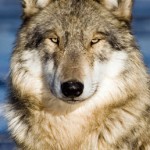
Wolf Park wolf copyright

**Photo courtesy of Monty Sloan, Wolf Park

“Wolf Park’s 13th Annual Easter Party
Saturday April 12, 2014
Open 1:00 -5:00 pm

Featuring the Easter Bunny!

You are invited to join Wolf Park on Saturday, April 12th for our 13th annual Easter Party!

There will be egg hunts for kids 1-13 years of age (bring a basket!), and there will also be an egg hunt for the Wolf Park wolves at 2 pm! The Easter Bunny will hop into the wolf enclosure (the wolves will be elsewhere) and will hide Easter eggs for the wolves to find (they will be let back into the enclosure after the Bunny leaves). Come see our wolves get their Easter treats, and get some treats of your own!

Wolves’ egg hunt begins at 2:00 pm sharp!

Egg hunts for children will be held between 3:00-4:00 pm.

Guided tours of the Park will be offered at 1:15, 2:15 3:15, and 4:15, followed by a handling demonstration at 4:30.

Wolf Park closes at 5:00 and the gates re-open at 7 for Howl Night.

SPECIAL ADMISSION:
Adults regular price
Children 13 and under FREE”

**Special thanks to “Wolf Park” for providing this information!  (http://blog.wolfpark.org/?p=968)

Read Full Post »


Participating in the 2014 Endangered Species Day Youth Art Contest

“We encourage teachers and their young artists in grades K-12 (as well as those in homeschools and youth groups) to participate in the 2014 Saving Endangered Species Youth Art Contest. The contest provides students with an opportunity to learn about endangered species and express their knowledge and support through artwork. All of the basic information you need to participate in the contest is included in the following sections:

Contest Background

Teacher/School Registration

Eligibility

Teacher’s Checklist

Subject Matter

Resources

Judging

Prizes

Ownership

Contest Sponsors


Background

The Saving Endangered Species Youth Art Contest is an integral part of the 9th annual national Endangered Species Day, celebrated on May 16, 2014. Started in 2006 by the United States Congress, Endangered Species Day is a celebration of the nation’s wildlife and wild places.  It recognizes the importance of endangered species and is an occasion to educate the public on how to protect them.

Last year, nearly 2,200 young artists from schools, homeschools, and youth activity and art programs throughout the country participated in the Saving Endangered Species Art Contest. The winners were chosen by a prestigious panel of judges, including artists, educators, photographers, and conservationists.

The contest is organized by the U.S. Fish and Wildlife Service, the Endangered Species Coalition, the Association of Zoos and Aquariums, and the International Child Art Foundation.

Teachers can include the Endangered Species Day Youth Art Contest as a featured activity for Youth Art Month in March 2014.

Teacher/School Registration

To enable us to contact the contest semi-finalists and winners, we ask that you complete an online registration form.

Please complete all fields in the form. Once you submit this information, we will send you an e-mail including a form for you to print out, complete, and attach to each artwork that you are submitting. We require your contact information so that we can contact semi-finalists and winners through you. If you don’t receive our email within an hour, check your spam/junk mailbox.

When you receive the form, please:

1) Print one copy of the form for each artwork that you are submitting for the contest.

2) Fill in complete information for the artist and his/her artwork.

3) Tape the form to the back of the corresponding piece of artwork.

4) Write DO NOT BEND on the envelope to ensure safe delivery!

Eligibility

Students in kindergarten through high school (K-12) are eligible to enter the art contest.

Young artists who are homeschooled and members of youth groups are also eligible to submit their art.

In order to provide a competitive opportunity for as many youths as possible, the grand prize winner is not eligible to win again for three years.

Entries must be postmarked by March 15, 2014.

Teacher Checklist

Please use this checklist to ensure that your students’ artwork is eligible for entry in the art contest:

The contest is open to students in grades K-12 residing in the United States.

☐ Artwork should depict threatened/endangered species that live or migrate within the United States. (Download a list of U.S. threatened/endangered Species.)

☐ Artwork must be the entrant’s original, hand-drawn creation and may not be traced or copied from published photographs or other artists’ works. Students may, however, use photographs or published images as guides.

☐ Entries may be multicolor, black and white, or a single color, using ink, oil or acrylic paint, watercolor, pastel, crayon, or pencil. Techniques may include scratch-board, airbrush, linoleum printing, paper collage, dry brush, crosshatch, pointillism.

☐ Photography, weak pencil and chalk drawings, or computer-generated art are not eligible.

☐ The physical size of submitted artwork must be 8 1/2″ x 11″ or smaller and less than 1/8″ thick.

☐ No lettering, words, signatures, or initials may appear on the front of the artwork.

☐ Entries should not be matted, mounted, laminated, framed, or folded.

☐ Submissions become property of the Endangered Species Coalition and will not be returned. You’re encouraged to make copies of students’ entries before sending.

☐ Entries must be postmarked by March 15, 2014.

☐ You must use the mailing label marked “Do Not Bend” that is included on the entry form.

Subject Matter

Artwork should highlight one or more land- and/or ocean-dwelling species that is currently listed as threatened or endangered and either resides in or migrates to the United States—mammal, bird, reptile, amphibian, fish, plant, and/or invertebrate (e.g., insect, spider, snail, coral, crustacean or clam).

The Saving Endangered Species art contest is a celebration of America’s success and leadership in protecting threatened and endangered species. We strongly encourage students to incorporate a positive perspective in their artwork. For example, their illustrations can portray a species success story: an imperiled species that has recovered thanks to the protections provided by the Endangered Species Act. The Act has been saving plants and animals from extinction for forty years. (See Resources below for lists of success stories.)

Resources

You can download a spreadsheet containing current threatened and endangered species in the United States.

Also visit http://www.nmfs.noaa.gov/pr/species/index.htm for additional information on marine species.

To find success stories in every state, see: http://www.esasuccess.org/ and http://www.fws.gov/endangered/map.

In addition, you’ll find an art instructor’s lesson plan and other educational materials on the Endangered Species Day website: www.EndangeredSpeciesDay.org.  You will also see the winning entries from the 2013 Youth Art Contest.

Judging Criteria

Winners will be chosen in four categories: Grades K-2, Grades 3-5, Grades 6-8 and Grades 9-12. From these, one national winner will be selected in 2014. Initial judging will be conducted by the International Child Art Foundation. The final winners will be chosen by a prestigious panel of judges, including artists, educators, photographers, and conservationists. The art will be judged on the basis of four primary artistic elements:

  • Concept:  How well the work relates to the endangered species theme
  • Composition:  How well the elements of line and form work together
  • Color:  How color enhances the artwork
  • Expression: How imaginatively the work conveys an idea or emotion. Artists may wish to incorporate a specific “story” in their illustrations. For example, they could show the species in its habitat, with someone in the background helping to clean up the area.

Judges pay particular attention to the concept or story that the work of art tells, in choosing the grand prizewinner. We encourage artists to pay attention to the theme of the concept—saving species.

Submission Guidelines

  • The entry must have the name, grade and title on the back of the submission in pencil.
  • Attach a completed entry form with tape or other fixative to the back of artwork. If using glue, please be careful to use one that will not run through and damage the artwork. No paperclips.
  • Entries must be postmarked by March 15, 2014
  • Entries must use the address label included at the end of the online entry form.

Prizes

Winners will be chosen in the four age categories. From these, one grand prize-winner will receive a round-trip flight to Washington, D.C. for him/herself and one guardian to attend a reception in May. (Accommodations will also be provided. Prize is not redeemable for cash. All other expenses are the responsibility of the winner.) In addition, the grand prize-winner will receive a special art lesson from a professional wildlife artist (via Skype) and $50 worth of art supplies of their choice.

Each of the grade category winners (K-2, 3-5, 6-8, 9-12) will receive a special plaque and $25 worth of art supplies.

Second and third place finishers will receive a special certificate, and contest semi-finalists (top 10 in each grade category) will also receive a certificate.

In addition, teachers/parents/youth leaders can download and print a Certificate of Participation (available on Endangered Species Day website) for all contest entrants.

An exhibition of the artwork and other promotions are also planned.

Ownership

All submissions become property of the Endangered Species Coalition. Through submission of artwork, entrants and their legal guardians grant non-exclusive reproduction and publication rights to the works submitted, which will not be returned. Though the Endangered Species Coalition will attempt to treat all submitted work with the utmost care, the Endangered Species Coalition is not responsible for any damage or loss that may occur due to U.S. Postal Service handling. Other contest partners, including U.S. Fish and Wildlife Service, the Association of Zoos and Aquariums, and the International Child Art Foundation will also have permission to use the artwork (with appropriate reference to the Youth Art Contest.)

Contest Partners

U.S. Fish and Wildlife Service

The U.S. Fish and Wildlife Service is the premier government agency dedicated to the conservation, protection, and enhancement of fish, wildlife, and plants, and their habitats. It is the only agency in the federal government whose primary responsibility is management of these important natural resources for the American public. The Service also helps ensure a healthy environment for people through its work benefiting wildlife, and by providing opportunities for Americans to enjoy the outdoors and our shared natural heritage.

www.fws.gov


Endangered Species Coalition

The Endangered Species Coalition is a national network of hundreds of conservation, scientific, education, religious, sporting, outdoor recreation, humane, business and community groups across the country. Through public education, scientific information and citizen participation, we work to protect our nation’s wildlife and wild places. The Endangered Species Coalition is a non-profit, non-partisan coalition working with concerned citizens and decision-makers to protect endangered species and habitat.

www.endangered.org


Association of Zoos and Aquariums

Founded in 1924, the Association of Zoos and Aquariums is a nonprofit organization dedicated to the advancement of zoos and aquariums in the areas of conservation, education, science, and recreation. Look for the AZA logo whenever you visit a zoo or aquarium as your assurance that you are supporting a facility dedicated to providing excellent care for animals, a great experience for you, and a better future for all living things. The AZA is a leader in global wildlife conservation, and your link to helping animals in their native habitats.

www.aza.org


International Child Art Foundation

The International Child Art Foundation has served as the leading art and creativity organization for American children and their international counterparts since 1997. The ICAF employs the power of the arts for the development of creativity and empathy—key attributes of successful learners and leaders in the 21st century. To date, approximately five million children have directly benefitted from the ICAF programs, and more than 110,000 people have participated in the ICAF festivals and exhibitions.”

**Special thanks to the “Endangered Species Coalition” for providing this information! http://www.endangered.org/campaigns/endangered-species-day/saving-endangered-species-youth-art-contest/

Read Full Post »


Wolf Zoo

(Photo Courtesy, N.C. Zoo)

“The North Carolina Zoo launches the first of several special events for the month of October on Saturday, Oct. 12, with “Howl-O-Ween,” a celebration of the zoo’s red wolves and the effort to save this highly endangered species.

Red wolf keepers will be meeting visitors and answering questions about the wolves at 1:30 p.m. at the Red Wolf Exhibit in the zoo’s North America exhibit region. In addition, demonstrations of Native American dancing, storytelling and art will be held in the park’s Junction Plaza at 11 a.m. and 2 p.m.

Other events will include face painting for kids from 10 a.m. to 5 p.m. in the North America Plaza. The mascot from Greensboro radio station WPAW 93.1 “The Wolf” will also be at the North America entrance from 10 a.m. to noon.

Later October events will include “Batology,” a special program on bats to be presented in the zoo’s Sonora Desert exhibit the weekend of Oct. 19-20 and “Boo at the Zoo” the park’s annual Halloween carnival for kids slated for the weekend of Oct. 26-27.

All special events are included in the regular zoo admission of $12 for adults, $8 for children 2-12 and $10 for senior citizens 62-plus. The zoo is located on Zoo Parkway (N.C. 159) six miles southeast of Asheboro off U.S. 64 and U.S. 220. Operating hours April through November are 9 a.m. to 5 p.m. daily. For more information visit the zoo’s website at www.nczoo.org or call toll-free at 1-800-488-0444.”

**Special thanks to “The Pilot.com” for providing this information! (http://www.thepilot.com/news/zoo-kicks-off-special-events-with-howl-o-ween-saturday/article_3f3928cc-3113-11e3-a585-0019bb30f31a.html)

Read Full Post »


Wotan

Photo of “Wotan” is property of Wolf Park.

“Want to learn more about wolves?  Want to spend some special time at Wolf Park when the rest of the public is gone?  “Camp” overnight in our Education Building and spend a weekend with the wolves!  Children will learn about wolves, foxes, coyotes, and bison — and other fascinating things in the world around them — in a safe and educational setting.  Campers will play animal tracking and direction-finding games, do crafts projects and make treats for the wolves.  Participants might also meet some Canis lupus familiaris (domestic dogs) and the Park’s tame red foxes (under adult supervision).  A Howl Night program is part of these fun weekends.  A campfire with marshmallows as the wolves howl in the dark makes for a truly special night!

Overnight Camps are $60 per child which includes all craft materials and meals (a dinner, breakfast and lunch – please inform us of any dietary restrictions your child has).  No drop-ins; children must be pre-registered to attend.  Children will need to bring bedding and pillows.  Overnight Camp begins at 1pm on Saturday, and ends at 4pm on Sunday.  Please arrange drop-off and pick-up accordingly.  Space is limited, so be sure to register soon!

All campers should bring water bottles.  Plenty of water will be available, and while safe to drink, our well-water has a strong metallic taste, so bringing water from home is encouraged so that kids stay hydrated.  Sprinkler time is a favorite camp activity on hot days.  Children should bring a bathing suit and towel along with them.  Cameras are welcome and recommended — there will be lots of opportunities for picture-taking!  Be sure to bring sunscreen and/or bug spray.

Camp will take place rain or shine — we will not cancel due to weather — so be sure to bring rain gear just in case.  In the event of inclement weather, activities will take place indoors.  Also, this camp is KIDS ONLY!  We are sorry, but we do not allow adults to remain with their children during camp.”

**Special thank to “Wolf Park” for providing this information (http://wolfpark.gostorego.com/camps/overnight-camps.html)!

Read Full Post »


Fiona

Fiona, wolf ambassador at Wolf Park (special thanks to wolf park for providing the picture)

“Research at Wolf Park

Wolf Park prides itself upon being a world-class source of information about the management of socialized (hand-raised) captive wolves. Besides its wealth of husbandry information, Wolf Park has contributed to a large number of research projects.

Wolf Park participates primarily in behavioral research, including cognitive research. The fact that the wolves are hand-raised helps considerably, as this allows and encourages them to exhibit their full range of behavior in front of researchers (and visitors, too!). Wild wolves are generally very difficult to observe for any length of time, as they tend to run away once they become aware of the presence of humans.

Past research projects have included investigations into howling, scent rolling, reproductive behavior, aggression, rank order, human interaction time lengths, pointing, opening apparatuses and feeding patterns.

We currently have 14 wolves and two foxes that are socialized. We also have 9 bison and two coyotes, which are not socialized, but have participated in research. Not all of our animals are able to participate in all types of research. While we have been very successful in getting our animals to participate, we cannot guarantee participation.

Researchers

Interactive Research. Interactive research involves any physical activity with the wolves, either by researchers or by Wolf Park staff. In order for any visitor to enter the wolf enclosures, they must go through our safety training presentation and be cleared for enclosure entry. All visitors that enter the animal enclosures must be accompanied by two trained staff members (one trained staff member for the foxes). Researchers are not required to enter our enclosures. In many situations, it is ideal for our staff to conduct the experiments or set up apparatuses due to their relationships with our animals.

Observational Research. Researchers observing our wolves must be accompanied by a docent at all times. Two types of docents are available: Docents and Wolf Expert Docents.

Docents are usually Wolf Park Interns or Volunteers. Docents have a basic understanding of our animals and their behaviors, but are not always able to answer in-depth questions. The role a Docent is to accompany you, not to field questions.

Wolf Expert Docents are our animal curator staff members, who have years of experience working with wolves and are amongst the top wolf experts in their field. Narration can be provided by Wolf Expert Docents, and they are able to field any questions you may have. Wolf Expert Docents are also ideal for researchers that can conduct their experiments through the fence, such as experiments on howl time duration.

Sample Collection. Wolf Park is able to collect and ship blood samples, fecal samples and fur samples. Pricing is varied based on the extent of activity required, such as requiring our animals to consume a special diet. Please contact us to enquire about other types of sample collection.

All researchers must submit a Research Proposal to Wolf Park, which will be reviewed by our Research Committee. This may be many pages long for cognitive experiments, or just a paragraph if you have a class of university school students that want to observe feedings. The write-up should include an overview of you project, goals, what you would like to do with the animals (if anything). Individual researchers, research teams and classes interested in conducting research at Wolf Park should email their proposals to wolfpark@wolfpark.org or call 756-567-2265 for more information.

Grants. Wolf Park has a limited amount of grant funds available for visiting researchers and school groups. Researchers are highly encouraged to apply. Please contact us at wolfpark@wolfpark.org for more information. Include a copy of your proposal.

Wolf Park’s Research Program goals are to learn more about our animals. We do not test drugs on our animals or allow any research that may cause physical or mental harm.”

**Special thanks to Wolf Park, http://wolfpark.org/,  for providing the information in this article! 

Read Full Post »


“Film about Northwest wolves airs July 7th

Discovery Channel premieres a new special on July 7th. The 90-minute documentary follows an expedition team into the Cascade Mountains to discover the fate of Washington’s pioneer pack of wolves, the Lookout Pack, with surprising results.

SATURDAY, JULY 7th, Discovery Channel, 8:00 pm PT/ET*
(*Check local listings, as times may vary)

Wolves are making a comeback in the Northwest, but they face challenges from illegal killing and loss of habitat. It’s up to all of us to decide their future.

About the documentary: Man vs. Wolf

Few other animals inspire such passion as the wolf. For thousands of years they were America’s most widely distributed predator. European colonists brought centuries-old animosity toward the wolf with them to North America, and as Americans and their livestock expanded west, local predator control escalated into a full-scale wolf-eradication program. By the early 20th century, more than a million wolves had been poisoned, trapped, or shot. Pushed to the brink of extinction, the wolf found protection under the 1973 Endangered Species Act (ESA) only to be stripped of that protection in the northern Rockies by the U.S. Congress in 2011. As rumors of new wolf packs in the Pacific Northwest abound, Discovery Channel explores the sightings in Man vs. Wolf which premieres on Saturday, July 7 at 8 PM ET/PT (check local listings).

Man vs. Wolf follows an elite team through the rugged terrain of one of America’s great wilderness areas, the Cascade Mountains in Washington State, as they search for an elusive and mysterious pack of 10 wolves, the “Lookout Pack,” rumored to be in the area. These wolves were the first to have been discovered there in nearly 100 years. Team leader Jasmine Minbashian, of Conservation Northwest, wolf tracker Isaac Babcock, and wildlife cameraman Gordon Buchanan spend eight weeks in the Cascade Mountains spanning a six-month period to not only confirm the existence of the wolf pack but document their presence on camera.

The ESA brought protection to wolves in 1973 and in May 2011, for the first time ever, the U.S. Congress removed an animal, the Northern Rockies gray wolf, from the ESA’s protection, taking away the very protection that prevented its annihilation. The US Fish and Wildlife Service is now considering whether or not wolves in the Pacific Northwest warrant protection.

In addition to investigating the “Lookout Pack” sightings, Man vs. Wolf also uncovers how the possibility of a wolf pack’s existence can lead some to take forceful actions, and the results from those actions.

Are wolves back in the Pacific Northwest to stay? How did they make their way into the Cascades? Are they establishing breeding populations? As more sightings of wolves are reported closer to major cities, finding these astute animals and the answers to these questions, and more, has never been as important. It will require every ounce of field skill and technical expertise Minbashian and the crew can muster.

Man vs. Wolf was executive produced by Tim Martin with Jonny Keeling, Susanna Handslip, and Rowan Musgrave for BBC and executive produced by James Manfull with John Cavanagh for Discovery Channel.”

Read Full Post »


“WHAT AN AMAZING STORY WE HAVE IN OUR HANDS!! … and we launched a 20-day funding campaign to get everyone on board.

THIS IS TRULY A ONCE-IN-A-LIFETIME OPPORTUNITY to document a journey that may never happen again!! … and you can be part of it with your input, your backing, and even coming with us on the road if you are up for it!

Wolf Connection’s pack of Ambassadors has been invited to participate in a sacred gathering …The International Council of Thirteen Indigenous Grandmothers is holding their 11th Council Gathering in Lame Deer, Montana at the end of July. This special event is the culmination of The Ride Home, a nearly 1,400 mile horseback ride in Remembrance of the Cheyenne Exodus of 1878.

“The International Council of Thirteen Indigenous Grandmothers represents a global alliance of prayer, education and healing for the Earth, all Her inhabitants, all the children and for the next seven generations to come. They bring together a wealth of sacred wisdom from world-wide traditions that honors intuition and spirit in a way that is often absent from daily life. The purpose of the Ride and Council is generational healing and a uniting between tribes to become one tribe – of humankind.”

Both the grandmothers and event organizers felt that Wolf Medicine and the long history of connection between wolf and man needed to be part of this gathering. We are honored that they felt that our human and wolf pack is a worthy representative of this unique bond.

On the week of July 16th, staff, backing guests, and three members of our pack will be journeying to meet the horse riders in South Dakota and travel the last 110 miles of The Ride Home in order to arrive at Lame Deer, Montana together and participate in the Council with the Grandmothers.

Now, n order to get there, we have to drive through several wolf-hunting states which will make journey unpredictable and the film all the more interesting.

As you can imagine, this is a huge logistic undertaking! … BUT with your super cool backing we are going to document every aspect of the journey in a film that will preserve the this amazing experience so it can be passed on.

THE FILM:

This documentary will send a powerful global message on our often-forgoten kindship and deep bond with animals in general and wolves in particular, and their key role in our survival on this planet AND on the importance of traditional ritual and ceremony as a way to unite humanity.

IT WILL INCLUDE:

* BEFORE: Training of the animals, preparation of the vehicles, film pre-production, and logistics planning

* DURING: The trip to and from Montana through wolf-hunting territory with all the unexpected situations that can create. The encounter with the horse riders and the united journey to meet the Grandmothers. The meeting with the 13 Grandmothers and wolf blessing.

* AFTER: Journey back to California, conclusion and learnings, post production.

LOGISTICS:

There are many elements that need to be considered in a trip like this:

* The first challenge is the management of the animals which requires great knowledge and a deep bond and connection with them. We are transporting 85-130 lb highly active animals in small travelling cages next to each other (travelling, feeding, and sleeping). This means they must have breaks every 2-3 hours to relieve themselves and exercise to prevent them from accumulating anxiety that could be vented on each other or the handlers. Each time we get them out of the cage we run the risk of them not wanting to go back in. Oh Well :/

* We are crossing several states where wolves are being hunted and people may have a less-than-friendly attitude towards them. This makes it challenging to find safe places to stop for provisions and spend the night. This must be mapped in advance with options for camping grounds and RV parks along the way. That’s the reason we will be using a travelling trailer with a full bathroom and kitchen which will give us the much-needed independence.

* We cannot run the risk of mechanical difficulties that would leave us stranded with a pack of wolves in unfriendly territory, so both the pulling truck and the trailer must be in excellent operating condition.

* Last, but not least, a trip like this will be physically and mentally demanding on the crew. We must make sure that we have all the supplies and resources needed for a minimal level of comfort and replenishment.

* The film crew will be traveling in a separate vehicle to have the independence needed to shoot the caravan on the road, leaving from and arriving to places.”

For more information regarding this project and the case, please visit their website at: 
http://www.kickstarter.com/projects/wolfconnection/wolf-connection-and-the-13-grandmothers-documentar

Read Full Post »


The Film

“From the opening scene, this film takes the audience on an unbelievable journey. Follow world-renowend animal trainer, Andrew Simpson as he travels to one of the coldest places on earth. Together with his Canadian crew and his pack of wolves, he sets out to make the biggest wolf film ever attempted.

 They will live in Siberia in a remote camp for five months where the temperature drops to -60C. You will witness the bond between man and wolf, and the emotional toll this journey takes on everyone.

The footage in this film had never been seen before – there are no computer effects everything you see is real.

Wolves are one of the most misunderstood animals of all time. In this film, you will see them in a new light. It will make you question everything you thought you knew about wolves. You will see an animal that is graceful, caring, affectionate, trusting and capable of expressing all levels of emotion.

You will see one man’s special relationship with a pack of wolves that he raised and lives with everyday. And you will witness his struggle as he wrestle’s with the decision to use this unique bond against them.

Andrew Simpson

Andrew was born and raised in Scotland. Even as a child he was drawn towards nature and was always the kid with a mouse or a frog in his pocket. But he also had a love of adventure. After leaving the Highlands, he travelled around the world several times before settling in Canada.

It was in Canada that all the stars aligned for him. Having a love of animals and a fascination with movies, he finallly found his calling – a professional animal trainer for the industry.

“It’s hard to imaging getting paid for something you love to do everyday, but I do…”

Almost 20 years later, his passion is still just as strong. With his love of nature and the outdoors, and vast film making experience, Andrews talents are in high demand. From the Australian outback to the Greek Islands to Northern China, he is constantly travelling the world, pursuing his dreams, and living life to the fullest.

Although he deals with all species, his speciality is wolves. It is because of this reputation that he was asked to travel to Siberia to make the biggest wolf film ever attempted. Having worked for almost every major Hollywood studio on over 100 productions, Andrew decided it was time to venture in a new direction.

“…What we do with wolves is very specialized, and people the world over are fascinated with them…”

This was the reason for making this film. Andrew wanted to show another side of wolves – a different side from the fairy tales and horror stories normally associated with them.”

*Special thanks to Zenn Media for providing this information! (http://www.wolvesunleashed.com/film.php)

Read Full Post »


“Who is really the predator?

This was the question that kept flashing through my mind as I watched Living With Wolves, an Emmy-nominated film about the experiences of filmmakers Jamie and Jim Dutcher as vividly share their remarkable experiences living with the wolves of the Sawtooth Wolf Pack over the period of six extraordinary years.

Wolves have long been and continue to be characterized as vicious beasts, relentless predators, a threat to humanity and even worse. Children’s stories, movies, songs and the news media have all portrayed wolves in a negative light. It would seem that only small pockets of humanity have bothered to look past the media portrayals and to search for the truth about wolves.

Jim Dutcher, a veteran documentarian and longtime explorer of the animal kingdom, is a remarkable cinematographer because his images aren’t just about staging romanticized views of the wolves but actually achieving a level of intimacy in their lives. Living With Wolves is one of the most remarkable and intimate films ever created about wolves, a film that reveals the unique social structure of the wolf pack, the ways that wolf cubs are raised within that social structure and, with remarkable honesty, how wolves interact with fellow creatures and with humanity.

There is, of course, a disclaimer that must be acknowledge when viewing Living With Wolves. The Sawtooth Wolf Pack was a human initiated wolf pack, a pack essentially planted by Dutcher within a confined area and with an initial wolf that had already experienced, at least to a degree, the human experience. So, as a scientific experiment, it is important to note that this wolf pack is not a truly “wild” pack.

That said, Dutcher’s footage is not only beautiful to behold but groundbreaking in the ways in which it shatters the image of wolf as predator and instinctively a killer. Jim Dutcher establishes a remarkable relationship with these wolves, not just the ones that he bottle fed as puppies but the ones with whom he planted the wolf pack and who’d experienced the wild. While even the staunchest wolf advocates would be unlikely to recommend initiating such encounters with wolves, the simple fact that Dutcher was able to live among them peacefully should, for any reasonable person, help to tear down the stereotypes of wolves that have existed for far too long.

There are scenes, many of them, that are simply breathtaking in their beauty and awe-inspiring in the ways that they capture wolf and man co-existing. There is one scene, in particular, where Jamie is so trusted by a mother wolf that she is permitted inside a wolf den to check on newborns. Amazing.

There is no question that Living With Wolves will have its naysayers, those who question the legitimacy of Dutcher’s claims and the wisdom of his assertions. It isn’t so much that Dutcher is trying to romanticize the wolf, but simply trying to tear down their reputation for being evil creatures. Narrated by Liev Schreiber and beautifully photographed by Dutcher himself, Living With Wolves captures the wild and playful, tender and loyal, caring and utterly remarkable world of the Sawtooth Wolf Pack.”

**Special thanks to Richard Propes of The Independent Critic  (http://www.theindependentcritic.com/living_with_wolves) for writing this review!

Read Full Post »


The young Norwegian girl Kim almost gets killed after falling from a hillside. She finds shelter and stumbles upon the territory of a wolf and her puppy. As time passes she finds the wolf less and less frightening. When she finds out three shepherds are out to kill the wolf, she decides to get across the border to Sweden, where they don’t hunt for wolves.

Please note for sensitive children: the film contains scenes with hunters and guns, and some animal carcasses are shown.

The following review is from Madeleine Wolf, 18, of Ridgefield, CT

The movie Wolf Summer is a heart-warming film filled with acts of bravery for beautiful creatures of nature. It is packed with adventure as the viewer is taken on the main character’s journey and mission to save her wolf friends. The story is an inspiring one that touches the heart, and quenches a thirst for suspense and action. The film conveys all of these features through a low key story.

When her summer plans fall through, Kim, a determined young girl of 11 sets out to match her dead father’s age record for climbing a treacherous face known as the East Wall. A fall changes her course, and she embarks on a mission to save a wounded wolf and her pup from hunters. Wolf Summer is a heart-warming film filled with acts of courage and devotion. Dramatically understated, it has a pervasive peace which balances the suspense and action, and the natural scenery provides a beautiful backdrop for the film. There is nothing pretentious about this movie, and despite the incredible story, it makes the character of Kim and the series of events totally believable. This is a fresh and honest movie which can inspire all ages.”

Awards

•Winner of the 2003 Amanda Awards, Norway for Best Children’s or Youth Film
•Winner of the Cinekid 2003 Audience Award
•Winner of the 2003 Prize of the Children’s Jury of the Lübeck Nordic Film Days
•Nominated for the 2003 Starboy Award at the Oulu International Children’s Film Festival

Check out a preview of the film through the link below!

<iframe src=”http://player.vimeo.com/video/31623391?title=0&amp;byline=0&amp;portrait=0” width=”400″ height=”225″ frameborder=”0″ webkitAllowFullScreen mozallowfullscreen allowFullScreen></iframe><p><a href=”http://vimeo.com/31623391″>Wolf Summer</a> from <a href=”http://vimeo.com/user6627561″>Kidflix Global</a> on <a href=”http://vimeo.com”>Vimeo</a>.</p>

**Special thanks to “Kidflix Global” for providing this information! (http://vimeo.com/31623391)

Read Full Post »

Older Posts »