Feeds:
Posts
Comments

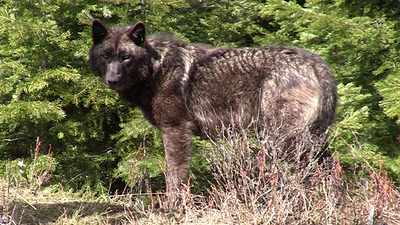
White Wolf

Are wolves eating all the elk?

“Answer: There is no shortage of elk where wolves live in the Rocky Mountains.  According to state game agencies, in 2010 in Idaho, Montana and Wyoming, there are 371,000 elk, 21,000 more than the previous year.  In Wyoming, the elk population is actually 50% above management objectives set by the Wyoming Department of Game and Fish.  In Idaho, Montana and Wyoming, there are at most 1,700 wolves, which are far outnumbered by bears and mountain lions.  Certainly, with 371,000 elk and many more deer, there is plenty of prey.

However, in some areas, the success of big game hunters has declined a bit, but not due to a general lack of elk.  With wolves back, elk habits have changed, reverting to behavior honed by time as the two species co-evolved in a predator/prey balance.  Now elk are once again more alert and spend much of their time on the move.  They find security in thick timber and maintain vantage points by spending more time on ridgelines rather than lingering down in open meadows and streambeds.  From the ridges, they can see threats approaching and have many directions to flee.

All these factors lead to heightened challenges for hunters.  Some concerned hunters point to specific herds, claiming that the elk are being decimated but, overall, population trends clearly dismiss that claim.

While only a few elk herds are in decline, local and regional fluctuations of herd populations are normal, according to the historical record.  Population trends are influenced by many factors.  Forest fires, for example, actually benefit elk by creating prime habitat.  When trees burn, verdant meadows, rich in nutritious grasses, replace the dead trees, and elk numbers increase.  But eventually, the trees grow back, thick shade decreases underlying grasses, and the elk population drops again.

Wolves keep the elk gene pool strong.  When wolves hunt, their technique is based not only on strategy, but also on opportunity.  They wear their prey down in a chase, singling out the weak, which are usually the sick, injured, old, or young.  The survivors are most often the healthiest, fastest and strongest elk, which live on to reproduce and perpetuate the best genes of their species.  This predator-prey relationship is good for both the health of the elk, and the health of the land.”

**Special thanks to “Living With Wolves, http://www.livingwithwolves.org/AW_question2.html, for providing the information in this article!

three wolves

Do wolves kill for sport?

“Answer: Wolves, like all wild carnivores, do not kill for sport.  They kill to sustain themselves.  Though it is uncommon, “surplus killing” (killing more prey animals than can be immediately consumed) has been observed in many predator species.  If given the opportunity to secure future meals, many animals will sometimes do so.  It is a survival mechanism.  It is this survival tactic that has led to the misplaced notion of “sport killing” arises.  It has nothing to do with sport.  Only people kill for sport.

Surplus killing occurs when prey is at an unusual disadvantage, offering an opportunity to significantly lower both the risk of injury to the predator and the amount of energy required to kill the prey.  It is for this reason that surplus killing by wolves, although rare, occurs more with livestock than it does with wild prey.

Typically, when a pack of wolves kills an elk or a deer, by the time the pack has subdued its prey, the rest of the herd has fled and is no longer in the area.  This is not the case with livestock introduced by humans.  Unlike their wild cousins, livestock have lost much of their survival instinct.  Spending a good amount of their existence fenced in or being herded, their reaction to a predator in their midst is very different from that of wild prey.  Calves and yearling cattle, for instance, flee during the chaos of the chase, but once the wolves have made a kill, rather than continuing to move away from danger, they have been known to stand nearby, watching in curiosity, perhaps unable to comprehend the threat and what might happen next.  Instead of fleeing, as a wild prey animal would, sheep, when confronted with danger, often run in frantic circles, triggering predatory instinct in wolves and increasing the opportunity for multiple kills.

Wolves are further mischaracterized as killing for sport when people happen upon a dead animal or animals, killed by wolves, but the wolves are no longer present.  This leads people to assume that the wolves abandoned their kill and therefore, must have killed for recreation or pleasure.  This is far from the reality.  The fact is that wolves are easily frightened away from their kill by the approach of human beings, whom they regard as a predator and tend to fear.  Wolves may be also chased away by other, larger carnivores, eager to take advantage of an easy meal.  So a presumably abandoned carcass is not what it seems.  In nature, where the margins of survival are narrow, surplus food is not forgotten.  Research shows that wolves return repeatedly, almost always eating the entire carcass.

For wolves, more so than bears and mountain lions, hunting can be very risky work.  Unlike the larger, solitary mountain lion that relies on the element of surprise, ambushing and then quickly overpowering its prey, wolves work together as a pack, chasing their prey and wearing it down, looking for vulnerabilities.  This is very difficult and dangerous, and they are often fatally wounded while hunting, gored by antlers or horns or kicked by a hoof.  80 to 90% of the time, their efforts to make a kill fail.  When they succeed, if any food is left unfinished by wolves, it feeds scavengers or other animals.

Misinterpretation of animal behavior and motives often perpetuate a bad reputation for wolves, but reality does not support the theory that wolves kill for sport.”

**Special thanks to “Living With Wolves, http://www.livingwithwolves.org/index.html, for providing the information in this article!
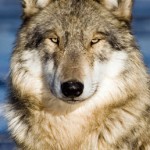

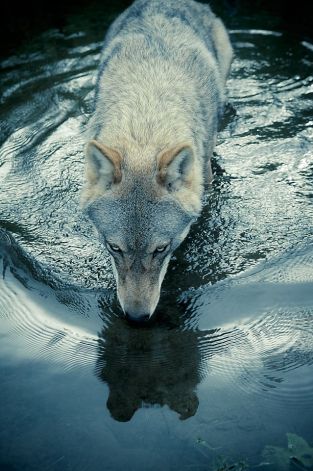
water wolf
This shot of a wolf slaking its thirst by Christian Houge – “Untitled 3” – is from his painstaking work with wolf packs in Norway. Photo: Hosfelt Gallery
Kimberly Chun: Published 3:36 pm, Wednesday, July 31, 2013

“While studying two wolf packs in Norway alongside wildlife researchers, Oslo photographer Christian Houge witnessed both love and blood between the animals, the euphoria of a pack and the nastiness of bullying. But his most intense encounter probably occurred when he was approached by the biggest wolf in one pack.

“The biggest one came over to me with the notion that it wanted contact, and I reached out and stroked its fur,” Houge, 41, says shortly after the opening of his Hosfelt Gallery show of striking wolf images drawn from that three-year period. “Out of the blue, it turned around and bit my arm, not breaking skin.

“I pulled my arm back slowly, thinking, it’s just going to run off now, and instead it sort of leaned back and studied me, my eyes and body motions. I was the one being studied. I was being tested to see if I was worthy to be there.”

Houge’s exploration of the feared and misunderstood creatures led him to look closer at the shadow side of his life and culture, a subject he’s touched on as part of a TED talk.

Q: What were some of the challenges in photographing the wolves?

A: The wolf in its nature stays away from anything that it doesn’t know. Just introducing the tripod, I had to let it stay in the area for two days before I could use it. I wanted to crawl into the holes they use – I’d been working with cracks in mountains, the inner and outer, the contrast between dream and reality – and it quite confused them because they’d never seen a human in these holes.

Q: You crawled into a cave to shoot them?

A: Once. I’m not pretending to be a wolf man. When I was with them, I had other people who could draw attention if there was too much curiosity and too much biting. If you show weakness, you can be in trouble.

“The ritual when you meet them – it can sound weird but it’s natural to me now – is you have to be on your knees, and they’ll have their tongues inside your mouth, and you can’t move. They might have their jaws around your head to measure your cranium. After the first time, you learn to meet them with your tongue. Their mouths are much cleaner than ours.”

Q: It sounds, and looks, like you got very close.

A: The feeling of howling with wolves, being in that energy of the wolf pack – I’ve traveled a lot, I’ve worked with these art projects, and I still haven’t found my tribe, my pack. But working with these animals, I got a strong connection to myself and my nature in a positive way.”


Special thanks to Kimberly Chun,  a Berkeley writer, for providing this information!


Brown / Grizzly Bear, Lake Clark National Park, Alaska.

“BOISE, Idaho — A new study released Monday draws a direct relation between the reintroduction of the gray wolf and the amount of berries consumed by grizzly bears. The result of this study found that with wolves in Yellowstone National Park keeping elk populations in check, bears are starting to consume more berries. The study, which appears in the Journal of Animal Ecology, looked at elk populations in the Yellowstone National Park region of Wyoming over the past 50 years. The research team lead by Bill Ripple at Oregon State University looked at the amount of berries found in bear scat. “Wild fruit is typically an important part of the grizzly bear diet,” Ripple said. “Especially in the late summer when they are trying to gain weight as rapidly as possible before winter hibernation.” Researchers found that before wolves were reintroduced to Yellowstone, elk populations grew and ate a significant amount of wild berries. Those berries are also part of a grizzly bear diet. Before wolf numbers started coming back in 1995, there were less berries found in the grizzly bear diet. After wolves were reintroduced, wolves started preying on elk — and less elk means more berries for the grizzly bears. The exciting part of this study, said Chris Haney, the chief scientist with Defenders of Wildlife, is the fact that this is a first-of-its-kind study. “I was actually surprised,” he said. “This is good news for the Yellowstone grizzly bear.” Haney also said: “If you think about nature, bears are not a species that would come to mind and say they are really vulnerable to losing this one kind of food. They are just very catholic in their food preferences,” he said. What he means is bears are omnivores that eat fruits and berries, bugs and meat. They are well prepared to adapt to a reduction in one of those food groups. Haney said he is impressed that this research found a strong relationship between the elk population and the amount of fruit found in bear scat. “It’s a good thing because when you have more than half of a puzzle explained by one variable, yeah that’s big news. Any time that we can find one variable,” Haney said.“ That explains more than half of the noise in the chaos that we see in natural systems, yes, that’s really worth paying attention to.” A study like this could eventually play a role in the U.S. Fish and Wildlife Service proposal to delist the Yellowstone grizzly bear. A push to delist the bear was overturned in federal court after environmental groups claimed the federal wildlife agency failed to take into account the role plants and trees have on the grizzly bear diet. There are approximately 700 bears around the Yellowstone region, according to recent estimates.”

**Special thank to Idaho Public Television, http://earthfix.opb.org/flora-and-fauna/article/researchers-find-a-relationship-between-elk-and-gr/, for providing this information!


Wotan

Photo of “Wotan” is property of Wolf Park.

“Want to learn more about wolves?  Want to spend some special time at Wolf Park when the rest of the public is gone?  “Camp” overnight in our Education Building and spend a weekend with the wolves!  Children will learn about wolves, foxes, coyotes, and bison — and other fascinating things in the world around them — in a safe and educational setting.  Campers will play animal tracking and direction-finding games, do crafts projects and make treats for the wolves.  Participants might also meet some Canis lupus familiaris (domestic dogs) and the Park’s tame red foxes (under adult supervision).  A Howl Night program is part of these fun weekends.  A campfire with marshmallows as the wolves howl in the dark makes for a truly special night!

Overnight Camps are $60 per child which includes all craft materials and meals (a dinner, breakfast and lunch – please inform us of any dietary restrictions your child has).  No drop-ins; children must be pre-registered to attend.  Children will need to bring bedding and pillows.  Overnight Camp begins at 1pm on Saturday, and ends at 4pm on Sunday.  Please arrange drop-off and pick-up accordingly.  Space is limited, so be sure to register soon!

All campers should bring water bottles.  Plenty of water will be available, and while safe to drink, our well-water has a strong metallic taste, so bringing water from home is encouraged so that kids stay hydrated.  Sprinkler time is a favorite camp activity on hot days.  Children should bring a bathing suit and towel along with them.  Cameras are welcome and recommended — there will be lots of opportunities for picture-taking!  Be sure to bring sunscreen and/or bug spray.

Camp will take place rain or shine — we will not cancel due to weather — so be sure to bring rain gear just in case.  In the event of inclement weather, activities will take place indoors.  Also, this camp is KIDS ONLY!  We are sorry, but we do not allow adults to remain with their children during camp.”

**Special thank to “Wolf Park” for providing this information (http://wolfpark.gostorego.com/camps/overnight-camps.html)!


Wolf
By 
Published: July 17, 2013

“There is a unit within the Agriculture Department’s Animal and Plant Health Inspection Service called Wildlife Services. Its official mission, according to its Web site, is “to resolve wildlife conflicts to allow people and wildlife to coexist.” This has meant, since 2000, some two million dead animals. The list includes coyotes, beavers, mountain lions, black bears and innumerable birds. The agency’s real mission? To make life safer for livestock and game species.

There will obviously be times when livestock and predators come into conflict, when coyotes kill lambs and black bears become too accustomed to humans and cause genuine harm. But Wildlife Services’ lethal damage is broad and secretive, according to a series in The Sacramento Bee last year. The techniques are old-fashioned — steel traps and cyanide cartridges — and the result, according to a new study in the journal Conservation Letters, is a program that is wasteful, destructive to the balance of ecosystems and, ultimately, ineffective.

Under one name or another — for years it was part of the Interior Department — the agency has been doing its work as quietly as possible, though not without protest from Congress, scientists and members of the public who got wind of what was going on. Two House members — John Campbell, a California Republican; and Peter DeFazio, an Oregon Democrat — have pressed for Congressional hearings and have asked the Agriculture Department’s inspector general to investigate Wildlife Services.

The agency, opponents say, has not scientifically evaluated the consequences of its actions and has consistently understated the damage it does to “nontarget” species, like songbirds. Its work also undercuts other programs intended to protect the balance of natural ecosystems.

It is time the public got a clear picture of what Wildlife Services is up to, and time for the Department of Agriculture to bring the agency’s work into accord with sound biological practices. Resolving wildlife conflicts need not involve indiscriminate killing.”

**Special thanks to “The Editorial Board” for providing this information (http://www.nytimes.com/2013/07/18/opinion/agricultures-misnamed-agency.html)


wolf in harney county

“McIrvin says killing the wolves is the only solution. He believes the calf carcass should have been laced with poison to get the “culprits.”

“Until somebody gets serious about opening season on these wolves, I don’t know that there is any answer,” he said.

Just as he did last year, McIrvin plans to continue to refuse compensation from the state.<


Excerpted from:

Another calf found dead as ranchers question state wolf investigations

By MATTHEW WEAVER

Capital Press

A northeast Washington cattle rancher says wolves killed a three-day-old calf from his operation last week.

Len McIrvin is owner of the Diamond M Ranch in Laurier, Wash. That’s the ranch where Washington State Department of Fish and Wildlife officials in September 2012 killed six wolves from the Wedge Pack. The wolves had killed at least 17 cattle from the ranch.

The killed calf was dragged from a barbed wire calving enclosure 200 yards from human presence, McIrvin said. There were fresh wolf tracks nearby in the river, he said.

“We know it was a wolf, but they can’t confirm it because the calf was 95 percent eaten up,” he said, noting coyote tracks were also found in the area.

Stephanie Simek, WDFW wildlife conflict section manager, said the case was unconfirmed as a wolf kill because there were signs of coyotes in the area. The six-strand barbed wire fence did not show signs of a larger carnivore entering the area, she said.

“The issue was the carcass was so far gone, you really couldn’t get a lot of those measurements,” said Dave Ware, WDFW game program manager. “You just couldn’t tell for sure what killed it.”

The department has been monitoring wolf activity, but didn’t find anything that would merit setting a trap to try to collar wolves.

“We’re certain there are wolves in the Wedge area again,” Ware said. “We’re seeing plenty of activity.”

McIrvin said his cattle are on the range, so he hasn’t found other kills or injuries.

“We know the wolves have been harassing them,” he said. “We know they’re there, we hear them howling, they’ve got the cows all chased off the range again. We put them back weekly, but the wolves are running them daily.”

The Stevens County Cattlemen’s Association believes the department’s unconfirmed ruling on the calf shows a “troubling trend” in which the department does not confirm wolf kills, a determination that could lead to killing the predators.

Association spokesperson Jamie Henneman said WDFW needs to clearly outline how they will deal with wolves.

“Right now we are seeing the department buckle under pressure from environmental groups who have absolutely no skin in the game,” she said. “There is no impact to their finances or livelihood if wolf management is done in a poor, watery or slipshod fashion. Band-aid payments of compensation will not solve this problem.”

Ware believes the department’s history proves it is willing to kill wolves, but said it will not always completely be on the same page as ranchers.

“Second-guessing what our field staff does seems to be a popular sport for both sides,” he said. “In their hearts, most (ranchers) feel, ‘Wolves are the things different from the landscape — it must be wolves that caused this.’ In some cases, we can verify that, in some cases, we just can’t.”

McIrvin says killing the wolves is the only solution. He believes the calf carcass should have been laced with poison to get the “culprits.”

“Until somebody gets serious about opening season on these wolves, I don’t know that there is any answer,” he said.

Just as he did last year, McIrvin plans to continue to refuse compensation from the state.

“We are not in the business of raising cattle to feed wolves. We’re in the business of raising cattle to be a cow ranch,” he said.”

Information

Washington Department Fish and Wildlife:

http://wdfw.wa.gov/conservation/gray_wolf/

Stevens County Cattlemen Association:

http://stevenscountycattlemen.wordpress.com


fladry_wind

Fladry is a line of rope mounted along the top of a fence, from which are suspended strips of fabric or colored flags that will flap in a breeze, intended to deter wolves from crossing the fence-line.[1] Fladry lines have been used for this purpose for several centuries, traditionally for hunting wolves in Eastern Europe.[1] They are effective temporarily, as the novelty may soon wear off, usually between three to five months, and can be used to protect livestock in small pastures from wolves.[1]

This technique is sometimes also used to alert horses and cattle to the presence of a fence, as the use of smoothwire fences and one strand of electric may not be seen by an animal unfamiliar with a new home.


“GRANTS PASS, Oregon — The Oregon Fish and Wildlife Commission on Friday adopted provisions of a lawsuit settlement that will make Oregon the only state in the West where killing wolves that attack livestock is a last resort.

The rules adopted by the commission amend Oregon’s Wolf Management Plan, along with statutory provisions enacted by the Legislature that will be signed by Gov. John Kitzhaber.

The rules require ranchers to show they have taken non-lethal steps, such as alarm boxes and low strings of fluttering plastic flags known as fladdery, to protect their herds before the state will send out a hunter to kill a wolf. There must also be hard evidence, such as GPS data showing a radio-collared wolf was in the area when a cow was killed, that wolves have attacked four times.

In return, ranchers get new rights to shoot wolves that they see attacking their herd, but only if those non-lethal protections are in place, and attacks have become chronic.

The settlement represents a new level of cooperation between conservation groups and ranchers, who have long fought over restoring wolves in the West, where they were wiped out by bounty hunters in the early part of the 20th century.

Ranchers downplayed the significance of the settlement.

“I don’t think it’s a whole lot different from the wolf plan already being implemented,” said Kate Teisl, executive director of the Oregon Cattlemen’s Association. “Now there’s just more documentation. Ranchers are out there doing all they can to keep their animals alive, including the non-lethal measures.”

But wolf advocates said it was that documentation of non-lethal steps that was groundbreaking.

Rob Klavins of Oregon Wild said the old plan talked about conservation of wolves being a priority, but it was so ambiguous that it was ineffective.

“It’s now up to the Oregon Department of Fish and Wildlife, the livestock industry, and the conservation community to honor the agreements that we have made,” he said. “If we do so, I am optimistic we will continue to see conflicts between wolves and livestock continue to be rare, and the need to kill wolves even rarer still.”

Brett Brownscombe, natural resources adviser to the governor, said making the rules clear was important as Oregon’s wolf population continues to grow, and the Obama administration moves toward lifting federal protections for wolves in areas they have yet to repopulate.

Oregon Wild and other conservation groups had sued the Oregon Department of Fish and Wildlife, claiming that a kill order on the Imnaha pack, the first to establish in Oregon as well as the first to attack livestock, threatened to wipe out the pack. Conservation groups claimed the actions violated the Oregon Endangered Species Act, which still protects wolves in the eastern two thirds of the state, where federal protections have been lifted.

The Imnaha pack only has one more strike against it before a kill order can be imposed, but so far, it has not been linked to an attack.

The Oregon Court of Appeals barred the state from killing wolves for more than a year before the settlement was reached between conservation groups, the Oregon Cattlemen’s Association, and the governor’s office. During that time, the number of wolves in Oregon went up, while the lethal attacks on livestock went down. In Idaho, where the Oregon packs had migrated from, the numbers of lethal livestock attacks went up, along with the numbers of wolves killed, primarily by trophy hunters and trappers.”

**Special thanks to JEFF BARNARD  Associated Press, for providing this information! (http://www.dailyjournal.net/view/story/27bc716ebcfd4046b4ba205ed9310261/OR–Wolf-Settlement/)


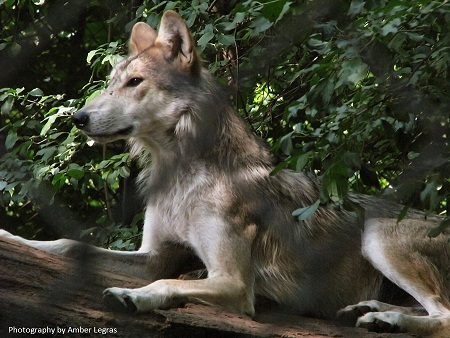
Mexican Wolf on log

“ALBUQUERQUE, N.M. (AP) — The effort to return the endangered Mexican gray wolf to the American Southwest has hit another stumbling block.

Federal and state wildlife officials confirmed Friday that a female wolf that was released into the wild in early May was found dead just one month later in southwestern New Mexico.

The animal, dubbed F1108, had been shot. Authorities released no other details and said the investigation was ongoing.

Top officials with the U.S. Fish and Wildlife Service have long pointed to illegal shootings as one of the challenges to reintroducing Mexican gray wolves in New Mexico and Arizona. Since reintroduction efforts began in 1998, there have been 50 illegal killings documented, with four occurring just last year.

Environmental groups called the latest wolf death a tragedy.

“The Mexican gray wolf population cannot afford the loss of another individual, let alone a breeding female with pups,” said Nancy Gloman, vice president of field conservation for Defenders of Wildlife. “This wolf and her pups were another critical step toward the promise of recovery.”

A survey at the beginning of the year indicated there were at least 75 wolves in the wild in the two states, marking the largest population since the reintroduction program began. Environmentalists have been pushing the federal government to release more captive animals to boost those numbers.

The Fish and Wildlife Service has cited genetic concerns for moving cautiously with any releases, while ranchers and some rural community leaders have voiced concerns about their safety and livelihoods being compromised by more wolves on the landscape.

Ranchers have blamed the predators for numerous cattle deaths over the years. In June, officials investigated the deaths of three calves in Arizona. Two of the deaths were found to have been caused by wolves.

The wolf found shot in late June was one of four captive animals that the Fish and Wildlife Service had hand-picked for release this spring with the hope of bolstering the wild population. The wolves were to be released in pairs — one in the Gila Wilderness and the other in southeastern Arizona.

After weeks of waiting, the agency pulled the plug on the Arizona release and returned that pair to captivity. The pair in New Mexico fared no better with the male being captured for roaming outside of the recovery area just days after his release.

Soon afterward the pair’s pups were presumed dead, and the female started roaming. She was last located in the northeastern corner of the Gila forest near Kline Mountain.”

**Special thanks to SUSAN MONTOYA BRYAN, Associated Press, for providing this information! (http://www.sfgate.com/news/science/article/Mexican-gray-wolf-shot-killed-in-NM-4663523.php)


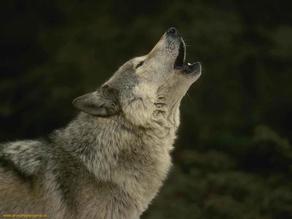
howling wolf

“Yellowstone officials expressed displeasure at a Montana state plan to increase grey-wolf hunting that also rejects the idea of a no-hunting buffer near the Park.The new wolf-hunting rules, as they stand now, would allow a hunter to bag five wolves during a longer season and set quotas in areas outside Yellowstone. When setting the new Montana wolf hunt rules, the Montana Legislature specifically prohibited a no-hunting zone near the Park.

Still, there’s some wiggle room, and Montana wildlife commissioners are expected to use that wiggle room to lessen the impact on Yellowstone wolves. Hunters near the Park would be allowed only one wolf, and the areas where quotas would apply is expanded.

That may not be enough to placate Yellowstone officials, who say the new Montana wolf hunt law targets Yellowstone wolves. Wildlife doesn’t respect human boundaries like Park limits and state lines, and given the propensity of wolves to wander over a large range in the course of a year, it’s inevitable that many will go into Montana — where, Montana Fish, Wildlife and Parks officials say, the wolves become Montana’s problem. Last year 12 Yellowstone wolves were killed in Montana, Idaho and Wyoming after leaving Yellowstone.

From AP:

Yellowstone’s chief scientist Dave Hallac said he appreciated the changes but added that it was unclear whether the commissioners will accept the agency’s recommendations.

“The park is not anti-hunting,” Hallac said. “What we’re trying to do is balance the conservation of wolves in Yellowstone, which are not an exploited population right now, with some level of reasonable harvest.”

Wildlife commission chairman Dan Vermillion said the move to lower the bag limit to one wolf near Yellowstone – versus five animals elsewhere in the state – was about increasing hunter opportunity, so that one hunter couldn’t fill the entire quota.

The presence of wolves in Yellowstone is still a contentious issue for sportsmen, who argue wolves diminish the number of elk in the region, and area ranchers who say their livestock is threatened by wolves.”


**Special thanks to the “Yellowstone Insider” for providing this information (http://yellowstoneinsider.com/2013/07/09/officials-montana-wolf-hunt-sets-sights-on-yellowstone-wolves/)!