Feeds:
Posts
Comments

Wolf Wolf

“Five Michigan Indian tribes have decided to challenge the state’s decision to hold a wolf hunt in the western UP this coming fall.

As we hear from The Michigan Public Radio Network’s Rick Pluta, they say the wolf hunt violates a treaty.

Specifically, the tribes of the Chippewa Ottawa Resource Authority say the state did not consult with them in a meaningful way before establishing a gray wolf season, and that’s required by a 2007 consent decree.

Aaron Payment leads the Sault Sainte Marie Tribe of Chippewas. He says the wolf is sacred in tribal culture and the hunting season disrespects that.

“The five tribes that are a party to the consent decree are unified that we are going to take some steps, and we’re not exactly sure what that is at this point, but we’re not happy with the outcome,” he says.

Payment says the treaty gives the tribes options including mediating a resolution or going to court.

The state says the tribes were consulted as part of the process that set up a wolf season in the western UP.”


**Special thanks to , WKAR, http://wkar.org/post/american-indian-tribes-challenge-michigan-wolf-hunt, for providing this information!


Lobo Wolf
L.A. Times, May 29, 2013 – Activists say the rule that hunters must know they are killing a protected animal allows the Justice Department to abdicate prosecution. (posted 05/30/13)
“Environmental groups are taking the Justice Department to court over a policy that prohibits prosecuting individuals who kill endangered wildlife unless it can be proved that they knew they were targeting a protected animal.
Critics charge that the 15-year-old McKittrick policy provides a loophole that has prevented criminal prosecution of dozens of individuals who killed grizzly bears, highly endangered California condors and whooping cranes as well as 48 federally protected Mexican wolves.
The policy stems from a Montana case in which Chad McKittrick was convicted under the Endangered Species Act for killing a wolf near Yellowstone National Park in 1995. He argued that he was not guilty because he thought he was shooting a wild dog.
McKittrick appealed the conviction and lost, but the Justice Department nonetheless adopted a policy that became the threshold for taking on similar cases: prosecutors must prove that the individual knowingly killed a protected species.
The lawsuit charges that the policy sets a higher burden of proof than previously required, arguing, “The DOJ’s McKittrick policy is a policy that is so extreme that it amounts to a conscious and express abdication of DOJ’s statutory responsibility to prosecute criminal violations of the ESA as general intent crimes.”
WildEarth Guardians and the New Mexico Wilderness Alliance said they intend to file a lawsuit Thursday in U.S. District Court in Arizona, one of the states where Mexican wolves were reintroduced. The Times received an advance copy of the lawsuit.
Federal wildlife managers who are responsible for protecting endangered animals have long criticized the policy as providing a pretext for illegal trophy hunters and activists.
A June 2000 memo from the law enforcement division of the U.S. Fish and Wildlife Service in Wyoming warned, “As soon as word about this policy gets around the West, the ability for the average person to distinguish a grizzly bear from a black bear or a wolf from a coyote will decline sharply. Under this policy a hen mallard is afforded more protection than any of the animals listed as endangered.”
Earlier this year, a man in Texas shot and killed a whooping crane, telling authorities that he thought it was a legally hunted Sandhill crane. He was not charged under the Endangered Species Act but was prosecuted under the Migratory Bird Treaty Act, which carries lesser penalties.
Wendy Keefover of WildEarth Guardians compared the policy to “district attorneys rescinding speeding tickets issued by traffic cops when then speeder claims he or she believed the legal speed limit was greater than what was posted, and that he or she had no intention to break the law.”
The unspoken attitude toward endangered species among some western ranchers is summed up by the expression: “Shoot. Shovel. And shut up,” suggesting that the most efficient way to deal with the unwanted bureaucracy associated with protected species was to quietly remove them.
Mexican wolves have been decimated by illegal shootings, causing the death of more than half of the animals released in the wild since the start of the reintroduction program in 1998.
Forty-eight Mexican wolves have been illegally killed, according to the lawsuit. It notes that the U.S. Fish and Wildlife Service anticipated that illegal shooting and trapping was likely to be a major impediment to recovery of the species, but the agency thought that strong enforcement could discourage the illegal acts.
Wolves are often killed by hunters who say they thought they were shooting at coyotes, which may be shot on sight in most states.
Mistaken identity is also frequently given in mix-ups between black bears and grizzly bears that lead to grizzly deaths.
The Wyoming U.S. Fish and Wildlife Service memo included this example:
In May 1996, a man hunting for black bear in Wyoming shot and killed a collared grizzly bear, an endangered species.
The hunter and three friends moved the bear carcass, destroyed the collar, dug a hole, dumped in the bear, poured lye over it and covered the hole.
When the animal’s remains were recovered, the man said he thought he was shooting at a common black bear.
The U.S. attorney’s office reviewed the case and declined to prosecute it, citing the McKittrick policy.”
**Special thanks to Lobos of the Southwest for providing this information!
This article appeared in the Los Angeles Times on May 29, 2013.

Collared Wolf

Minnesota Court of Appeals Dismisses Petition Challenging Wolf Hunting and Trapping

“ST. PAUL, MN (May 28, 2013) – The Minnesota Court of Appeals today dismissed the petition challenging wolf hunting and trapping on the basis of standing, not on the basis of the merits of the case. The Court found that the petitioners (Center for Biological Diversity, Howling For Wolves) did not adequately persuade the Court that sufficient standing was held to challenge the rulemaking process implemented by the MN DNR for the inaugural wolf hunting and trapping season.

“It’s hard to put into words our disappointment and sense of injustice over this decision.” said Dr. Hackett, founder of Howling For Wolves. “Minnesotans have a legitimate concern about the care and management of our wolves and all our natural resources. The public’s input should not be disregarded just because it’s convenient for the DNR.”

Since 1995, the MN DNR has authorized 200 of the 202 hunting rules using the expedited emergency rulemaking process that bypasses any opportunities for public input. Hackett states, “When the public is cut out of the process for public agency decisions and rulemaking, then bad stuff can happen, like the agency becomes hostage to special interests with special demands.”

The requirement that the DNR have a formal public comment was the law prior to the start of the inaugural 2012 wolf hunting season. But the DNR only offered an online survey where the actual rule which would have described to the public the methods allowed to kill wolves, was not published. Nearly 80% of respondents to the informal DNR online survey opposed the wolf hunt. But this response was ignored by the DNR.

A recent Lake Research Partners poll found that 79% of respondents agreed that the wolf is a valuable asset to Minnesota and one that should be protected for future generations. The majority (66%) also opposed trapping and snaring wolves for sport.

Howling For Wolves is analyzing the Court’s decision and considering its options. Despite today’s legal news, Howling For Wolves has plans and opportunities going forward to forge a peaceful existence for the wolf in Minnesota.

Howling For Wolves was created to be a voice for wild wolves and those who are concerned with their survival. We aim to educate the public about our wolf population and the advocacy that is necessary to keep wild wolves in a self-sustaining existence. For more information and resources: www.howlingforwolves.org

Maureen Hackett, M.D., the founder of Howling For Wolves, is a physician, a triple board certified forensic psychiatrist, and a former United State Air Force officer. In 2003, Hackett was instrumental in the passage of Minnesota law providing for tobacco-free state hospital grounds.”

**Special thanks to Contact: Maureen Hackett, MD 612-250-5915
hackett@howlingforwolves.org, for providing this information! 


Arizona Map

Wolf-relocation project struggles as lobos fall prey to guns and cars…

By Brandon Loomis The Republic  |  azcentral.com, Sat May 25, 2013 11:25 PM

“ALPINE — A brown-streaked wolf — named Ernesta by her admiring captors — bounded from a crate and onto Arizona soil. She carries in her womb the newest hopes for a rare native species that is struggling to regain a footing in the Southwest.

Her government-sponsored April 25 relocation with her mate, from New Mexico’s Sevilleta National Wildlife Refuge to a mountain south of Alpine, was the first in the state for a captive-bred pair of Mexican gray wolves in more than four years.

The last time a new canine couple sniffed freedom in these mountains, in fall 2008, they didn’t last the winter. Someone shot the female almost immediately, and the male disappeared by February.

“It’s a tough life for wolves in the wild,” Endangered Wolf Center animal-care director Regina Mossotti said after watching the latest pair bolt from their crates last month in the Apache-Sitgreaves National Forests. The Missouri non-profit center is part of a breeding program and has nurtured both of the transplanted wolves at times. Mossotti felt a special kinship with the female she helped raise, and she was a little anxious.

“It’s like seeing a child graduate from high school and go off into the world,” Mossotti said.

There is reason to worry.

Fifteen years after America reintroduced lobos to the Southwest, only 75 ran wild at the end of 2012. Officials celebrated that record high as a small victory, but it’s a tenth of what scientists on a 2005 panel proposed as a recovery goal. Humans have killed dozens of reintroduced wolves, mostly through illegal shootings and vehicle collisions.

As of 2011, the federal, state and tribal agencies involved estimated they had spent about $26 million studying, breeding and restoring Mexican wolves over about 20 years. The U.S. Fish and Wildlife Service paid the biggest share, nearly $17 million. The Arizona Game and Fish Department paid $2.5 million and used another $3 million in federal funds.

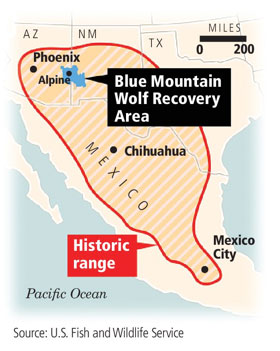
Wolf advocates fear the animals’ extinction unless the government increases the frequency of the releases, adopts a population goal and extends the wolf a welcome mat beyond the current recovery area in far eastern Arizona and western New Mexico — perhaps to the Grand Canyon’s North Rim. Those are long-sought wishes that have languished as ranchers and hunters pushed back and the government stuck with a plan that limits wolves to the Blue Mountains.

“The Mexican wolf’s fate really hangs in the balance between the promise that we’ve long heard of scientific management and the reality that we’ve long experienced of politicized management,” said Michael Robinson, New Mexico-based wolf advocate with the Center for Biological Diversity.


Conflict in cattle country

John Hand has raised cattle across the state line in Catron County, N.M., since 1953. He said the Fish and Wildlife Service made a mistake bringing wolves back. It’s ranch country, he said, and the unavoidable conflicts mean the restoration is “doomed to fail.”

Wildlife agents confirmed wolves killed 18 cattle and one mule last year. The previous year’s toll was 20 cattle, a horse and a sheep. An interagency compensation fund helps offset losses.

Although wolves enjoy federal protection as an endangered species, their status here as an experimental population gives ranchers a right to defend cattle. They can legally shoot wolves that are attacking their stock on private land, and can report them to government officials for potential agency-directed trapping or killing after repeated offenses on public lands.

“I don’t want them on (our ranch),” Hand said. “If they come here, it’s not something we’ll tolerate. We’d probably shoot them. Our neighbor shot one not too long ago.”

That means Ernesta and family are endangered in more than just the legal sense.

Since she was relocated near Alpine, Ernesta, also known as F1126, is thought to have whelped an unknown number of pups and nursed them in a wooden denning box inside a fenced enclosure with a 473-foot perimeter. There the animals are getting acclimated and nervously accepting road-kill offerings until early June, when biologists will swing open the gates and leave the wolves to the forest. The pair are the 93rd and 94th captive-reared Mexican wolves released by federal biologists.

If they avoid bullets, bumpers, snakes, lightning and every other hazard that has prematurely killed 92 lobos since their 1998 reintroduction, they will form what biologists are calling the Coronado Pack. They also must avoid killing livestock and keep their distance from homes, or they could face the management actions that have killed another 12.

It’s a big “if” for the Mexican gray wolf, a subspecies of gray wolves that has not rebounded from the brink the way its larger cousins did in the northern Rockies after they were reintroduced in the 1990s. Canadian transplants there have produced thousands of offspring in the Yellowstone and central Idaho wildernesses.

Arizona lacks the vast, roadless forests of the north. Yellowstone National Park alone is half the size of the Mexican wolf’s currently designated recovery zone.

Another difference, according to Mexican wolf recovery coordinator Sherry Barrett, is that the northern wolves were transplanted from the wild and not from captivity. Biologists and veterinarians try to minimize human contact in captivity, but the animals are comparatively naive when released.

The Southwestern lobos also are smaller than their cousins — about 60 to 80 pounds — and are not impervious to elk hooves and antlers.

Then there’s the shooting.

“All of these wolves are relatively accessible,” Barrett said. “Whether it’s malicious or mistaken identity, we do experience regular mortality.”

Illegal shootings — 46 so far and four prosecutions — are an echo of an eradication program earlier in the 20th century, when ranchers and government trackers shot and poisoned Mexican gray wolves almost to extinction.

By the early 1980s, the species was down to seven genetically distinct animals to start a captive breeding program.

From those, dozens of wildlife centers have bred and maintained up to 300 at a time in captivity (currently 258). Attitudes toward wolves softened as ecologists stressed predators’ role in maintaining natural ecosystems, and former Arizona governor and U.S. Interior Secretary Bruce Babbitt oversaw the wolf’s initial return during the Clinton administration.

A controversial return

The return was controversial, especially in the small towns most affected. Travis Udall, an Eagar school superintendent and a hunter, said wolves have struck the deer population and sometimes have struck fear in people.

“We’ve had a couple wolves follow us when we were hunting,” Udall said. “They say it’s curiosity, but it’s kind of unnerving.”

The recovery program generates hard feelings, he said. Locals feel imposed upon in a way they might not if wolves were left to recover or fade on their own.

“It feels forced,” he said.

Arizona has at times been a wary partner in the restoration. The Arizona Game and Fish Department in March said it wanted to hold the line at 100 wild Mexican wolves and remove endangered-species protections. A 1980s plan mentioned 100 as a first target, but wolf allies say that’s only because 100 seemed such a lofty goal from zero.

Managing for both hunters and animals can be tricky, and each release is made in consultation with the state.

“Wolves like to hunt elk and deer,” Game and Fish field team leader Chris Bagnoli said, “but so do people. So we want to make sure we have a good balance of all uses of the landscape.”

It would help, he said, if the program were permitted to spread beyond the Blue Mountains to dilute the local effects. But he said he believes the wolves are slowly breeding success. Their numbers grew by 15 in the last year. “I think we’re progressing,” he said.

Many conservationists hope that a new recovery plan will include two new wolf zones: one north of the Grand Canyon and one in southern Colorado and northern New Mexico. These would help disperse wolves to reduce in-breeding — which reduces litter sizes — and protect against extinction during disease outbreaks.

“All of the science done to date points to the fact that there’s good habitat for wolves and good prey in northern New Mexico, southern Colorado and the Grand Canyon eco-region,” said Eva Sargent, Southwest program director for the non-profit Defenders of Wildlife. “The (Fish and Wildlife) Service really needs to be paving the way for all of that to happen. But instead of paving the way, I can tell you that the recovery team hasn’t met since 2011.”

That year, Utah’s governor and wildlife chief learned that the Fish and Wildlife Service was considering adding southern Utah to the wolf-recovery zone. Utah’s forests could offer spillover habitat for wolves released around the Grand Canyon. They wrote a letter to Washington in protest.

No detailed recovery plan

The program is operating under a 1982 plan that didn’t spell out conditions to meet before removing Endangered Species Act protections. The Fish and Wildlife Service had said it would produce a detailed plan last year, but it hasn’t. Barrett declined to say when it would be completed, and said discussions about potential recovery zones are internal.

The wild population needs more new blood like Ernesta and her pups, Sargent said. But without a science-based plan, the creature faces “extinction by bureaucratic delay.”

Barrett and Arizona officials say there are reasons not to rush releases, especially in family groups. First, the wolves must be monitored together to ensure that they bond and that they are wary of humans. They are conditioned against cattle predation with a nauseating substance fed to them in ground beef. There also has to be a promising, unoccupied range available for a new pack, and by rule the government can only release captive-bred wolves on the Arizona side of the recovery zone.

“We’re learning as we go,” Barrett said.

“It has been very, very slow,” said Phil Hedrick, an Arizona State University conservation biologist and geneticist. He twice served on Mexican wolf recovery planning teams that the Fish and Wildlife Service shut down without writing guidelines or population goals. He fears federal and state biologists have missed their window of opportunity for maximizing genetic diversity.

“The reasons why the numbers haven’t gone up are based on the killing,” Hedrick said, “and lack of active management.”

His last participation was in 2005, when he and other scientists recommended 750 wolves in three distinct populations. After that meeting, silence. The Bush administration never codified that plan and never explained why.

In the meantime, the Coronado Pack is getting the best start possible.

In New Mexico, a veterinarian vaccinated the parents and poured alcohol on their foot pads to help them cool down after a wall of 22 volunteers and agency workers closed in and spooked them into a box where they could be pinned by steel bars and blindfolded for safe transport.

In Arizona, they emerged into daylight just down a gravel road from the ignition point of the massive 2011 Wallow Fire. The largest wildfire in state history torched trees but recharged grass and shrub growth that should feed lots of elk and deer. The elements of a good life are all there.

Now it’s on Ernesta to live or die.”

**Special thanks to By Brandon Loomis The Republic  |  azcentral.com, for providing this information!


Collared Wolf

This 2013 photo provided by Horsefeathers Photography shows a black wolf wearing a VHF radio collar that identifies it as Wolf  “831F,” a member of the Yellowstone National Park ’s Canyon pack, in Swan Lake, Mont. Big game outfitter William Hoppe shot and killed this female wolf near where 13 sheep were killed in April. Leaders of a wolf advocacy group said Hoppe is intentionally luring the animals by leaving dead sheep carcasses in a pile. Photo: Horsefeathers Photography, Brad Orsted

May 8, 2013

“BOZEMAN, Mont. (AP) — A big game outfitter who shot and killed a collared wolf from Yellowstone National Park is intentionally luring the animals by leaving dead sheep carcasses in a pile, leaders of a wolf advocacy group said.

“Make no mistake about that, it’s definitely intentional baiting,” Marc Cooke, president of Wolves of the Rockies, told The Associated Press on Wednesday.

William Hoppe shot and killed a 2-year old, female wolf Sunday near where 13 sheep were killed in April. He notified Fish, Wildlife and Parks warden Chris Kerin that he killed the wolf using one of his two shoot-on-sight permits the agency issued after the sheep were killed, the Bozeman Daily Chronicle (http://bit.ly/17LAEJ5) reported Wednesday. The permits are valid for 45 days and only allow wolves to be shot on the property where the sheep were killed.

In mid-April, Hoppe, an outspoken opponent of wolves, bought about 30 sheep and started raising them on his property along the Yellowstone River near Gardiner.

On April 24, he awakened to find that two wolves had killed five ewes and eight lambs.

Hoppe “deliberately put the sheep on his property … knowing that the wolves would kill them,” Cooke charged.

Hoppe told the Chronicle he was going to move the rest of the sheep closer to his house and that he had disposed of the dead sheep in a bone pile in the area where they were killed.

“This man needs to be held accountable for baiting,” said Kim Beam, vice president of Wolves of the Rockies. She said the issue would be raised at Thursday’s Fish, Wildlife and Parks commission meeting in Helena, where commissioners will consider the 2013 wolf hunting season.

Animals such as wolves and grizzly bears can smell carcasses a mile away and sometimes further, said Doug Smith, a Yellowstone National Park wolf biologist. He said the wolf that was killed Sunday may have been attracted by the decaying meat.

Smith said information from the wolf’s radio collar indicated that she was not involved in killing Hoppe’s sheep.

Hoppe is a former president of the Friends of the Northern Yellowstone Elk Herd. In January, he opposed the Fish, Wildlife and Parks Commission’s decision to close wolf hunting around Yellowstone National Park. He argues wolves are driving down the elk population in the area.

He did not return a phone call seeking comment.”

Special thanks to http://www.chron.com/default/article/Activists-say-wolf-killer-is-baiting-the-animals-4498538.php for providing this information!


Wolf Geographic

“ANCHORAGE,  Alaska (AP) — A second interior Alaska wolf has tested positive for rabies, the  Alaska  Department of Fish and Game announced Thursday.

A  trapper captured the wolf March 15 near Chandalar Lake near the foothills of the  Brooks range about 185 miles north of Fairbanks, the same general location as a  rabid wolf shot last month. The trapper killed the wolf, skinned it and fed raw  meat from the carcass to his dog team, said spokeswoman Cathie  Harms. The five dogs are in quarantine in Fairbanks.

The  dogs had been vaccinated for rabies but will be given booster shots, the  department said.

Rabies,  according to the Centers  for Disease Control and Prevention, is a viral disease that can infect  mammals, including humans. It’s usually transmitted through bites but can also  spread by coming into contact with infected nerve tissue such as brains or  spinal cords.

The  rabies virus infects the central nervous system and can cause death, according  to the CDC.

Rabies  is regularly detected in Arctic foxes along Alaska’s west and north coasts but  had not been found south of the Brooks Range since statehood in 1959, the  department said.

“We’re  still trying to get a clearer picture of the current situation, especially in  wolves in the Chandalar Lake area,” Dr. Kimberlee Beckmen, a department  veterinarian, said in the announcement. “We’d really like to hear from the  people who have seen wolves or other wildlife acting abnormally in that area.  Abnormal behavior can also be caused by diseases other than rabies, such as  distemper, so a test of brain tissue is required for a definitive diagnosis of  the disease.”

Both  rabid wolves exhibited abnormal behavior when they were killed.

Wolves  normally are shy, but a trapper who shot the wolf last month said the animal had  closely approached him.

The  trapper, a man who lives near Palmer, took the animal home with him and cut  himself while skinning it. Worried that the animal may have been infected, he  sent the head in for testing and discarded the rest of the carcass in a  wooded area.

When  the department confirmed rabies, which can be spread to other animals that eat  nerve tissue such as brains or spinal cords, the carcass was retrieved. The  carcass had been scavenged, but the spinal cord had not been disturbed,  officials said.

The  wolf caught in a leg trap March 15 was alive when the trapper approached but  appeared dull and unaware, the department said.

The  trapper killed the animal, skinned it and fed the raw meat to his dogs.

Beckman  said they should not have been fed the carcass.

“It’s  very dangerous to feed raw carcasses of wildlife, especially carnivores, to  pets,” Beckmen said. “Pets can not only become infected, they can then transmit  diseases and parasites to their owners, rabies, tularemia and echinococcus being  the most serious.”

Echinococcus  is a bacterial infection, Harms said.

Rabies  had not been diagnosed in the region in 54 years of statehood, but archived  territorial reports document cases of rabies in fox and dogs in interior Alaska,  the department said.

Beckmen  said she’s looking for more samples from the heads of wolves, wolverines, foxes  or coyotes killed near the Chandalar Lakes or Fortymile River areas.

Rabies  has been detected over the winter along the north and west coasts and more cases  are expected in the arctic fox and red fox populations. Village dogs, the  department said, are vulnerable to infection from foxes.

Alaska  health officials warn trappers and hunters to wear gloves when skinning animals,  wash wounds with soap and water, wash knives after cutting off heads and avoid  cutting into brains or spinal cords.”

Special thanks to DAN JOLING, Associated Press, for providing the information in this post! 


Wolf Geographic

Photograph by Joel Sartore

“Gray wolves once populated large portions of North America, Europe, and Asia, but were hunted to near extinction.

Wolves are legendary because of their spine-tingling howl, which they use to communicate. A lone wolf howls to attract the attention of his pack, while communal howls may send territorial messages from one pack to another. Some howls are confrontational. Much like barking domestic dogs, wolves may simply begin howling because a nearby wolf has already begun.

Wolves are the largest members of the dog family. Adaptable gray wolves are by far the most common and were once found all over the Northern Hemisphere. But wolves and humans have a long adversarial history. Though they almost never attack humans, wolves are considered one of the animal world’s most fearsome natural villains. They do attack domestic animals, and countless wolves have been shot, trapped, and poisoned because of this tendency.

In the lower 48 states, gray wolves were hunted to near extinction, though some populations survived and others have since been reintroduced. Few gray wolves survive in Europe, though many live in Alaska, Canada, and Asia.

Red wolves live in the southeastern United States, where they are endangered. These animals actually became extinct in the wild in 1980. Scientists established a breeding program with a small number of captive red wolves and have reintroduced the animal to North Carolina. Today, perhaps 100 red wolves survive in the wild.

The maned wolf, a distant relative of the more familiar gray and red wolves, lives in South America. Physically, this animal resembles a large, red fox more than its wolf relatives.

Wolves live and hunt in packs of around six to ten animals. They are known to roam large distances, perhaps 12 miles (20 kilometers) in a single day. These social animals cooperate on their preferred prey—large animals such as deer, elk, and moose. When they are successful, wolves do not eat in moderation. A single animal can consume 20 pounds (9 kilograms) of meat at a sitting. Wolves also eat smaller mammals, birds, fish, lizards, snakes, and fruit.

Wolfpacks are established according to a strict hierarchy, with a dominant male at the top and his mate not far behind. Usually this male and female are the only animals of the pack to breed. All of a pack’s adults help to care for young pups by bringing them food and watching them while others hunt.”

Fast Facts:

Size relative to a 6-ft (2-m) man:

Wolf Size and Human

Type:
Mammal
Diet:
Carnivore
Average life span in the wild:
6 to 8 years
Size:
Head and body, 36 to 63 in (91 to 160 cm); Tail, 13 to 20 in (33 to 51 cm)
Weight:
40 to 175 lbs (18 to 79 kg)
Group name:
Pack
Protection status:
Endangered
 

**Special thanks to National Geographic for providing this information!


wolf down

Takepart.com – Tue, Apr 23, 2013

“Of the top reasons tourists travel thousands of miles for a 12-hour round-trip bus ride into Denali National Park, wolves rank right up there with grizzly bears and the sight of 20,320-foot Mount McKinley on a rare bluebird day. To the few who know, members of Denali’s wolf population are also some of the longest, continuously studied animal groups in the world, besting even Jane Goodall’s chimps. But in recent years, wolf numbers in the 7,370-square-mile park have decreased even faster than the TV audience of Sarah Palin’s Alaska on TLC. In 2007, Denali Park biologists counted 147 wolves in nine groups that roamed the 93-year-old park. But in their most recent count, taken last autumn, numbers had declined to 54, the lowest since 1986.

Some, like the Alaska Board of Game, blame this die-off on natural causes—wolves killing wolves and low sheep populations. But others, including private citizens, park biologists, and members of the environmental advocacy group the Alaska Wildife Alliance (AWA), believe there are more sinister reasons. According to some AWA members, the recent, radical decline of the park’s most visible wolves—called the Grant Creek group—is the result of three main factors: the dissolution of Denali’s protective buffer zone, the Palin-appointed Alaska Board of Game, and the acute, ethically questionable actions of a small handful of local trappers, including a man named Coke Wallace.

 We’ll start with the protective buffer zone. Between 1966 and 2009, celebrated wolf biologist Gorden Haber studied wolves, on the ground, in Denali, hundreds of hours each year. During his extensive observation, Haber witnessed wolves wandering just outside the park and trappers laying their snares along the park’s boundary to kill these wolves. Thanks to his studies, Haber was able, in 2000, to convince the then-Board of Game to establish a protective buffer along the outside edge of the park, within a finger of state land, where wolf trapping was otherwise legal. Tragically, Haber died in a plane crash while observing wolves in late 2009. And the following March, the Board of Game rescinded the protective area.

Trappers once again position their snares along the park boundary, killing not only adult wolves, but pups. And last May, in an act that infuriated both wolf advocates and the usually detached Denali Park Service, the local trapper, Coke Wallace, hitched a dead horse to his four-wheeler, dragged it to the park boundary, and used it to lure and snare the pregnant alpha female of the park’s wolf group, Grant Creek.

AWA member Marybeth Holleman studied these ongoing events as she wrote her forthcoming book, Among Wolves, a profile of the late biologist Gordon Haber. She says that Denali Park biologist Tom Meier (also recently deceased) reported that he and other park biologists believed declining wolf populations weren’t the result of declining prey. Nor did they blame habitat, which is abundant in the 6.3 million-acre park. That, Meier said, left two causes: trapping on park borders and the vigorous predator-control program against bears and wolves currently under way in areas adjacent to the park. “What Tom told me is that when game officials do intensive predator control, it creates a vacuum,” says Holleman. “He believed that Denali wolves may have expanded their territory to fill it.”

Holleman, along with several wolf advocacy groups, have petitioned the Board of Game to “reinstate the protective buffer.” But in about six attempts, between 2010 and present, the Board refused and created a potentially illegal eight-year “moratorium” on even discussing the buffer zone. At its January meeting, the Board also discussed the petition “behind closed doors,” possibly violating the Alaska Open Meetings Act. The AWA has filed a lawsuit contesting the Board’s conduct with that meeting, results withstanding.

Another petition to reinstate the buffer will be discussed at the next meeting of the Board of Game, this May.”

*Special thanks to http://news.yahoo.com/secret-reasons-wolves-dying-denali-212011543.html?bcmt=1366763539830-6fe0d306-033a-4655-b7a9-42b6a9d169c4_00002s000000000000000000000000-82acbcc7-8567-4b35-ad73-3b7c4a4277d6&bcmt_s=e#mediacommentsugc_container, for providing this information!

Gray Wolf Pup

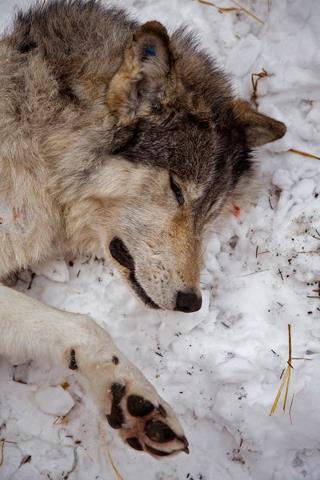
“ALBUQUERQUE, N.M.—Officials confirmed Wednesday that an animal killed by a federal employee in southwestern New Mexico in January was a Mexican gray wolf.

The U.S. Fish and Wildlife Service said genetic tests confirmed it was a small, uncollared female. More tests are under way to determine which pack the wolf was associated with.

In January, an employee with the U.S. Department of Agriculture’s Wildlife Services shot what officials described at the time as a “canine.” The employee reported the shooting because the animal looked like a Mexican wolf after closer inspection.

The wolf was shot from about 250 yards away, officials said.

“Our specialist, at the time, was upset and that’s why he reported it. Still, we’re disappointed that it occurred,” said Carol Bannerman, a spokeswoman at Wildlife Services headquarters.

The Mexican gray wolf was added to the federal endangered species list in 1976. The effort to reintroduce the wolves in New Mexico and Arizona has stumbled due to legal battles, illegal shootings and other problems.

Federal officials have been tightlipped about the January shooting. They have not said what prompted the employee to shoot but implied that he may have thought it was a coyote. The employee was in the Mangas area investigating cattle deaths when the shooting occurred.

Bannerman said the employee remains on the job and the agency is cooperating with the Fish and Wildlife Service.  The case been turned over to the U.S. attorney’s office for review.”

*Special thanks to The Associated Press, http://www.ruidosonews.com/ci_23098618/feds-confirm-employee-killed-mexican-gray-wolf for providing this information!

wolf hunted

**Animal activists say bill denies voters a voice**

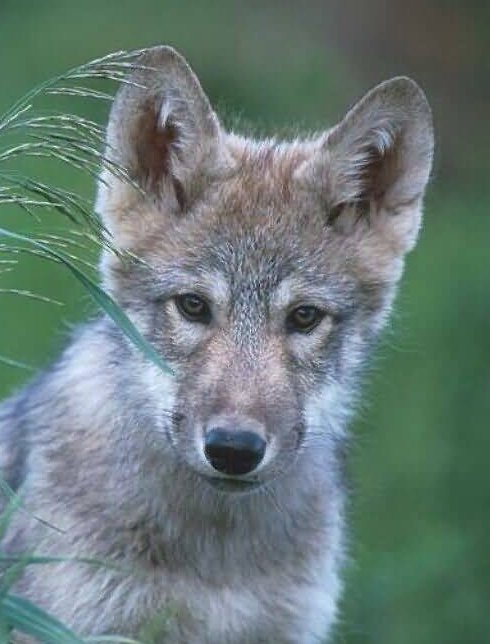
“LANSING, Mich. (WOOD) – Michigan lawmakers are looking to shift the power of deciding which animals — including gray wolves — can be hunted from the legislature to the Department of Natural Resources.

The sponsors of  Senate Bill 288 say the issue is about science and believe the Michigan DNR’s  Natural Resources Commission is better suited than the legislature to determine if an animal like a wolf should be placed on the state’s gaming list, meaning it can be hunted.

Animal rights activists, however, disagree.

Once  gray wolves were removed from the endangered species list in 2012,  legislation was passed allowing for them to be hunted in Michigan. The wolf population in Michigan sits at 658, mainly in the Upper Peninsula.

Since then, animal rights organizations like the Humane Society and Keep Michigan Wolves Protected have gathered more than 250,000 signatures to place a referendum on next year’s ballot to repeal part of that law and stop the wolf hunt.

But Senate Bill 288 could override those ballot efforts and pave the way for wolf hunting as early as this fall.

Currently, adding a species to the gaming list has to go through the elected legislature.  SB 288 would give that power exclusively to the Natural Resources Commission — a seven-member, non-elected, governor-appointed panel.

“Basically, the Natural Resources Commission can continue to make these decisions so our wildlife in Michigan is managed based on sound science,” said bill co-sponsor Sen. Dave Hildenbrand (R-Lowell). “We have a lot of data about the population, about disease control, about public safety and there’s a lot of research being done on that for all of our species, all of our game all of our wildlife.”

SB 288 would also, in effect,  allow the NRC to override any ballot challenges put forth through a public referendum that could repeal the hunting of wolves. Animals rights groups say that silences the public’s voice.

“We just turned in more than a quarter-million signatures to the Secretary of State’s Office from Michigan voters saying that they do not want to see wolves hunted and trapped in our state, so in issues like this of great importance to citizens, they want to be able to use their voice to speak up,” State Humane Society Director and Keep Michigan Wolves Protected member Jill Fritz told 24 Hour News 8 in a phone interview.

Hildenbrand said lawmakers are still tweaking SB 288 and plan to remove a controversial $1 million appropriation that would have prevented the public from challenging SB 288 itself later through ballot referendum.

But if SB 288 passes, the NRC will still hold  public hearings. One is already scheduled for next month, during which members will vote on whether or not to hold a wolf hunt.

Even if SB 288 passes, the legislature will still hold the power to remove a species from the gaming list, though they cannot add one, DNR spokesman Ed Golden said. Even if an animal is added to the list, it does not mean they will for absolutely be open to hunt. The NRC will have to hold public hearings first.

Fritz also said there are already laws in place that will not be effected by SB 288 that allow farmers or residents to kill wolves that are actively attacking live stock or pets. This is another reason Keep Michigan Wolves Protects feels it is not necessary to allow an active hunt of wolves.

A vote is expected Thursday. If it passes in the Senate, it will go to the House for a vote. ”

*Special thanks to Marc Thompson, http://www.woodtv.com/dpp/news/michigan/senate-bill-would-give-dnr-hunt-creation-power for providing this information!