Feeds:
Posts
Comments

Gray Wolf Pup

“GRAND RAPIDS, MI — Does a proposed law working through the state Senate put Michigan wolves in danger?

A number of letter writers say the public should have a direct say in protecting wildlife from hunters, and stand in opposition to a bill co-sponsored by Grand Rapids-area state Sens. David Hildenbrand, R-Lowell, and Arlan Meekhof, R-West Olive.

Pat Hartsoe attended a recent hearing in Lansing:

Last week I attended the Senate Committee on Natural Resources, Environment and Great Lakes. I came away feeling marginalized by the thinly-veiled political process I witnessed. Senate Bill 288 (co-sponsored by State Sen. Dave Hildenbrand, R-Lowell) was discussed.

SB 288 would allow the Natural Resources Commission to designate animals as “game species.” This bill was quickly introduced April 9, shortly after 250,000 registered voter signatures were delivered to the Secretary of State office in Lansing. I helped collect those signatures during bitter winter weather. The petition would require a public vote in 2014 on wolf hunting.
One problem with SB 288 is that if the NRC designates an animal a game species, concerned citizens would not be able to reverse this decision with a ballot referendum as they could with legislative decisions. Further, the NRC is an appointed, not elected, group.

Only one member has a science background. Two nationally-recognized scientists from Michigan’s Upper Peninsula with 30 years of wolf research experience were never consulted. After hearing public input, a 5 to 2 vote in favor was quickly taken. The bill moved to the Senate and could become law in less than two weeks.

I see a disturbing pattern developing in Michigan politics. In my opinion, if individuals get involved with legal, organized and timely opposition to an issue, politicians shouldn’t disenfranchise them by passing quickly-crafted and referendum-proof laws.

Think emergency manager. Think right to work. Think keep Michigan wolves protected. I am sorely disappointed by what I witnessed in Lansing.

PAT HARTSOE Grand Rapids

People should vote on hunting issues

In a deliberate attempt to circumvent the constitutional rights of the voters in Michigan, State Sen. Senator Tom Casperson (R-Escanaba) introduced Senate Bill-288 on April 9, 2013. It was approved by a 5 to 2 vote by the Natural Resources, Environment, and Great Lakes Committee and eventually goes to the Governor to be signed into law.

This bill would effectively nullify the efforts of a coalition of over 2,000 conservationists, Native American tribes, scientists and animal welfare interests who turned in more than 255,000 signatures from Michigan voters to place Public Act 520, listing wolves as a game species, to a referendum vote in November 2014.

SB 288 is an obvious attempt to prevent citizens from being able to conduct a constitutionally-guaranteed right to ballot referendum to reverse decisions by the legislature.

In 2006, Michigan voters overwhelmingly rejected a law to allow sport hunting of mourning doves – showing their desire to have the right to vote on wildlife issues. Voters rejected this, casting more votes against shooting doves than they did for any candidate that election. If SB 288 passes, this decisive outcome would be reversed.

SB 288 is a blatant display of political bullying that will put Michigan’s declining wolf population further at risk.

This bill is an extreme power grab by politicians and a deliberate attempt to subvert democracy and silence the voices of Michigan voters.

This type of political maneuvering by our elected officials must be stopped.

HARRY T. EDWARDS Kent City Wolf bill is an abuse of power

A few weeks ago, the Keep Michigan Wolves Protected campaign submitted over 255,000 signatures from registered Michigan voters opposed to sport hunting for wolves. This right to seek a voter referendum on legislation is guaranteed in the Michigan Constitution.

Unfortunately, the politicians in Lansing who most want to see wolves, recently introduced legislation (SB 288) which is exclusively aimed at nullifying this referendum and assuring that Michigan citizens never have a say again in hunting issues. This is not an exaggeration.

The legislation specifically removes all authority of citizens to have a voice about which animals are hunted in Michigan.

Even if you are in favor of hunting wolves, you should be very upset about this abuse of power. Drafting legislation specifically to silence Michigan voters who are following a constitutionally-guaranteed process is a stunning insult to democracy.

Please contact your state senator and state representative immediately and insist that they VOTE NO on SB 288.

TOM LYON New Era

People should decide on wolves

There is a new bill SB288 going through the State Senate this week that will take away all rights of the people of the state to make decisions on any wildlife.

Keep Michigan Wolves Protected collected and submitted 253,000 signatures from people around the state to put the upcoming wolf hunt on the Michigan Ballot in 11/2014. In the meantime, the hunt would be on hold until after the people voted.

Well, Sen. Tom Casperson submitted a bill this last week that would take all rights away from the citizens to have a say on any wildlife issues for all time. It would make the signatures mute, and silence the people and their wishes. This bill will change the constitution of the state and take away peoples voices on any wildlife issues.

He is upset because the wolf hunt which he had submitted, got the brakes put on it by the citizens of the state. So now he is attempting to take away all citizens rights when it comes to wildlife. People need to speak out.

They are changing a law that has been in place since 1908. And ballot proposals in the past that wanted to change our state constitution, were all readily defeated. This bill needs to be stopped. People need to contact their senators and reps……and quickly.  It could be law within eight days.

DOROTHY RODGERS Georgetown Township

Lawmakers not following will of the people

Not surprisingly, once again in our State legislature it appears that there is a “do as I say and not as I do” mentality. I am speaking in regard to SB 288 which is being fast tracked to a vote by State Sen. Tom Casperson R-Escanaba. This bill would sign legislation into law that would circumvent Michigan voter’s right to referendum, and includes a non-related appropriation that prevents the voters from rejecting the measure by referendum.

This bill, this is the good Senator’s response to the 253,000 signatures that were delivered to the Secretary of State in March, asking that another bill he was fast tracking; to allow a wolf hunt in Michigan, be put to Voter referendum in 2014.

Apparently Mr. Casperson, who prides himself on being a “sportsman” has no problem trying to write legislation that takes away Michigan voter rights when he doesn’t get his way. In this case, a trophy wolf hunt. This is truly unsportsmanlike conduct in the highest degree as the Senator has little or no regard for due process, let alone the opinions of 253,000 voters…..which was simply to let us decide whether a wolf hunt would be in the best interest of all of Michigan’s residents.

Regardless of how you feel about hunting, this bill works to undermine our right to referendum and to keep our lawmakers in check. I urge you, call or write your legislators and urge them to vote no on SB288.

MARGO BURIAN Grand Rapids”

**Special thanks to:  MLive/Grand Rapids Press guest opinion The Grand Rapids Press, for providing this information!     

wolf down

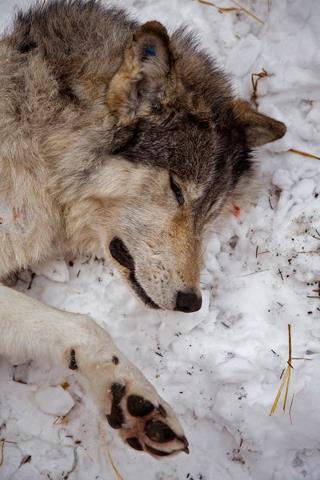
“Something’s not right in New Mexico. A federal agent with the notorious Wildlife Services agency is under investigation for killing a Mexican gray wolf. Adding to the misery, the government has been keeping this incident from the public.

It’s no surprise that Wildlife Services, part of the U.S. Department of Agriculture, is involved. This highly secretive agency has come under heavy fire over the past year because of the tens of thousands of animals it senselessly kills each year, often in the name of protecting livestock. Its methods are a lethal mix of medieval brutality and high-tech efficiency that include aerial gunning, trapping, deadly gases and poisons.

The agency was the focus of a recent blistering series in the Sacramento Bee that revealed the torturing of coyotes, the death of family pets and golden eagles — all done beneath the public’s radar. Members of Congress called for an investigation.

Help apparently didn’t come quick enough for the wolf in New Mexico.

The Southwest’s endangered Mexican gray wolves — with just three breeding pairs left in the wild — are hanging on by a thread in New Mexico and Arizona. The last thing they need is one of their own gunned down by an employee of the government that’s supposed to be nursing this wild population back to health.

Although the killing happened months ago, the public didn’t hear about it until it was reported in the Albuquerque Journal on Thursday afternoon. Government agencies, not surprisingly, have closed ranks and are refusing to talk about what happened.

Here’s what we’re piecing together: In January, a Wildlife Services employee apparently shot and killed a wolf, possibly a pup, while investigating the death of some livestock. The shooting evidently happened very close to the home range of the San Manteo wolf pack, which just added four pups to its family last year.

What’s more troubling about the latest incident in New Mexico is that the very agency that’s tasked with saving America’s wolves, the U.S. Fish and Wildlife Service, apparently knew about the wolf killing but is refusing to say anything about it.

I can’t say it’s all that shocking. The Fish and Wildlife Service has long taken a lackluster approach to wolf recovery in New Mexico and Arizona.

Fifteen years after Mexican wolves were first reintroduced to the Southwest, there are only 75 wolves in the wild. Wildlife officials predicted in 1998 there would be more than 100 in the wild by 2006. The Fish and Wildlife Service hadn’t released a single wolf into the wild from its captive-breeding facilities in four years before one was finally let out earlier this year — only to be recaptured by government agents three weeks later.

Scientists believe the small Mexican wolf population is suffering from genetic inbreeding, with reduced litter size and pup survivorship.

But the apparent shooting of the wolf in New Mexico in January was more than bureaucratic indifference. It was an act of violence against an animal protected under the Endangered Species Act.

The government has correctly launched an investigation into what happened and we’ll be keen to see the results.

But one thing has already been made clear: By not coming out and talking about this incident publicly, these government agencies have  placed a veil of secrecy over the behavior of one of its own and the management of one of this nation’s flagship endangered species.

For anyone who cares about America’s wildlife, or accountability in their government, that should be unacceptable.”

**Special thanks to Kieran Suckling, Executive Director, Center for Biological Diversity, for providing this information in this article!


mexicanwolf

“Common sense writing on Montana wolves, I  thought  it was worth sharing.

Are you listening to their howls Governor Bullock? Wolves are treasured by real Montanans who care about wild places and wilderness. Be bold! Don’t listen to the crazy rhetoric, it’s not grounded in fact.

===

BOLD VISIONS CONSERVATION

This week’s Sunday Sermon Vol. 1  No. 2

Montana Governor Steve Bullock

and the politics of Wolves

 Stephen Capra

 There was a time when I use to think politics really mattered. I remember going to a rally for Senator Eugene McCarthy, as he ran for President in 1968, in Madison Square Garden, the energy and belief could really change our nation, or so I thought.

I really believed that democrats would change our country, by the end of that year our heart had been stolen by too many bullets, to many great leader’s had fallen. I think of that today with the state of affairs in Montana, a state led by ignorance, political pandering and a Governor who fancies himself progressive.

This all comes back to our heart being stolen. In this case it’s not men that have fallen, its wolves. I have watched as Montana shared in the magical return of wolves to Yellowstone, watched as tourists have flocked from around the world, watched in Lamar Valley as you could not estimate the price of cameras in a one-mile stretch, all focused on wolves. Since President Obama sold wolves out and the Endangered Species Act on a rider that ensured another Democrat would get re-elected, Senator Jon Tester, clear thinking shows us that faith in political leaders is very overrated.

Over the past few months the Montana Legislature, seemingly some of the most ill-informed, and job destroying group of people God ever put under one roof, spent the majority of their time trying to find new ways of killing wildlife. Spear-hunting was a hot topic, yes spear-hunting. Of course, new ways to kill, more jobs. Yet, when it came to wolves and bison, this group could not have enough blood on their hands. If it was not so heartbreaking, it would be funny. Listening to Montana Game and Fish talk about “responsibly harvesting” predators, none of it with any science worth discussing.

This is a group designed to kill animals, not protect. New bills are now being introduced. to allow silencers on guns to protect the precious ears of hunters; continuing to allow dead wolf members to be used as traps set to kill the rest of the family; making licenses easier and cheaper. New non-resident permits can be had for $50.

When Governor Bullock panders to the wolf hating bunch, he opens the door to killing more beautiful animals and their family units slaughtered by ignorance and by the ego that demands reelection. If Democrats do not have the guts to stand up for wolves, [by standing up I mean vocally,] publicly, and ignore the stupidity of state Game and Fish departments, there will be shooting in the dens of newborn pups. Introduction of strong and important protections for wolves must happen now and end the shameless pain of trapping once and for all. The Governor is aware that people come from all over the world (meaning serious tourist dollars) to observe wolves.

  The whining rancher scenario is a SNORE.

I believe in wolves, I love bison. I am sick and tired of Democrats that want only their reelection and refuse to acknowledge how important wildlife is to our humanity. I challenge them to causality.

 It amazes me that some people can feel nothing when confronted with wild animals. For me it is so magical, such a spiritual experience. I have seen grizzlies in the wild, wolves and bison. It is a gift; there is more than enough land to share. Throughout our history we have destroyed as a means of growth for man to feel magisterial.

 William Beebe said it so well, “When the last individual of a race of living things breaths no more, another heaven and earth must pass before such a one can begin again.”

 I was inspired in 1968. I look forward to being inspired once again, but my Democratic party and Governors like Bullock must become inspiring, must take chances, and must become a voice for those who cannot speak.

 Don’t be redundant Governor, wolves belong! Be BOLD!

Let your soul heal in the wild spirit that wolves bring to us. Amen!”


**And of course, special thanks goes to Stephen Capra and “Howling for Justice” for providing and sharing the information in this article!


wolf gang

“How do wolves live together?

Wolves live in groups of between two and twenty (averaging about six to eight) animals.  These groups are called packs.  Each pack of wolves maintains an area, called a territory, which belongs to it and which it defends from other wolves.  Within this territory, the pack hunts, sleeps, plays, and raises pups.  Territories range in size from 50 to 1,000 square miles, depending on how much prey is available.  Packs also vary in size depending on what kind of prey is available.  Wolf packs which hunt deer as a primary source of food will have fewer wolves than packs which hunt bison or moose.  These large animals are harder to catch and kill, and can also feed more wolves once caught.

Wolves have a linear rank order, or hierarchy, which helps keep peace within the pack.  There is a separate line of rank for each sex: one for males and one for females.  At the top of the rank order is the alpha male and female.  The beta male and female are next highest in status.  At the bottom of the rank order is the omega “scapegoat” wolf, which may be either male or female.  In the rank order, each wolf has a set place.  When two wolves from the same pack cross paths, one is always dominant to the other, or higher in status than the other wolf.  The lower-ranking wolf is said to be submissive to the higher-ranking, dominant wolf.

The alpha wolves are not necessarily the strongest, the fastest, or the smartest.  High rank has more to do with attitude and confidence than size or strength.  Dominance also does not favor gender — either the alpha male or the alpha female may be the overall “leader of the pack”.

While dominant wolves generally act more self-confident than lower-ranking ones, wolves do not walk around constantly displaying their status.  They most often adopt a neutral pose, changing their expression towards dominance or submission depending on which other wolves are around.  (A wolf will show dominance to a lower-ranking animal, and submission to a higher-ranking one.)  A wolf displaying dominance stands up tall, looks directly at the other wolf, puts its ears forward, and will lift its tail (usually not much higher than its back, unless it is very excited).  A wolf displaying submission crouches down to look small, lowers or even tucks its tail, looks away from the other wolf, and puts its ears down and back.  This is usually all that happens when two wolves meet: wolves cannot afford to spend all their time fighting, and these subtle displays are all that is needed to maintain social stability.

Wolf communication involves a lot of signals like these.  The postures and facial expressions used will vary in intensity, or strength, depending on the context: an alpha wolf will often simply look hard at a wolf to send it a dominance message, and a submissive wolf will often just look away from a dominant wolf to give the appropriate response.  An excited alpha may give a stronger dominance message, and growl at a lower-ranking wolf or even hold it down.  Stronger submission signals include whining and pawing at the dominant wolf.  Mostly, signals just get louder and stronger the more excited the wolves get, and fighting rarely occurs.

The alpha wolves are not necessarily “in charge” or “leaders of the pack” at every moment.  They may decide where and when to hunt or they may not.  An alpha wolf is not always a leader so much as a wolf who has the right to do whatever it wants, whenever it wants.  Since they have so much social freedom to do what they like, alpha wolves often have more opportunity than lower-ranking wolves to start hunting or to choose a resting place.  The rest of the pack will then often follow and join in.  But when in home range, often younger wolves will take the lead on an outing.

The omega wolf ranks lower than any other wolf.  It usually sleeps away from the other pack members and may not engage in much social behavior, like howling or greeting.  The other wolves may make a “game” of picking on the omega wolf, biting it and driving it away from food.  At other times, the omega may be tolerated or even accepted into group activities.  This wolf may be able to eventually work itself back higher in the rank order or it may eventually choose to leave and form a new pack.

Rank order is not always linear and may be somewhat flexible in certain circumstances.  Puppies and yearlings, for example, have a rank order, but this order may change from month to month, week to week, or even from day to day in the case of young puppies.  (The rank order for adult wolves is usually more stable.)  “Playing” wolves, who are engaging in behaviors such as chasing and running for fun, may “switch” rank temporarily, and a lower-ranking wolf will be allowed to mock-dominate a higher-ranking one.  Some rank orders may be circular, with wolf A dominating wolf B who dominates wolf C who dominates wolf A, but this is rarely permanent.  Also, low-ranking wolves of one gender may be able to dominate high-ranking wolves of the other, without changing their rank in the social order of their respective sex.”

**Special thanks to “Wolf Park, http://www.wolfpark.org/aboutwolves.shtml, for providing this information!

Lobo Wolf

Although most humans fear wild animals, there’s evidence that they might be more people-friendly than we think.

“What were you, raised by wolves?”

“Parents usually ask this to cow an unruly child, but actually, when you think about it, the track record of wolf-raised children is pretty good. Mowgli anchored a best-selling book and a Disney movie; Romulus founded Rome. While wild animal encounters don’t always turn out as pleasant as “The Jungle Book,” there are plenty of children and adults that have been saved by wild creatures.

In 2005, a 12-year-old Ethiopian girl was reportedly saved from a group of kidnappers by three lions. Seven men had abducted the girl to try and force her into marrying one of them, and they had beaten her repeatedly. But the lions apparently chased off the men and stood guard over her until the police and her family came.

The case is particularly amazing because lions are well-known potential man-eaters. A 2005 study published in Nature found that lions had killed more than 563 people and injured 308 in Tanzania alone. But in this case, the lions may have been moved to sympathize with the girl because she was crying after being beaten.

“A young girl whimpering could be mistaken for the mewing sound from a lion cub, which in turn could explain why they didn’t eat her,” wildlife expert, Stuart Williams, in 2005, told the Associated Press.

Take heed: If you’re in need of leonine assistance, your best recourse may be to start sobbing uncontrollably.

If you’re looking for more long-term help from the animal kingdom, your better bet might lie with wolves, as Mowgli discovered. Don’t forget that Man’s Best Friend is almost genetically identical to a wolf; that’s why wolves and dogs can interbreed. Wolves do occasionally attack people – especially if they’re starving, habituated to humans or rabid – but despite their fierce portrayal in fairy tales and Liam Neeson movies, wolves actually are more likely to turn tail if they see a person.

“Most people don’t realize this, but wolves are wimps,” Utah State University ecologist and researcher Daniel MacNulty last year told National Geographic.

There are stories of wolves assisting children in the wilds of Russia and India, but these are hard to verify. One of the more famous stories of such wolf children, two girls, Amala and Kamala, was based on a single claim by the reverend who claimed to have discovered the girls.

Wild dogs have also occasionally been reported to take in runaway children, like the feral “Mowgli Boy” of Romania, who allegedly fled an abusive father.

Dolphins might be the most reliably altruistic animals in nature, with accounts of them saving humans stretching back to Greek mythology. There are numerous accounts of dolphins assisting injured podmates, beached whales and humans. A group of dolphins was reported to have circled around four swimmers in New Zealand to keep a great white shark at bay. Another pod protected a California surfer who had just been mauled by a great white.

Other cetaceans have a knack for altruism as well. In 2009, a beluga whale at a Chinese theme-park pushed a foundering freediver to the surface after the human’s legs cramped up.

It’s still unclear what motivates an animal to save a drowning swimmer or protect a girl from kidnappers,or raise a lost child; it seems to defy evolutionary sense. But altruism and cooperation may be just as natural as predation. Some experiments in humans suggest that generosity can induce the same kind of pleasurable reward in the brain that we get from food or sex. And if we’re hard-wired to enjoy being nice, there might be similar setups in brains across the animal kingdom.”

**Special thanks to , http://www.salon.com/2013/04/07/are_wolves_and_lions_mans_best_friends_partner/, for providing this information!


three wolves

April 06, 2013 12:00 am

“Recently I attended a hearing in Helena where I heard numerous people,  including many in the state Legislature, asserting that wolves were “decimating”  Montana’s game herds. Unfortunately due to the widespread repetition of the lies  and distortions, the only thing being decimated is the truth.

According to MDFWP in 1992, three years before wolves were reintroduced into  Yellowstone and Idaho, there were an estimated 89,000 elk in Montana. By 2010,  elk had been so “decimated” that MDFWP estimated that elk numbers had grown to  140,000-150,000 animals.

Indeed, in 2012, according to MDFWP statistics, out of 127 elk management  units in the state, 68 are above objectives, 47 are at objectives, and only 12  are considered to be below objectives. And even among these 12 units, the causes  for elk declines are often complex and involve more than wolf predation. In at  least a few instances, overhunting by humans is the primary factor.

Beyond hunting, the presence of wolves has many other benefits. Wolves cull  sick animals such as those with brucellosis and Chronic Wasting Disease from  herds that could threaten both humans as well as livestock. Wolves shift  ungulates away from riparian areas, resulting in greater growth of willows and  other streamside vegetation. This, in turn, creates more habitat for wildlife  including songbirds, and beaver. Healthier riparian areas also results in  greater trout densities.

It is disturbing to me as a hunter and ecologist that MDFWP repeatedly fails  to aggressively counter the distortions and misinformation.

**Special thanks to George Wuerthner, for providing the information in this article! (http://billingsgazette.com/news/opinion/mailbag/article_357bf3f3-40aa-5bd1-90b5-0dfdf8c70446.html#.UWCFuBxtCGA.facebook)


Gray Wolf Pup

“During the 15 months the wolf known as OR7 has crisscrossed the Oregon-California border, the news from his birthplace back in Eastern Oregon has shaken the boots off some of those holding most tightly to deeply rooted misperceptions about the ability of wolves to coexist on the landscape with the rest of us.

In the two years since a lawsuit stopped the state of Oregon from killing wolves, the state’s fledgling wolf population has doubled to nearly 50. Yet in Wallowa County, where the majority of Oregon’s wolf-livestock conflicts are reported each year, fatal wolf attacks on livestock have fallen by 60 percent as ranchers and agencies were forced to rely on nonlethal conflict-prevention methods.

At the same time in neighboring Idaho, where over the last two years hunters, trappers and state agents have killed more than 700 wolves, the number of sheep and cattle killed by wolves increased by more than 75 percent.

In fact, those trends reflect exactly what biologists and wolf experts have been telling anyone who would listen since wolves became one of the first animals to be protected by the Endangered Species Act when it was passed, 40 years ago: Tried-and-true, centuries-old nonlethal wolf management techniques such as range-riding, livestock-guarding dogs and appropriate fencing greatly reduce predation by wolves on livestock.

And it reinforces the fact that killing wolves and leaving behind orphaned pups and dispersed packs actually increases the chances of livestock being killed, because once the order of the pack is destroyed, so is the natural pack discipline of teaching younger wolves to kill natural prey such as deer and elk, leaving lone wolves with no choice but to take down the easiest prey they can find to survive.

Those lessons come at a valuable time for Californians during the current public comment period, which ends in May, on whether we should protect wolves under the state Endangered Species Act.

It reminds us that as the U.S. Fish and Wildlife Service moves toward dropping federal protections for wolves in the lower 48 states, we have a great opportunity to build a wolf management plan that sets a national example of how wolves can coexist with human endeavors.

Wolf experts have long said California has hundreds of thousands of acres of excellent wolf habitat. Of course, California is also the nation’s most populated state and home to a thriving livestock industry of more than 6 million cattle and sheep.

With 163,000 square miles, California is the nation’s third-largest state, behind only Alaska and Texas. And that means we’re in a great position to share the land we’ve inherited with the species we purposefully killed off in California and many other western states.

The return of wolves to California is a promising event for many of us fortunate enough to make our home here in the Bear Republic, where the state flag, featuring an image of the state’s last known grizzly, says a lot about how we see ourselves.

Like residents of the other 49 states, we, too, are concerned about jobs, taxes, education, climate change and the length of our commutes.

But the people who make up our state’s ever-swelling population continue to represent Western ideals as old as the state, from an ongoing pioneer-style willingness to go where others have not, to a belief in fresh starts.

Even for wolves.

The arrival of OR7 in California in December 2011 shows it’s only a matter of time before wolves once again make their homes in our state. And given that animals live in ecosystems rather than states, whether OR7 decides to put down roots here is only a side issue in a much larger ecological evolution, one that wolf experts say will surely result in wolves returning permanently to California.

They’re coming – the question is, will we be ready to protect them?

Efforts to make sure those protections are in place were put in motion last fall when state officials recommended that California extend endangered species protections to OR7 and all that follow him. That recommendation will be ruled on in October.

In the meantime, let’s be clear: Recovering wolves to their historic range will take discipline and the acceptance that they, like the rest of us, have a right to be here. It won’t always be easy.

But as the mounting evidence from neighboring Oregon shows, it can be done and done well, if we’re willing.”

**Special thanks to Amaroq Weiss Special to The Bee, for providing the information in this article!

California resident Amaroq Weiss, a biologist and former attorney who has been working to recover wolves in the West for 16 years, is West Coast Wolf Organizer for the Center for Biological Diversity. Reach her at aweiss@biologicaldiversity.org


Food and Farm-Targeting Wolves

“The resumption of wolf-hunts in Idaho, Montana and Wyoming illustrates why citizens must continue to oppose such unnecessary and senseless slaughters.

The wolf-hunts are predicated upon morally corrupt and inaccurate assumptions about wolf behavior and impacts that is not supported by recent scientific research. State wildlife agencies pander to the lowest common denominator in the hunting community—men who need to booster their own self esteem and release misdirected anger by killing.

Wolf-hunts, as Montana Fish and Game Commission Chairman Bob Ream noted at a public hearing, are in part to relieve hunters’ frustrations—frustration based on inaccurate information, flawed assumptions, and just plain old myths and fears about predators and their role in the world.

Maybe relieving hunter frustration is a good enough justification for wolf-hunts to many people. However, in my view permitting hunts to go forwards without even registering opposition is to acquiesce to ignorance, hatred, and the worse in human motivations. Thankfully a few environmental groups, most notably the Center for Biological Diversity, Wildearth Guardians, Alliance for Wild Rockies and Western Watersheds had the courage and gumption to stand up to ignorance and hatred.

All of the usual justifications given for wolf-hunts are spurious at best. For instance, one rationale given for hunting wolves is to reduce their presumed affects on big game populations. Yet in all three states, elk and deer populations are at or exceed population objectives for most hunting units.

For instance in Wyoming, one of the most vehement anti wolf states in the West, the 2010 elk population was 21,200 animals over state-wide objectives, and this did not include data for six herds, suggesting that elk populations are likely higher. Of the state’s elk herds most were at or above objectives and only 6 percent were below objectives. Similar data is found for Idaho and Montana elk herds as well.

However, you would not know that from the “howls” of hunters who characterize the elk populations as suffering from a wolf induced Armageddon. And Fish and Game departments are loath to counter the false accusations from hunters that wolves are somehow “destroying” hunting throughout the Rockies.

Experience in other parts of the country where wolves have been part of the landscape longer suggests that in the long term, wolves while they may reduce prey populations in certain locales generally do not reduce hunting opportunities across a state or region. Despite the fact that there more than double the number of wolves in Minnesota (3000+) as in the entire Rocky Mountain region, Minnesota hunters experienced the highest deer kills ever in recent years, with Minnesota deer hunters killing over 250,000white-tailed deer during each of those hunting seasons – an approximate five-fold increase in hunter deer take since wolves were listed under the ESA in 1978.

Another claim made by wolf-hunt proponents is that hunting will reduce “conflicts” with livestock owners. Again this assertion is taken as a matter of faith without really looking into the veracity of it. Given the hysteria generated by the livestock industry one might think that the entire western livestock operations were in jeopardy from wolf predation. However, the number of livestock killed annually by wolves is pitifully small, especially by comparison to losses from other more mundane sources like poison plants, lightning and even domestic dogs.

For instance, the FWS reported that 75 cattle and 148 sheep were killed in Idaho during 2010. In Montana the same year 84cattle and 64 sheep were verified as killed by wolves. While any loss may represent a significant financial blow to individual ranchers, the livestock industry as a whole is hardly threatened by wolf predation. And it hardly warrants the exaggerated psychotic response by Congress, state legislators and state wildlife agencies.

In light of the fact that most losses are avoidable by implementation of simple measures of that reduce predator opportunity, persecution of predators like wolves is even more morally suspect. Rapid removal of dead carcasses from rangelands, corralling animals at night, electric fencing, and the use of herders, among other measures, are proven to significantly reduce predator losses—up to 90% in some studies. This suggests that ranchers have the capacity (if not the willingness) to basically make wolf losses a non-issue.

However, since ranchers have traditionally been successful in externalizing many of their costs on to the land and taxpayers, including what should be their responsibility to reduce predator conflicts, I do not expect to see these kinds of measures enacted by the livestock industry any time soon, if ever. Ranchers are so used to being coddled; they have no motivation or incentives to change their practices in order to reduce predator losses. Why should they change animal husbandry practices when they can get the big bad government that they like to despise and disparage to come in and kill predators for them for free and even get environmental groups like Defenders of Wildlife to support paying for predator losses that are entirely avoidable?

But beyond those figures, wolf-hunting ignores a growing body of research that suggests that indiscriminate killing—which hunting is—actually exacerbates livestock/predator conflicts. The mantra of pro wolf-hunting community is that wolves should be “managed” like “other” wildlife. This ignores the findings that suggest that predators are not like other wildlife. They are behaviorally different from say elk and deer. Random killing of predators including bears, mountain lions and wolves creates social chaos that destabilizes predator social structure. Hunting of wolves can skew wolf populations towards younger animals. Younger animals are less skillful hunters. As a consequence, they will be more inclined to kill livestock. Destabilized and small wolf packs also have more difficulty in holding territories and even defending their kills from scavengers and other predators which in end means they are more likely to kill new prey animal.

As a result of these behavioral consequences, persecution of predators through hunting has a self fulfilling feedback mechanism whereby hunters kill more predators, which in turn leads to greater social chaos, and more livestock kills, and results in more demands for hunting as the presumed solution.

Today predator management by so called “professional” wildlife agencies is much more like the old time medical profession where sick people were bled. If they didn’t get better immediately, more blood was let. Finally if the patience died, it was because not enough blood was released from the body. The same illogical reasoning dominates predator management across the country. If killing predators doesn’t cause livestock losses to go down and/or game herds to rise, it must be because we haven’t killed enough predators yet.

Furthermore, most hunting occurs on larger blocks of public lands and most wolves as well as other predators killed by hunters have no relationship to the animals that may be killing livestock on private ranches or taking someone’s pet poodle from the back yard. A number of studies of various predators from cougars to bears show no relationship between hunter kills and a significant reduction in the actual animals considered to be problematic.

Again I hasten to add that most “problematic predators” are created a result of problem behavior by humans—for instance leaving animal carcasses out on the range or failure to keep garbage from bears, etc. and humans are supposed to be the more intelligent species—though if one were to observe predator management across the country it would be easy to doubt such presumptions.

Finally, wolf-hunting ignores yet another recent and growing body of scientific evidence that suggests that top predators have many top down ecological influences upon the landscape and other wildlife. The presence of wolves, for instance, can reduce deer and elk numbers in some places for some time period. But rather than viewing this as a negative as most hunters presume, reduction of prey species like elk can have many positive ecological influences. A reduction of elk herbivory on riparian vegetation can produce more song bird habitat. Wolves can reduce coyote predation on snowshoe hare thus competition for food by lynx, perhaps increasing survival for this endangered species. Wolves have been shown to increase the presence of voles and mice near their dens—a boon for some birds of prey like hawks. These and many other positive effects on the environment are ignored by wolf-hunt proponents and unfortunately by state wildlife management agencies as well who continue to advocate and/or at least not effectively counter old fallacies about predators.

Most state agencies operate under the assumption that production of elk and deer for hunters to shoot should have priority in wildlife management decisions. All state wildlife agencies are by law supposed to manage wildlife as a public trust for all citizens. Yet few challenge the common assumption that elk and deer exist merely for the pleasure of hunters to shoot.

I have no doubt that for many pro wolf-hunt supporters’ predators represent all that is wrong with the world. Declining job prospects, declining economic vitality of their rural communities, changes in social structures and challenges to long-held beliefs are exemplified by the wolf. Killing wolves is symbolic of destroying all those other things that are in bad in the world for which they have no control. They vent this misdirected anger on wolves– that gives them the illusion that they can control something.

Nevertheless, making wolves and other predators scapegoats for the personal failures of individuals or the collective failures of society is not fair to wolves or individuals either. The entire premises upon which western wolf-hunts are based either are the result of inaccurate assumptions about wolf impacts or morally corrupt justifications like relieving hunter anger and frustrations over how their worlds are falling apart.

I applaud the few environmental groups that had the courage to stand up for wolves, and to challenge the old guard that currently controls our collective wildlife heritage. More of us need to stand up against persecution of wildlife to appease the frustrations of disenfranchised rural residents. It is time to have wildlife management based on science, and ecological integrity, not based upon relieving hunter frustrations over the disintegration state of their world.”

For on predator studies and management see http://www.thewildlifenews.com/wp-content/uploads/2011/06/Predator-report.pdf

**Special thanks to George Wuerthner,  an ecologist and former hunting guide with a degree in wildlife biology, for providing this information!


HUNTER

This information is from the 1980’s and 1990’s but gives all of you stat lovers out there some great facts.  As you can see, clearly hunters have the greatest impact on deer populations.  Enjoy!

Appendix E Impact of Wolves on Deer in Wisconsin. by Ronald N. Schultz, Keith R. McCaffery, and Adrian P. Wydeven

“Many hunters continue to be concerned about the impact wolves may have on deer populations. During fall 1997 hunters became aware of the lower deer numbers across northern Wisconsin, and some blamed the deer decline on the increasing wolf population. The severe winters of 1995-1996 and 1996-1997 were the main factor that caused the deer decline across northern Wisconsin. Because such deer declines do create concerns over the impact of wolf predation, careful monitoring of wolf and deer populations will continue to be important aspects of management for both species.

Winter mortality is the main factor affecting deer numbers in northern Wisconsin. (Figure E1) During winter 1995-96 as many as 170,000 deer died in northern Wisconsin due to harsh winter weather. In the 1996-97 winter another 70,000 may have died. Winter Severity Indices correspond to severe winters and declines in the deer population.

There have been a few cases where wolves have limited ungulates (hooved mammals) to low population densities (Mech and Karns 1977; Gasaway et al. 1992). Generally such wolf impact would occur when ungulate populations are also stressed by severe winters, habitat deterioration, and/or overharvest. Fuller (1990) monitored a deer herd decline in Minnesota wolf range that went from 28 to 10 deer per square mile, but wolves accounted for only 10% of the deer mortality. Mech (1984) indicated that wolves rarely limit deer populations. Deer populations would normally need to be reduced to fewer than 3 deer/mi2 for wolves to limit growth of the deer population (Mech 1984). Generally wolf predation is not a major mortality factor to deer populations until deer densities drop to fewer than 10 deer/mi2 (Wydeven 1995). Deer densities of fewer than 10 deer/mi2 occur infrequently in Wisconsin.

Wolves in the Great Lakes region normally consume 15-18 deer per wolf per year (Fuller 1995). At a rate of 18 deer per wolf pack per year an average Wisconsin wolf pack of four wolves on a 70-square mile territory would consume about 72 deer or about 1 deer per square mile. Wisconsin’s wolf population in 1999 consisting of about 200 wolves probably consumed 3,000 -3,600 deer. The total 1998 harvest within the central and northern forest zones where wolves occur was 112,936 by firearm hunters, 29,266 by bow hunters and another 10,000 by motor vehicles.

Mortality due to wolves occurs year round which is much different than hunting mortality which is compressed into one season and has less effect on herd dynamics and hunter opportunity, because some wolf predation is compensatory.

The projected potential wolf population in Wisconsin could be 300-500 wolves (Appendix C). At a rate of 18 deer per wolf year, wolves would annually remove 5,400-9,000 deer. This rate of wolf predation would occur across 6000+ square miles, therefore would consist of 0.9 to 1.5 deer per square mile. Deer population density over winter across this region would generally range from 10 to 25 deer per square mile

The overall deer population and deer density were compared for 4 deer management units with wolves and 4 deer management units without wolves across northern Wisconsin (Table E1). Population fluctuations were relatively similar across deer management units with or without wolves. Deer density was slightly more in units without wolves than units with wolves, but the results were not statistically different (t-test P>0.10). The over winter management goals for the units with wolves is 18.7 deer per square mile. The management goals for the units without wolves is 21.3 deer per square mile. These goal differences reflect habitat and climatic effects unrelated to wolves. It appears that habitat and climatic effects have greater impacts on deer population trends than wolf predation.

Table E1     Comparison of deer population densities from 4 deer management units with wolves in    Wisconsin and 4 deer management units without wolves
Deer Management Units with wolves (1473 sq. miles) Deer Management Units     without wolves (1536 sq.miles)
Wolf No. Deer No. Deer/mi2 Wolf No. Deer No. Deer/mi2
1987-1988 28 28.900 19.6 0 35,900 23.4
1988-1989 33 35,600 24.2 0 41,300 26.9
1989-1990 33 35,300 24.0 0 38,600 25.1
1990-1991 37 37,800 25.6 0 44,000 28.6
1991-1992 22 33,800 22.9 0 35,200 22.9
1992-1993 24 24,400 16.6 0 25,200 16.4
1993-1994 31 24,300 16.5 0 29,400 19.2
1994-1995 31 33,400 22.7 0 42,400 27.6
1995-1996 30 46,200 31.3 0 50,900 33.1
1996-1997 37 31,400 21.3 0 41,800 27.2
Avg. Density 22.5 25.0
Mgt Goal 18.7 21.3
Population Density     Over Mgt. Goal 3.8 3.7

Furthermore, the average rate of herd increase from post-harvest to subsequent pre-harvest (1981-1997) was 1.33 for units without wolves and 1.31 for units with wolves which shows similar recruitment (net increase in herd size) in both sets of management units.

Overall it does not appear that wolves are likely to be a major mortality factor to deer in northern Wisconsin under current conditions or in the near future. Even with a population of 500 wolves, annual predation of 9000 deer would represent only 2.6% of the overwinter population of 343,000 deer in the Northern Forest and Central Forest. The area has an average fall population of about 450,000. Much of the predation by wolves would probably compensate for other natural mortality because it occurs year-round. A large proportion of northern Wisconsin deer die from natural causes, which can vary drastically depending on severity of winter (Creed et al. 1984). Wolves would probably remove some of these animals that would die from other causes. A deer killed by wolves won’t be killed by winter stress or other mortallities.

Wolves may also displace other predators such as coyotes (Peterson 1995); under some circumstances coyote predation may have more of an impact on deer populations than wolves (Mech 1984). The current deer management system in Wisconsin adjusts antlerless deer harvest in individual deer management units by limiting the number of hunter choice permits per unit (VanderZowen and Warnke 1995). This system should be able to adequately adjust for the impacts of wolf predation in deer management units. Generally, wolf predation would have very limited impact on the number of hunter-choice permits issued, or the overall deer harvest within specific management units.”

Literature Cited:

  • Creed, W.A., F.P. Haberland, B.E. Kohn, and K.R. McCaffery. 1984. Harvest management:    The Wisconsin experiences. Pages 243-260 in L.K. Halls, ed. White-tailed Deer Ecology    and Management. Wildl. Manage. Inst., Stackpole Books, Harrisburg, PA. 870 pp.
  • Fuller, T.K. 1990. Dynamics of a declining white-tailed deer population in    north-central Minnesota. Wildl. Monogr. 110. 37 pp
  • Fuller, T.K. 1995. Guidelines for gray wolf management in the northern Great Lakes    region. International Wolf Center, Tech. Publ. #271. Ely, Minnesota. 19 pp.
  • Gasaway, W.C., R.D. Boiertje, D.V. Grangaard, D.G. Kellyhouse, R.O. Stephenson, and D.G.    Larsen. 1992. The role of predation in limiting moose at low densities in Alaska and    Yukon and implications for conservation. Wildl. Monogr. 120. 59 pp.
  • Mech, L.D. 1984. Predator and predation. pp. 189-200 in L.K. Halls, ed. White-tailed    Deer: Ecology and Management. Stackpole Books, Harrisburg, PA. 870 pp.
  • Mech, L.D. and P.D. Karns. 1977. Role of the wolf in a deer decline in the Superior    National Forest. USDA. For. Serv. Res. Report. NC-148. 23 pp.
  • Peterson, R.O. 1995. Wolves as interspecific competitors in canid ecology. Pages    315-323 in L.N. Carbyn, S.H. Fritts, and D.R. Seip. Ecology and conservation of wolves in    a Changing World. Canadian Circumpolar Institute, Occ. Publ. No. 35, 642 pp.
  • VanderZouwen, W.J. and D.K. Warnke. 1995. Wisconsin deer population goals and harvest    management: Environmental assessment. Wisconsin Department of natural Resources,    Madison, WI. 305 pp.
  • Wydeven, A. Wolf carrying capacity. Pages 43-47 in W.J. VanderZouwen and D.K. Warnke,    eds. Wisconsin deer population goals and harvest management: Environmental assessment. Wisconsin    Department of Natural Resources, Madison, WI 305 pp.


Arizona Republic, March 20, 2013 (posted 3/21/13) Letters to the Editor Needed!

By Brandon Loomis

“The Arizona Game and Fish Commission on Wednesday voted to back an effort by Western lawmakers to remove gray wolves from the endangered-species list.

The commission unanimously supported a letter by Sen. Orrin Hatch, R-Utah, and Rep. Cynthia Lummis, R-Wyo., asking the U.S. Fish and Wildlife Service to drop federal protections for wolves nationwide.

That would include Mexican gray wolves, which have struggled to find a foothold in the Southwest since reintroduction in 1998, though the commission reasserted its support for at least 100 “wolves on the ground.”

That’s a number that wolf supporters find unacceptable, and they don’t trust the state to nurse the animals to a fully recovered population.

But Hatch and Lummis, in their March 15 letter to Fish and Wildlife Service Director Dan Ashe, said that wolves are not endangered and that states don’t need federal meddling on the predators’ behalf.

“Unmanaged wolves are devastating to livestock and indigenous wildlife,” they wrote. “Currently, state wildlife officials have their hands tied any time wolves are involved.”

Commission Chairman Jack Husted said wolves in the northern Rocky Mountains — reintroduced in the 1990s, just like Arizona’s — have thrived to the point that they are damaging prey populations such as elk. Idaho, Wyoming and Montana have hosted more than 1,000 wolves between them for years. “We’ve time and again voiced our support for wild wolves on the ground (in Arizona),” Husted said, “but not in unlimited numbers.”

When federal officials released Mexican gray wolves from captive breeding programs into the mountains of eastern Arizona and western New Mexico, they discussed an initial goal of 100 animals.

They were unsure how many might actually be needed to support a perpetual population and left that prescription to be determined in a recovery plan that still has not been completed.

Although federal biologists this year reported a record number of wild Southwestern wolves — 75, split about evenly between the two states — wolf proponents say it’s nowhere near a safe number. They’re awaiting the recovery plan, which could designate new areas for reintroduction, such as the forests around the Grand Canyon.

Gray wolves’ legal status is complicated. Alaska’s plentiful packs have long been state-managed. Wolves brought from Canada to the northern Rockies, like those rebounding naturally in the upper Great Lakes states, have thrived to the point that federal officials have already dropped them from the endangered list.

But any that take up residence outside their official recovery zones — in eastern Utah, for instance — would enjoy full federal protection.

The Southwest’s wolves are physically the smallest North American subspecies and numerically the smallest population, and they remain legally protected from such actions as sport hunting.

Hatch and Lummis seek a blanket removal of federal oversight.

Sandy Bahr, director of the Sierra Club’s Grand Canyon chapter, said the commission would have more credibility in backing that move if the state had ever seriously supported wolf recovery.

“There’s no demonstration of commitment,” she said. Seventy-five animals don’t add up to success, she added. “Common sense tells you these are endangered animals.”

Defenders of Wildlife also condemned the commission’s vote, saying it defies polls that have shown that most Arizonans support wolf recovery.

This article was published in the Arizona Republic.
****************************************************************************************************************
Please write a letter to the editor today, thanking the paper for this article and opposing AZ Game and Fish Commission’s irresponsible position of support for delisting gray wolves nationally.
The letters to the editor page is one of the most widely read, influential parts of the newspaper. One letter from you can reach thousands of people and will also likely be read by decision-makers.  Tips for writing your letter are below, but please write in your own words, from your own experience.

Letter Writing Tips & Talking Points

Below are a few suggestions for ensuring your message gets through clearly-your letter will be most effective if you focus on a few key points, so don’t try to use all of these. If you need additional help or want someone to review your letter before you send it, email it to info@mexicanwolves.org.

Start by thanking paper for publishing this article. This makes your letter immediately relevant and increases its chances of being published.

Convey your outrage that once again the AZ Game and Fish Commission is attempting the undermine the survival of the Southwest’s native Mexican gray wolf. The Commission has a public trust responsibility to protect all of Arizona’s wildlife, especially endangered animals like the lobo. The Commissioners have betrayed that trust by advocating the removal of endangered species protections for wolves in all of the lower 48 states. It’s time they stopped trying to hinder the wolves’ recovery.

Remind readers that, at last count, just 75 Mexican gray wolves, including three breeding pairs, survived in the wild. These native wolves are critically endangered. New releases and additional populations of these wolves are desperately needed for them to thrive. Endangered species protections are critical to their survival. But AZ Game and Fish has consistently tried to undermine the wolves and will continue to do so if lobos become subject to state management.

Tell readers why you support wolves and stress that the majority of Arizona residents support wolves and understand their importance.   Polling done by Research and Polling, Inc. found 77 percent of Arizona respondents support the reintroduction of Mexican gray wolves. The poll also showed strong majority support for giving wolves greater protection under the Endangered Species Act. The Commission’s decision is an affront to the majority of Arizonans who value wolves and welcome the economic and ecosystem benefits they bring.

Convey how urgent it is for people to contact their elected officials in congress now to urge them to oppose national delisting of wolves. As the majority, we can make our voices heard above the commission if we reach out to our members of congress. Arizona letters can specifically thank Representatives Grijalva, Sinema, and Barber for their opposition to national delisting; they can also urge, by name, the other AZ Senators and Representatives who have not yet done so to step forward for wolves. Click here for information about members of Congress.

Talk about your personal connection to wolves and why the issue is important to you. If you’re a grandmother wanting your grandchildren to have the opportunity to hear wolves in the wild, or a hunter who recognizes that wolves make game herds healthier, or a businessperson who knows that wolves have brought millions in ecotourism dollars to Yellowstone, say so.

Describe the ecological benefits of wolves to entire ecosystems and all wildlife. Wildlife biologists believe that Mexican wolves will improve the overall health of the Southwest and its rivers and streams – just as the return of gray wolves to Yellowstone has helped restore balance to its lands and waters. Science has repeatedly demonstrated that wolves are keystone carnivores who help to keep wildlife like elk and deer healthy and bring balance to the lands they inhabit.

Keep your letter brief, between 150-200 words.

Provide your name, address, occupation, and phone number; your full address, occupation, and phone number will not be published, but they are required in order to have your letter published.”

**Special thanks to Brandon Loomis, http://www.mexicanwolves.org/index.php/news/937/51/In-the-News-Arizona-commission-backs-request-to-remove-wolves-from-endangered-list/d,News2) for providing the information in this article!