Feeds:
Posts
Comments

FILE – This May 8, 2012 file photo provided by the California Department of Fish  and Game shows OR-7, the Oregon wolf that has trekked across two states looking  for a mate, on a sagebrush hillside in Modoc County, Calif. State wildlife  officials could move a step closer to listing the gray wolf as an endangered  species in California. The gray wolf has been considered extinct in the state  for decades, but a wolf born in Oregon that crossed the border has rejuvenated  efforts to protect the species in the Golden State. That wolf, OR-7, is thought  to be an indication that revitalized wolf populations in other Western states  are making an expected push into California’s wildlands. Photo: California  Department Of Fish And Game / AP

“SAN FRANCISCO (AP) — As  California’s lone gray wolf continues roaming the state’s far northern wilds,  officials Wednesday decided to launch a one-year study to see whether the  species should be given state endangered species protections.

The California  Fish and Game Commission voted unanimously in Sacramento that a “status  review” study — spurred by a petition from the Center  for Biological Diversity and other groups — is warranted.

“Wolves, like grizzly bears,  white sharks and mountain lions, have always been controversial,” said Michael  Sutton, the commission’s vice president. “The status review we launched  today will give us the information we need to make an informed decision on  whether or not to protect the wolf in California.”

Ranchers and at least three  rural counties in the state’s rugged, sparsely populated north opposed the plan,  saying it was an unnecessary use of public money for a species that already has  federal protection. While the actual cost of the state’s one-year study is  unknown, it will be at least partially funded by a $300,000  federal grant.

Endangered species protections  for the gray wolf in California have been debated since December, when the  Oregon-born wolf called OR-7 left his pack and wandered across the border  seeking a mate.

It was the first hard evidence  of a wolf in the state in more than 80 years, according to the California  Department of Fish and Game. The wolf was hunted to extinction in California  in the early 20th century.

OR-7 is still believed to be the  only wolf in the state. The male wolf is outfitted with a tracking tag so he can  be studied by government scientists.

Noah  Greenwald, the Center for Biological Diversity’s endangered species  director, said the vote moves the wolves closer to recovery  in California.

“Protection of wolves under the  California Endangered Species Act will help these beautiful animals return to  extensive habitat in northern California and the Sierra Nevada, where scientists  estimate there is plenty of room for them,” he said.

Since December, California’s  lone wolf has become a celebrity, with its own Twitter account and frequent  state updates on his whereabouts.

Gray wolves in California are  already protected under the federal Endangered Species Act. But populations in  some Western states have been increasing, meaning they could qualify for  delisting. Wildlife advocates want the state to ensure future protections in  California if federal ones are dropped.

In some states where wolf  populations have thrived, officials have implemented hunting programs to  control growth.

“(Hunting) may affect future  expansion,” said Eric  Loft, chief of the Fish  and Game Department‘s wildlife branch.

Officials in several counties in  the far north said the department’s resources should be used to develop a  management plan for the wolf, not on a study for protections they see  as redundant.

“The people promulgating this  affair have shown no evidence of caring about the (financial) burden this places  on the people of California,” said Ric  Costales, a natural resources policy specialist for Siskiyou County. “Added  to this is the insult that this is occurring at a time when the state and  counties are struggling financially.””

**Special thanks to JASON DEAREN, Associated Press for providing this information!


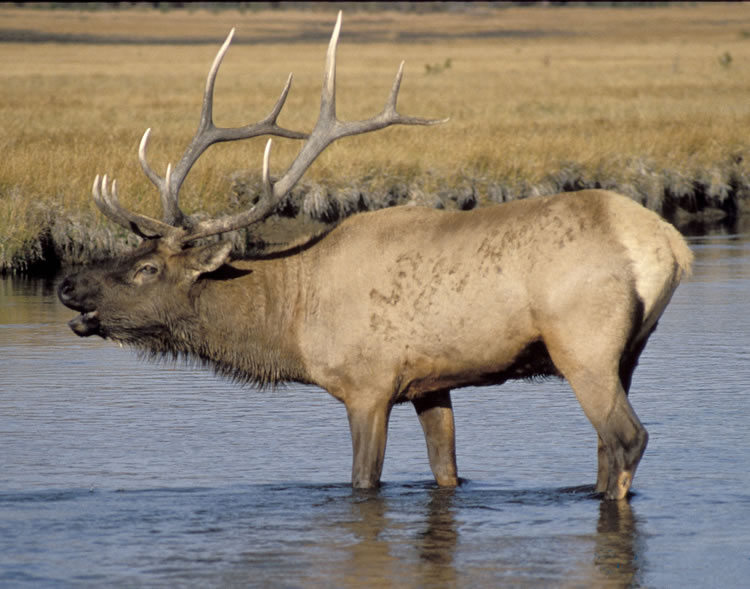
“Now that Wyoming has gained the authority to manage wolves and will soon have a wolf hunt, the much lamented lack of elk due to those “insatiable packs of killing machines” — wolves — has suddenly turned around and there are said to be too many elk . . . just like that.

Brian Nesvik, chief of the wildlife division for the Wyoming Game and Fish Department says “in many areas of the state, those herds have simply grown too large.” Therefore, the state has made an emergency order providing for an extra, reduced-price cow elk and elk calf license in some of the areas with too many elk. In fact, Game and Fish is trying so hard to get more hunting in the larger elk herds that they are offering special elk hunts on private lands. They are even encouraging elk hunters to buy three elk tags in some parts of the state.

It seems more than passing strange that there have been too many wolves, and then start talking of too many elk; all this quick as you can snap your fingers.

It seems like a contradiction, but you can tease out a sensible explanation of this seeming contradiction by reading this story, Wyoming Game and Fish Department offers extra elk licenses. By Christine Peterson. Casper Star-Tribune.

The Wyoming Legislature is dominated by ranchers who have always lorded it over the Department of Game and Fish. Elk eat grass and forbs that cattle could eat. While cattle are always allowed the lion’s share of the range, sometimes elk herds grow big enough there are some ranchers who are short of feed. As a result ranchers don’t like the elk, except for maybe those ranchers who do a bit of hunt outfitting in the fall.

Of course, wolves do kill and eat elk, and sometimes they even appear to hold elk numbers in check. Sometimes wolves even reduce elk numbers. But ranchers don’t like wolves either. This is because their tradition is to hate wolves, and they don’t like the people who support the wolf restoration any better. The desired policy is to kill both of them — wolves and elk both.

The only thing that remains to be explained is why some hunters can’t figure this out.”

*Special thanks to Dr. Ralph Maughan for providing this information! (http://www.thewildlifenews.com/2012/09/04/wyoming-elk-herds-have-grown-too-large/)


-Trapper violated use restrictions for placing deadly M-44 sodium cyanide devices

– Congressmen have called for oversight hearings on the out-of-control agency responsible, USDA Wildlife Services

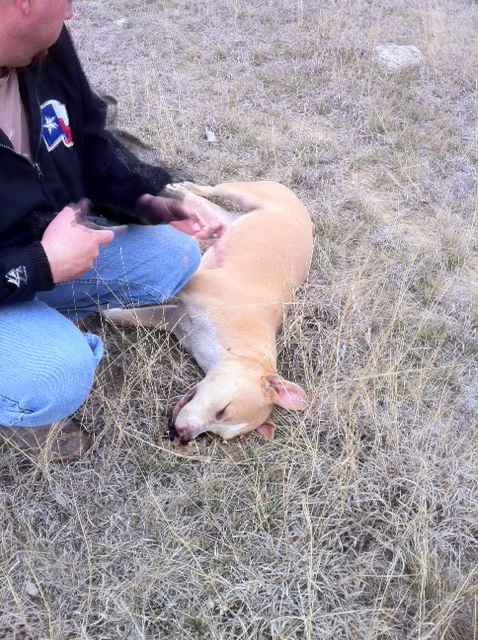
“June 18, 2012 – Our sad story below about Bella, the Walker family’s beloved pit bull in Texas whose death to a M-44 sodium cyanide device has garnered significant attention, just became an even bigger story.

We’ve now learned that the trapper who set the device violated three prime EPA M-44 use restrictions when placing the device. Even worse, his records qualify Bella’s death as the “kill” or “take” of an “intentional target.”

Read Notice of Violation from Texas Dept. of Agriculture to the trapper | Read full list of M-44 use restrictions

The Texas Wildlife Services trapper involved was working outside his normally assigned work areas. He had requested and received special approval to conduct animal damage control for his father, a county commissioner, on land he leases located next to the Walker family’s home. The trapper grossly violated M-44 use restrictions by:

  • setting the M-44 devices in proximity to areas frequented by humans or domestic dogs, where exposure to public and pets is probable;
  • using improper record-keeping; and
  • targeting a domestic dog, a species not specified for use on the label.

The Texas Department of Agriculture also wrote a letter to Predator Defense and a letter to the Walker family warning us about the extreme dangers posed by M-44s and the risks involved with being at the scene where Bella died. The irony of their letters is that we were not the ones who put the Walkers in harm’s way—Wildlife Services did. We didn’t kill their dog—Wildlife Services did. We warned the Walkers to use extreme caution around the M44s and provided information to ensure their safety—Wildlife Services did not provide the location of the devices or proper warning of the danger they posed to their family or pets. The letters of warning from the Texas Department of Agriculture were sent well over a year after the federal trapper’s negligence caused the death of the Walker’s dog and put them in harm’s way.

Predator Defense has supported the Walkers since the death of their dog and we are continuing to work with them to bring this case to the public’s attention, as well as to the attention of lawmakers. We asked for a Congressional investigation of Wildlife Services and now the two U.S. Representatives we’ve been working with—Peter DeFazio (D-Oregon) and John Campbell (R-California)—have called for oversight hearings on Wildlife Services by the House Committee on Oversight and Government Reform.

Wildlife Services is a federal agency that is out of control. We have hope that Bella’s tragic death may serve as the catalyst needed to focus intensive congressional scrutiny on their inhumane lethal predator control program. Ideas for reforming the agency are explored in a May 6, 2012 Sacramento Bee article, “Suggestions in changing Wildlife Services range from new practices to outright bans.”

If you want to help us stop the USDA’s war on widlife in the most effective way possible, we cannot stress this enough: NOW IS THE TIME! A bill to ban wildlife poisons ilke M-44s has been introduced in Congress, H.R. 4214. Support the bill and donate today. Your donation is critical to keep pressure on and spread the word.

Bella’s Story: Wildlife Services Kills Dog and Puts Family at High Risk

Beginning February 18, 2011 the Walker family’s idyllic country home in Texas no longer felt like the haven they had believed it to be.

That day Predator Defense was contacted by Angel Walker and her husband J.D. about the poisoning of their beloved dog, Bella, by an M-44 sodium cyanide device placed by the USDA Wildlife Services just 918 feet from their house. The Walkers have two sons who could also have been harmed or killed by this device—one is a typical curious 11 year-old.

Predator Defense immediately sent the Walkers the EPA M-44 use directives for the use of these dangerous devices. We also asked them to photograph and document the placement of the M-44s, that killed Bella and other M-44s that were still loaded in the area, in proximity to their home and road ways. Violations of the directives include an M-44 that was placed on a roadway that the Walkers use daily. And at least four other M-44s were within plain sight of roadways—just 6 to 10 feet away.

Despite being notified of Bella’s death, Wildlife Services reset this device twice within the next two weeks. Mind you this is less than 1,000 feet from the Walker’s house which they share with their 11 and 18 year old sons.

Learning that the M-44s were being reset, Predator Defense went beyond advising the Walkers and contacted the Texas state director of Wildlife Services, Michael Bodenchuk.* After initially being told Mr. Bodenchuk was not available, Predator Defense Executive Director Brooks Fahy asked that a written message be delivered to him at which point he became available. He was dismissive about the case. Brooks let him know that it was not in Wildlife Services’ best interest to continue using M-44s in this location after the death of Bella.

The ramifications of Wildlife Services’ callus disregard for public safety was strongly conveyed to Mr. Bodenchuk. In no uncertain terms Brooks told them that Wildlife Services’ reckless behavior was being closely followed and documented by Predator Defense.

One hour after that phone call all M-44s in the immediate area had been removed, as were dead coyotes that had been hung along the fence line of the road that the Walker’s use to reach their home. We assume that the coyotes were initially placed there to intimidate the Walkers. Seeing these dead animals on the fence upset the Walker’s sons.

A gray fox was also killed by one of the M-44s near the roadway and left there to decompose. This is another violation of Wildlife Services own protocol and directives. This species is typically not targeted for predation on cattle. The fox’s death, along with Bella’s, is an example of the indiscriminate nature of M-44s and how they kill any animal that pulls on them whether it is a beloved pet or an endangered species.

Under advisement of Predator Defense the Walkers contacted the appropriate state and federal agencies—The Texas Department of Agriculture, USDA Wildlife Services, and the EPA. M-44s are registered for use by Wildlife Services through the EPA. Now the USDA Wildlife Services and the Texas Department of Agriculture’s pesticide inspectors are investigating Bella’s death.

From the information we’ve gathered, including photos, it is obvious that Wildlife Services ignored EPA directives regarding the placement of M-44s and required warning signs. Wildlife Services used absolutely no common sense to avoid this tragedy from happening in the first place. Before Bella went missing the Walkers were not informed that M-44s were being placed near their home. This is not the exception but rather the rule when it comes to USDA Wildlife Services and their use of M-44s.

This case is yet another example of why we need an immediate ban on these deadly devices. Please contact your representatives and urge them to cut Wildlife Services funding for lethal predator control programs nationwide. ”

*Special thanks to “Predator Defense,” http://www.predatordefense.org/index.htm, for providing this information!


Bad move Lady Gaga…in a shocking image that represents the massacre of wolves, visit the link provided below and share your thoughts about this image for her new movie!  (http://www.hollywood.com/news/Lady_Gaga_Robert_Rodriguez_Machete_Kills_Wolf_Mother/35149897)

“In a movie that was already looking like one of the most interestingly-casted films we’d heard of in awhile, Robert Rodriguez added yet another outlandish name to his Machete Kills cast list: Lady Gaga. Now, if having a cameo role in one of Rodriguez’s exploitation films isn’t a natural progression for her image and general aesthetic, we’re not sure what is, really. Playing a character named La Chameleón, Gaga joins fellow attractive ladies Sofía Vergara and Jessica Alba, as well as a couple scandalebrities like Charlie Sheen, Mel Gibson, and Michelle Rodriguez. Eyebrows, they are a-raisin’. And how does her character look? Well, see for yourself:

Dang, Gaga! They certainly can’t call this yellow mellow. Not when you’re packing heat like that. PETA are probably minutes away from a s**t fit, but it certainly leaves us wondering what sort of woman has the, well, balls to waltz around with a head-on wolf fur in life. We’re sure some of you will be howling (can’t help myself, sorry) over this image for awhile. Though we now have more questions then answers about her character’s role within the film. According to productions notes, there is another similarly-named character listed in the film: La Camaleon, and he (yes, HE!) is played by Cuba Gooding, Jr. What is going on here? Color us very intrigued, Rodriguez.

Either way, the choice of project falls very much in line with Gaga’s world. Who could forget her Tarantino-homage-tinged Telephone video (Quentin Tarantino and Rodriguez are notorious buddies, plus Gaga featured the “Pussy Wagon” from Kill Bill in the video)? Homegirl is certainly known for her over-the-top drama and performances: both things that work very well in the exploitation scene.”

Special thanks to  Alicia Lutes, Hollywood.com Staff for providing this information.


George Wuerthner is an ecologist with among others, a degree in wildlife biology, and is a former Montana hunting guide. He has published 35 books and reports the following:

“On July 12, 2012, the Montana Department of Fish, Wildlife and Parks (MDFWP) Commissioners voted 4-0 to increase wolf hunting in the state, expanding the hunting season and permitting the trapping of wolves for the first time as well. The goal is to reduce wolf numbers across the state in hopes that it will calm the hysteria that presently surrounds wolf management.

The commission’s decision to boost wolf hunting and trapping will likely lead to greater conflicts between humans and wolves because MDFWP’s management ignores the social ecology of predators.

Hunting predators tends to skew populations towards younger animals. Younger animals are inexperienced hunters and thus are more likely to attack livestock. Predator hunting disrupts pack cohesion, reduces the “cultural” knowledge of pack members about things like where elk might migrate or where deer spend the winter.

In addition, just as occurs with coyotes, under heavy persecution, wolves respond by producing more pups. More pups means greater mouths to feed, and a need to kill even more game—thus hunting and trapping may actually lead to greater predator kill of game animals like elk and deer.

Thus a vicious self-reinforcing feedback mechanism is set up whereby more predators are killed, leading to greater conflicts, and more demand for even greater predator control.

So why has MDFWP and the commission ignored the social ecology of predators? The answer lies in politics.

Montana’s hunters have been driven to frenzy by various interest groups. Some are just plain ignorant predator ecology and truly believe that the best way to reduce conflicts is to kill more wolves. Less wolves, some believe, means hunter nirvana. But others have a sinister motive which I believe the MDFWP Commission was in part responding to.

Right-wing conservative groups have seized upon the wolf issue as a way to generate support among ecologically ignorant hunters. They have used the media and hunting advocacy groups (like the Rocky Mountain Elk Foundation) to sell the idea that wolves were a major threat to big game hunting– despite the fact there are more elk now in Montana than when wolves were first restored.

Others spread stories about wolves carrying off babies and children or spreading infectious disease.

Some of the most conspiracy-minded survivalist types even believe the restoration of wolves is a UN Plot—part of Agenda 21. Agenda 21 is a plan for sustainable living but many conservatives believe is a blue print for a new world order.

And of course against this backdrop we had the livestock industry screaming that wolves were destined to destroy the industry despite an annual loss of less than 100 animals to the predators last year out of a total population of 2.5 million cattle and sheep.

These conservative organizations and individuals successfully made killing wolves a litmus test for politicians and even the MDFWP. If you were not supportive of more wolf persecution, you were, at the very least against rural America and in the minds of some individuals perhaps even against hunters.

At the worse, a decision to lessen the persecution of wolves meant you were sympathetic to animal rights organizations and gun control advocates. What Fish and Game Commissioner wants to be branded as siding with animal rights organizations or the gun control crowd? Of course that is all irrational. But you must remember this issue is not based on rational thought.

It is within this kind of madness that the MDFWP Commissioners were required to make a decision. If the commission did anything but increase the killing of wolves, it would have certified in many people’s mind, including many hunters that the MDFWP was anti hunter.

The Commission vote demonstrates that Fish and Game agencies are incapable of managing predators based on science or ethics.

One must remember that hunter and angler license sales are the primary funding mechanism for state wildlife agencies. Even if the vast majority of the public were against killing predators, the state agencies are likely to ignore those concerns if there is the perception that the majority of hunters were in favor of more predator control.

The commission, for instance, recently increased the quota for mountain lion in western Montana despite the direct opposition of some its own biologists who argued that such hunting was ineffective and even detrimental to mountain lion populations.

In Montana, as with the rest of the country, I have no doubts that the majority of hunters favor fewer wolves. And the commissioners have to dance with the one that “brung ya.”

Beyond this political background that the commissioners faced, there was an even larger context.

The right wing conservative organizations, most of them friendly and supportive of Republican candidates for office, were hoping to lay a trap for Democratic politicians. If the Commissioners, who after all, were appointed by a Democratic governor, voted to maintain last year’s hunting quota or god forbid actually reduce or eliminate wolf hunting, it would have been exactly the issue needed to unseat every Democrat in the Montana legislature.

There was a further fear—and a not unwarranted one—that if the MDFWP Commission did not expand wolf hunting and trapping, it could ruin the chances for Democratic candidates for office. A new Republican governor and Republican dominated legislature it is reasoned, would quickly sweep the MDFWP Commission clear of anyone who didn’t actively promote even more aggressive wolf control.

There is also some who were willing to bet, and probably were correct, that all Democratic candidates would be hurt if the Commission did not expand wolf hunting, including Senator Jon Tester, who is seeking re election to the US Senate.

So it was within this context that the Commissioners had to make their decision.

I do know the MDFWP Commissioners are well educated, thoughtful, and very conscientious men. In my view the MDFWP commissioners are men of the highest integrity. Although I was not privy to any of their thoughts, I am certain they did not reach their decision, easily nor with any joy. For some, I am almost certain it was an agonizing and painful splitting of the baby. I would not have wanted to be in their shoes.

I suspect that if you asked them why they decided to expand wolf killing, they would tell you that they know that wolves won’t be eliminated from Montana—and that is a step forward compared to the situation of a few decades ago when there were few or no wolves in the state.

And some might even suggest that once the rhetoric and hysteria dies down, they could envision a more sensible and less vindictive approach to wolf management in the future. There might even be wolf management based on science, including the social ecology of predators, instead of politics.

I am also certain if you could speak to the Commissioners in private when they thought no one would hear, they might admit the wolf had to take the fall for a “greater good.” As they would suggest, and quite correctly I’m afraid, a Republican Governor in Montana would be even more likely to enact aggressive wolf hunting policies, and appoint Commissioners far less sympathetic to wolf supporters.

It may be difficult to believe that MDFWP Commissioners are sympathetic to wolf supporters given their votes, but I know after attending one of the hearings that the Commissioners are not personally hostile to wolves.

But I am sure that Commissioners were thinking even beyond Montana state politics when they voted to expand wolf persecution. If somehow right wing conservatives were able to paint Senator Tester as one of the “wolf loving” Democrats, it might hurt his re election bid. After all Tester only won in the last election by a mere 3000 votes.

Whether a correct assumption or not, many Democrats fear if Tester loses his re election, the US Senate could tip to the Republicans. In their worst nightmares, some Democrats see a situation whereby Republican Mitt Romney wins the Whitehouse, the rabid tea party activists manage to hold on to their stranglehold on the House, and the Senate is controlled by Republicans.

With all legislative bodies held by Republicans and a Supreme Court that sees Corporations as persons, and is generally sympathetic to tea party anti-government rhetoric and big business interests, there is no end to the bad outcomes that one could imagine might befall the country.

Within this political context, a few more dead wolves seems like a small, if not regrettable sacrifice necessary to prevent a far worse calamity for the country. The unfortunate thing for me is that it appears that despite all the scientific research, and “enlighten” environmental concern, predators are still being treated as unwanted and under-valued members of our wildlife heritage.

I might even go so far as to suggest pro wolf sympathizers made some strategic mistakes. They failed to hammer over and over again that predator control is unnecessary, ethically suspect, and only leads to greater conflict. By not taking the high moral ground, they lost the political debate.

Many were unwilling to argue against wolf hunting in general—afraid that such a position would be unacceptable to most hunters and ranchers. By passively and in some cases, even agreeing that wolf control was needed, it legitimized the idea that wolf control was necessary. At that point the discussion just degenerates to a debate about how many wolves should be killed, not whether wolves should be killed in the first place.

Environmentalists should stated categorically there is no legitimate reason to kill wolves or any other predators for that matter, except perhaps for the most unusual and special circumstances such as the surgical removal of an aggressive animal.

Instead of arguing that wolves are part of the Nation’s wildlife patrimony that deserve to be treated with respect, appreciation, and enlightened policies, pro wolf activists lost the rhetorical argument by allowing anti wolf forces to define the limits of discussion and successfully frame the issue.

In my view, many conservation organizations lost the debate with their weak and tepid stance. As many have suggested, boldness is rewarded—and in the case of wolves—boldness by those set on using wolves as a surrogate for conservative values won the political debate.

If environmentalists had made a more cogent argument, marshaled the latent and widespread support for predators, wolves in particular, they might have provided the political cover for the MDFWP commissioners to make a more wolf-friendly decision.”

George Wuerthner is an ecologist with among others, a degree in wildlife biology, and is a former Montana hunting guide. He has published 35 books.

July 11th, 2012

“The Iberian wolf lives in increasingly humanised landscapes, with limited food resources and its presence is not always welcome. But, according to Spanish researchers, food availability plays a secondary role compared to landscape characteristics, which can offer refuge and allow wolves to remain in human-dominated environments in Galicia.

 The habitat of the Iberian wolf (Canis lupus signatus) varies greatly across the Iberian Peninsula and its diet revolves around what is available, ranging from wild animals to domestic waste. In contrast, this predator is able to survive in humanised landscapes where characteristics provide them refuge from humans. “Although the wolf boasts highly adaptable strategies for survival, landscape is the factor we have analysed that best explains their distribution across Galicia,” as explained to SINC by Luis Llaneza, researcher at Asesores en Recursos Naturales (A.RE.NA.) and lead author of the study published in the ‘Diversity and Distributions’ journal. His research has allowed for the analysis of the relative influence of landscape attributes, human presence and food resources and the existence of wolves over an area of 30.000 km2 in the north-west of the Peninsula.

The scientists concentrated on indirect signs of the animal to identify their distribution in Galicia. In total, 1,594 excrement samples were analysed, which were then verified using DNA molecular analysis to locate them in the territory. The results revealed that landscape properties are decisive in terms of animal safety at a level of 48%, whereas the presence of humans (buildings and roads) is influential at a level of 35% and food availability as 17%. Llaneza says that “as long as tolerated by humans, the wolf can be found in any place where there is refuge and food.” According to the scientists’ model, the presence of wolves would increase if there were more semi-wild horses and wild ungulates. As the authors outline, “the amount of semi-wild horses in Galicia could be a key factor determining the presence of wolves in areas where wild prey or other food sources area not so abundant.” A safe refuge for the wolf After studying the effect of altitude, land orography and refuge availability, researchers demonstrated that these mammals require their habitat to be a plant mosaic containing vegetation of more than 50 centimetres in height (bushes and shrubs) to hide in.

“These animals remain in Spain and little by little we are beginning to understand how they survive in human-dominated areas,” says Llaneza. The study reveals that wolves choose high places that are difficult to access, such as areas where vegetation provides refuge from humans. “The density of vegetation allows wolves to go unnoticed by humans”, adds the researcher, who recalls that humans are the known cause of wolf death in 91% of instances. Some 65% of wolves are killed on the road, 20% by poaching and 6% by legal hunting. With the participation of the University of Santiago de Compostela and the Doñana Biological Station (EBD-CSIC), the research team concludes that a set of variables and data analysed explains only 20% of wolf distribution in Galicia. Their next undertaking will be the study of other factors that influence wolf survival in humanised areas, such as the extent to which they are tolerated. More information: Llaneza, L.; López-Bao, J.V.; Sazatornil, V. “Insights into wolf presence in human-dominated landscapes: the relative role of food availability, humans and landscape attributes”. Diversity and distributions 18 (5): 459-469, May 2012. DOI: 10.1111/j.1472-4642.2011.00869x”

Read more at: http://phys.org/news/2012-07-iberian-wolf-humans-refuge-prey.html#jCp


For Immediate Release, July 10, 2012

Contact: Rebecca Noblin, Center for Biological Diversity, (907) 274-1110
Larry Edwards, Greenpeace, (907) 747-7557

Obama Administration Delays Protection for Alexander Archipelago Wolf Threatened by
Logging in Tongass National Forest

“ANCHORAGE, Alaska— The Center for Biological Diversity and Greenpeace notified the U.S. Fish and Wildlife Service today of their intent to file suit against the agency for delaying Endangered Species Act protection for the Alexander Archipelago wolf, a rare subspecies of gray wolf found only in the old-growth forests of southeast Alaska. In August 2011 the groups filed a petition to protect the wolves, which are at risk of extinction because of the U.S. Forest Service’s unsustainable logging and road-building practices in the Tongass National Forest. The Service, which was required by the Endangered Species Act to determine whether listing may be warranted within 90 days of the filing, has not yet responded to the petition.

“The existence of this unique wolf is imperiled by ongoing old-growth logging that adds to the high loss of quality wildlife habitat, which has occurred across all land ownerships in the forests of southeast Alaska over the past six decades,” said Greenpeace forest campaigner Larry Edwards. “The ongoing logging is further reducing and fragmenting forest habitat, to the detriment of the wolf and its deer prey.”

Heavily reliant on old-growth forests, Alexander Archipelago wolves den in the root systems of very large trees and hunt mostly Sitka black-tailed deer, which are themselves dependent on high-quality, old-growth forests, especially for winter survival. A long history of clear-cut logging on the Tongass and private and state-owned lands has devastated much of the wolf’s habitat on the islands of southeast Alaska.

Logging on the Tongass also brings new roads, making wolves vulnerable to hunting and trapping. As many as half the wolves killed on the Tongass are killed illegally, and hunting and trapping are occurring at unsustainable levels in many areas. Despite scientific evidence showing that Alexander Archipelago wolf populations will not survive in areas with high road density, the Forest Service continues to build new logging roads in the Tongass. Road density is an urgent concern on heavily fragmented Prince of Wales Island and neighboring islands, home to an important population of the wolves.

“There’s no excuse for delaying protections for these unique island wolves of the Tongass,” said Rebecca Noblin, Alaska director of the Center for Biological Diversity. “More and more Alexander Archipelago wolves are falling victim to irresponsible logging of these ancient trees, as well as unsustainable hunting. If the Fish and Wildlife Service doesn’t act soon to protect this highly specialized predator, America is going to lose another precious piece of its biological heritage.”

The Fish and Wildlife Service considered listing the wolf under the Act in the mid-1990s but chose not to do so, based on new protective standards set out in the Forest Service’s 1997 Tongass Forest Plan. Unfortunately, as outlined in the groups’ 2011 petition, the Forest Service has not adequately implemented those standards.

This week’s 60-day notice of intent to sue is a legally required precursor before a lawsuit can be filed to compel the Fish and Wildlife Service to comply with the law and act to save these wolves.”

The Center for Biological Diversity is a national, nonprofit conservation organization with more than 375,000 members and online activists dedicated to the protection of endangered species and wild places.

Greenpeace is the leading independent campaigning organization that uses
peaceful protest and creative communication to expose global environmental problems and to promote solutions that are essential to a green and peaceful future.


“Wolves are the intelligent and majestic ancestors of man’s best friend, dogs. Should they be honored as spiritual companions, respecting Anishinaabe Indian traditions? Should they be killing fodder for the hound dogs and trappers, inflicting animal cruelty no other state provides — wolf/dog fights?

Are human beings really qualified to micromanage nature — or would benign neglect and ecotourism be the path forward? It is humans who are ravaging the climate and oceans — destroying other species at an unprecedented rate. Should we just leave well enough alone and focus on managing our own populations, violence and excesses? I think so.

The core solution is democratizing nature policy, replacing killing license funding with general public funding of the Department of Natural Resources. Fair pay, fair say.

The extreme animal cruelty involved in hunting and trapping is made obvious in the proposed management and quotas of killing wolves. Wisconsin has 3.4 million cattle, 1.4 million deer — and we have a problem with 800 wolves?

The DNR-recommended quotas are 142-233 wolf kills in seven zones over four and a half months. Add in 37 wolves already killed with landowner and USDA permits. Add the usual conservative annual estimate of 100 killed illegally and you get a third of wolf packs destroyed and dispersed randomly. The minimum wolf population goal set 20 years ago was 350. Since then science has revealed how essential wolves are to the integrity of whole ecosystems. They are the best protection we have against chronic wasting disease in the deer herd.

George Meyer, head of the killer coalition, Wisconsin Wildlife Federation, clamors, “There is a need to manage the wolf population to a lower level. The quotas might be too conservative, though, to actually accomplish that goal.” The goal of the bear hounders and trappers. Not science. Not healthy ecosystems.

The quotas and methods have drawn fire from DNR wildlife managers Dick Thiel and Randy Jurewicz and UW wolf researcher Adrian Treves. The season is absurdly long and the use of dogs and trapping is gratuitous abuse. Treves’ studies showing extremely low wolf predation of livestock and 91 percent predictability of which few wolves predate, concentrated on 6 percent of wolf territory. Two or three guard dogs kept on farms in those areas are perceived as competing wolf packs, a successful strategy averting human/wolf conflicts. The biologists advocated no wolf hunt and cautious use of landowner kill licenses.

Treves predicted that this extremely abusive assault on wolves would be contested in lawsuits under the Wildlife Public Trust Doctrine, which states that wildlife is to be protected in trust for all citizens.

Jody Habush Sinykin, Midwest Environmental Advocates attorney, laid out before the Natural Resources Board how the wolf kill bill could be contested under animal cruelty laws. She cited the 2009 case of the Kuenzi brothers, who ran over deer with snowmobiles, leaving them crippled and dying. They also tied deer to trees and tortured them. The Kuenzis argued this was just part of hunting tradition and the laws applied only to domestic animals. The appellate ruling clarified that animal cruelty laws apply to wildlife.

Sinykin informed the board that the law could be used to keep the DNR from allowing hunting with dogs and some other practices. “When wolves and dogs mix, there are going to be few standing. It will result in fatalities, euthanasia,” she said.

Dave Clausen, NRB chair, echoed her, “You’re looking at a wolf/dog fight. That would have some very negative connotations. I think we should be very careful about allowing (this).”

Rachel Tilseth is one of the 300 volunteer wolf trackers, following wolves for 15 years near Menomonie in Dunn County. She has learned to love them. She is starting an ecotourism business, taking people out to howl with the wolves. She plans to work with the International Crane Foundation. She is collaborating with a tour group out of Delaware, coming in October for wolf tracking, and she will be working with local hotels and businesses. She has contacted the Tourism Board and the DNR for support.

How will the DNR balance wolf, crane and bear ecotourism with destroying the attractions? Tilseth sent an email saying, “I think comparing the pristine ecosystem to the wolf bleeding to death is a great way to get Wisconsinites to think about hunting versus wildlife viewing.”

Patricia Randolph of Portage is a longtime activist for wildlife. madravenspeak@gmail.com or www.wiwildlifeethic.org


“Living With Wolves” sums up the answer to this question nicely (http://www.livingwithwolves.org/index.html)

Do wolves kill for sport?

“Answer: Wolves, like all wild carnivores, do not kill for sport. They kill to sustain themselves. Though it is uncommon, “surplus killing” (killing more prey animals than can be immediately consumed) has been observed in many predator species. If given the opportunity to secure future meals, many animals will sometimes do so. It is a survival mechanism. It is this survival tactic that has led to the misplaced notion of “sport killing” arises. It has nothing to do with sport. Only people kill for sport.

Surplus killing occurs when prey is at an unusual disadvantage, offering an opportunity to significantly lower both the risk of injury to the predator and the amount of energy required to kill the prey. It is for this reason that surplus killing by wolves, although rare, occurs more with livestock than it does with wild prey.

Typically, when a pack of wolves kills an elk or a deer, by the time the pack has subdued its prey, the rest of the herd has fled and is no longer in the area. This is not the case with livestock introduced by humans. Unlike their wild cousins, livestock have lost much of their survival instinct. Spending a good amount of their existence fenced in or being herded, their reaction to a predator in their midst is very different from that of wild prey. Calves and yearling cattle, for instance, flee during the chaos of the chase, but once the wolves have made a kill, rather than continuing to move away from danger, they have been known to stand nearby, watching in curiosity, perhaps unable to comprehend the threat and what might happen next. Instead of fleeing, as a wild prey animal would, sheep, when confronted with danger, often run in frantic circles, triggering predatory instinct in wolves and increasing the opportunity for multiple kills.

Wolves are further mischaracterized as killing for sport when people happen upon a dead animal or animals, killed by wolves, but the wolves are no longer present. This leads people to assume that the wolves abandoned their kill and therefore, must have killed for recreation or pleasure. This is far from the reality. The fact is that wolves are easily frightened away from their kill by the approach of human beings, whom they regard as a predator and tend to fear. Wolves may be also chased away by other, larger carnivores, eager to take advantage of an easy meal. So a presumably abandoned carcass is not what it seems. In nature, where the margins of survival are narrow, surplus food is not forgotten. Research shows that wolves return repeatedly, almost always eating the entire carcass.

For wolves, more so than bears and mountain lions, hunting can be very risky work. Unlike the larger, solitary mountain lion that relies on the element of surprise, ambushing and then quickly overpowering its prey, wolves work together as a pack, chasing their prey and wearing it down, looking for vulnerabilities. This is very difficult and dangerous, and they are often fatally wounded while hunting, gored by antlers or horns or kicked by a hoof. 80 to 90% of the time, their efforts to make a kill fail. When they succeed, if any food is left unfinished by wolves, it feeds scavengers or other animals.

Misinterpretation of animal behavior and motives often perpetuate a bad reputation for wolves, but reality does not support the theory that wolves kill for sport.”


“Film about Northwest wolves airs July 7th

Discovery Channel premieres a new special on July 7th. The 90-minute documentary follows an expedition team into the Cascade Mountains to discover the fate of Washington’s pioneer pack of wolves, the Lookout Pack, with surprising results.

SATURDAY, JULY 7th, Discovery Channel, 8:00 pm PT/ET*
(*Check local listings, as times may vary)

Wolves are making a comeback in the Northwest, but they face challenges from illegal killing and loss of habitat. It’s up to all of us to decide their future.

About the documentary: Man vs. Wolf

Few other animals inspire such passion as the wolf. For thousands of years they were America’s most widely distributed predator. European colonists brought centuries-old animosity toward the wolf with them to North America, and as Americans and their livestock expanded west, local predator control escalated into a full-scale wolf-eradication program. By the early 20th century, more than a million wolves had been poisoned, trapped, or shot. Pushed to the brink of extinction, the wolf found protection under the 1973 Endangered Species Act (ESA) only to be stripped of that protection in the northern Rockies by the U.S. Congress in 2011. As rumors of new wolf packs in the Pacific Northwest abound, Discovery Channel explores the sightings in Man vs. Wolf which premieres on Saturday, July 7 at 8 PM ET/PT (check local listings).

Man vs. Wolf follows an elite team through the rugged terrain of one of America’s great wilderness areas, the Cascade Mountains in Washington State, as they search for an elusive and mysterious pack of 10 wolves, the “Lookout Pack,” rumored to be in the area. These wolves were the first to have been discovered there in nearly 100 years. Team leader Jasmine Minbashian, of Conservation Northwest, wolf tracker Isaac Babcock, and wildlife cameraman Gordon Buchanan spend eight weeks in the Cascade Mountains spanning a six-month period to not only confirm the existence of the wolf pack but document their presence on camera.

The ESA brought protection to wolves in 1973 and in May 2011, for the first time ever, the U.S. Congress removed an animal, the Northern Rockies gray wolf, from the ESA’s protection, taking away the very protection that prevented its annihilation. The US Fish and Wildlife Service is now considering whether or not wolves in the Pacific Northwest warrant protection.

In addition to investigating the “Lookout Pack” sightings, Man vs. Wolf also uncovers how the possibility of a wolf pack’s existence can lead some to take forceful actions, and the results from those actions.

Are wolves back in the Pacific Northwest to stay? How did they make their way into the Cascades? Are they establishing breeding populations? As more sightings of wolves are reported closer to major cities, finding these astute animals and the answers to these questions, and more, has never been as important. It will require every ounce of field skill and technical expertise Minbashian and the crew can muster.

Man vs. Wolf was executive produced by Tim Martin with Jonny Keeling, Susanna Handslip, and Rowan Musgrave for BBC and executive produced by James Manfull with John Cavanagh for Discovery Channel.”