Feeds:
Posts
Comments

Do wolves ever hunt for sport or fun in certain situations?  Wolf Preservation wants to hear your opinion on this controversial issue so please PROVIDE FEEDBACK and thank you! 

Below are some comments from different sides of the issue:

“Wolves traditionally hunt for “SPORT”, often times attacking an animal or group of animals and then walk off and leave most of the meat. The wolf “hunt for sport” pattern has reduced the overall population of elk and deer in Idaho.”(Idaho Deadwood Outfitters)

“I have seen wolves playing with an animal by biting it enough to wound and slow it down, then chase it, knock it down, let it up and repeat over and over. But, most of the time they are hunting for food.”(Randy, retired Police Officer and avid hunter)

“Wolves, like all wild carnivores, do not kill for sport. They kill to sustain themselves. Though it is uncommon, “surplus killing” (killing more prey animals than can be immediately consumed) has been observed in many predator species. If given the opportunity to secure future meals, many animals will sometimes do so. It is a survival mechanism. It is this survival tactic that has led to the misplaced notion of “sport killing” arises. It has nothing to do with sport. Only people kill for sport.” (Living With Wolves, Not for profit corporation)

“Unlike humans, wolves do not kill for sport from a safe distance. However, like humans, wolves do often harvest more food than they can eat in one sitting.”(Oregon Wild)

“They have never seen the trail of death a pack of wolves leaves behind as it kills to teach its pups how to hunt, or just for fun, eating little of the animals whose lives they have just ended.”(Peterson’s Hunting)


“WHAT AN AMAZING STORY WE HAVE IN OUR HANDS!! … and we launched a 20-day funding campaign to get everyone on board.

THIS IS TRULY A ONCE-IN-A-LIFETIME OPPORTUNITY to document a journey that may never happen again!! … and you can be part of it with your input, your backing, and even coming with us on the road if you are up for it!

Wolf Connection’s pack of Ambassadors has been invited to participate in a sacred gathering …The International Council of Thirteen Indigenous Grandmothers is holding their 11th Council Gathering in Lame Deer, Montana at the end of July. This special event is the culmination of The Ride Home, a nearly 1,400 mile horseback ride in Remembrance of the Cheyenne Exodus of 1878.

“The International Council of Thirteen Indigenous Grandmothers represents a global alliance of prayer, education and healing for the Earth, all Her inhabitants, all the children and for the next seven generations to come. They bring together a wealth of sacred wisdom from world-wide traditions that honors intuition and spirit in a way that is often absent from daily life. The purpose of the Ride and Council is generational healing and a uniting between tribes to become one tribe – of humankind.”

Both the grandmothers and event organizers felt that Wolf Medicine and the long history of connection between wolf and man needed to be part of this gathering. We are honored that they felt that our human and wolf pack is a worthy representative of this unique bond.

On the week of July 16th, staff, backing guests, and three members of our pack will be journeying to meet the horse riders in South Dakota and travel the last 110 miles of The Ride Home in order to arrive at Lame Deer, Montana together and participate in the Council with the Grandmothers.

Now, n order to get there, we have to drive through several wolf-hunting states which will make journey unpredictable and the film all the more interesting.

As you can imagine, this is a huge logistic undertaking! … BUT with your super cool backing we are going to document every aspect of the journey in a film that will preserve the this amazing experience so it can be passed on.

THE FILM:

This documentary will send a powerful global message on our often-forgoten kindship and deep bond with animals in general and wolves in particular, and their key role in our survival on this planet AND on the importance of traditional ritual and ceremony as a way to unite humanity.

IT WILL INCLUDE:

* BEFORE: Training of the animals, preparation of the vehicles, film pre-production, and logistics planning

* DURING: The trip to and from Montana through wolf-hunting territory with all the unexpected situations that can create. The encounter with the horse riders and the united journey to meet the Grandmothers. The meeting with the 13 Grandmothers and wolf blessing.

* AFTER: Journey back to California, conclusion and learnings, post production.

LOGISTICS:

There are many elements that need to be considered in a trip like this:

* The first challenge is the management of the animals which requires great knowledge and a deep bond and connection with them. We are transporting 85-130 lb highly active animals in small travelling cages next to each other (travelling, feeding, and sleeping). This means they must have breaks every 2-3 hours to relieve themselves and exercise to prevent them from accumulating anxiety that could be vented on each other or the handlers. Each time we get them out of the cage we run the risk of them not wanting to go back in. Oh Well :/

* We are crossing several states where wolves are being hunted and people may have a less-than-friendly attitude towards them. This makes it challenging to find safe places to stop for provisions and spend the night. This must be mapped in advance with options for camping grounds and RV parks along the way. That’s the reason we will be using a travelling trailer with a full bathroom and kitchen which will give us the much-needed independence.

* We cannot run the risk of mechanical difficulties that would leave us stranded with a pack of wolves in unfriendly territory, so both the pulling truck and the trailer must be in excellent operating condition.

* Last, but not least, a trip like this will be physically and mentally demanding on the crew. We must make sure that we have all the supplies and resources needed for a minimal level of comfort and replenishment.

* The film crew will be traveling in a separate vehicle to have the independence needed to shoot the caravan on the road, leaving from and arriving to places.”

For more information regarding this project and the case, please visit their website at: 
http://www.kickstarter.com/projects/wolfconnection/wolf-connection-and-the-13-grandmothers-documentar


“Wolf Connection is a 501 c(3) nonprofit initiative located in Acton, CA.
We are much more than just an animal rescue organization. The wolves and wolfdogs we save are physically and mentally rehabilitated to find a new purpose in life as “Youth Ambassadors” for our youth education and empowerment program. With the help of these magnificent animals, young men and women from all walks of life learn about nature and conservation, work through the challenges in their lives, learn to be of service by responsibly caring for another living being, and work towards becoming the kind of person they want to be.
The organization was created nearly three years ago with the purpose of using the presence and natural balance of these deeply intuitive animals to inspire and educate at-risk youth in Los Angeles County and its vicinity. Due to the energized responses of youth participants and administrators, what started as in-school presentations and brief visits to the sanctuary has turned into overnight camps and 8-week-long intervention sessions with a progressive experiential education and characterbuilding curriculum; and is in the process of becoming the first Charter High School of it’s kind.
In an emotionally, psychologically and physically safe environment, young participants get to identify with the life stories of these magnificent animals. Once a bond is established, we apply our innovative Wolf Education Curriculum to help kids assimilate their experience so they can:
* Understand the nature of human relationships and the circumstances leading to love, support and empowerment, as well as cruelty, abuse and neglect.
* Identify the characteristics of a healthy peer-group in order to replace aggression, segregation, and rivalry with the understanding, respect and mutual acceptance needed to develop constructive, healthy communities.
* Learn the effective communication, collaboration and self reflection skills needed to sustain such communities.
* Find their place in the world.”

Special thanks to http://www.kickstarter.com/projects/wolfconnection/wolf-connection-and-the-13-grandmothers-documentar for providing this information!  Please visit them!


Well my wolf friends, here is a bit of good news in light of all the bad scenarios happening for wolves right now.

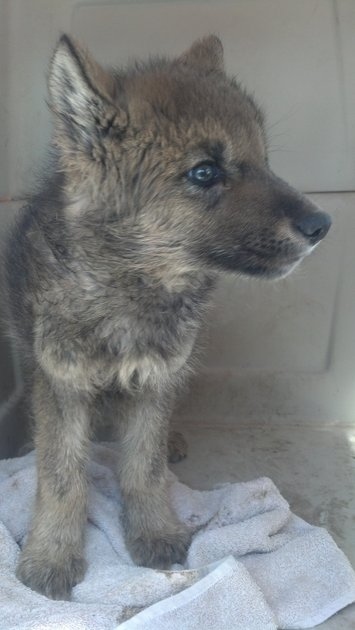
“A “puppy” picked up by campers in Idaho last month turned out to be a wolf. Since no wolf pack could be found to return it to, the pup is now headed for Busch Gardens in Virginia, which has experience raising wolves in captivity.

By The Spokesman-Review

A lost wolf pup left Boise Wednesday morning on its way to a new home and family in Virginia.

Idaho Fish and Game officials selected Busch Gardens in Williamsburg, Va., from a list of potential facilities willing to accept the wolf.

Last month, out-of-town campers picked up what they thought was a lost domestic puppy outside Ketchum and took it to a vet clinic in town. Officials thought the male puppy looked like it might be a wolf. A DNA test proved them right — it is a wild wolf, but no pack was found in the area.

Zoo Boise took care of the pup while a list of facilities accredited by the Association of Zoos and Aquariums that would be suitable for the pup was compiled.

Busch Gardens was chosen for several reasons, officials said. It has had wolves for more than 12 years, and recently received two 6-week-old pups. The National Zoo sends its staffers there to get captive-wolf training.

Busch Gardens also has been active in Mexican wolf recovery, and it sponsors a fund that has contributed more than $10 million worldwide to wildlife conservation.”


Article by: DOUG SMITH, Star Tribune

  • Updated: June 22, 2012 – 9:25 AM

Critics call methodology flawed. DNR says the hunt is on.

“About 80 percent of the more than 7,000 people responding to an online survey by the Minnesota Department of Natural Resources (DNR) opposed a wolf hunting and trapping season.

But the results won’t stop this fall’s planned wolf season.

The question of whether to have a season was resolved by the Legislature, said Dennis Simon, DNR wildlife chief. “It was a public input process, it wasn’t a poll. … The Legislature and governor directed us to have a wolf season. So we will have a season.”

The DNR’s survey, which was not limited to Minnesota residents, closed Wednesday after accepting public comments for a month. The agency received 7,351 responses — 1,542 people supported a wolf season, 5,809 opposed it.

“Frankly, I’m not a bit surprised,” said Howard Goldman, senior Minnesota director of the Humane Society of the United States, which opposes the wolf hunting-trapping season.

Mark Johnson, executive director of the Minnesota Deer Hunters Association, which supports the wolf season, said the survey is flawed and doesn’t reflect public opinion in northern Minnesota.

“I took the survey, and it didn’t ask where you live,” said Johnson. “It’s totally unscientific. What’s the use of it when it’s not limited to Minnesotans? I’d say zip.”

Simon said it’s uncertain whether the DNR will be able to determine how many comments came from outside Minnesota. “It was wide open — anyone could go on the site and take it,” he said.

Goldman said his group did not encourage out-of-state anti-hunting groups to take the DNR’s online survey. “I thought it should reflect the opinions of Minnesotans,” he said.

Nancy Gibson, co-founder of the International Wolf Center in Ely, said the results clearly indicate the public is still divided on the question of a wolf hunt, even if the survey was hijacked by anti-hunting groups. “It’s a surprise to me,” she said of the number who responded, and the overwhelming anti-hunting sentiment they expressed.

Both Johnson and Goldman had wanted the DNR to hold public meetings around the state, which the DNR decided not to do, citing time constraints.

Simon said the agency had hoped to get public reaction to the specific wolf hunting proposals. The agency will analyze those comments and release details of the survey next week.

The DNR also plans to finalize the wolf hunting rules next week, Simon said, so that the regulations can be included in the DNR’s hunting and trapping season regulation handbook.

The proposal was to split the season into two parts, an early hunting-only season, beginning Nov. 3, to coincide with the firearms deer season and a late one, Nov. 24 to Jan. 6, that would permit trapping and hunting. DNR officials have suggested the season would close if a 400-wolf quota is reached. Simon wouldn’t say whether the final rules will deviate from those proposals.”

Staff writer Josephine Marcotty contributed to this report. Doug Smith • 612-673-7667


THIS DELISTING PLAN IS NOT “SCIENTIFIC BASED!”  Please read and provide your comments.

This article was written by Steve Waters, June 14th, 2012 | 7:02 PM, at SunSentinal.com:

“The Ninth Circuit Court of Appeals in March affirmed the constitutionality of Congress’ removal of wolves from the federal endangered species list. The deadline to appeal that decision passed quietly this week with no action from animal rights and anti-hunting groups.

Attorneys representing the Rocky Mountain Elk Foundation said that means the case will not advance to the U.S. Supreme Court, and that the litigation has ended in favor of science-based, state-regulated management and control of wolves.

“A lawsuit that began in 2011 in Judge Donald Molloy’s courtroom in Missoula, Mont., following the Congressional delisting is finally over — and conservation has prevailed,” said David Allen, RMEF president and CEO. “No appeals paperwork had been filed by end of the day on June 12, so the Ninth Circuit’s decision is absolutely final.”

Allen said RMEF applauds the development because it helps clear the way for continued work to balance wolf populations with other wildlife and human needs.

Attorneys representing RMEF and other conservation groups in the Ninth Circuit hearing had presented oral arguments supporting the Congressional action.

RMEF has pledged to continue to fight wolf lawsuits and support delisting legislation at both federal and state levels.”


Special thanks to “Wolf Warriors (howlingforjustice.wordpress.com) for providing the news article below!

June 2, 2012

“Little wolf pups are emerging from their dens in Idaho’s Lolo and Selway zones where the wolf hunt IS ONGOING, stretching into June. Lactating alpha mothers and their pups are sitting ducks for “hunters”, lambs to the slaughter. So in this context I read the moving story of the little wolf pup who was found by campers last weekend in the Sawtooth National Forest. They assumed he was a lost puppy and called the cops who advised them to take him to a vet, where it was determined this was probably a little six-week old wolf pup. A DNA test was done, the results are pending.

There are many unanswered question surrounding this little guy, was his mother poached? Did the pack move to a rendezvous site, leaving him behind accidentally? Of course we’ll never know. It seems unlikely a wolf mother would leave her little one behind, wolves adore their babies.

There’s a search on for his natal pack so he can be reunited with them, which becomes increasingly remote with each passing day.

“field technicians with the Wood River Wolf Project and Fish and Game have been scouring the area near where the pup was found since Sunday, searching for any signs of the pack the pup might have come from.”

Even IDFG “Regan Berkley, regional wildlife biologist” and “Randy Smith, big game manager for the Magic Valley Region” have commented on the pup.

It’s looking more and more like the little wolf will be spending the rest of his life in captivity, probably a wolf sanctuary and personally I don’t think that’s such a bad thing, considering the wolf hating climate in Idaho. Which brings me back to the point of this post.

It strikes me as hypocritical that IDFG managers are taking an active interest in this pup’s welfare when up North in the Lolo and Selway, pups just like him can be slaughtered along with their mothers, fathers, sisters and brothers. Idaho is a brutal place to be a wolf. Hunters snared, trapped, shot and arrowed wolves from August 30, 2011 to March 31, 2012. The slaughter continues in the Lolo and Selway right through breeding, denning and pupping season. This is not a place where a little wolf pup wants to be. Not only did Idaho hunters kill 378 wolves in the last seven months but Wildlife Services continues to kill wolves for agribusiness. A wolf kill order recently went out for Flat Top Ranch, with the Little Wood Pack in trouble. So more wolves will die.

Idaho is decimating it’s wolf population quicker then you can say lickety-split and earning a nasty reputation for itself. It’s been just one year since President Obama signed the budget bill/wolf delisting rider and sent the apex predators into the arms of their enemies and oh how they are delighting in slaughtering them. Just take a visit to some of the wolf hating sites on Facebook or peruse hunting forums to see the carnage in full color. One thing about trophy hunters, they love to pose over the corpses of their prey, smiling like they’ve won the lottery. Of course they don’t just like to kill wolves, they take pleasure in torturing them.

While America sleeps, the wolves they paid millions of dollars to restore, after almost every last one of them was shot, poisoned and trapped by the 1930′s, is on the road to extermination once again in the lower 48.

So excuse me if I think the little, lost wolf hit the jackpot by getting rescued and how sad is that? He has a better chance of surviving in captivity and having a life then ending up in a choking snare, or shot in the gut writhing in pain or sitting for days in a trap trying to chew off his own foot, thirsty and alone waiting for the trapper to come back so he can choke him to death from behind or stomp on his head and body until he kicks and crushes the life out of him. No this little boy is better off somewhere else then the hell hole that Idaho has become for wolves.”


LARIMER COUNTY, Colo. (CBS4)

“A lot of planning went into keeping the animals that make their home at a wolf sanctuary in a remote area of Rist Canyon in Larimer County safe from the High Park Fire.

The Wolf sanctuary knew it would be tough to evacuate 30 wild animals so they built underground bunkers. They showed CBS4 some of the video that proved the fire dens worked and 17 wolves are safe because of the structures.

Over the weekend the flames were only a few miles away as the High Park Fire began to blow up. Volunteers at Wolf started tranquilizing 13 of the animals and taking them to safety.

“We went first for the animals that didn’t have dens and worked backwards from there. Unfortunately we ran out of time before we could get all the animals out,” said primary animal caretaker Michelle Proulx.

“Last year when we had the Crystal Mountain Fire, we started developing the idea for fire dens. They’re basically concrete structures we have buried into the mountain side to allow the animals to get out of the flames and smoke in the event we were unable to evacuate them for a fire.”

For the first few days of the week no one knew if the man-made dens worked until an employee was allowed back into the sanctuary.


“As we look up this fence line we see scorched trees and scorched ground on the left. Untouched ground to the right,” said Proulx.

One building on the sanctuary grounds was destroyed by fire but the wolf habitat was left standing. The fire had burned right up to the enclosure and left the wolves unharmed.

“And a wolf, happy and healthy,” said Proulx.

For the wolves that didn’t have a den, they’re in a smaller kennel at a volunteer’s house. Now the sanctuary is trying to figure out what to do next.

“It would be ideal to not have to go back to a fire disaster area to keep caring for the animals. The tricky part is finding good locations for them to go,” said Proulx.

The 17 wolf dogs remain in Rist Canyon in part because of the difficulty of tracking them down and putting them in kennels. Many of the wolves had to be shot with tranquilizer darts to subdue them so they could be relocated.”

**Special thanks to CBS Denver for providing this information!


“A necropsy revealed that the alpha female sat in Coke’s trap for 10 days to two weeks, eating dirt and rocks. She lost 15 percent of her body weight and broke all of her teeth.

The puppies didn’t know they were being hunted.

On a hillside above the Teklanika River, they pounced on their mother, nuzzled their father, and wrestled each other, chewing on snouts and tails. Through the heat of the day, they slept in the forest, curled up in the filtered light. When evening came, they edged out of the tree wells, skimming the roots with their bellies, and played on the brown grass.

It was June, and silver-gray clouds hung over the wide green valleys of Denali National Park. Beneath Sable, Polychrome, and Eielson Peaks, waves of tundra fanned out like carpet. Beyond the tundra, no people. Only mountains, anchored in glaciers, tearing into the sky.

Pups born into the world-famous Toklat pack cavort without fear in the safety of the 6-million-acre park. Protected since 1952, they roam Denali boldly, brushing up against tourist buses, stealing backpackers’ shoes.

But when food is scarce, they follow the Denali caribou herd past the park’s northeastern boundary and across a narrow no-hunting zone into a windswept valley rich with lichen. Waiting there, just 14 miles from their den site, is an army of hunters that targets the trusting Denali wolf.

One of them, a guide named Coke Wallace, makes no apologies for killing Denali’s wolves. Not only is it legal, he argues, it’s essential to safeguard moose and caribou populations, which hunters kill for sport and food.

The only thing stopping Wallace from decimating the pack is the no-hunting zone, a controversial 90-square-mile buffer fiercely defended by his longtime nemesis, wildlife scientist Gordon Haber. A student of the Toklat for 43 years, Haber has spent thousands of days in Denali recording pack behavior. He insists the safety zone is far too small, and bitterly contests any call to roll it back. But that is exactly what could happen in March 2010, when the buffer comes up for renewal. Already, advocacy groups are gearing up for a battle that will pit hunters against hikers, state biologists against national park officials, and two obdurate, obsessive men against each other.

For Wallace, the next year is a chance to preserve traditional ways. For Haber, it’s a fight to save the world’s most beloved family of wolves. For the pups I saw frolicking above the Teklanika, it’s life or death. The clock is ticking.

Toklat. If you’ve been to Denali, you know this pack, these wolves. Adolph Murie came here in 1939 to study their impact on Dall sheep, and biologists–and tourists–have been watching them ever since. The subject of Murie’s book, The Wolves of Mount McKinley, the Toklat (or East Fork) pack is the longest-studied group of large social vertebrates in the wild, outdating Jane Goodall’s chimps by 30 years.

I saw them often when I worked in Denali as a backcountry ranger in the late 1990s. It was a difficult time for wolves across the park; hunters and trappers were targeting them more aggressively, often setting snares and traps just inches from park boundaries, and shooting them on sight.

Wolf hunting itself wasn’t new–Eskimos baited wolves with whale blubber 10,000 years ago–but it was getting noticed. Protests poured in about Alaska’s bounties and lax regulations. Questions were being raised about the sanctity of Denali’s wildlife. Concerned about the wolves–and the tourism dollars they generated–the Denali Citizens Council asked the Alaska Board of Game to establish safety buffers where the Toklat and Savage wolf groups left federal land.

The board initially balked, but in November 2000, with controversial predator-control programs on tap elsewhere in the state, it conceded a 19-square-mile corridor along the park’s northeastern boundary. In the years since, the zone has grown and shrunk, depending on which political party held sway. At 90 square miles, the current buffer covers half of the windswept valley where the Toklat and other wolf packs congregate to prey on wintering caribou. Called the Wolf Townships, it is the epicenter of Alaska’s wolf wars.

Coke Wallace and Gordon Haber first locked horns over the Toklat in 2001. Bitter enemies who frequent the contested buffer, they’ve been sparring ever since.

“I remember the day Gordy became a nuisance to me,” says Coke, 44, whose face is a smashup of Woody Harrelson and Sean Penn. Alaska-raised and proud of it, Coke lives with his wife and son in the Wolf Townships, where he’s been laying his traps and snares for more than 20 years.

“There were wolves over here and wolves over there,” says Coke, remembering the brisk October day his buddy Brent Keith called him to say it sounded like every wolf in central Alaska was carrying on in his backyard. “It was, as we say in the guide-hunting business, a target-rich environment.”

Heading out, Coke and Brent found 12 wolves sunning themselves on an outcropping, their distended bellies full of moose. The men crawled up and opened fire, killing seven.

Almost immediately, Haber, who monitors multiple wolf packs from the air using radio telemetry, zeroed in on the carnage. “A couple days later,” Coke recalls, “people were calling me at home inflicting me shit over something I do that’s completely legal: state land, state license, state-sanctioned season, state animals.”

Coke also claims that Haber buzzed his house several times a week in a small plane: “It got so bad my 4-year-old wouldn’t go outside because of the scary man in the sky.”

Tensions between the men ran high for weeks, then settled into an uneasy détente. But the word was already out. In 1992 and 1993, Friends of Animals had taken out full-page ads calling for a tourism boycott until aerial wolf killing stopped. Little came of them, except to put the Board of Game on notice that it could no longer operate in a vacuum.

Thanks to Haber, the scrutiny increased again. Nothing happened immediately, but in March 2004 the board surprised everyone with a decision to maintain–rather than reduce–the buffer’s boundaries. At least one member admitted to the Associated Press that the vote was motivated by a desire to make wolf hunting elsewhere in Alaska more palatable.

Coke and other hunters roared in protest, but this time Coke’s anger was directed at Governor Frank Murkowski, who he accused of capitulation to “ecoterrorists,” and at animal lovers who fell for what he calls Haber’s “false biology.”

The fragile peace between Wallace and Haber held until the bitter-cold morning of February 11, 2005, when Coke had had enough. With his buddy Adam, he was out in the Wolf Townships checking the wire snares and metal leg traps he had scattered in the willow around a frozen horse carcass. The snares hung snout-high on a wolf, and the leg traps lay concealed in the snow beside Coke’s snowmobile trail.

Coke didn’t know he had a wolf in his trap that morning, but he’d brought his trailer anyway. If he had gotten lucky, he’d need to get the wolf–or lynx or moose or caribou–back to the small outbuilding on his property where he skins what he catches, the place he calls “the petting zoo.” But he did have a wolf, an adult the color of river stones that happened to be the Toklat’s alpha female, easily identified by her park- service collar. And he shot her, swiftly and cleanly, just like he always does, with his favorite gun, a Ruger MK II.

Then Coke did something he’d never done. Haber’s Cessna 185 came into view, and Coke acted out. Maybe it was frustration, or hatred, or overheated rivalry. As Haber circled, Coke pulled his black balaclava over his face, put on his sunglasses, and stuck the barrel of his pistol in the dead wolf’s mouth. “When I saw Gordy up there with his camera, I said, ‘This is gonna cost me a shitload of grief,'” says Coke. “‘So I’m gonna make it worth it.'”

Coke knew that within days, animal rights activists would be calling his home, threatening to poison him and his family if he didn’t stop killing park wolves. He knew the hostile letters would arrive, calling him an “asshole dirtbag murdering son-of-a-bitch,” from people threatening to hunt him.

With his free hand, Coke gave Adam his camera, telling him to take a picture. Then they coaxed their Ski-Doos to 20 miles per hour, pulling the dead wolf down the Stampede Road. Back at the shed, Coke unloaded the wolf’s body; he’d remove her collar later and turn it in to the park service biologist, following federal regulations, like he always did. But first, he had a call to make–to a T-shirt company.

Coke still smirks when he thinks about the message he had silk-screened above the picture of himself, looking like an Alaskan Sandinista, holding Gordon Haber’s prized Toklat wolf by the throat. He likes to imagine the gash it must have torn in Gordon’s oozy, wolf-loving heart. “Haber has violated my civil liberties,” he declares, “and I can’t get the government to do anything about it because he has a herd of attorneys behind him.”

Coke’s T-shirts come in heather gray and olive green, in a full size run, so you can buy one for your kid. The slogan, printed in square black letters, reads: Visit Alaska This Summer or the Wolf Gets It!”

**for more on this story, please visit http://www.backpacker.com/dogs_of_war_the_battle_over_denalis_toklat_wolf_pack/nature/12719


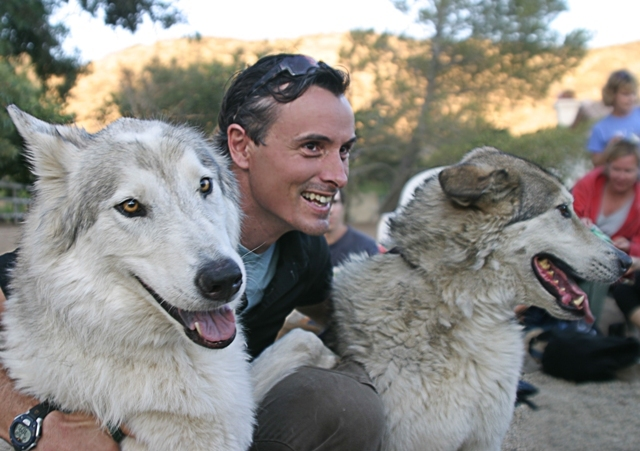
“Campers picked up the young male Friday near Ketchum, beginning an effort to determine if he’s wild — and if he can be returned to his pack.

The pup is awaiting his fate at Zoo Boise.

Tracks on Warm Springs Road in the Smoky Mountains northwest of Ketchum appear to show he was part of a wild pack that lived in the area, said Suzanne Stone, a wolf expert with the Defenders of Wildlife.

Stone and Idaho Department of Fish and Game officers searched in vain Saturday through Monday looking for his pack.

Stone sent an email to wolf biologists worldwide seeking guidance on whether the pack would accept the pup if he were returned. She was deluged with replies — from Europe, Africa, Canada and across the U.S. — giving her enough hope to launch an aerial search and keep looking.

“We haven’t given up yet,” Stone said. “We have weeks if we can find this pack.”

Fish and Game officials still aren’t absolutely sure the pup is a wild wolf; he could be a hybrid someone had as a pet. Fish and Game biologists took a blood sample and sent it away for DNA testing.

The out-of-state campers watched the wolf for about an hour with their car running before picking it up, Stone said. That might have kept the pack from coming for the pup.

For Fish and Game officials, it’s an old story: A mother is scared off, leaving a baby that people take, thinking it abandoned.

Officials warn people to leave them be.

“They didn’t know that the pack would have been right there,” said Mike Keckler, Fish and Game communications chief.

Keckler said the parents were likely moving the pups from a den to a rendezvous site, usually within a mile or two.

The road had been blocked by snow until recently, Stone said. That might explain why the wolves were there in the first place.

The campers took the pup to a veterinarian, where a technician recognized it as a wolf and called Patrick Graham of Defenders of Wildlife. Defenders contacted Fish and Game, and together they agreed to try to find his parents.

The wolf pup was thin but not seriously injured. Fish and Game officers took him to Zoo Boise, where he will await tests and search results.

Zoo Boise vet Holly Peters looked him over and got him to eat some ground meat. But she wanted to wait to do a full exam.

“He was pretty stressed,” said Steve Burns, Zoo Boise director. “She wanted to give him some time to settle down.”

The pup will be quarantined, because officials don’t know what if any diseases he may be carrying, Burns said.

“We want to ensure the health of our collection, as well as him,” Burns said.

Burns is helping Fish and Game by checking with other zoos to determine if they would want him, should he remain in captivity.”

Special thanks to Idaho Statesman for providing this information: http://www.idahostatesman.com/2012/06/01/2137894/rescued-puppy-turns-out-to-be.html#storylink=cpy