Feeds:
Posts
Comments

“Public opinion research and polling (NM, AZ) shows consistently that lobo supporters are in the majority in the southwestern United States. By translating the passion that we feel for wolves into action, we can make a real difference in turning Mexican wolf management around towards real success.

Remember, it is only because so many of us took action in the first place that Mexican wolves were brought back from extinction in the wilds of the Southwest and reintroduced in Arizona and New Mexico.

In recent years, the Mexican gray wolf’s supporters brought about significant changes using tools like those below. These include ending a destructive policy of killing or permanently removing from the wild wolves that depredated on three or more livestock a year, a ban on trapping in the wolf recovery area, and movement toward the lobo’s own listing for stronger Endangered Species Act protections!

Top predators, like Mexican gray wolves, are beautiful animals that play a vital role in keeping the balance of nature. They are also one of North America’s most imperiled creatures.

LORDS OF NATURE is the story of how science is now discovering top predators as revitalizing forces of nature, and of a society now learning tolerance for these animals.

Help protect wolves and other top predators by hosting a home screening of Lords of Nature: Life in a Land of Great Predators.” 

For more information about how to host a screening of Lords of Nature:  Life in a Land of Great Predators, please visit “Lobos of the Southwest” at http://www.mexicanwolves.org/index.php/news/493/51/You-Can-Be-A-Champion-for-Conservation/d,News2 to find out how to download your toolkit.  THIS IS A GREAT WAY TO GET INVOLVED AND MAKE A DIFFERENCE FOR WOLVES AND OTHER PREDATORS!    Please also send Lobos of the Southwest a message, thank them for providing this information!


October 24, 2011

“LA GRANDE, Ore.—A new wolf pack is using the Snake River wildlife management unit of northeast Oregon, which borders Idaho and includes the Hells Canyon National Recreation Area and Wilderness.

ODFW surveyed the area last week, after receiving reports and trail camera photographs from hunters indicating wolves were in the area. Tracks from at least five different wolves were documented on Thursday. Though the photographs provided to ODFW indicate that at least one pup was produced in this area, the new pack will not be considered a “breeding pair” unless two or more pups are documented in December. 

ODFW encourages hunters and other outdoor enthusiasts to report wolf sightings using the online reporting system or by phone. “These public wolf reports from Oregon’s outdoor enthusiasts really help us target our survey efforts and make the best use of limited resources.” said Russ Morgan, ODFW wolf program coordinator.

The confirmation of the Snake River pack marks the fourth wolf pack confirmed in Oregon since the mid-2000s, when wolves began returning to the state from Idaho.

Last Friday, ODFW radio-collared its first wolf from the Walla Walla pack in Umatilla County (OR-10, or the tenth wolf collared in the state). This pack was first documented in January 2011 and is near the Washington border. The female pup collared weighed 48 pounds and appeared to be in excellent health. She was released unharmed.

While ODFW wolf program staff out of ODFW’s La Grande office assisted with the immobilization and radio-collaring of the wolf, district staff from the Pendleton field office were responsible for the wolf’s capture. “We’ve known about the Walla Walla pack since January and at least two pups since summer, but the collar will make it much easier to document the pack’s size and get a sense of the pack’s movements,” said Mark Kirsch, ODFW district wildlife biologist in Pendleton.

“As wolves expand their range in Oregon, more work will be handled by our district staff,” noted Russ Morgan. “Livestock producers and others are encouraged to work directly with district staff as they do for other wildlife in their area.”

In other wolf-related developments, two wolves from the Imnaha Pack of Wallowa County have dispersed to central Oregon.

OR-7 was last documented in northern Lake County. He was born in northeast Oregon (Imnaha pack) and was collared on Feb. 25, 2011. GPS collar data shows that this wolf left the Imnaha pack territory on Sept. 10, 2011. Since then he has visited six counties (Baker, Grant, Harney, Crook, Deschutes and now Lake). ODFW and USFWS will continue to monitor OR-7’s location data. At this point, it is unknown if he will continue to disperse or settle down in central Oregon.

OR-3 was also last located in central Oregon. OR-3 was born in northeast Oregon (Imnaha pack) and radio collared on Feb. 12, 2010.  He is a three-year-old male and dispersed from the pack in May.  He has a VHF radio collar which does not allow for continuous tracking. OR-3 has been monitored by ODFW and USFWS using periodic aerial flights.  He was discovered in Wheeler County in July and was later located in the Ochoco Mountains on Sept. 29.  Since that time he has not been found.  The USFWS and ODFW will continue to attempt to locate this wolf.

It is very natural for wolves to disperse away from their birth area. Counting the two wolves in central Oregon, a total of four radio-collared wolves from northeast Oregon have dispersed away from their home pack (the Imnaha). One travelled to Washington last winter and has not been located since. Another dispersed to Idaho and continues to be in that state. 

Wolves throughout Oregon are protected by the state Endangered Species Act (ESA). West of Hwys 395-78-95, they are also protected by the federal ESA. The U.S. Fish and Wildlife Service is the lead management agency for wolves west of this boundary.”

**Special thanks to http://www.dfw.state.or.us/news/2011/october/102411.asp for providing this information!


October 14, 2011

“The city of Calabasas, California, in Los Angeles County, prides itself on being an environmentally-conscious community. So when resident Randi Feilich Hirsch pointed out that the city’s contract with Los Angeles County to trap and kill coyotes was not only inhumane but threatened to upset the ecological balance of the area, officials took notice. City council suspended all coyote trapping to review the issue.

That was back in July. Now, three months later, Calabasas City Council has made the ban on coyote trapping permanent and adopted a model plan for coexistence.

Feilich Hirsch wasn’t alone in this battle. As the Southern California Representative for Project Coyote, she had the organization and its expertise behind her. Project Coyote, working with the Animal Welfare Institute (AWI), started a campaign on Change.org to build public support for ending the city’s coyote killing policy. By the time city council voted, the groups had more than 9,000 people backing them up.

Continue Reading »


Wednesday, October 19th, 2011

“A gray wolf dispersing from the Imnaha pack in Wallowa County has been confirmed in Harney County. Over the past week or so it came down from the Strawberry Mountains and through the Silvies Valley, keeping to the more forested and vegetated sections of the national forest lands. It moved in a straight, deliberate line as wolves do when they are intent on serious long-distance travel. For the past few days it has been hanging around west of Burns, mainly on private ranch land. The wolf has a GPS collar so its location information can be downloaded periodically via satellite.

OR-3, the dispersing Imnaha wolf that was located in the Ochoco Mountains last month is still believed to be in the area. At least one person has reported seeing it, but as of last week efforts by US Fish and Wildlife biologists to find it during ground searches have been unsuccessful.

Because the Ochoco wolf, which has a VHF radio collar emitting radio signals allowing it to be tracked, has been moving fairly slowly since it left its home pack and has been lingering for long periods of time in small areas before moving on, biologists are speculating that it might indicate he is traveling with another wolf or wolves. However, it must be emphasized that is only speculation at this point based on OR-3’s behavior and multiple wolves would need to be seen by a reliable observer or multiple wolf tracks found to make a confirmation.

The Imnaha wolf that dispersed into Idaho earlier this year had its radio collar signal detected north of Weiser in late July.

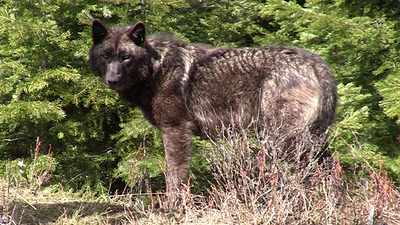
 The photo accompanying this post is of OR-3, currently a resident of the Ochoco Mountains. Photo by ODFW.”

*Special thanks to Oregon Wildlife News and Views for providing this information (http://sneakcat.blogspot.com/2011/10/wolf-confirmed-in-harney-county.html)


Arizona Daily Star, October 18, 2011 (posted 10/19/11) Show support with a letter to the editor!

Tim Steller

“Mexican officials have released five wolves in the Sierra San Luis mountains of northeastern Sonora, a Mexican environmental group said in a news release.

The wolf release occurred Oct. 11, the group Naturalia said. It gave no specific information about where the release occurred, but that mountain range abuts the New Mexico and Arizona borders with Sonora and ends about 80 miles south of the international border at Douglas.

The release came after years of planning by Mexican officials and opposition by U.S. ranchers, who are worried the wolves will cross into the United States and be completely protected from capture or killing.

Environmental groups have said they hope the wolves cross into the U.S. and mix with wolves living in the White Mountains of eastern Arizona.

Please write a letter to the editor celebrating this historic accomplishment!!  
Letters can be submitted to: letters@azstarnet.com.

Tips for your letter:
* Keep it short, no more than two or three paragraphs.
* Start by thanking the paper for their story and tie your letter to the article.
* Write from your own experience, in your own words. Talk about why Mexican wolves are important to you.

* Some talking points you could include are:
* With only around 50 Mexican gray wolves in the wild, new releases are critically important to increase the size and genetic health of the wild population.
* Mexico, along with Arizona, New Mexico, and western Texas, is part of the Mexican wolf’s historic range.
* True recovery of these highly endangered wolves requires several populations that have connectivity; this release in Mexico is a critical step towards making this happen.
* The wolves reintroduced in Mexico should receive full endangered species protections and not be restricted in their movements by arbitrary boundaries.”

**Special thanks to “Lobos of the Southwest” for providing this information! Check them out at:  http://www.mexicanwolves.org/index.php/news/553/51/In-the-Press-Wolves-released-in-Mexico-mountains-near-Arizona


“All the members of the Wolf Park community are in mourning today after the loss of the Park’s founder, Dr. Erich Klinghammer.  He passed away the morning of October 6, at  Lafayette’s  IU Health Arnett Hospital, at the age of 81.   Dr. Klinghammer had suffered from polycystic kidney disease for much of his adult life, and had been on dialysis for 12 years.

As a professor of ethology at Purdue University, Dr. Klinghammer started Wolf Park in 1972 using his own property, and his personal funds to create the 75 acre facility outside Battle Ground, Indiana. With the support of many who donated both their valuable time and money, the Park has grown and thrived.  As a 501 ( c ) 3 non-profit organization, it now maintains a Board of Directors, staff of eight, and dozens of volunteers who do the work to keep the organization strong.

Dr. Klinghammer is well known for his study of wolf behavior, contributions to the process of socializing captive wolves, and his English translation of the sixteen-volume Grzimek’s Animal Life Encyclopedia.  A native of Germany, he came to the U.S. after World War II, attended the University of Chicago, and became a professor at Purdue University in the 1960s.

The passing of Dr. Klinghammer leaves hundreds or perhaps thousands of people saddened, those whose lives he touched.  But they are also ready to carry on the Park’s mission and to carry this passion for wolf advocacy and education into the future.  This will mean that Dr. Klinghammer’s legacy will be ensured for generations to come.
A viewing and funeral service will be held on Sunday, October 9 at the
Soller Baker Funeral Home in West Lafayette, Indiana.  The viewing is
4-7 pm, and the service 7-8 pm, Eastern Daylight Time.

The Park is planning an event celebrating Dr. Klinghammer’s memory,
but the date has not been set.  It will probably be sometime in
November.”

**Special thanks to Wolf Park for providing this information (http://blog.wolfpark.org/?p=522)


“CASPER, Wyo. – The most highly-efficient predator hunting elk is not the wolf.

A new study of wolves’ elk-hunting abilities finds that Mother Nature didn’t give wolves the best set of tools – and that they would be more successful if they were built more like cats or bears.

It’s also not uncommon for wolves to be mortally wounded by elk hooves and horns, according to the study. One of its co-authors, wildlife ecologist Dan MacNulty, an assistant professor in Utah State University’s Department of Wildland Resources, shares another finding:

“This impression that we have of larger packs being more dangerous in terms of their ability to hunt is incorrect.”

In fact, he found, hunting success levels out with four wolves in a pack. MacNulty says wolves do tend to gather in large packs, but the reasons why are unrelated to food.

“One of those problems is maintaining territories. Bigger packs tend to be more successful at maintaining a territory than are smaller packs.”

MacNulty says he has encountered a general belief that elk are highly vulnerable to wolves – but he has found that’s clearly not true. He explains why wolves target aging animals.

“Those younger, prime-aged individuals are extremely feisty, and they will stand and defend themselves. Very common for elk to simply just confront wolves and run them off.”

The wolves and elk studied were in Yellowstone National Park.

The study, “Nonlinear Effects of Group Size on the Success of Wolves Hunting Elk,” is in the September-October issue of the journal Behavioral Ecology, and is online at beheco.oxfordjournals.org.”

**Special thanks to Deb Courson Smith, Public News Service – WY (http://www.publicnewsservice.org/index.php?%2Fcontent%2Farticle%2F22776-1) for providing this information in the article!

“ZANESVILLE, Ohio — Sheriff’s deputies shot nearly 50 wild animals — including 18 rare Bengal tigers and 17 lions — in a big-game hunt across the Ohio countryside Wednesday after the owner of an exotic-animal park threw their cages open and committed suicide in what may have been one last act of spite against his neighbors and police.

As homeowners nervously hid indoors, officers armed with high-powered rifles and shoot-to-kill orders fanned out through fields and woods to hunt down about 56 animals that had been set loose from the Muskingum County Animal Farm by its owner, Terry Thompson, before he shot himself to death Tuesday.

 After an all-night hunt that extended into Wednesday afternoon, 48 animals were killed. Six others — three leopards, a grizzly bear and two monkeys — were captured and taken to the Columbus Zoo. A wolf was later found dead, leaving a monkey as the only animal still on the loose.

 Those destroyed included six black bears, two grizzlies, a baboon and three mountain lions.

 Jack Hanna, TV personality and former director of the Columbus Zoo, defended the sheriff’s decision to kill the animals, but said the deaths of the Bengal tigers were especially tragic. There are only about 1,400 of the endangered cats left in the world, he said.

 “When I heard 18 I was still in disbelief,” Hanna said. “The most magnificent creature in the entire world, the tiger is.”

 As the hunt dragged on outside of Zanesville, population 25,000, schools closed in the mostly rural area of farms and widely spaced homes 55 miles east of Columbus. Parents were warned to keep children and pets indoors. And flashing signs along highways told motorists, “Caution exotic animals” and “Stay in vehicle.”

 Officers were ordered to kill the animals instead of trying to bring them down with tranquilizers for fear that those hit with darts would escape in the darkness before they dropped and would later regain consciousness.

 “These animals were on the move, they were showing aggressive behavior,” Sheriff Matt Lutz said. “Once the nightfall hit, our biggest concern was having these animals roaming.” 

Lutz said at an afternoon news conference that the danger had passed and that people could move around freely again, but that the monkey would probably be shot because it was believed to be carrying a herpes disease.

 The sheriff would not speculate why Thompson killed himself and why he left open the cages and fences at his 73-acre preserve, dooming the animals he seemed to love so much.

 Thompson, 62, had had repeated run-ins with the law and his neighbors. Lutz said that the sheriff’s office had received numerous complaints since 2004 about animals escaping onto neighbors’ property, and that Thompson had been charged with animal-related offenses.

 Thompson had gotten out of federal prison just last month after serving a year for possessing unregistered guns.

 John Ellenberger, a neighbor, speculated that Thompson freed the animals to get back at neighbors and police. “Nobody much cared for him,” Ellenberger said.

 Angie McElfresh, who lives in an apartment near the farm and hunkered down with her family in fear, said “it could have been an ‘f-you’ to everybody around him.”

 Thompson had rescued some of the animals at his preserve and purchased many others, said Columbus Zoo spokeswoman Patty Peters.

 It was not immediately clear how Thompson managed to support the preserve and for what purpose it was operated. It was not open to the public. But Thompson had appeared on the “Rachael Ray Show” in 2008 as an animal handler for a zoologist guest, said show spokeswoman Lauren Nowell.

 The sheriff’s office started getting calls Tuesday evening that wild animals were loose just west of Zanesville. Deputies went to the animal preserve and found Thompson dead and all the cages open. Several aggressive animals were near his body and had to be shot, the sheriff said.

 “It’s like Noah’s Ark, like, wrecking right here in Zanesville, Ohio,” Hanna lamented.

 Sheriff’s Deputy Jonathan Merry was among the first to respond Tuesday. He said he shot a number of animals, including a gray wolf and a black bear. He said the bear charged him and he fired his pistol, killing it with one shot when it was about 7 feet away.

 “All these animals have the ability to take a human out in the length of a second,” said Merry, who called himself an animal lover but said he knew he was protecting the community.

 “It was like a war zone with all the shooting and so forth with the animals,” said Sam Kopchak, who was outside Tuesday afternoon when he saw Thompson’s horses acting up. Kopchak said he turned and saw a male lion lying down on the other side of a fence.

 “The fence is not going to be a fence that’s going to hold an African lion,” Kopchak said.


Danielle Berkheimer said she was nervous as she drove home Tuesday night and afraid to let her two dogs out in the yard.


“When it’s 300-pound cats, that’s scary,” she said. She said it had been odd Tuesday night to see no one out around town, and the signs warning drivers to stay in their cars were “surreal.”

 Some townspeople were saddened by the deaths. At a nearby Moose Lodge, Bill Weiser said: “It’s breaking my heart, them shooting those animals.”

 “What a tragedy,” said Barb Wolfe, a veterinarian with The Wilds, a nearby zoo-sponsored wild animal preserve. She said she managed to hit a tiger with a tranquilizer dart, but the animal charged toward her and then turned and began to flee before the drug could take effect, and deputies shot the big cat.

 Ohio has some of the nation’s weakest restrictions on exotic pets and among the highest number of injuries and deaths caused by them. At least nine people have been injured since 2005 and one person was killed, according to Born Free USA, an animal advocacy group.

 On Wednesday, the Humane Society of the United States criticized Gov. John Kasich for allowing a statewide ban on the buying and selling of exotic pets to expire in April. The organization urged the state to immediately issue emergency restrictions.

 “How many incidents must we catalog before the state takes action to crack down on private ownership of dangerous exotic animals?” Wayne Pacelle, president and CEO, said in a statement.

 Kasich said Wednesday during a meeting of Dix Communications editors: “Clearly, we need tougher laws. We haven’t had them in this state. Nobody’s dealt with this, and we will. And we’ll deal with it in a comprehensive way.”

 Barney Long, an expert at the World Wildlife Fund, noted that tigers in general are endangered. He said there appear to be fewer of them living in the wild than there are in captivity in the U.S. alone. Over the last century, the worldwide population has plunged from about 100,000 in the wild to as few as 3,200, he said.

 More than half are Bengal tigers, which live in isolated pockets across Nepal, Bhutan, Myanmar, India and Bangladesh, he said in a telephone interview

 “The tragic shooting of 18 tigers in Ohio really highlights what is happening on a daily basis to tigers in the wild throughout Asia,” Long added in an email. “Their numbers are being decimated by poaching and habitat loss, and that is the real travesty here.”

**Special thanks to IndyStar.com for providing this information!
 

Rob Klavins, Oregon Wild, has a message for you:

‘Wolf news has once again faded from the headlines of the states major papers. But we’re still working hard to protect the Imnaha Pack. Unfortunately anti-wolf interests are hard at work too. Worse yet – the state is listening.

Make sure your elected leaders hear from you!

In news that left us shaking our heads, we learned that the state is going to actively fight the temporary stay of execution for the alpha male and young Imnaha wolf. Despite thousands of calls, letters, and e-mails, ODFW seems hell-bent on killing wolves and doesn’t want to wait for a judge to tell them whether it’s legal or not.

If ODFW is determined to appease anti-wolf interests and Governor Kitzhaber won’t listen to the thousands of Oregonians (and people around the world) who have weighed in over the past few weeks, perhaps he’ll listen to the state legislature.

Please take a moment and contact your state legislators. Let them know that you support wolf recovery. Tell them you don’t want more of your money wasted on fighting to kill endangered wolves.

With anti-wildlife interests expected to continue their attacks on Oregon’s already weak wolf protections in the next legislative session, it’s important that your representatives know that this issue is important to you.

Wolf opponents are well-funded, vocal, and politically powerful. But one thing they don’t have is the support of the majority of Oregonians who value native wildlife. The extermination of Oregon’s wolves in the last century was one or our greatest environmental tragedies. Their recovery has the potential to be one of our greatest success stories. But it’s not going to happen if the state continues to bend to special interests with no interest in meaningful wolf recovery.

Tell your state legislator that it’s time to stop the killing.

For Wolves,

Rob Klavins
Oregon Wild

PS – Wolf opponents know the last kill order catalyzed the Oregon public and hope  they’ll forget about the kill order issued at their request. Kudos to those of you who wrote and had published letters to the editor. Don’t forget to take a moment to contact your state legislator today, but if your letter wasn’t accepted, I hope you’ll try again.”


“Wolf advocates headed to the state capitol today, demanding an end to wolf slaughtering.

Members of Friends of Animals, Predator Defense, and Howl Across America held a rally outside of the state capitol to tell Governor Schweitzer to stop the assault on gray wolves.

They say Montana does not know how many wolves live in the state, and it should not allow Montanans to hunt the animals.

They are encouraging supporters to boycott Montana and the states that persecute wolves.

Dr. Catherine Feher-Elston, Author of the Naturesong book series, pleads, “Stop killing wolves because wolves are an essential part of a strong ecological system and they contribute many millions of dollars to the state of Montana just in tourism alone.”

Advocates claim that there is no evidence that wolves negatively affect cattle or elk.

There were speakers on hand, posters, and loud chants to try to get the government’s attention.”

 
**Special thanks to KFBB.com for providing this information!