Feeds:
Posts
Comments

Wolf Warriors on Facebook states, “Judge Molloy has ruled against the wolf settlement, which would remove wolves from the Endangered Species list in Idaho and Montana but would keep them listed in Wyoming, Oregon, Washington, and Utah.”

April 9, 2011 — Thanks to Ken Cole of Wildlife News for providing the information below:

Molloy denies wolf settlement
Says that the agreement is illegal
Today Montana District Court Judge Donald Molloy denied the settlement agreement put forth by 10 of the 14 environmental groups who sued to keep wolves protected under the Endangered Species Act. The settling parties had asked the judge to set aside his previous ruling which found that the USFWS 2009 delisting rule was illegal because it split the distinct population segment (DPS) of wolves in the Northern Rockies and left them listed in Wyoming. The Endangered Species Act does not allow the USFWS to partially delist a DPS.

“[The] District Court is still constrained by the “rule of law.” No matter how useful a course of conduct might be to achieve a certain end, no matter how beneficial or noble the end, the limit of power granted to the District Court must abide by the responsibilities that flow from past political decisions made by the Congress. The law cannot be ignored to accommodate a partial settlement. The rule of law does not afford the District Court the power to decide a legal issue but then at the behest of some of the litigants to reverse course and permit what the Congress has forbidden because some of those interested have sensibly, or for other reasons, decided to lay a dispute to rest.”


Ridiculous reactionary politics, lies, needs to be contronted head on.

“In the interests of political gains, lawmakers of Idaho are attempting to declare a disaster emergency which would include enlisting local law enforcement officers to eradicate wolf packs” says Writer Brian Ertz of The Wildlife News.

He adds, “The outright absurdity of the extreme reactionism that continues to threaten wolves can often seem too outrageous to be real. We hope that it’s just some marginal voice and that maybe by ignoring it, it will go away.
Wolf management in the Rockies is a very real culminating crisis prompted more from the imagination of zealots than from anything we can objectively quantify. Born uniquely in the minds of men more than in the actual behavior of wolves.
Unfortunately, the crisis is real – bounties are being proposed in state legislatures, Wildlife Services considered gassing pups in dens, citizens are being encouraged to defy federal law and to kill wolves in both Idaho and Montana.

It’s lawless, it’s absurd, it’s anti-rational insofar as it’s a response to a real condition prompted by wolves’ actual behavior … But it’s perfectly rational politically – thus far it has been rewarded politically by both anti-wolfers and implicitly by some pro-wolfers’ capitulation alike – it’s a paradigm that will prevail under state management of wolves should wolf advocates lose the effort to keep wolves federally protected – because the sad truth is that in the halls of state legislatures, reason will have no voice.” (http://wolves.wordpress.com/2011/04/01/wolf-fearing-id-lawmakers-want-emergency-declared/)

Wolf Preservation wants your responses! Please comment.


I greatly appreciate all comments but I can only ship throughout the United States due to high cost of shipping. Thanks for understanding!

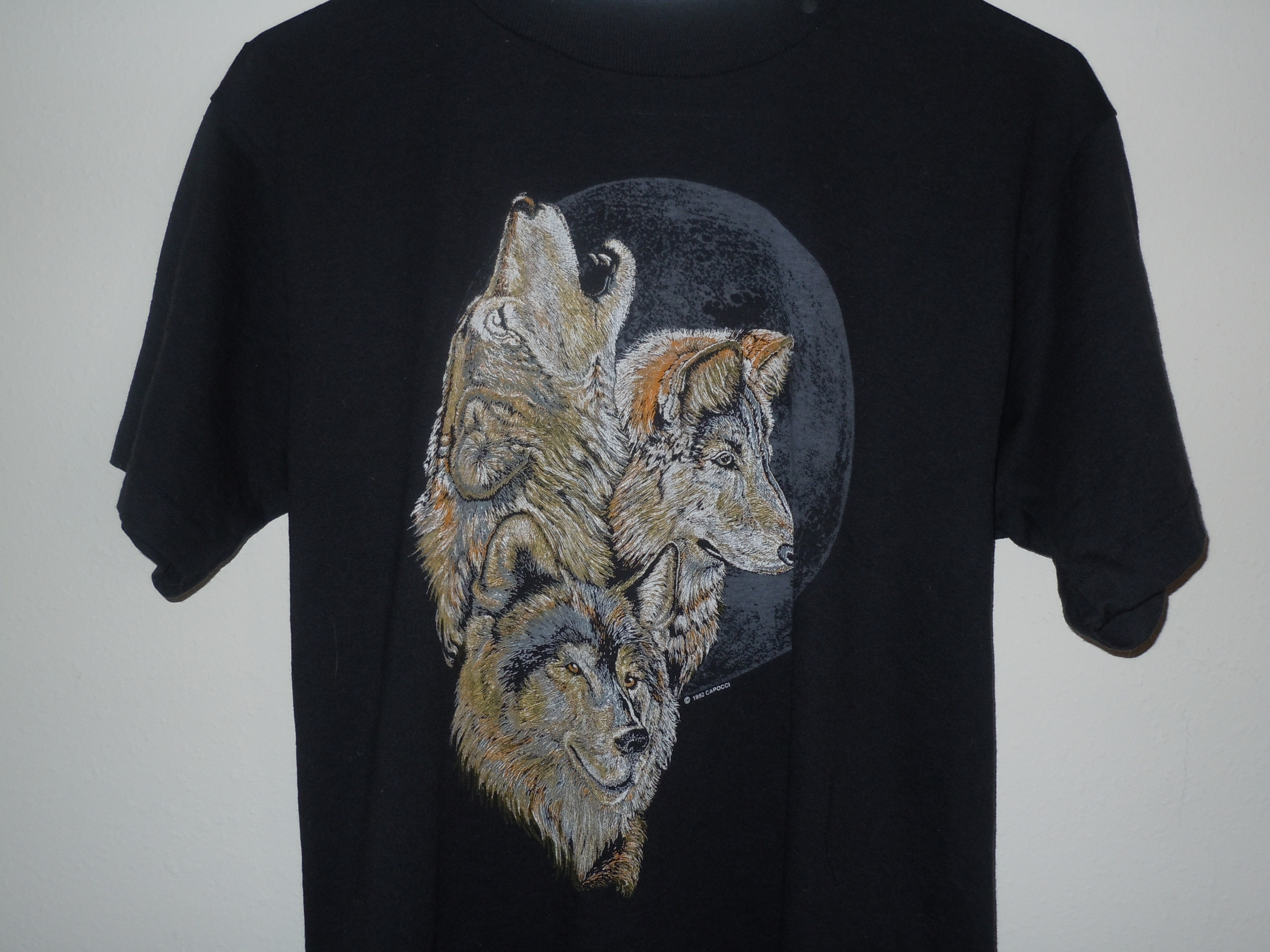
Wolf t-shirt prize giveaway!


WASHINGTON (March 30, 2011) – Nearly 1,300 scientists today urged senators to oppose efforts to undermine the scientific authority of the Endangered Species Act, which they fear would threaten the long-term survival of all species protected by the law.
If Congress passed the continuing resolution with the gray wolf provision, it would be the first time a species was delisted without the benefit of scientific analysis establishing a precedent for Congress to delist other species without scientific review.

**To see the rest of this article, visit the link below, and post your comments on Wolf Preservation! Thanks to The Union of Concerned Scientists, the leading U.S. science-based nonprofit organization working for a healthy environment and a safer world for providing this information.

http://www.ucsusa.org/news/press_release/scientists-denounce-congress-endangered-esa-0526.html


Bow hunting wolves in Montana and Idaho and discouraging people not to arrest poachers.  We cannot stand for this!

Thanks to “Howling for Justice” for providing the following information:

“This is the face of trophy hunting, a wolf brutally shot to death for sport. A painful, horrific death.

Wolves don’t go quietly. Can you imagine this happening to your beloved dog?  Since wolves and dogs share 99.8 percent of their DNA, it’s not hard to do.

I know it’s disturbing but this is what Montana and Idaho wolves are facing if the deal, brokered by the “10 settling groups” and USFWS. becomes reality. Or if Congress tacks a delisting rider onto the budget bill.  Or if one of the myriad of anti-wolf bills squeaks through, all wolves could be delisted. Either way, wolves are under attack from all sides. It’s up to us to continue to fight for them.

The budget extension in Congress ends on April 8th. There could be another attempt to push a wolf delisting rider through. We have to gear up for the next  push. I know everyone is emotionally exhausted, especially since the “settlement” was revealed on March 18th but that is out of our hands, it’s Judge Molloy’s decision. We have to focus on Congress and their wolf delisting antics.

In 2010 Montana added a wolf archery and back country wolf rifle  season to their hunt. They also raised their quota from 75 to 186 wolves.  Idaho’s bag of tricks included calling, baiting and trapping wolves, allowing snares and leg hold traps.

Who knows how much worse it will get?  Idaho Governor Otter made these statements in October 2010.

Idaho Governor Rejects ESA Wolf Management

Posted on: 10/24/10

In another salvo of the wolf-wars, Idaho’s Governor Otter has ordered state wildlife managers to “relinquish their duty to arrest poachers or to even investigate when wolves are killed illegally.” Under the Endangered Species Act (ESA) Idaho wildlife officials are the “designated agent” for investigating wolf deaths in the state.

This means Idaho Department of Fish and Game managers will no longer perform statewide monitoring for wolves, conduct investigations into illegal killings, provide law enforcement when wolves are poached or participate in a program that responds to livestock depredations. “

http://howlingforjustice.wordpress.com/2011/03/26/montana-and-idaho-wolves-abandoned/


 As always, Wolf Preservation invites you to comment on this article and take action!

In Gallitin National Forest (Bozeman, Montana), U.S. Fish and Wildlife Service found an illegally killed wolf .  They are offering a reward for information leading to the arrest of the culprit.  To see the article, visit http://www.kxnet.com/getArticle.asp?ArticleId=748992

Wolf Preservation responded by writing  Montana Senator Ken Miller, who’s stance on wolves is to “KILL EM’ ALL!”  Here is a copy of the letter:

Ken Miller,
How do you feel about the illegal killing of wolves, as the individual in this article has done? How much effort is being put into the capture of the person who conducted the illegal shooting of the wolf?
Wolf Preservation challenges you stand up for the “honesty,” and “integrity” you so love to splash all over your webpage. Do you condone breaking the law in order to satisfy your lust for killing these predators and how is that “integrity?”

Michael Heath, Wolf Advocate and Educator, Founder of Wolf Preservation.

**Please write to Montana Senator Ken Miller (http://miller4governor.com/contact/) and ask him how much effort is being put into the capture of the person who conducted the illegal shooting of the wolf? 


Fish and Game Officials say trapping and killing 9 wolves have reduced chances of an attack.  However, there is no indication, other than “boldness,” that any attack occurred on people.   After reading this article,  Wolf Preservation wants to hear your comments!  Reporter Mike Campbell from The Bellingham Herald reported the following information:

“Alaska Department of Fish and Game regional supervisor Mark Burch said the effort to remove wolves considered dangerous to humans and their pets succeeded. All the wolves that were killed were on base property.

“We believe we’ve mitigated the risk,” said Burch, who added that one wolf died after being hit by a car not connected to the control effort. “We’re not trying to eradicate wolves; we’re trying to reduce the risk.”

He estimates four wolves remain in the area.

As spring approaches, trapping conditions worsen and bears begin emerging from their dens, hastening the end of the program.

But some contend the wolves didn’t pose much risk to begin with.

“I’m not a biologist in any way, shape or form,” said Gary Gustafson, chairman of Chugach State Park Citizens’ Advisory Board, which criticized Fish and Game for nearly wiping out the wolf population in that portion of the half-million-acre park. “But what’s troublesome to us is that the department has decided one size fits all and that the plan is to exterminate all wolves.”

Burch disagrees, saying that wolves often repopulate areas quickly.

“We want and expect other wolves to move into the area,” he said. “We know how valuable that is for diversity.”

 PUBLIC SAFETY CONCERNS

Fish and Game and base wildlife officers say there was a clear pattern of increasingly bold wolf behavior. Last November, a man walking his dogs on base was briefly surrounded by four wolves. Two women running on Artillery Road with a dog nearly a year ago were treed for about two hours.

Some homeowners in the Eagle River area have reported their pets killed by wolves.

“It’s not common for wolves to become aggressive toward people, but when they do, it’s a public safety issue,” Burch said. “While wolf attacks on humans are rare, this lack of fear and aggression is the kind of behavior seen by wolves that have attacked people in the past — so we are doing what we can to minimize the risks.”

Pete Panarese, another member of the advisory board and a former state parks deputy director, thinks the fears are overblown.

“If somebody sees a wolf and it just looks at them and doesn’t run away, is that grounds to shoot the wolf?” he asked. “Sometimes wolves, when they show up, they’re checking something out to see if it will go away. They’re predators, looking at you to see what you’re going to do. A very small number of them keep pushing the envelope.”

Food, trash, unsecured dog food and habitation to humans tends to draw them in, Panarese added.

Burch agreed.

“We have suspicions some of those (wolves) were intentionally fed by people and, of course, we hope that won’t happen,” he said. That didn’t change what he considered his obligation to act.

“We had a public safety threat that was ongoing,” he said. “Something could happen, and somebody could get hurt. We don’t dither with public safety.”

However, he noted Fish and Game had not received a single wolf complaint in Anchorage so far this year.

 MONITORING MODE

The wolf-control project was a partnership between Fish and Game and Joint Base Elmendorf Richardson. Burch said the state spent $12,374, mostly in staff time.

“If there’s a public safety problem, we should give wide discretion to Fish and Game to deal with it,” said Kneeland Taylor, a board member with the Alaska Wildlife Alliance. Taylor’s bigger concern is a proposal before the Alaska Board of Game, meeting in Anchorage today, to open the far reaches of Chugach State Park to wolf hunting and trapping.

The wolves killed ranged from about 65 pounds to 115 pounds, said state biologist Sean Farley. He and his colleagues will examine bone, hair and tissue samples in an effort to learn more about the wolves’ diet. Hides will be sold at the next Fur Rendezvous fur auction.

The winterlong control effort is over for now, but the state may not be done killing wolves.

“We’re moving to more of a monitoring mode,” Burch said. “But Fish and Game employees continue to have authority to take wolves opportunistically by shooting if in their judgment it’s appropriate. It’s the same judgment that’s involved with dealing with moose, bears and wolves on a daily basis. The public accepts the judgment of professionals on matters like this that involve public safety.”

A glimpse into the public attitudes towards wildlife in Anchorage can be gleaned from a survey conducted for Fish and Game last year using telephone interviews and focus groups.

When asked what was the most important wildlife issue facing Anchorage residents, 56 percent pointed to increasing wildlife numbers in populated areas. Most singled out moose and bears. Only 1 percent mentioned wolves.

At the same time, about 70 percent of those surveyed thought Anchorage residents should learn to live with some conflicts or problems with wildlife. Just 17 percent agreed with a statement that some wildlife is dangerous and that they did not want potentially dangerous species in town.”

Wolf Preservation encourages you to contact Fish and Game Regional Supervisor Mark Burch.  Please be respectful but tell him how your feel about killing these nine wolves. 

Alaska Department of Fish and Game
Division of Wildlife Conservation
333 Raspberry Road
Anchorage, AK 99518-1599
(907) 267-2257 phone
(907) 267-2433 fax

Mark Burch, Regional Supervisor (mark.burch@alaska.gov)


*Check out this article provided by authors Tory and Meredith Taylor, Wyofile (in depth reporting about Wyoming people, places, and policies) from April 06th, 2009.  This gives you some good facts about predator/prey relationships and other causes of Elk decline.  Please read and provide your feedback!

While some Wyoming legislators, hunters, and ranchers claim that wolves are decimating the state’s elk herds, analysis of the facts tells a different story. Prior to the reintroduction of wolves into the Greater Yellowstone area during 1995 and 1996, some pessimists predicted that following wolf recovery, Wyoming’s abundant elk herds and popular elk hunting would be things of the past.

In contrast, many wildlife biologists — who had a better grasp of predator-prey relationships — predicted that after wolves recovered, elk distribution and behavior might fluctuate in some herds, but that elk numbers would be largely unaffected. Now, wolf and elk population monitoring studies indicate that the wildlife biologists’ predictions were more accurate than the darker forecasts of the anti-wolf pessimists.

Many things kill Wyoming elk. Human hunters, animal predators, disease, too little or too much precipitation, hard winters, and poor forage all help determine which elk live and which die. Other things — auto-elk collisions, spring floods, lightning, fences, culling of diseased elk, and poaching — also take a toll. The risks to elk seem daunting at times, and the odds of an elk dying of old age are slim.

How many elk are in Wyoming and how many do we want? Through a public process taking into consideration many factors, the Wyoming Game and Fish Department sets objectives for the state elk population. The department weighs factors such as forage availability, winter range, and hunter demand. Other factors with greater weight, such as landowners’ desires and political wishes, are also considered. Game and Fish wildlife biologists annually compare elk populations against the population objectives in order to determine proper management strategies. If elk numbers are declining from the population objective, wildlife managers rummage in their “elk population tool box” for appropriate tools to fix the problem. For example, they may need fewer hunters and more habitat improvement projects. If elk numbers are increasing too much above the herd objective, wildlife managers may increase hunting opportunities by issuing more hunting licenses, lengthening hunting seasons, or instituting hunter access programs that facilitate elk harvest.

Each year Wyoming wildlife biologists collect data from elk herds and elk hunting seasons in order to gauge trends. Elk data from the state’s 35 elk herds and eight management districts are compiled in Wyoming Fish and Game Department annual reports that show the big picture of Wyoming elk populations. Interestingly, the annual reports’ data tell a far different story about Wyoming elk numbers and elk hunting opportunities than is often heard in coffee shops, from bar stools, and at the state legislature.

Nearly three decades of Wyoming elk data taken from the department’s annual reports show that the elk population, number of elk harvested, and elk hunter success rates have steadily increased both before and after wolf reintroduction. During this time, the number of elk hunting licenses sold each year has slightly decreased. This means that Wyoming has more elk today than thirty years ago, with about the same number of hunters killing more elk.

According to the 2008 Game and Fish Annual Report, the 2007 state elk population objective was 83,140 animals. The estimated Wyoming elk population was calculated from only 27 of 35 elk herds at 94,936 animals (population estimates for the other eight herd units are not available in the report or from the department). Even with eight herd units missing from the count, the 2007 Wyoming elk population was 14 percent above the target population objective, according to the annual report.

“The Department continues to manage for a reduction in Wyoming’s elk population,” the report states, noting that “overall, management strategies will continue to focus on decreasing the statewide population. However, some herds are at objective and will be managed for their current numbers.” (WGFD, 2008 Annual Report, p. A-2.)

*Source Wyoming Game and Fish Department Annual Reports.
(1) Statewide elk population was calculated from 27 of 35 elk herds; 8 herd populations unavailable
(2) Statewide elk population was calculated from 29 of 35 elk herds; 6 herd populations unavailable.
(3) Statewide elk population was calculated from 28 of 35 elk herds; 7 herd populations unavailable.
(4) Statewide elk population was calculated from 28 of 35 elk herds; 7 herd populations unavailable.
(5) Statewide elk population was calculated from 27 of 35 elk herds; 8 herd populations unavailable.
Note: 2003-07 elk population estimates are below actual numbers.

Wyoming has never been a state to let science or facts get in the way of culture, custom, and wishful thinking. Our 1880s-era political system is based on a one cow, one vote premise, and change comes hard.

In an e-mail exchange with WyoFile during the 2009 legislative session, Wyoming State Rep. Pat Childers (R-Park), chairman of the Travel, Recreation, and Wildlife Committee, stated his opinion that wolves are bad for elk.

“As for wolves and elks [sic], I have had two reports from the Wyoming Game & Fish presented to me that clearly show that the wolves are impacting the ungulate [sic] of the elk herds,” Childers wrote. “While the populations of those herds have not currently decreased, the study shows that the populations of the herds will soon be reduced to an alarming low level because the loss of ungulate [sic] will result in less animals.”

An “ungulate” is a hoofed mammal; it’s unclear what Chairman Childers thinks it is.

The Game and Fish department’s Absaroka Elk Study that Chairman Childers cites clearly shows that elk numbers have been well above the Clark’s Fork herd objective since 1992, throughout the entire wolf recovery period. What Childers thinks would reduce the elk to alarmingly low levels is not clear, but herd reduction appears to be the intended goal of the Wyoming Game and Fish Department order to manage the elk at or near the herd’s population objective. (Absaroka Elk Ecology Project, 2008 update. WYGFD, UW, and USFWS.)

All elk populations do not respond identically to sharing landscape with wolves, a new report from Montana suggests. Montana Fish, Wildlife and Parks and Montana State University researchers spent the past seven years monitoring elk populations and behavior in southwestern Montana. Their study shows that elk numbers in some areas dropped, mostly due to the loss of elk calves to wolves and grizzly bears. But in other Montana areas, elk numbers increased while hunter-harvests of elk decreased, with little apparent influence by local wolf packs on elk numbers.

“One-size-fits-all explanations of wolf-elk interactions across large landscapes do not seem to exist,” said Justin Gude, chief of Fish, Wildlife and Parks wildlife research in Helena. He noted that the study also found that “calves with higher gamma globulin levels, a possible indicator of superior condition, survived better than those with lower levels, demonstrating that environmental factors are also important contributing factors to predation and survival with Yellowstone elk calves.”

How big a bite do predators take out of elk herds? Since wolf restoration in Greater Yellowstone, some people assumed the wolves would be the main cause of elk calf mortality. So from 2003 to 2005 the U.S. Geological Survey, Yellowstone National Park, and the University of Minnesota conducted an elk calf mortality study to answer the question of who’s eating what. The study showed that wolves accounted for about 12 percent of newborn calf deaths, while grizzly and black bears caused about 69 percent of recorded deaths, and coyotes killed 11 percent. wolf hunting

(Elk Calf Survival and Mortality Following Wolf Restoration to Yellowstone National Park, Shannon M. Barber-Meyer, L. David Mech, and P. J. White,13(3) Yellowstone Science, Summer 2005, p. 37.)

While many current ranchers are from fourth and fifth- generation families, wolves have had an even longer history in the West. (See, “Trophic Cascade: The Case For Wolves,” by Debra Donahue, WyoFile 07/21/2008)

And now there is a new economic constituency for wolves. Winter wolf-watch trips to Yellowstone are transforming Yellowstone into a year-around destination. According to Dr. John Duffield’s research for the University of Montana, wolves are now a tourist magnet annually bringing in at least $35 million directly, or $70 million indirectly through the multiplier effect, to such Yellowstone satellite communities as Cody, Dubois, and Jackson.

Wolf numbers are down this winter in Wyoming because of disease (distemper and mange), inter-pack conflicts, and excessive wolf shootings while the animal was delisted in the state during 2008.

“The number of wolves in Yellowstone National Park declined last year,” a January 2009 Yellowstone National Park news release stated. “It’s the first drop in wolf numbers in the park in three years. The Yellowstone Wolf Project reports the 2008 population at 124 wolves, down 27 percent from the 171 wolves recorded in 2007. The greatest decline occurred on the northern range, the area with the greatest wolf population density. The wolf population there dropped 40 percent, from 94 to 56 wolves.”

However, disease also reduced the population in 2005, when the numbers showed an even greater drop from 171 wolves in 2004, to 118, due to distemper. Sarcoptic mange is also a concern in Yellowstone wolves and has recently been identified in a Jackson-area wolf pack. The number of breeding pairs in the park has declined from 10 to six. This decline brings the wolves to the lowest number of breeding pairs recorded since 2000, when wolves first met the minimum population requirement for delisting.

Where does this leave people who are directly affected by wolves? Outfitter Bud Betts lives in the Dunoir Valley along the Wiggins elk herd migration route. His closest neighbors are elk, grizzly bears, and wolves. Betts says the wolves are doing fine, but the elk are not.

“The elk cow-calf numbers are down closer to herd objective, so we have reduced hunter opportunities. I don’t like the wolf,” he admits, but philosophically adds, “They are here and we have to live with them.”

Wildlife science still takes a back seat to politics in Wyoming. According to an Associated Press article in the February 24, 2009 Casper Star Tribune, Wyoming lawmakers want to test wolves for brucellosis, a bacterial infection best known in Wyoming in cattle and bison, although different forms of the disease can also infect swine, goats, sheep and dogs.

During the 2009 legislative session, Senate File 87, sponsored by Sen. Kit Jennings (R-Natrona) and Rep. Childers, would have required Wyoming Game and Fish to test wolves for the disease.

“[Brucellosis is] not even an issue,” said Mike Jimenez, the U.S. Fish and Wildlife Service’s wolf recovery project director for Wyoming. “No one’s ever really been concerned about it, but for whatever reason, if there is a concern, it’s easy enough to test for it.”

Jimenez said that federal wildlife agents have tested 16 captured or killed Wyoming wolves for the disease, but the results were all negative.

Terry Kreeger, state game and fish department supervisor of veterinary services, said the Sybille, WY research laboratory has tested wolves for brucellosis occasionally, and all results have been negative, he said.

“Given what we know today, we would consider wolves a dead-end host for [bovine brucellosis] bacteria, i.e., they become infected but they are not capable of transmitting it to other animals, even other wolves,” he said. Kreeger said he doesn’t believe wolves are a factor in Wyoming’s brucellosis problem. He said studies have shown that wolves infected with brucellosis do not transmit the disease.

Some Wyoming lawmakers are more practical than others when dealing with wolf management. In 2009 Wyoming Rep. Keith Gingery (R – Jackson/Dubois) introduced House Bill 21 to classify and manage wolves solely as “trophy game” statewide, which would have allowed the wolf to be delisted by the U.S. Fish and Wildlife Service. In the mid-1990′s, state wildlife staff recommended the “trophy animals” classification, but the politically-appointed Wyoming Game and Fish Commission, livestock interests, and most Wyoming politicians flatly rejected the idea.

Instead, politics insisted that Wyoming wolves be classified as both “trophy and predator” throughout most of the state. Predator classification means that the animal can be shot on sight at any time. Trophy game status requires a Wyoming Game and Fish regulation to hunt the animal only with a seasonal license. This dual classification has kept wolf management out of state hands, so in 2008 the wildlife commission voted to support a statewide trophy game management plan. Soon after this decision, the Wyoming Wildlife Federtion, the state’s leading hunting organization, also read the writing on the wall and voted to change its position to now support statewide trophy game management for wolves. HB 21 died this session as lawmakers stuck to their guns and their original dual classification, predator/trophy game plan. The U.S. Wildlife Service has already rejected the plan, and after a lawsuit over the large number of wolves killed in Wyoming last year, the animals have been “relisted.”

“If Wyoming wants to get to the point at which the people of Wyoming, through the Wyoming Game and Fish, manage wolves rather than the Feds,” Gingery said to WyoFile, “then we need to change our proposed wolf plan. The Feds have made it clear that they will not accept a dual status of predator/trophy game. The Feds want Wyoming to adjust their plan to a single status, namely trophy game status, just like Montana and Idaho have already done. This was under the Bush administration, and I highly doubt the Obama administration will lessen that requirement.

“Thus, the option is either drop the dual status or continue to fight in court for the next five years knowing full well that in the end we will lose. The issue that the courts will look at is whether or not the Wyoming plan meets the requirements of the Endangered Species Act, and at this point it does not.”

During the past two decades, wolf recovery and management have dwelt much more in the political and legal realms than in the biology and wildlife management worlds. Endangered species such as wolves and grizzly bears resonate loudly on the states’ rights drum. While we humans navigate the procedures of the state and national management plan process, wolves and elk, predators and prey, continue their delicate dance in Greater Yellowstone, as they have for tens of thousands of years.

  “Wolf Warriors” on Facebook reports the following:

“ALERT: Anti-Wolf bill in Helena! Please contact your MT legislators

On Thursday, March 24, at 9am, the Montana Senate Finance & Claims Committee will hear testimony on SB 414, the Montana Wolf Control Act. Among other things, this bill wil…l make it legal to shoot wolves at any time on private land, even without a hunting license. This bill will diminish the success of wolf recovery in Montana, while seriously undermining Montana’s federally-approved wolf management plan!

We believe wolves should be managed like other native wildlife, as a valuable part of Montana’s wildlife heritage, not as pests to be destroyed.

Please contact the Senate Finance & Claims committee in Helena and urge them to VOTE NO on SB 414.

Background on SB 414 (Sponsored by Sen. Chas Vincent).

* Prevents Montana game wardens from investigating or citing anyone who kills a wolf when wolves are protected under the Endangered Species Act.

* Allows wolves to be killed on private land at any time without a license, once wolves have been delisted.

* Requires Montana FWP to kill entire packs in response to any livestock depredation or reductions in elk herd numbers, while wolves are protected under the ESA, as long as there are at least 15 breeding pairs in the state.

* Forces the Attorney General to sue the federal government for “economic damages” to livestock and big game caused by wolves.

Nearly a dozen other wolf-related bills have already been drafted in Helena, and are moving through the process. Besides increasing the killing of wolves in Montana, these bill hearings provide a forum for anti-wolf types to vilify wolves, carnivores, and endangered species generally.

That is why your legislators in Helena need to hear from you!

**Please contact the Senate Finance & Claims committee and let them know you oppose SB 414**

You can also call the capitol at 444-4800 and leave a message for the Senate Finance & Claims Committee.

I’ve pasted some more talking points below. Please feel free to put them into your own words. Also, if you would like to attend a hearing at the Capitol in Helena, please contact me for more information.

Thank you for speaking up for wolves and Montana’s wildlife heritage!

[If the links do not work in this message, please copy and paste this address you’re your browser window: http://leg.mt.gov/css/sessions/62nd/legwebmessage.asp ]’