Feeds:
Posts
Comments

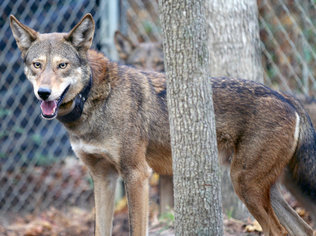
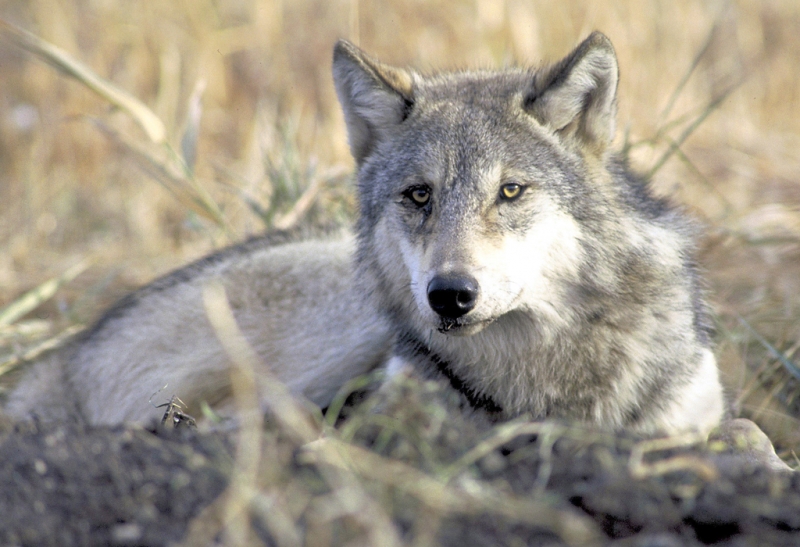
Coyote saved

Photo courtesy of Patricia Randolph of Portage, a longtime activist for wildlife. madravenspeak@gmail.com or www.wiwildlifeethic.org

Please note:  This article is from 2012 but thought it was a good one to share!

““I cannot tell you how this coyote has turned me upside down.  Wiley is a member of our family.  I feel like I am fighting for the life of my relative!” ~ Rick Hanestad, Dunn County, Wisconsin

It is not often that a hunter calls me, asking for help.  In November, I found an urgent message on my answer machine.  I returned the call immediately.  Rick Hanestad, Nascar All American Series driver, life-long hunter/trapper and hound hunter, was calling me to help him save the life of a coyote.

Rick launched into his story.  His father and uncle farm over 1000 acres in western Dunn County.  In March, 2011, his uncle allowed a neighbor to hunt turkeys on his land.  The DNR promotes coyote killing 24/7 year-round, so that hunter killed a lactating female coyote.  Rick said, “Patricia, I don’t like that.  When I heard a female was shot in the spring, it made me sick to my stomach.”  He and his then 7 year-old daughter and 14 year-old son went looking for her pups.  Three days later they found five crying puppies, their eyes not yet open.  But he was “so scared of the DNR” that he just raked around the den to make sure it was the den of the coyote killed.  When he checked again, then the fifth day since the coyote had been shot, only one pup remained alive, dehydrated and weak.   Rick and his family spent the night dripping fluids down his throat.  They named him Wiley.

Asked what he thought would happen, Rick said, “I figured that at about 6 months he would be so vicious, I would either let him go, or shoot him.”  Did he ever show any aggression to their old male lab, their children, or their horses – to anyone?  “Never. He is such a sweet animal. I trust him absolutely with my 8 year-old daughter.  He is best friends with our dog.”

In November, 2012, a policeman was called out to neighboring land on a deer-stand dispute. Seeing the coyote outside in a pen, the policeman informed Rick’s wife that “the DNR will be out to pick up your coyote.”  (to kill him )

Rick dedicated himself, full-time, to save their family pet.  He called the local warden, the town supervisor, his legislators, and an outdoor radio host in Minnesota.  Hanestad wrote Representative Mursau’s aide,” In our state we have numerous coyotes, but without hunting dogs, who ever sees one?  I would love to take him to things like a biology class at schools or other situations where his extraordinary kindness around people could be shared.”

He continued, “I also found out about an individual that lives about an hour from our home in Ladysmith, WI.  This person (owns) a place that people take their hunting hounds to chase coyotes in an enclosed pen.  Talking with one person that uses the pen I was told that coyotes are chased and, on occasion, tore to pieces by hounds while people watch.  This guy does have a license legal by our state.  I can’t believe it! “   A neighbor’s son had seen a coyote killed by a pack of dogs in that enclosure, with people enjoying the “sport”.

Wisconsin coyotes have been taken legally from our state, for this legalized fenced torture, and required reports have not been made for 10 years.  There has been no DNR oversight.  Former DNR head of special investigations, Tom Solin, told me, a decade ago, that the DNR should not allow coyotes to be used in these enclosures because they cannot climb trees or hide from the dogs.  They get ripped apart on the ground.

Hanestad was looking for a way to get his coyote’s story to the public.  Someone at the DNR gave him my name.   He told me, “They might as well send 5 police officers, because they will not be taking our coyote, they will be taking me.”

All this required is a commonly DNR- issued captive wildlife license.  I made a few calls targeted to captive wildlife DNR personnel, asking if Hanestad has to promise to have this coyote ripped apart by dogs to get the appropriate license.  The next day, Rick called me, joyfully:  “The DNR will sell me Wiley for $24.00, and the cost of the state license, no fine, and I just have to build him a 144 square foot pen.  He would be standing in his own feces.  I am building him an acre.  He is ours!”

Rick says Wiley is the star of his hunting community.  People come to sit in the living room and hear him sing a thousand different songs. “Patricia, the different vocalizations amaze me on a nightly basis.  I’ve heard coyotes numerous times in the wild, but no one can possibly appreciate how beautiful they sound.  My family gets to hear different songs every night.”

Hanestad describes himself as having a deep lineage in hunting. His uncle taught him hunting and trapping from the age of five.  All his teen years he trapped, on average, setting 100 traps on a trap-line.  His average take was “130 coons, 40-50 red foxes, and 15-20 coyotes per season”.  He told me, “I always heard ‘the only good coyote is a dead coyote’.  The coyotes would be snarling in a foothold trap, and I would beat them to death with a stick.  I have killed hundreds of them.  I never thought about it.  I thought of it just like getting rid of weeds.”

And now?  “It makes me sick to my stomach when I think of what I did in the past.”

Does he think other coyotes are just like Wiley?  “Absolutely – they don’t do a thing to harm anybody.”  Why does he think they are so hated?  “Ignorance – it is just ignorance.”  Does it make him rethink all of his assumptions about animals?

“Absolutely.”

Hanestad emailed me, “When the warden and the state wildlife biologist came to visit him, Wiley fell to his back and the biologist scratched his belly.  The biologist stated ‘oh my god; he’s just like a dog’.  That to me was worth its weight in gold because on the spot I changed his opinion of coyotes.”

I asked him how many hard core hunters he thought would be changed by meeting Wiley.  Hanestad replied “20% the first ten minutes – and 100% if they had experienced a week of what I have.  How could they not be changed?”  But he cautioned, “Some people choose to remain ignorant.”

Wiley Coyote, Trickster, power animal, has come to Wisconsin. Wisconsin citizens can no longer tolerate a legislature and DNR who choose ignorance.”

**Special thanks to “Wisconsin Wildlife Ethic-Vote Our Wildlife Wisconsin WE VOW” for providing this information!
http://wiwildlifeethic.org/2013/02/17/wiley-the-coyote-a-wisconsin-hunters-story-of-love-and-transformation/


Looking back:  December 2012

“Montana and Wyoming hunts ruin Park’s study of how many elk wolves eat, wolf movements, pack territories-

While the official stance of Yellowstone Park is that the three state wolf hunt that has been going on along the Park’s boundaries has not jeopardized the Park’s wolf population (now down to 81 wolves), it certainly killed the Park’s wolf project’s  research on wolf habits such as how many and where wolves eat elk, bison, deer, and the like.  Not only that, but the loss of the 3 GPS collars which  tracked wolf movements 24/7 makes it so it cannot be known if the wolves have killed what they eat or whether they find a carcass (or steal it from lion, bear, coyotes, etc.).

Other Yellowstone wolves killed in the wolf hunt while on a foray outside the Park had regular (standard) collars.  Uncollared wolves were killed too, and most of these carcasses probably gave no indication they were basically Park wolves. The number in this category is not known, but it is a reasonable assumption that the true Park wolf population today is actually less than 81.

Science Insider has a detailed article on what the death of the 3 GPS-collared wolves means. Hunters Kill Another Radio-Collared Yellowstone National Park Wolf.  by Virginia Morell. Ms. Morell interviewed Dr. Douglas Smith, the head of the Park’s wolf project.

Most of the Wyoming wolf hunt units have closed now and Montana will not allow wolf trapping along the Park boundary when their first wolf trapping season begins Friday, Dec. 15. The wolf hunt goes on in Idaho where it is almost endless, but not many wolves migrate directly out of the Park into Idaho because the expansive Madsion Plateau sits in the way to Idaho.  It has almost no prey … little habitat for ungulates.”

**Special thanks to Dr. Ralph Maughan, professor emeritus of political science at Idaho State University with specialties in natural resource politics, public opinion, interest groups, political parties, voting and elections. Aside from academic publications, he is author or co-author of three hiking/backpacking guide.


Monday, October 21st, 2013

WELCOMING WOLVES BACK TO CALIFORNIA – A RANCHER’S PERSPECTIVE

“My husband and I live on the Bar C R ranch in Petaluma, CA where we run 300 mother cows using predator friendly ranching methods. I am also an advisory board member of Project Coyote – a coalition of educators, scientists and predator-friendly ranchers who promote coexistence between people and wildlife. As someone who understands the importance and benefits that predators provide to both ranch lands and entire eco systems, I want to see the wolf recover in California.

Last week I spoke at a rally in Sacramento in support of maintaining federal protections for wolves under the Endangered Species Act (ESA)- and against a proposal put forth by the U.S. Fish and Wildlife Service to delist wolves from the ESA. To delist wolves would be wrong in so many ways; these important canids are keystone species and necessary for the balance and health of wild creatures and wild places.  To delist would be unscientific, counter-productive, and financially wasteful.

As important apex predators, wolves need and deserve protection across their historical range. And as they try to expand into their former range, they run the gauntlet of misinformed management that results in their needless death. Wolves are unaware that they are crossing political boundaries where they will face ever-changing policies ranging from excessive killing to nearly full protection. If they are not consistently protected with sound conservation strategies now, how will delisting improve their peril?

Many management tools and techniques have proven successful in preventing attacks on livestock. Ranchers who use non-lethal methods report lower losses from predation than those who use lethal methods. The U.S. Fish and Wildlife Service as well as USDA Wildlife Services and State Fish and Game departments can promote and improve non-lethal methods.

Unfortunately, old traditions—even bad ones—die hard, and some ranchers will continue to engage in their war on wildlife, however real or imagined the threats might be. Delisting wolves sends ranchers the message that it is unnecessary for them to have systems in place to help prevent wolves from attacking their livestock in the first place.

Why are Wildlife Services, State Fish and Game department and hunters allowed a functional open season on wolves? They are ready and willing to kill any wolf that is considered a problem. The truth is, the wolf really isn’t the problem- rather it’s lack of coordinated management where wolves cross from a protected area to a kill zone: lack of effective management that provides good healthy habitat with sufficient game populations that together deter wolves from killing livestock and; lack of cost-effective management that should promote and implement non-lethal control measures.

In the last two centuries, we have shot, gassed, poisoned, trapped, and snared: bison, prairie dogs, badgers, grizzly bears, coyotes, wolves, foxes, bobcats and more, all because they pose some sort of threat to livestock.

Meanwhile, the American public has started to see that these animals we are killing actually play a valuable role in our ecosystem, and maybe the slash- and- burn way we are ‘controlling’ wildlife isn’t sustainable. We overharvest the natural prey for predators like wolves; we take away their habitat and replace it with domestic livestock with little protection. We create the very problem that wolves are being killed for.

Ranchers should welcome the wolves back into California, not only for the ecological benefits they bring but because wolves were in California long before our sheep and cattle, and if we force the public to choose, they might decide that wolves are a more valuable resource than our livestock. If we devoted just half the money, time and energy towards learning to coexist with wolves as we have towards our war against them, livestock producers could save countless lives on both sides of the fence, while also building a new reputation as an ecologically responsible industry that has learned from its mistakes. We all would win.  And then and only then might you might consider delisting the wolf from the endangered species list.”

**Special thanks to Keli Hendricks, a predator friendly cattle rancher from Petaluma, California who serves on the Advisory board of Project Coyote, for providing this information!  http://www.sandiegolovesgreen.com/welcoming-wolves-back-to-california-a-ranchers-perspective/


MALAMUTE
Photo courtesy of ARTHUR MOURATIDIS/for the Missoulian
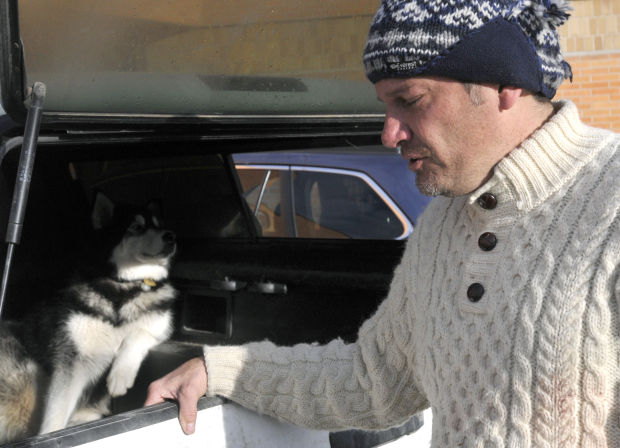
Layne Spence pauses as he describes to the Missoulian the moments leading up to the death of his Malamute Little Dave, 2, while skiing at Lee Creek near Lolo Pass on Sunday. Spence reported that a hunter carrying an assault rifle allegedly shot Little Dave, one of his three Malamutes, multiple times as the group was cross-country skiing, claiming he thought the canine was a wolf.
“Layne Spence’s pet malamute, Little Dave.

Here’s the Great Falls Tribune article in its entirety:

Written by John S. Adams

Tribune Capital Bureau

http://www.greatfallstribune.com/apps/pbcs.dll/article?AID=/201311200500/NEWS01/311200023

HELENA –  Layne Spence went out into the woods west of Missoula on a Sunday afternoon to do what he loves to do best: recreate in Montana’s outdoors with his three beloved malamutes.

Spence, an avid outdoorsman, drove to the Lolo National Forest’s Lee Creek campground, an area the agency touts on its website for its “winter recreation opportunities such as cross-country skiing and snowmobiling.”

The area also is popular with hunters and trappers.

Spence parked his truck, turned on his dogs’ lighted collars, clipped into his cross-country skis and set off down the snow-covered forest road.

Within minutes of starting out on his trek with his dogs Rex, Frank and Little Dave, Spence said he heard a gunshot from up ahead. Spence said he looked up from road just as Little Dave’s hind leg was struck by a bullet. Spence said a man, dressed mostly in camouflage, was standing on the road approximately 30 yards ahead of him and was aiming a semiautomatic assault rifle in his direction.

Merriam-Webster defines an assault rifle as “any of various automatic or semiautomatic rifles with large capacity magazines designed for military use.”

“I started screaming at the top of my lungs, ‘No! No! Stop! Stop! You’re shooting my dog!,” Spence recalled, his voice still hoarse from yelling three days after the alleged incident.

Spence, a licensed emergency medical responder, said even though his dog was gravely wounded, he thought he had a chance to save him after the first shot. Even with a missing leg, Little Dave could live a full and happy life, Spence said later.

“I started running toward Little Dave, screaming the whole time and then I heard this ‘tat, tat, tat’ five or six more times,” Spence said. “Then Little Dave’s head just tilted over and he was dead.”

As Spence huddled over the body of his dead pet, the unidentified shooter approached him and told Spence he thought the dog was a wolf. According to Spence, the man asked if there was anything he could do. Spence he was distraught and screamed at the man to leave him alone.

“I was sitting there screaming, I was covered in blood, and I was trying to find my dog’s leg,” Spence recalled.

Spence said any responsible wolf hunter should have known his domestic dogs aren’t wolves. Spence said Little Dave bears a resemblance to the Ewok characters from the “Star Wars” films.

Local law enforcement authorities, state wildlife officials and U.S. Forest Service officials announced Tuesday that they spoke to the hunter involved in the incident.

According to a joint statement issued by the Missoula County Sheriff’s Office, the hunter broke no criminal or wildlife laws in the incident. Authorities said they are withholding the man’s name for his own safety.

“Based on the statements provided by both parties, it was determined that there was no malicious or purposeful intent to cause harm or injury to a domesticated animal on behalf of the hunter,” the statement read. “The Missoula County Attorney’s Office concurs with the Missoula County Sheriff’s Office that the facts of the incident do not fit the elements of any criminal statutes contained in Montana law …”

The Montana Department of Fish, Wildlife and Parks said the circumstances do not “constitute any egregious violation of Montana hunting regulations.”

“The incident was not enforceable by their agency because it involved a domesticated animal, rather than a game animal,” the statement read.

Debate ignites

Although authorities say no laws were broken, widespread news of the incident has outraged many outdoor enthusiasts and sparked debate over who is responsible for the safety of the nonhunting public and their pets on public lands during open hunting seasons.

Wolf hunting and trapping is legal in Montana, and so far 85 wolves have been killed during Montana’s 2013-2014 hunting and trapping season.

Hunters can hunt wolves with guns from Sept. 15 to March 15, and trapping runs from Dec. 15 to Feb. 28. Wolf hunters are only required to wear “hunter orange” during the five-week general rifle season. After Dec. 1, they can hunt until mid-March without wearing orange.

Matthew Koehler, executive director of the Missoula-based WildWest Institute, said as an environmentalist and a big-game hunter, he is deeply troubled by the reported actions of the hunter who allegedly shot Spence’s dog.

Koehler said state wildlife and law enforcement officials appear to be applying a different set of rules for wolf hunters than other big-game hunters.

“The first rule for any ethical hunter is to know your target,” Koehler said. “If FWP or law enforcement found out a hunter mistakenly shot a bull elk when the regulations only allowed the taking of antlerless elk, they would fine the hunter and perhaps even take away his license. It blows me away that in this case, authorities are apparently saying it’s OK for wolf hunters to shoot people’s pets on public lands and there are no consequences for those actions.”

Jerry Black is an anti-wolf hunting advocate who said Montana’s liberal wolf hunting laws put unreasonable onus on unarmed citizens to protect themselves and their pets from injury or death while recreating on public lands.

“What’s screwed up is this tragic incident shows that we as citizens out walking with our dogs, or out there hiking, fishing or skiing on public lands, it’s now our responsibility to not get shot,” Black said. “For six months out of the year, we’re under siege by wolf hunters who say it’s our responsibility to wear blaze orange.”

Changes coming?

Spence said he believes the man who shot Little Dave should lose his hunting privileges and have his guns taken away.

Spence said  the hunter violated hunting regulations, including shooting from a public roadway.

According to the 2013-2014 Montana wolf-hunting regulations, “it is illegal for anyone to hunt or attempt to hunt any wolf from, on or across any public highway or the shoulder, berm, barrow pit or right-of-way of any public highway …”

“I don’t want anything bad to happen to the guy. I just want an apology,” Spence said. “He has to be held accountable. I’m lucky to be alive. He was shooting right at me.”

Spence said he believes there needs to be stiff penalties on the books for hunters who endanger nonhunters or their pets through irresponsible actions. He said he hopes if anything good comes from the death of Little Dave, it will prevent future incidents like this from occurring.

“It could have happened to anyone. I could have had a child out there with me,” Spence said. “People need to be aware. I don’t want this to happen to anybody else.”

One state lawmaker is already talking about taking action in the 2015 Legislature.

Rep. Ellie Boldman Hill, D-Missoula, said on her Facebook page that she is considering proposing legislation making what happened on Sunday a crime. Hill is up for re-election in 2014.

Spence said he’s not opposed to hunting and has hunted in the past. However, Spence said he believes the use of a semiautomatic rifles should not be allowed for hunting.

Semiautomatic rifles are legal in Montana and no special permit is required to own them or hunt with them.

“Everybody has their Second Amendment right to bear arms, but irresponsibility and those kinds of weapons that allow you to fire off a bunch of rounds with a few quick squeezes of the trigger should be banned,” Spence said. “Assault weapons are not hunting rifles.””

**Special thanks to “Exposing the Big Game, http://exposingthebiggame.wordpress.com/2013/11/21/new-article-outdoorsman-seeks-action-after-pet-malamute-shot-killed-by-wolf-hunter/) for providing this information!


Red Wolf

Photo courtesy of Ryan Nordsven – U.S. Fish & Wildlife Service
This young red wolf was born on St. Vincent Island, Fla., where the U.S. Fish & Wildlife Service keeps a breeding pair. It was fitted with a radio collar in preparation for release to the wolf recovery area in North Carolina.

“Wolves have a terrible public relations problem that dates back many centuries.

In old fables, they’re constantly up to no good, stalking Little Red Riding Hood and blowing down the houses of the Three Little Pigs. Their storied reputation might explain why people are quick to put a price on their heads for killing livestock or simply showing their faces.

But recently in North Carolina, wildlife biologists flipped the script. They are offering a bounty of sorts for information leading to the capture of whoever who shot to death two rare red wolves.

That species of wolf is one of the world’s most endangered wild canids — a group that includes jackals, coyotes and dogs. The $21,000 reward was raised by animal rights organizations after the dead wolves were found Oct. 28 and Oct. 30 on the flat plains of Washington County, on the central Carolina coast.

Accelerometers pinging in the wolves’ tracking collars informed U.S. Fish and Wildlife Service officials that the animals’ hearts had stopped beating and led them to the dead bodies. The wolves were among 66 that authorities have tracked since they were old enough to wear collars.

The animals are monitored as part of the government’s Red Wolf Recovery Program, to reestablish them in the Southeast after federally sanctioned bounties nearly wiped them out.

Today, only 90 to 100 live in the wild, and each death is a major blow to the federal government’s effort to restore red wolves in their native habitat.

Authorities said the dead wolves were of breeding age, making their demise especially upsetting since there are too few adults to produce enough litters to reestablish the species.

“When we lose an animal, that obviously has an impact on a very small population,” said David Rabon, recovery coordinator for the Fish and Wildlife program. While there are 90 wolves in the wild, that doesn’t mean 45 of them have coupled. “About 13 pairs are breeding,” Rabon said.

Red wolves were once a lot more common in the Southeast, biologists say. Their numbers were reduced by predator control programs that put prices on the heads of native wolves as people encroached on their range. By the 1960s, they were on the brink of surviving only in zoos and museums.

The Fish and Wildlife Service listed the wolves as endangered in 1967 and frantically attempted to rebuild the population. Seventeen remaining red wolves were captured by biologists, and most went into a program that preserves their gene pool and breeds them.

With no more red wolves in the wild, they were declared extinct in the Southeast in 1980. It took seven years to breed enough of them to start a restoration program on theAlligator River National Wildlife Refuge in North Carolina’s rural northeast.

About 100 wolves roam an expanded range that includes three wildlife refuges on nearly 2 million acres. An additional 200 red wolves are in breeding, part of a Species Survival Plan in locations across the United States.

There is another species in North America: the gray wolf, or Canis lupus, with an even more fearsome and, many say, unearned reputation. In an ongoing battle with encroaching ranchers, gray wolves killed more than 250 sheep and about 90 cattle last year in Idaho alone.

In response, hunters in the state killed 330 wolves in 2012, and about 200 in 2011, according to the Agriculture Department.

Red wolves, or Canis rufus, are slimmer and slightly smaller than their gray cousins. They are sometimes mistaken for coyotes, which is problematic because that more plentiful group isn’t native to North Carolina and can be shot any day but Sunday, Rabon said.

Coyotes bow to bigger red wolves. If a red wolf wants a coyote’s territory, it takes it. Adult red wolves weigh up to 80 pounds, stand about 26 inches tall and measure four feet long, from nose to tail. But calling them red is a bit of an overstatement. The wolves “are mostly brown and buff colored with some black along their backs,” according to a Fish and Wildlife description.

Rabon doesn’t know why anyone would want to kill them. There are few documented cases of a healthy wolf or coyote attacking a person, he said.

“We have documented less than a dozen cases where a red wolf took livestock in 27 years,” Rabon said. Most of the time the culprit is man’s best friend — a dog. Or coyotes.

Red wolves eat white-tail deer, rabbits, rats, mice and the invasive nutria, also known as the invasive swamp rat from South America.

On the coastal Carolina plain where the wolves were reintroduced, there are no livestock to protect. The land is planted with corn, soy, wheat, cotton and pine grown on plantations, Rabon said.

Six red wolves were killed this year by gunfire, three were hit by vehicles, and one died by some other circumstance, perhaps caught in a trap, Rabon said. In the three previous years, 21 were shot.

Rabon said the motive could be the fearsome reputation of wolves, spread through fables or stories of gray-wolf hunting packs out West that are strong and smart enough to bring down enormous prey such as bison.

The bounty raised by several organizations, including the Humane Society of the United States, the North Carolina Wildlife Federation and the Center for Biological Diversity, reflects the outrage over the killings.

In a statement, Fish and Wildlife officials hoping to bring them back extolled the red wolf’s good looks. “As their name suggests, red wolves are known for the characteristic reddish color of their fur most apparent behind the ears and along the neck and legs.”

**Special thanks to “The Charlotte Observer” for providing this information!  (http://www.charlotteobserver.com/2013/11/13/4462716/a-wolf-bounty-not-in-nc-in-a-switch.html#.UoWNf0Yo7IV)

Photo courtesy of PhotoBucketSnow Gray Wolf

“HOUGHTON — This month Isle Royale National Park will hold a series of public meetings to discuss the status of wolf management on the island. During the meetings, the Natural Resources team will present information about the history of wolves on Isle Royale, climate change implications, and current and future status. The presentation will be followed by an opportunity for the public to discuss natural resources, ecology, climate change, and wildlife management as well as ask questions and provide comments to park staff.*

“Isle Royale has a long-standing history of broad ecosystem management,” commented Park Superintendent Phyllis Green. “I hope the public takes this opportunity to become more informed on the natural resources of the island.”

The first of these meetings will be held from 3 p.m. to 5 p.m. this Tuesday, Nov. 12, at the Franklin Square Inn, 820 Shelden Ave., Houghton. The presentation will begin at 3:30 p.m. followed by an open house.

Additional public meetings will be held as follows:

Public Meeting 2: Chelsea, Michigan
Date: Thursday, Nov. 14,  2013
Location: Chelsea Depot, 125 Jackson Street
Time: 3 p.m. -5 p.m. (Presentation at 3:30 p.m. followed by open house)

Public Meeting 3: St. Paul, Minnesota
Date: Tuesday, Nov. 19,  2013
Location: TBA.
Time: 3 p.m. – 5 p.m. (Presentation at 3:30 p.m. followed by open house)

Public Meeting 4: Duluth, Minnesota
Date: Wednesday, Nov. 20, 2013
Location: Environmental Protection Agency Mid-Continent Ecology Division Laboratory, 6201 Congdon Boulevard
Time: 3 p.m. – 5 p.m. (Presentation at 3:30 p.m. followed by open house)

* Editor’s Note:  According to Rolf Peterson, co-director of the Isle Royale Wolf-Moose Study, the National Park Service (NPS) is considering three options: (1) do nothing, even if wolves go extinct; (2) allow wolves to go extinct (if that is what they do), and then introduce a new wolf population; or (3) conserve Isle Royale wolves with an action known as genetic rescue by bringing some wolves to the island to mitigate inbreeding. See “Message from Rolf Peterson: Public input needed on future of Isle Royale wolves,” posted on Keweenaw Now Oct. 11, 2013.”

**Special thanks to “Keweenaw Now” for providing this information!  (http://keweenawnow.blogspot.com/2013/11/isle-royale-national-park-to-hold.html)


gw

George Wuerthner, Author

“WOLF KILLING MAKES MOCKERY OF NORTH AMERICAN MODEL OF WILDLIFE CONSERVATION

Many state wildlife agencies and organizations promote the North American Model of Wildlife Conservation (NAMWC) as a guiding philosophy for management.  There are seven major themes to the model. Despite the promotion of NAMWC, there are many apparent contradictions between the ideal and how wildlife is actually managed by state wildlife agencies.

SEVEN THEMES OF THE NORTH AMERICAN MODEL OF WILDLIFE CONSERVATION

  1. One of the most important ideas articulated by the NAMWC is that wildlife is a public trust and must be managed for all citizens. No one can “own” wildlife.
  2. Commercial hunting of wildlife is prohibited (but not trapping which is one of the obvious contradictions).
  3. Public participation is essential in development of wildlife management policies.
  4. The recognition that many wildlife species are of international importance, therefore, Americans have an obligation and responsibility to manage wildlife as an international heritage.
  5. Science should be used to articulate management policies.
  6. A philosophical and legal ban on wasteful and frivolous killing of wildlife.
  7. Hunting is a legitimate use of wildlife.

There are many good aspects of the NAMWC. However, just as the authors of the Declaration of Independence declared all “men are created equal”, and the United States has not fully lived up to this commendable goal, there are aspects of wildlife management policy that state wildlife agencies advocate that do not live up to the admirable goals of the NAMWC. Nowhere is this more obvious than the attitudes and policies directed towards predators like wolves.

THE INFLUENCE OF HUNTERS ON WILDLIFE POLICY

NAMWC proponents are quick to promote the idea that recreational hunters “saved” wildlife, and are the primary interest group in promoting wildlife conservation.

There is some truth to the assertion. Enlightened hunters like Theodore Roosevelt, George Bird Grinnell, Gifford Pinchot and others joined together to form the Boone and Crockett Club that among other things promoted recreational hunting to counter the destructive effects of market hunting and unrestricted subsistence hunting. They promoted the idea of the “fair chase” and the “trophy” hunt to counter unrestricted hunting. To facilitate such hunting ethics the Boone and Crockett Club promoted restrictions on how many animals could be killed, season of hunting and other changes that once implemented did result in a recovery of so called “game” species like elk and deer.

It should also be noted, however, that these early hunter/conservationists like Grinnell and Roosevelt were also some of the strongest proponents for creation of national parks and wildlife refuges that were closed to hunting. That is a position that is missing today from many hunting organizations and state wildlife agencies who almost uniformly oppose creation of new parks or other preserves if hunting is excluded.

In addition, advocates of the NAMWC argue that since hunters are the major financial supporters of wildlife management, they deserve significant voice in management policy. In fact, most state wildlife agencies, though by law are required to manage wildlife as a public trust for all citizens, tend to make their decisions  that favor species that hunters and fishers value.

Certainly hunters, through their purchase of licenses and tags are also one the major source of funding for state wildlife agencies formerly known as Fish and Game Departments. And state wildlife agencies tend to “dance with the one that brung ya.” In other words, they respond to the opinions of hunters to the exclusion of other wildlife enthusiasts.

However, all taxpayers (which includes hunters of course) in general pay for habitat acquisition, and protection of wildlife through their support of public lands where a significant majority of all wildlife resides as well as payment for programs like the Conservation Reserve Program which promotes habitat protection on private lands. Many environmental laws that ultimately protect and preserve wildlife like the Endangered Species Act, Clean Water Act, and others are supported and funded by the general public.

One of the major weaknesses of the current polities of state agencies is the bias towards huntable wildlife. Some 99% of all other wildlife is ignored and suffers benign neglect, or worse. In many instances, the active management and enhancement of huntable species comes at the expense of other wildlife that are negatively impacted by species of interest to hunters. For instance, wild boars are commonly sustained by state wildlife agencies because hunters like to pursue them. Yet these wild pigs root up vegetation, prey on native species like salamanders, and otherwise degrade native wildlife populations. For this reason the National Park Service seeks to limit or remove wild boars from its lands, all the while state wildlife agencies are thwarting their efforts by transplanting and otherwise seeking to enhance boar hunting opportunities.

STATE WILDLIFE AGENCIES VIOLATE MAIN THEMES OF NAMWC

Clearly, however, many state agencies promote activities that violate these main themes and are detrimental to wildlife in general.  For instance, prairie dogs are regularly blown away by some to see the “red mist” of their blood hanging in the sky. This killing of prairie dogs is ostensibly justified by some to rid the land of “vermin” or animals that conflict with say ranchers or farmers.  Yet numerous studies have documented the importance of prairie dogs in supporting many other wildlife species from blackfooted ferret to burrowing owls.

The stocking of streams and lakes with exotic but popular “game” fish has often harmed native fish species and other wildlife. For instance, the practice of stocking formerly fishless high elevation lakes has been shown to decimate frogs and salamanders residing in those waters.

The transplanting of exotic game species like mountain goats into ranges with no history of the goats has led to overgrazing and impoverishment of alpine flora in some cases.

These are only a few of the examples of policies commonly employed by state wildlife agencies that are detrimental to biodiversity and ecosystem function.

However, perhaps the most significant and obvious conflict between the goals of the NAMWC and actual behavior of state agencies has to do with management of predators, particularly bears, cougars, coyotes and wolves. State wildlife agencies have a financial conflict of interest that makes it impossible for them to manage predators with regards to the wider public values. In most instances, hunters perceive predators as detrimental to hunting—even though there is plenty of evidence that predators seldom depress wildlife populations across the broader landscape. As a result of the funding mechanisms whereby state agencies rely on hunter purchase of hunting tags to maintain operations, these bureaucracies are not going to promote predators in the face of opposition from hunters.

This leads to obvious conflicts with the NAMWC prohibition against the frivolous killing and waste of wildlife.

Given that few hunters actually consume coyotes, wolves, cougars, and except for a few individuals, even bears, it is obviously a “waste” of wildlife to shoot or trap these animals just for “fun.”

Worse, these policies tend to ignore the growing body of evidence that suggests a significant ecological importance for these animals in maintaining ecosystem health. For instance, in some instances, fear of predators will change the behavior of herbivores like elk and deer, forcing them to use different habitat, for instance, avoiding heavy browsing of riparian areas. This in turn has been shown to increase habitat for songbirds and improve aquatic ecosystems for fish.

There are also social effects from the killing of predators. For instance, older and dominant male cougars have large territories they patrol. They will kill young male cougars that trespass in these territories to reduce competition. Thus the death of a dominant male cougar can permit younger less experienced cougars to occupy a territory. Inexperienced cougars are more likely to attack livestock, thus leading to greater human conflicts.

Trapping of predators or other animals is obviously a commercialization of wildlife. Why should a trapper have the exclusive “right” to kill say otter or marten that the rest of society might value alive? Commercial outfitting is perilously close to commercialization of wildlife as well, especially in states where exclusive rights to kill wildlife in specific areas are granted.

Some proponents of hunting and trapping of predators like wolves or bears argue that if these animals are hunted and trapped, they will  garner greater  support among hunters for their persistence. But that is somewhat like arguing that if people could own slaves, they would have more incentive to give food and shelter to people who might otherwise be homeless if free.

DO WE NEED TO REMOVE PREDATOR MANAGEMENT FROM STATE WILDLIFE CONTROL?

One increasingly popular idea is to remove management authority for predators from state wildlife agencies. Some suggest transferring it to other state agencies with less obvious conflict of interest such as environmental or park agencies. Another idea is to change funding mechanisms for state wildlife agencies giving them more general state tax support under the theory that this would provide an incentive for state wildlife agencies to pay attention more to non-hunter concerns. A third option has been to keep management of predators under federal authority by the National Park Service which has a mandate to manage lands and wildlife for more natural conditions.

All of these ideas have their weaknesses and potential flaws. Whether any of these could ultimately alter the way predators are managed by government agencies is questionable. However, we definitely need to challenge the traditional collusion between hunters and state agencies if the NAWMC is realize its full potential for preserving and enhancing all wildlife conservation in the United States.”

**Special thanks to George Wuerthner is an ecologist and former hunting guide with a degree in wildlife biology, for providing this information (http://www.thewildlifenews.com/2013/10/14/north-american-model-of-wildlife-conservation-and-wolves/).


Utah Wolf

Photo provided by “Standard Examiner” (http://www.standard.net/stories/2013/10/15/wolf-funding-audit-brings-out-political-divide)

By Antone Clark, Standard-Examiner correspondent

 Tue, 10/15/2013 – 1:54pm

“SALT LAKE CITY — A state audit of how funding was appropriated for a program to keep Canadian wolves out of the state raised some concerns about performance standards, but did little to solve the political divide the issue has generated.

State auditors released a seven-page review of legislative funding efforts to delist wolves in Utah on Tuesday, even as state officials claim the effort has been a success. A wildlife conservancy executive said the results have come in spite of state efforts, not because of them.

The findings of the audit, which covered four years and approximately $800,000 in state funds, were relatively minor. The audit recommended the Division of Wildlife resources amend its existing contract with Big Game Forever to include a more current plan for how the delisting effort will be carried out, replace the up-front contract payment with payments based on agreed upon performance standards and include the original requirement of maintaining accounting records available for state review.

The Legislature appropriated $300,000 on the issue in 2013, and another $300,000 is appropriated for the 2013-2014 fiscal year with BGF, a group claiming the wolf population in the northwest is growing and thinning the herds of elk and moose.

Big Game Forever is a political action group that spun off Sportsmen for Fish and Wildlife. The group’s website claims that before wolves were introduced in Idaho the population of elk was 20,000. Now that population is 1,700.

The same trend is shown in Yellowstone Park, where the population of elk was also estimated to be at approximately 20,000 before wolves were introduced in the park. It said the elk herd is now down to 6,500.

“One of the things not brought out in the audit are the results of the money we spent. It’s been unbelievably successful,” Michael Styler, executive director for the Department of Natural Resources, said of the program. “The money we have spent has been well spent. The results are far more than I dream we could have accomplished with that.”

Kirk Robinson, executive director of Western Wildlife Conservancy, has a different take on state spending to delist wolves. He said there is no evidence that BGF’s efforts or state funding has had any direct impact on keeping the wolves out of Utah. He said there is actually evidence the big game group lobbied against the effort to delist wolves, before they took the contract with the state’s Division of Wildlife Resources.

Sen. Gene Davis, D-Salt Lake, has been outspoken against the program and said the Legislature appropriated money for a cause the DWR didn’t ask to have funded. He worried the state doesn’t have enough accountability for how non-profits handle state funds.

House Speaker Rebecca Lockhart, R-Provo, asked Styler if the DWR has asked for funding and was told no and said it would have been inappropriate to push for funding, not included in the governor’s budget.

Senate President Wayne Niederhauser, R-Sandy, said the state appropriates money to non-profits all the time.

“The bottom line here is this is a political issue. A lot of people don’t want the wolves delisted and a lot of people want the wolves delisted. That’s a political discussion we need to debate,” Niederhauser said.”

**Special thanks to Antone Clark, Standard-Examiner correspondent, for providing this information!


Wolves and Willows

“The top photo……from a paper by Ripple and his colleague Robert Beschta, was taken in 1991; the photo below is from 2002 and illustrates the recovery of streamside cottonwoods after just seven years of wolf presence.”…Todd Palmer and Rod Pringle

October 9, 2013

“Wolves are being slaughtered left and right but that’s not enough for the wolf haters. They still  find it necessary to visit this blog and spew their anti wolf dogma. The main talking points are centered around the sub species of wolf reintroduced in 95/96.  The story goes that Occidentalis is the big, bad Canadian wolf who replaced the sweet, loving Irremotus. That of course is BS. Yes, Occidentalis was the sub species reintroduced to Yellowstone and Central Idaho..but the myth that they are super wolves is absolutely ridiculous. Wolves are wolves, apex predators who are vital to healthy Eco-systems.

Unlike human hunters, who kill the strongest and genetically sound animals, wolves select out the weak, sick, old and yes sometimes the young, which  helps control ungulate populations. Wolves don’t hide behind AR-15′s, they go toe to toe with their prey, that’s fair chase. Human hunters use heavy firepower, traps, snares and every sneaky trick in the book to torture, abuse, maim and kill animals.  Trophy hunters have nothing to be proud of. NOTHING! They wouldn’t be such big, brave “hunters” if they were limited to using their bare hands. Fair chase my a@%.

Canus lupis Irremotus are very similar to Canis Lupus Occidentalis, who are a bit heavier but still both sub species are wolves. They live in packs, hunt cooperatively and put family above all else.

“Canis Lupus Irremotus…..This subspecies generally weighs 70–135 pounds (32–61 kg) and stands at 26–32 inches, making it one of the largest subspecies of the gray wolf in existence. It is a lighter colored animal than its southern brethren, the Southern Rocky Mountains wolf, with a coat that includes far more white and less black. In general, the subspecies favors lighter colors, with black mixing in among them”…..Wiki

Occidentalis has always lived on both sides of the Northern Rockies US/Canadian border, since wolves know no boundaries. Anyone who believes otherwise is living in a fantasy world.  The idea that Occidentalis is foreign to American soil is absurd. They’ve been crossing back and forth across that “border” for tens of thousands of years.

The burning question I have for the professors of wolfology is if Irremotus was loved so much, why the hell did their wolf hating forefathers try to wipe them out?  Of course  attempting to reason with the unreasonable is an exercise in futility, so I don’t expect a cogent response to that question.

The other favorite talking point of wolf haters is the Yellowstone elk herd. Wolves are accused of decimating the elk in Yellowstone, when in fact it was the feds who were killing Yellowstone elk for decades, in the wolf’s absence, due to the damage elk were wreaking in the park.

“Once the wolves were gone the elk began to take over. Over the next few years conditions of Yellowstone National Park declined drastically. A team of scientists visiting Yellowstone in 1929 and 1933 reported, “The range was in deplorable conditions when we first saw it, and its deterioration has been progressing steadily since then.” By this time many biologists were worried about eroding land and plants dying off. The elk were multiplying inside the park and deciduous, woody species such as aspen and cottonwood suffered from overgrazing. The park service started trapping and moving the elk and, when that was not effective, killing them. This killing continued for more than 30 years. This method helped the land quality from worsening, but didn’t improve the conditions. At times, people would mention bringing wolves back to Yellowstone to help control the elk population. The Yellowstone managers were not eager to bring back wolves, especially after having so successfully ridding the park of them, so they continued killing elk. In the late 1960s, local hunters began to complain to their congressmen that there were too few elk, and the congressmen threatened to stop funding Yellowstone. Killing elk was given up as a response, and then the population of the elk increased exponentially. With the rapid increase in the number of elk, the condition of the land again went quickly downhill. The destruction of the landscape affected many other animals. With the wolves gone, the population of coyotes increased dramatically, which led to an extreme decrease in the number of pronghorn antelope.However, the increase in the elk population caused the most profound change in the ecosystem of Yellowstone after the wolves were gone.”.…..Wiki

Elk numbers had swelled to over twenty thousand while wolves were away…a very bad thing for Yellowstone. As Aldo Leopold so eloquently states in Thinking Like A Mountain:

“I have lived to see state after state extirpate its wolves. I have watched the face of many a newly wolfless mountain, and seen the south-facing slopes wrinkle with a maze of new deer trails. I have seen every edible bush and seedling browsed, first to anaemic desuetude, and then to death. I have seen every edible tree defoliated to the height of a saddlehorn. Such a mountain looks as if someone had given God a new pruning shears, and forbidden Him all other exercise. In the end the starved bones of the hoped-for deer herd, dead of its own too-much, bleach with the bones of the dead sage, or molder under the high-lined junipers.

“I now suspect that just as a deer herd lives in mortal fear of its wolves, so does a mountain live in mortal fear of its deer. And perhaps with better cause, for while a buck pulled down by wolves can be replaced in two or three years, a range pulled down by too many deer may fail of replacement in as many decades. So also with cows. The cowman who cleans his range of wolves does not realize that he is taking over the wolf’s job of trimming the herd to fit the range. He has not learned to think like a mountain. Hence we have dust-bowls, and rivers washing the future into the sea.”

Do your homework wolf haters and stop parroting talking points drilled into your heads by the hunting and ranching cabal.”

**Special thanks to “Howling for Justice” for providing this information! (http://howlingforjustice.wordpress.com/2013/10/09/more-stupidity-from-the-fringe/)


Wolf Zoo

(Photo Courtesy, N.C. Zoo)

“The North Carolina Zoo launches the first of several special events for the month of October on Saturday, Oct. 12, with “Howl-O-Ween,” a celebration of the zoo’s red wolves and the effort to save this highly endangered species.

Red wolf keepers will be meeting visitors and answering questions about the wolves at 1:30 p.m. at the Red Wolf Exhibit in the zoo’s North America exhibit region. In addition, demonstrations of Native American dancing, storytelling and art will be held in the park’s Junction Plaza at 11 a.m. and 2 p.m.

Other events will include face painting for kids from 10 a.m. to 5 p.m. in the North America Plaza. The mascot from Greensboro radio station WPAW 93.1 “The Wolf” will also be at the North America entrance from 10 a.m. to noon.

Later October events will include “Batology,” a special program on bats to be presented in the zoo’s Sonora Desert exhibit the weekend of Oct. 19-20 and “Boo at the Zoo” the park’s annual Halloween carnival for kids slated for the weekend of Oct. 26-27.

All special events are included in the regular zoo admission of $12 for adults, $8 for children 2-12 and $10 for senior citizens 62-plus. The zoo is located on Zoo Parkway (N.C. 159) six miles southeast of Asheboro off U.S. 64 and U.S. 220. Operating hours April through November are 9 a.m. to 5 p.m. daily. For more information visit the zoo’s website at www.nczoo.org or call toll-free at 1-800-488-0444.”

**Special thanks to “The Pilot.com” for providing this information! (http://www.thepilot.com/news/zoo-kicks-off-special-events-with-howl-o-ween-saturday/article_3f3928cc-3113-11e3-a585-0019bb30f31a.html)