Feeds:
Posts
Comments

Archive for November, 2012


SUSAN MONTOYA BRYAN, Associated  Press, Updated 3:45 p.m., Wednesday, November 21, 2012 (thank you for providing the information in this article):

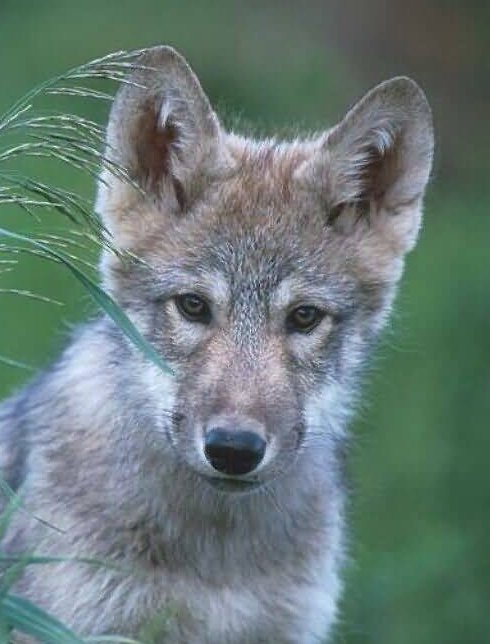
“ALBUQUERQUE, N.M. (AP) — Two  six-month-old Mexican gray wolf pups are navigating southwestern New Mexico’s  Gila forest on their own now that their troubled pack has splintered, worrying  environmentalists who think the animals’ chances of survival are slim.

This week’s efforts to track the  Fox Mountain pack show the pups are miles apart and far from the pack’s alpha  male. Environmentalists blame federal wildlife managers, who ordered the pack’s  alpha female — the pups’ mother — captured and removed from the wild in response  to a string of cattle kills.

The fate of the pack is fueling  the latest wave of frustration over the U.S.  Fish and Wildlife Service‘s handling of the 14-year effort to reintroduce  wolves to the American Southwest. The frustration has taken the form of online  petitions, public records requests and now a lawsuit.

WildEarth Guardians, a Santa  Fe-based environmental group, announced Wednesday that it was asking a federal  court to force the Fish and Wildlife Service to release documents related to  management of the Fox Mountain pack. Another public records request filed by the Center  for Biological Diversity has gone unanswered. A third has netted hundreds of  pages of blacked-out documents, raising questions about decision-making within  the wolf program.

Fish and Wildlife Service  regional spokeswoman Charna  Lefton said Wednesday she could not comment on the  pending litigation.

Wendy  Keefover, director of WildEarth Guardians’ carnivore protection program,  questioned the veracity of the evidence used by wildlife managers to link the  alpha female to the cattle kills.

“We have yet to see proof that  the loba actually killed livestock, and none appears to be forthcoming,” she  said, adding that the female wolf should be reunited with the pack.

The pack has been blamed for six  cattle deaths, including four that happened outside the wolf recovery boundaries  within a four-month period.

Ranchers have long voiced their  opposition to wolf reintroduction, pointing to economic losses as well as safety  issues for rural residents. Gov. Susana  Martinez even asked the Fish and Wildlife Service to capture and relocate  the entire Fox Mountain pack.

Michael  Robinson of the Center for Biological Diversity said no livestock killings  had been reported in the pack’s territory for months leading up to the alpha  female’s capture. He said the wolf’s removal was unnecessary and now the pups  could end up starving.

“The U.S. Fish and Wildlife  Service has treated the removal of this animal as just removing a piece from a  chess board,” Robinson said. “What we see again is that these are social animals  and that the remainder of the pack is no longer a pack at this point.”

Wildlife managers have been  struggling to boost the wolf population and the number of packs in New Mexico  and Arizona since the reintroduction program began in 1998. Efforts have been  hampered by everything from politics to lawsuits and illegal shootings.

An annual survey done at the  beginning of the year showed at least 58 wolves in the wild — far below what  biologists had initially expected.

The next survey will begin in  January, and Lefton said the hope is that some of the pups born this year will  make it through the winter.

Wolf program managers said they  are monitoring the Fox Mountain pups but no supplemental feeding  is planned.

Managers are considering several  options for releasing wolves in Arizona to replace three wolves that were killed  over the past year, but no final decisions have been made.”
 

Read Full Post »


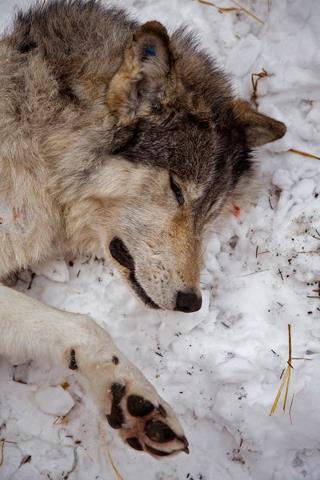
This was Alpha Fe, the mother of the late Basin Butte Pack. This is where she …fell.


“Two of us and Lynne Stone of the Boulder White Cloud Council went out early one frigid winter morning in search of what we feared had happened.  What we found was a trail of blood that led us to a tragic scene.  In the meadow next to Alpha Fe’s lifeless body, was the place the Wildlife Service’s helicopter had touched down just long enough for the gunner to walk over to her body and remove her radio collar.  Her collar, attached in the name of science, was also the homing tool used to betray her location, giving her no chance to elude the aerial pursuit.  This is the little-known dark side of radio collars, and their unfortunate dual purpose.

It has been three years since The Thanksgiving Day Massacre of Idaho’s most known and most viewed pack of wolves.  People traveled great distances to come see them.  In November of 2009, the Basin Butte Pack was destroyed for allegedly preying on a few calves early in the summer, many months before Wildlife Services killed them off with semi-automatic shotguns from a helicopter and an airplane in a two day aerial assault.  We all paid for it, but not just with our tax dollars. She and her pack mates lived in the Sawtooth National Recreation Area (SNRA), Idaho’s spectacular scenic and outdoor recreation centerpiece and home of the majestic Sawtooth Mountains where the Sawtooth Pack once lived. They inhabited the same land, the Basin Butte Pack and the Sawtooth Pack.

What we set out to achieve with our documentaries of the Sawtooth Pack was that they would act as ambassadors for the wolves that would follow in there footsteps.  Killing this pack was unnecessary. Should Idaho’s leading tourism and recreation attraction be a place utilized to graze some of Idaho’s 2,200,000 million cows?  If so, should the wildlife that inhabits the SNRA be annihilated if no effort is made to implement non-lethal methods to protect livestock from predation?  Wildlife Services still operates in this manner and wolves are killed for preying on livestock that are left without any protective measures unattended on the open range, very often on your public lands. Clearly there is much more work to be done, as this story continues to repeat itself.  Cooperation and good will are essential if man and wolf are to coexist.   Solutions have been proven to work by those who are willing to try.

This is a reminder of the need to demand the reform of the USDA’s Wildlife Services, the government agency that spends taxpayer money to kill “problem” wildlife.  Their practices are currently in question and being challenged.  Please read the article in the link written by Tom Knudson of the Sacramento Bee.  Two Congressmen, Peter Defazio, a democrat from Oregon and John Campbell, a republican from California, have been pushing the House Oversight Committee to investigate Wildlife Services and their current practices.  Please support them in their efforts to reform Wildlife Services.”

**Special thanks to “Living With Wolves” for providing this information!  For more on this story,  please visit http://archive.constantcontact.com/fs021/1102459385062/archive/1102886320092.html

Read Full Post »


Wolf supporters, as the wolf hunt continues, even when a certain quota is reached, many do not realize how the loss of a pack member effects the rest of their unit.  With the loss of any older, more experienced members of a wolf pack, the younger ones struggle to learn about how to hunt.  Eventually, this can lead to starvation.  I encourage you to share your comments, feedback, and tell me how losing a member of a wolf pack can effect rest of the pack after reading the article below:

November 20th, 2012

“Wolf hunting season has begun in several states, and hundreds of the animals already have been killed. It’s the first time in years that wolves have been legally hunted in Wyoming and Minnesota, and the decision has drawn the ire of many conservationists and some scientists.

Gray wolves have long been a point of contention between ranchers, who see them as pests that eat their livestock, and conservationists, who see the critical part the play in the ecosystem. Recently, as state laws changed and the animals were taken off the federal endangered species list, hunters have taken aim.

About 50 wolves have been killed in Wyoming, where they can be shot on sight without a permit in about 85 percent of the state, according to news reports. Seven of the dead wolves once lived in Yellowstone National Park, where wolves are still protected; they wandered outside the park and were legally shot, Reuters reported. (Scientists put collars on the Yellowstone wolves as part of a park research program.)

Wyoming’s wolf population was estimated at 328 before the hunt. The state’s plan, approved by the U.S. Fish and Wildlife Service, requires that the population of wolves remain above 100 outside Yellowstoneand the Wind River Reservation. That figure is cited by conservationists as dangerously low.

In nearby Idaho, 96 wolves have been killed, according to the Coeur d’Alene Press.

During last year’s hunting season, 545 wolves in Idaho and Montana were killed. This year both states got rid of their statewide quotas, or upper limit on number of kills, according the Center for Biological Diversity. The center, along with the Natural Resources Defense Council and other environmental groups, is suing the U.S. Fish and Wildlife Service, accusing it of failing to adequately protect the animals. Other suits are pending in various states.

Back from the brink?

Wolves were hunted, trapped and poisoned to the brink of extinction in the 20th century, and they rebounded only after being protected under the Endangered Species Acts of the 1960s and subsequently being re-introduced to Yellowstone. Much of the Northern Rockies sub-population of gray wolves lost federal protections last year following a controversial rider placed in U.S. budget legislation.

The wolf hunt in Minnesota is also under way and has met with opposition.  The 147 wolves killed in that state are about twice what the Department of Natural Resources expected, according to the Associated Press. The second phase of the hunting season begins Saturday (Nov. 24), during which wolves can be trapped, a technique that conservationists and some hunters call cruel.

Minnesota’s earlier wolf-management plan stated that the animals couldn’t be hunted for five years after being removed from the federal protection provided by the Endangered Species Act — which happened in January, 2012. Instead of opening a formal comment period, the DNR offered only an online survey, according to the Center for Biological Diversity. More than 75 percent of people taking the poll opposed the wolf hunt: Of 7,351 responses, only 1,542 people supported a wolf season. Even so, that five-year waiting period was not upheld.

In Wisconsin, hunters had killed 83 wolves as of Nov. 18, according to the Badger Herald. The hunting season there will run through the end of February unless hunters reach the 116-wolf quota before then.”

**Special thanks to “Live Science” for providing this information! (http://www.livescience.com/24942-wolf-hunt-begins.html)

Read Full Post »


Posted November 13, 2012 in Saving Wildlife and Wild Places

“With wolf hunts underway in Idaho and Montana, we are headed back to court to challenge the latest removal of Endangered Species Act protections from wolves in the state of Wyoming. Wyoming and the U.S. Fish & Wildlife Service left us no choice, as Wyoming’s “wolf management” plan sanctions the complete eradication of wolves in approximately 85% of the state and requires Wyoming to maintain only 100 wolves and 10 breeding pairs in the entire state outside Yellowstone National Park and the Wind River Reservation. Only the northwest corner of Wyoming, in the area surrounding Yellowstone and Grand Teton National Parks, will allow for wolves, but regulated wolf hunting will also take place there.

While it is true that most of the wolves in Wyoming currently reside in that northwestern corner of the state, the Wyoming plan ensures that wolves will never be allowed beyond that imposed boundary – a policy of absolute intolerance for a species that our country just spent the last several decades working to recover. Furthermore, by restricting wolves to the northwest corner and reducing the number of wolves surrounding Yellowstone, Wyoming’s plan compromises the ability of wolves to successfully travel (and exchange DNA) between the Greater Yellowstone Ecosystem and the remaining wolf subpopulations in central Idaho and northwest Montana – a component that has been identified as critical to the survival of the entire Northern Rockies wolf population.

The Wyoming plan is almost identical to an earlier version that the U.S. Fish & Wildlife Service rejected as inadequate to protect wolves – and a federal judge found that it put the continued existence of the wolf in Wyoming “in serious jeopardy.” In fact, the Service spent years insisting that Wyoming needed to develop a credible statewide plan. But, repeatedly, Wyoming refused. And the U.S. Fish & Wildlife Service? Well, instead of keeping Endangered Species Act protections in place for wolves in Wyoming until the state adopted an acceptable management plan, the Service caved in to political pressure and approved a plan that is almost identical to the one they (and a federal court) previously rejected.

Wyoming’s plan takes us back to the exact eradication practices that endangered the wolf in the first place. The Endangered Species Act was created to remedy these very practices, not to reinstate them.  And while we certainly don’t think that wolves will need the protections of the Endangered Species Act forever, we believe that those protections should be in place until states like Wyoming commit to responsible statewide management that will ensure the continued survival of what has been one of our country’s greatest conservation success stories.”

**Special thanks to Sylvia Fallon, NRDC,  http://switchboard.nrdc.org/blogs/sfallon/standing_up_for_wyomings_wolve.html,   for providing this information!!

Read Full Post »


 While this an older story, let’s not forget the positive impacts wolves have in Yellowstone.  Take a look and share your comments!

December 30,  2011  By

“Fifteen years after wolves were returned to Yellowstone National Park the health  of the overall ecosystem is overwhelming and obvious.

This is the observation made by scientists in a new report published in the  journal Biological Conservation.

For the first time in 70 years, the young aspen and willow trees are not  being eaten before they have a chance to flourish and grow by the elk  populations in northern Yellowstone, thanks to the introduction of wolves back  into the park. The elk are beginning to decline and are also beginning to fear  wolf predation.

As such, trees and shrubs are recovering along some streams, which in turn  provide improved habitat for beaver and fish, and provide more food for birds  and bears.

“Yellowstone increasingly looks like a different place,” said William Ripple,  a professor in the Department of Forest Ecosystems and Society at Oregon State  University, and lead author of the study. “These are still the early stages of  recovery, and some of this may still take decades. But trees and shrubs are  starting to come back and beaver numbers are increasing. The signs are very  encouraging.”

The findings released in the report are based on a recent analysis conducted  by Oregon State University researchers as well as a review of several other  studies.

The report outlines four streams that were studied in the Lamar River basin.  100 percent of the tallest young aspen sprouts were being browsed in 1998, but  that number has dropped to just 20 percent in 2010. As a result of the total  browsing by elk, the new aspen trees were unable to grow and expand, grinding to  a halt in the mid to late 1990s. And all because the wolves weren’t around to  snack on the snackers.

This is the observation made by scientists in a new report published in the  journal Biological Conservation.

Among the observations in this report:

  • Since their reintroduction in 1995-96, the wolf population generally  increased until 2003, forcing changes in both elk numbers and behavior due to  what researchers call the “ecology of fear.”
  • The northern range elk populations decreased from more than 15,000  individuals in the early 1990s to about 6,000 last year, and remaining elk now  have different patterns of movement, vigilance, and other traits.
  • By 2006, some aspen trees had grown tall enough they were no longer  susceptible to browsing by elk, and cottonwood and willow were also beginning to  return in places.
  • Improved willow growth is providing habitat that allows for a greater  diversity and abundance of songbirds such as the common yellowthroat, warbling  vireo and song sparrow.
  • The number of beaver colonies in the same area increased from one in 1996 to  12 in 2009, with positive impacts on fish habitat.
  • Increases in beaver populations have strong implications for riparian  hydrology and biodiversity – Wyoming streams with beaver ponds have been found  to have 75 times more abundant waterfowl than those without.
  • The coyote population decreased with the increase in wolf numbers,  potentially allowing more small mammals that provide food for other avian and  mammalian predators, such as red foxes, ravens and bald eagles.

Evidence of improved ecosystem health following the return of wolves is “becoming increasingly persuasive,” the scientists said in their report, though  they also note that an increasing population of bison is continuing to impact  young woody plants in the Lamar Valley.

“The wolves have made a major difference in Yellowstone,” said Robert  Beschta, a professor emeritus of forestry at OSU and co-author on the study.

“Whether similar recovery of plant communities can be expected in other  areas, especially on public lands outside national parks, is less clear,” Beschta said. “It may be necessary for wolves not only to be present but to have  an ecologically effective density, and mechanisms to deal with human and wolf  conflicts also need to be improved.”

“Predation and predation risk associated with large predators appear to  represent powerful ecological forces,” the researchers concluded in their  report, “capable of affecting the interactions of numerous animals and plants,  as well as the structure and function of ecosystems.”

Read Full Post »


Nancy Jo Dowler, the president of the Timber Wolf Preservation Society, with Comet.

By STEVEN YACCINO

Published: November 1, 2012

“GREENDALE, Wis. — When people like Nancy Jo Dowler started raising wolves here decades ago, the animals were rare in Wisconsin and nearly extinct across the country.

Now the president of the Timber Wolf Preservation Society, Ms. Dowler, 66, cares for five full-grown purebreds. She bottle-fed them as pups and howls with them at passing sirens. The other day she gave one breath mints through a hole in the fence, passing it directly from her lips to his.

Hers seems a fairy tale world compared with the legal dogfights occurring beyond these kennels. Out there, Wisconsin is three weeks into its first wolf-hunting season, sanctioned by the State Legislature in April. Minnesota is scheduled to begin its first registered wolf hunt this weekend.

The legalization of wolf hunting in both states was devised to manage a rebounding wolf population after the federal government stopped listing the species as endangered in the region last year. Both have drawn lawsuits from local and national animal rights groups that fear the undoing of nearly four decades of work to restore a healthy number of wolves.

“We’ve spent a lot as a nation to protect them,” said Wayne Pacelle, president of the Humane Society of the United States, which in October announced a lawsuit against the federal Fish and Wildlife Service to restore protections for wolves. “These plans in Wisconsin and Minnesota are draconian, severe and unwarranted, and we think they may jeopardize the health and viability of this population.”

Since the wolf hunt began last month, at least 42 have been killed in Wisconsin. All told, officials expect 600 wolves will die at the hands of hunters and trappers in the two states before spring.

Wolves were once so numerous in the United States that ranchers and government agencies paid people to kill them. By the time the Endangered Species Act began protecting wolves in 1973, they were nearing extinction in the lower 48 states. Today, wolf numbers have grown to 4,000 and exceeded recovery goals in the western Great Lakes area, according to federal estimates.

But some of those packs have started to cause problems again for ranchers in northern Wisconsin and have cost the state hundreds of thousands of dollars in livestock reimbursement payments, said officials at the Wisconsin Department of Natural Resources. “Without controls, what we’ve seen in the state is a feeling of needing to take it into their own hands for folks that are frustrated,” said Kurt Thiede, head of the wildlife management program for the agency.

After the Wisconsin Legislature approved the wolf hunt, which ends Feb. 28, more than 20,000 people applied for the required license. The state awarded 1,160 permits and capped this year’s harvest at 201 kills, or roughly a quarter of its current wolf population.

In Minnesota, about 3,600 licenses were available to hunt up to 400 wolves, which would reduce the state’s numbers by about 15 percent.

“There ain’t too many people that have one hanging in their living room,” said Timothy Mueller, a hunter from Silver Cliff, Wis. He, like others with a wolf license, was waiting for winter because pelts will be thicker and the snow will make it easier to track the animals.

Yet some hunters who once proudly talked about the rare opportunity would now rather keep their adventures private. A number declined to speak about the controversy because of reported threats made against a hunter who was among the first to register his kill with the state.

“There are a lot of the claims about how easy this is and how this is senseless slaughter,” said Scott Meyer, a lobbyist for the United Sportsmen of Wisconsin. “When you see the terrain and the geographies of everything, you understand that the advantage is toward the wolf.”

Animal rights groups have little sympathy for the hunters. They argue that the state kill quotas do not properly account for other ways that wolves can die, like poaching and vehicular collisions and the killing of the animals by farmers and ranchers protecting their livestock. Those additional causes, they say, could put the animals at risk again.

On Oct. 15, the day Wisconsin’s wolf-hunting season began, two national groups — the Humane Society and the Fund for Animals — filed a 60-day notice of their intent to sue the federal government to restore wolf protections.

In addition, Wisconsin humane groups have filed a lawsuit to prohibit the use of dogs for hunting wolves, calling it cruel. Minnesota advocates also took legal action against their state in an attempt to stop its hunt, which lasts from Nov. 3 to Jan. 31. And Minnesota’s Chippewa tribes have banned wolf hunting and trapping on its reservation lands.

“The whole balance of nature, they don’t want to hear any of that,” said Ms. Dowler, criticizing hunters for killing the animals she has devoted years to protect. “People absolutely love them or they absolutely hate them. There are few people in the middle.”

This article has been revised to reflect the following correction:

Correction: November 3, 2012

A picture caption on Friday with an article about the friction between wolf hunters and those who want to protect the animals misidentified the city in Wisconsin where the Timber Wolf Preservation Society is located. As the article correctly noted, it is in Greendale, not in Glendale.”

*Special thanks to TheNew York Times for providing this information! http://www.nytimes.com/2012/11/02/us/friction-between-wolf-hunters-and-protectors-rises.html?_r=2&goback=.gde_2859887_member_181479466&

Read Full Post »


“Federal employee allows dogs to savagely attack a trapped coyote and more …

Published on November 2, 2012 by Marc Bekoff, Ph.D. in Animal Emotions

Wildlife Services, a branch of the USDA, is constantly being criticized for the wanton slaughter and abuse of millions of animals every single year.

A summary of some of Wildlife Services egregious activities include, but is not limited to, the following:

With steel traps, wire snares and poison, agency employees have accidentally killed more than 50,000 animals since 2000 that were not problems, including federally protected golden and bald eagles; more than 1,100 dogs, including family pets; and several species considered rare or imperiled by wildlife biologists.

A growing body of science has found the agency’s war against predators, waged to protect livestock and big game, is altering ecosystems in ways that diminish biodiversity, degrade habitat and invite disease.

In all, more than 150 species have been killed by mistake by Wildlife Services traps, snares and cyanide poison since 2000, records show. A list could fill a field guide. Here are some examples: Armadillos, badgers, great-horned owls, hog-nosed skunks, javelina, pronghorn antelope, porcupines, great blue herons, ruddy ducks, snapping turtles, turkey vultures, long-tailed weasels, marmots, mourning doves, red-tailed hawks, sandhill cranes and ringtails.

The body count includes more than 25,000 red and gray foxes, 10,700 bobcats, 2,800 black bears, 2,300 timber wolves and 2,100 mountain lions. But the vast majority—about 512,500—were coyotes.

Aerial gunning is the agency’s most popular predator-killing tool. Since 2001, more than 340,000 coyotes have been gunned down from planes and helicopters across 16 Western states, including California—an average of 600 a week, agency records show.

Between 2004 and 2010, Wildlife Services killed over 22.5 million animals to protect agribusiness. The agency spends $100 million each year, and Wildlife Services’ job is to “eradicate” and “bring down” wolves, coyotes, mountain lions, bears, prairie dogs, and other wild animals.

In 2010, Wildlife Services killed 5 million animals (this number does not include the thousands birds the Service has since admitted to poisoning in 2010), including 112,781 mammalian carnivores such as coyotes, wolves, bobcats, cougars, badgers and bears.

New evidence of reprehensible animal abuse: What follows is not easy reading

And, just this week, we’ve learned that an employee of Wildlife Services, Jamie Olson, who works as a trapper in Wyoming, has been caught, and is being held responsible for, promoting extreme acts of cruelty and torture. A summary of these heinous acts can be found here. The photos on Mr. Olson’s Facebook page and elsewhere include: ” …two dogs savagely attacking a coyote in a leg-hold trap and the employee posing with the tattered carcass of a coyote. They also show other trapped animals – dead and alive. … [another] shows the trapper’s brownish-black Airedale approaching a coyote in a leg-hold trap, unable to defend itself. The coyote is snarling and trying to pull away. A caption says: ‘My Airedale Bear with a sheep killing female.’ … Another photo on Twitter showed a partly disemboweled coyote on a log. The caption reads: ‘Eagles got to this adult female before I did.'”

This sort of abuse is “very common”

Is this sort of abuse rare? No, according to a former Wildlife Services trapper. “Gary Strader, a former Wildlife Services trapper in Nevada, was not surprised to learn about the controversial photos. ‘That is very common,’ Strader wrote in an email. ‘It always was and always will be controversial. It has never been addressed by the higher-ups. They know it happens on a regular basis.'”

I’m sorry to post this story but it’s essential to get the word out about these sorts of heinous activities. And, more important, you can do something about these thoroughly repugnant and unacceptable behaviors that uses our tax dollars.

Please contact Mr. Rod Krischke, State Director, Wyoming Wildlife Services, P.O. Box 67, Casper, Wyoming 82602; Rodney.F.Krischke@aphis.usda.gov; William Clay, Deputy Administrator for Wildlife Services; Bill.Clay@aphis.usda.gov; Jeffrey S. Green, Western Regional Director for Wildlife Services; jeffrey.s.green@usda.gov; and Congressman Peter DeFazio at https://forms.house.gov/defazio/IMA/contact.html and Congressman John Campbell at http://campbell.house.gov/index.php?option=com_content&view=article&id=1023&Itemid=35.

Cruelty can’t stand the spotlight and these heinous activities must be stopped now.”

*Special thanks to “Psychology Today,”  http://www.psychologytoday.com/blog/animal-emotions/201211/wildlife-services-trapper-allows-animal-torture for providing this information!

Read Full Post »